

Simopelta minima
- Scientific Name
- Simopelta minima
- Tribe
- Ponerini
- Subfamily
- Ponerinae
- Author
- Brandão, 1989
- Distribution
- Found in 2 countries
Simopelta minima Overview
Simopelta minima is an ant species of the genus Simopelta. It is primarily documented in 2 countries , including Brazil, Colombia. Detailed taxonomic data and occurrence records can be further explored via authoritative databases such as AntWeb or the Global Biodiversity Information Facility (GBIF).
Simopelta minima
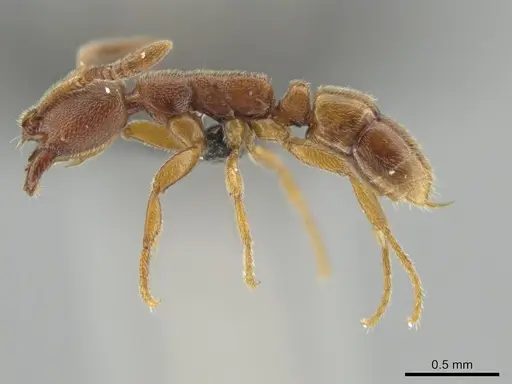
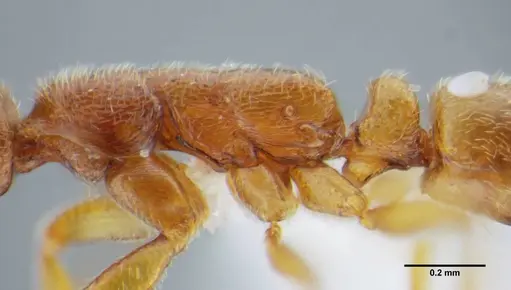
Simopelta minima is one of the smallest Simopelta species, measuring under 2.5mm in total length [1]. Workers are a bright ferrugineous red with yellow antennae and legs, and can be recognized by their tiny single-faceted eyes, three sharp mandibular teeth, and a distinctive spine on the clypeus [1]. This species was originally described from soil samples collected in an old shaded cocoa plantation in Bahia, Brazil, and was once considered the first ant species driven to extinction by human activity when its habitat was destroyed [2]. However, it was rediscovered in 2007 in Minas Gerais, Brazil, over 1,000km from the original site, showing this species has a wider distribution than initially known [2]. Like other Simopelta species, they exhibit army-ant behavior, foraging in dense columns to raid other ant nests [2].
Quick Summary
- Difficulty: Expert
- Origin & Habitat: Eastern Brazil (Bahia and Minas Gerais) and Colombia (Caldas). Found in hypogaeic (subterranean) habitats at 0-20cm depth in shaded cocoa plantations and forest fragments [2][1].
- Colony Type: Single-queen colonies (monogyne). Queens are dicthadiiform, permanently wingless with an enlarged petiole and temporarily swollen gaster [2]. Colony size is unknown but likely follows the genus pattern of large colonies with low density.
- Colony: Monogyne
- Size & Growth:
- Queen: Unknown, queens are dicthadiiform (permanently wingless) [2]
- Worker: Under 2.5mm total length [1][2]
- Colony: Unknown, likely large for the genus but low density [2]
- Growth: Unknown
- Development: Unknown, no direct data available (Development timeline has not been studied. Related Simopelta species likely take several months.)
- Antkeeping:
- Temperature: Keep at 24-28°C, they are a tropical species from lowland Brazil. A gentle gradient is recommended.
- Humidity: High humidity required, these are subterranean ants that live in soil at 0-20cm depth. Keep the nest substrate consistently moist but not waterlogged.
- Diapause: Unlikely, being a tropical species from Brazil, they probably do not require a diapause period. Maintain warm conditions year-round.
- Nesting: These tiny hypogaeic ants require a naturalistic setup with moist soil or a plaster/acrylic nest with tight chambers. They are subterranean and rarely come to the surface, so minimal outworld space is needed.
- Behavior: Simopelta minima exhibits army-ant behavior, workers forage in dense columns and raid the nests of other ant species [2]. They are predatory and likely specialize on other ants as prey. Workers have a functional stinger as they belong to the Ponerinae subfamily. Their tiny size (under 2.5mm) and subterranean lifestyle make them difficult to observe. Escape prevention should be excellent despite their small size, they can squeeze through tiny gaps.
- Common Issues: this species is extremely rare in the hobby and no captive colonies are known to exist, subterranean lifestyle makes them nearly impossible to observe and enjoy as pets, their specialized predatory diet (raiding other ant nests) is extremely difficult to replicate in captivity, the original habitat was destroyed, highlighting how sensitive this species is to environmental changes, no information exists on captive care requirements, this is essentially an unstudied species in captivity
Species Overview and History
Simopelta minima is a remarkable species with a dramatic history. Originally described in 1989 from just four workers collected in an old shaded cocoa plantation in Bahia, Brazil, it was believed to be the first ant species driven to extinction by human activity when its habitat was completely destroyed [2]. However, in 2007,researchers rediscovered the species over 1,000km away in Minas Gerais, Brazil, using subterranean pitfall traps at 20cm depth [2]. This rediscovery showed the species was more widespread than initially thought and highlighted how little we know about subterranean ant species. The genus Simopelta is known for its army-ant-like behavior, with workers foraging in dense columns to raid other ant nests, and queens that are permanently wingless (dicthadiiform) with an enlarged petiole and swollen gaster [2].
Identification and Appearance
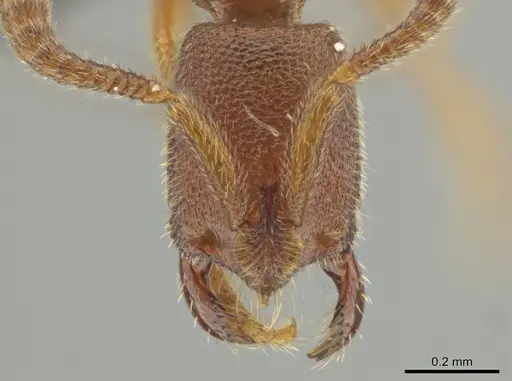
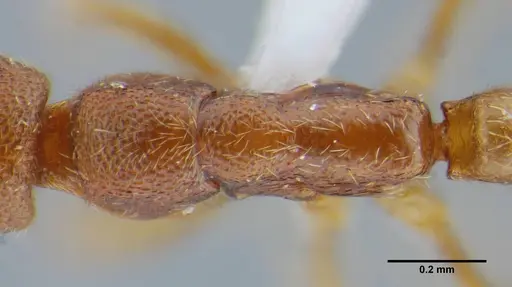
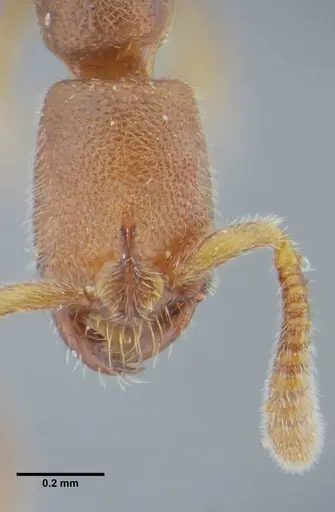
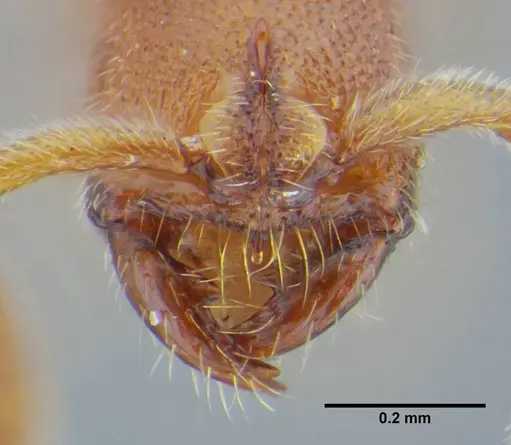
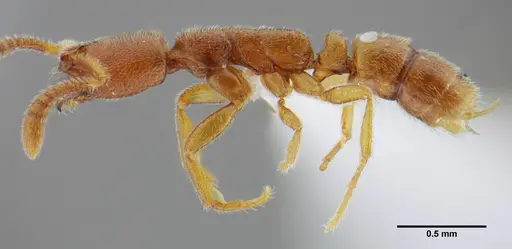
Simopelta minima is one of the smallest Simopelta species, with workers measuring under 2.5mm in total length [1]. They are a bright ferrugineous red color with yellow antennae and legs [1]. The mandibles have three well-developed, sharp teeth [1]. A distinctive feature is the sharp spine on the anterior medial margin of the clypeus, followed by a well-developed carina [1]. The eyes are tiny, reduced to single facets, a common adaptation in subterranean ants [2]. The scape (first antennal segment) fails to reach the posterior corner of the head by almost twice its apical width [1]. They can be distinguished from similar species like Simopelta pergandei by the shiny surfaces of their mandibles, and from S. bicolor by having only three mandibular teeth (S. bicolor has at least six) [3].
Distribution and Habitat
This species is known from eastern Brazil (Bahia and Minas Gerais) and Colombia (Caldas) [4][5]. The original collection was from an old shaded cocoa plantation ('cabruca') in Ilhéus, Bahia, where workers were extracted from 0-15cm deep soil samples using Berlese funnels [2]. The rediscovery occurred in a semidecidual forest fragment at the Universidade Federal de Viçosa campus in Minas Gerais, at a depth of 20cm [2]. Notably, the rediscovery site was a forest fragment that had been devastated by fire about nine years prior and was in the early stages of regeneration [2]. Almost all known specimens have been collected below the soil surface, confirming this is a hypogaeic (subterranean) species that prefers to live underground [2].
Biology and Behavior
Simopelta minima belongs to a genus that shares remarkable convergent similarities with army ants (Ecitoninae). Workers forage in dense columns and raid the nests of other ant species [2]. The queen is dicthadiiform, permanently wingless with an enlarged petiole and a gaster that becomes grossly swollen during egg-laying [2]. Like other Ponerinae, they have a functional stinger. The species forms large colonies but presents low density relative to other ants, meaning colonies are widely spaced and difficult to find [2]. Their diet consists primarily of other ants, which they capture during raids. This specialized predatory lifestyle makes them extremely difficult to keep in captivity, as replicating their natural raiding behavior is nearly impossible.
Care and Captive Maintenance
Simopelta minima is NOT a species for beginners and is essentially impossible to keep in captivity. No captive colonies exist in the antkeeping hobby, and there is no documented information on keeping this species. If attempting to keep them, you would need to replicate their subterranean lifestyle, a naturalistic setup with deep, moist soil (at least 15-20cm) would be essential. Temperature should be warm (24-28°C) to match their tropical origin. Humidity must be high, these ants live in soil at depths where moisture is constant. The biggest challenge is diet: they are specialized predators that raid other ant colonies. Providing live ant colonies as prey would be required, which is impractical for most keepers. Given how rare this species is in the wild and its conservation concerns, it should NOT be collected from the wild. [2]
Conservation Status
Simopelta minima has a unique place in ant conservation history. It was one of the first ant species officially listed as extinct by Brazilian environmental institutions (MMA 2007) due to the complete destruction of its original habitat, an old shaded cocoa plantation that was logged [2]. The rediscovery in 2007 was therefore significant not just for the species, but for highlighting how little we know about subterranean ant fauna. The species is now known from at least two widely separated populations in Brazil (Bahia and Minas Gerais) and Colombia, suggesting it may have a broader distribution than the sparse records indicate. However, its subterranean lifestyle and low density make it inherently rare and difficult to study. For these reasons, Simopelta minima should be considered a species to observe only in scientific contexts, not one to collect for captivity.
Frequently Asked Questions
Can I keep Simopelta minima as a pet?
No. This species is essentially impossible to keep in captivity. No captive colonies exist in the antkeeping hobby, and there is no documented information on their care. They are specialized predators that raid other ant colonies, replicating this diet in captivity is extremely difficult. Additionally, they are subterranean and nearly impossible to observe. Given their conservation history and extreme rarity, they should not be collected from the wild.
What does Simopelta minima eat?
Like other Simopelta species, they are predatory army ants that raid the nests of other ant species [2]. They forage in dense columns and capture brood and adult ants from host colonies. Their diet consists primarily of other ants, not sugar sources or general insects.
How big do Simopelta minima colonies get?
The exact colony size is unknown. However, the genus Simopelta is known to form large colonies, though they present low density (colonies are widely spaced) [2]. The rediscovered population only yielded 11 workers, and the original type series had only 4 workers, this reflects both their subterranean lifestyle and low colony density, not necessarily small colony size.
Where does Simopelta minima live?
This is a subterranean (hypogaeic) species found at depths of 0-20cm in soil [2]. Originally described from an old shaded cocoa plantation in Bahia, Brazil, and rediscovered in a forest fragment in Minas Gerais, Brazil. Also recorded in Colombia. They are almost never found on the surface.
Is Simopelta minima endangered?
The species was once considered extinct, it was one of the first ant species listed as extinct by Brazilian environmental institutions when its original habitat was destroyed [2]. However, the 2007 rediscovery showed it still exists. Its conservation status is unclear, but it is considered rare due to its subterranean lifestyle and low density. The species is known from at least two widely separated populations in Brazil and Colombia.
How do I identify Simopelta minima?
Workers are under 2.5mm total length, one of the smallest Simopelta species. They are bright ferrugineous red with yellow antennae and legs. Key identifying features include: three sharp teeth on the mandible, a sharp spine on the clypeus, tiny single-faceted eyes, and fine sculpture. They can be distinguished from similar species by their shiny mandibles (S. pergandei has dull mandibles) and having only three mandibular teeth (S. bicolor has six or more) [1][3].
Do Simopelta minima queens fly?
No. Simopelta minima has dicthadiiform queens, permanently wingless with an enlarged petiole and a gaster that becomes temporarily swollen during egg-laying [2]. This is a common trait in the genus Simopelta, where queens never develop wings and instead travel with the colony during raids.
What temperature do Simopelta minima need?
As a tropical species from lowland Brazil, they should be kept warm at 24-28°C. The original collection sites in Bahia and Minas Gerais are in warm, humid tropical regions. Being subterranean, they likely experience relatively stable temperatures in their natural habitat.
Why is Simopelta minima considered special?
This species was once considered the first ant species driven to extinction by human activity when its cocoa plantation habitat was destroyed [2]. Its rediscovery in 2007,over 1,000km from the original site, was significant for ant conservation. Additionally, Simopelta as a genus shows remarkable convergent evolution with army ants, they have similar behavioral and morphological traits despite being in different subfamilies [2].
References

This caresheet is licensed under CC BY-SA 4.0 .
ANTWEB1038199
View on AntWeb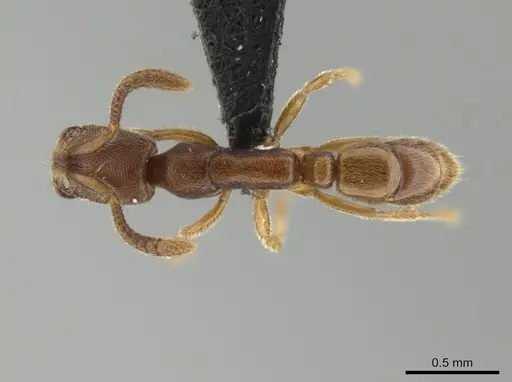
UFV-LABECOL-000001
View on AntWeb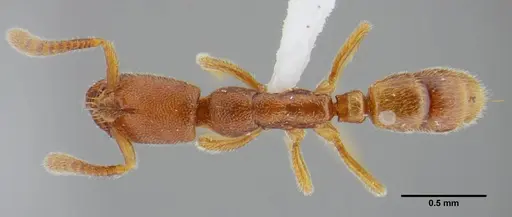
Literature
Loading...Loading products...