

Simopelta longinoda
- Scientific Name
- Simopelta longinoda
- Tribe
- Ponerini
- Subfamily
- Ponerinae
- Author
- Mackay & Mackay, 2008
- Distribution
- Found in 1 countries
Simopelta longinoda Overview
Simopelta longinoda is an ant species of the genus Simopelta. It is primarily documented in 1 countries , including Costa Rica. Detailed taxonomic data and occurrence records can be further explored via authoritative databases such as AntWeb or the Global Biodiversity Information Facility (GBIF).
Simopelta longinoda
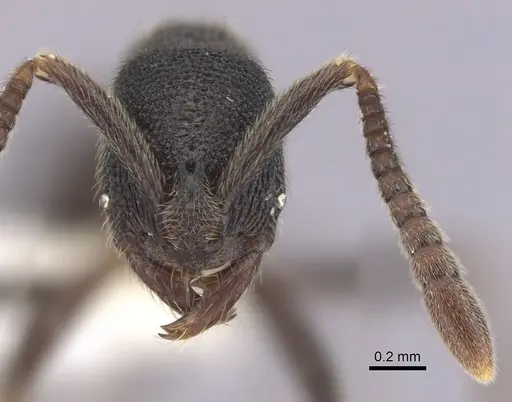
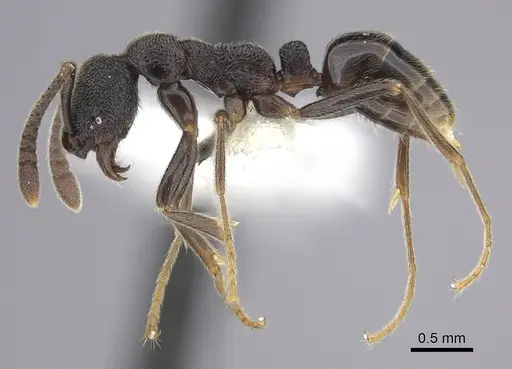
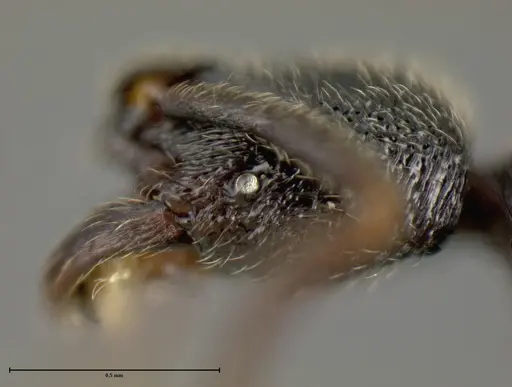
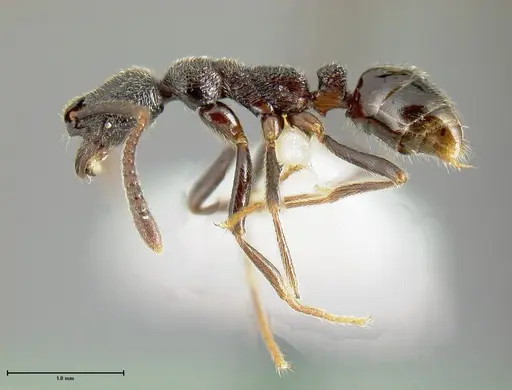
Simopelta longinoda is a small predatory ant (workers 2.2-2.5mm) native to the cloud forests of Costa Rica [1]. They are almost entirely black with dark brown legs, and have a distinctive long, narrow petiolar node that gives them their name (from Latin 'longus' meaning long and 'nodus' meaning node) [1]. The head is covered with large punctures while the lower parts of the body are smooth and glossy [1].
This species is one of the more commonly encountered Simopelta in Costa Rica, found at elevations between 700-1500m in areas like Monteverde and the Peñas Blancas Valley [2]. They are predators that raid colonies of other ants, particularly Pheidole species, and are uniquely adapted to forage in the canopy and during cold, rainy conditions that would stop most other ants [2].
Quick Summary
- Difficulty: Expert
- Origin & Habitat: Cloud forests of Costa Rica at elevations of 700-1500m, including Monteverde, Peñas Blancas Valley, Braulio Carrillo National Park, and Wilson Botanical Garden near San Vito [2]. They nest in epiphytes and moss mats, with colonies appearing to be diffuse with no central nest structure [2].
- Colony Type: Colony structure is unconfirmed. Only the worker caste has been described, and no queens have been documented in scientific collections [1]. The diffuse nesting pattern suggests potential polydomous (multiple nest sites) behavior.
- Size & Growth:
- Queen: Unknown, queen caste has not been described [1]
- Worker: 2.2-2.5mm [1]
- Colony: Unknown, colonies appear diffuse with scattered workers rather than concentrated nests [2]
- Growth: Unknown
- Development: Unconfirmed, no development data exists for this species (Related Simopelta species may provide rough estimates, but specific data is lacking)
- Antkeeping:
- Temperature: Keep cool, these are high-elevation cloud forest ants. Aim for roughly 18-22°C, avoiding temperatures above 25°C. They are adapted to cool, damp conditions and are even active during cold rainy weather in the wild [2].
- Humidity: Very high humidity required, think damp cloud forest. Keep the nest substrate consistently moist but not waterlogged. Provide a humidity gradient so ants can choose their preferred microclimate.
- Diapause: Unknown, no specific studies on overwintering requirements. Given their high-elevation cloud forest origin, they likely experience reduced activity during cooler months but true diapause requirements are unconfirmed.
- Nesting: In nature they nest in epiphytes and moss mats, with no centralized nest, workers are scattered throughout the vegetation [2]. In captivity, a naturalistic setup with multiple damp moss areas or a well-humidified plaster/acrylic nest works best. Avoid dry conditions entirely.
- Behavior: These are active predators that form raiding columns to attack other ant colonies, particularly Pheidole species [2]. They forage in columns that move back and forth over the same paths, and have been observed carrying prey (hairy larvae) and foraging high in the canopy [2]. They remain active on cold, rainy days when other ants are inactive. Workers are small (2.2-2.5mm) so escape prevention should be moderate, they are not tiny enough to require fine mesh but standard barriers are advisable.
- Common Issues: high humidity maintenance is critical, they will not survive dry conditions, dietary challenges as obligate predators, need consistent access to live prey, cold temperature requirements may conflict with typical room temperatures, diffuse colony structure may make it difficult to maintain a concentrated colony in captivity, limited information makes captive care largely experimental
Temperature and Cooling Requirements
Simopelta longinoda is a high-elevation cloud forest species, and temperature management is critical for successful captivity. They occur at elevations of 700-1500m in Costa Rica where temperatures remain cool year-round [2]. Unlike most ant species kept in captivity, these ants are actually active during cold, rainy conditions, Longino observed columns foraging during such weather in Monteverde [2].
Keep the nest area in the range of 18-22°C. Avoid temperatures above 25°C, as this species is not adapted to tropical heat. If your room temperature runs warm, consider using a small cooling method or positioning the nest in the coolest area of your setup. A slight temperature gradient allowing workers to move between warmer and cooler areas is ideal. This is one of the few ant species where overheating is a greater concern than being too cold.
The cool temperature requirement may seem unusual, but it reflects their natural habitat in the cloud forests where temperatures are mild and humidity is constantly high. Attempting to keep them at typical room temperature (22-25°C) may stress the colony and reduce activity.
Feeding and Predatory Behavior
Simopelta longinoda is an obligate predator. In the wild, they have been observed raiding colonies of Pheidole boruca, carrying small hairy larvae back to their nest [2]. They form diffuse raiding parties that move through moss and soil, attacking the brood of other ant species.
In captivity, you will need to provide a consistent source of live prey. They are small ants (2.2-2.5mm) so prey should be appropriately sized, small insects like fruit fly adults, pinhead crickets, small mealworms, and other tiny arthropods work well. Given their predatory nature, they are unlikely to accept sugar sources, though you can offer them occasionally to test acceptance.
Feed them small prey items 2-3 times per week, adjusting based on colony consumption. Remove any uneaten prey after 24-48 hours to prevent mold. The key challenge with this species is that they are specialized predators, unlike many ants that can switch between protein and sugar sources. If the colony accepts only live prey, you will need to establish a reliable feeding schedule.
Their foraging behavior in the wild involves columns moving back and forth over the same paths [2], which suggests they may benefit from predictable feeding locations where they can establish foraging routes.
Humidity and Nesting Environment
As cloud forest inhabitants, these ants require very high humidity. In their natural habitat in places like Monteverde and the Peñas Blancas Valley, the air is constantly moist and precipitation is frequent [2]. The lower third of the pronotum and mesopleuron are smooth and glossy in this species [1], which may be an adaptation to high-moisture environments.
Keep the nest substrate consistently damp but not waterlogged. The substrate should feel moist to the touch at all times. Using a naturalistic setup with sphagnum moss or a well-humidified plaster nest works well. You should see condensation on the nest walls periodically.
Their natural nesting behavior is unusual, Longino dug through epiphytes and moss mats but found no central nest, only scattered workers [2]. This suggests they may be polydomous (using multiple nest sites) in the wild. In captivity, providing multiple damp areas or a larger naturalistic setup may better suit their needs than a compact formicarium. Consider using a setup with multiple connected chambers or a naturalistic terrarium-style enclosure with moss and epiphytes.
Avoid dry conditions entirely, this is not a species that can tolerate periods of low humidity.
Unique Foraging and Activity Patterns
One of the most remarkable aspects of Simopelta longinoda is their activity pattern. Longino observed columns of these ants foraging high in the canopy of cloud forest trees and across moss mats, including during cold, rainy conditions when most ant species would remain in their nests [2]. This makes them unusual among ants and suggests they are adapted to cool, wet conditions that other species cannot tolerate.
Their foraging columns move back and forth over roughly the same paths, disappearing into epiphytes at both ends [2]. This suggests they maintain established foraging routes rather than randomly searching for food. In captivity, you might observe similar behavior if you provide a suitable setup.
They are not aggressive toward humans, being small Ponerinae, they can sting but the sting is mild given their tiny size. Their primary defense is fleeing rather than attacking. The small eye (maximum diameter 0.05mm) [1] suggests they may rely more on chemical cues than visual information.
Because they are active in conditions where other ants are not, they may fill a unique ecological niche in the cloud forest, allowing them to raid colonies of species that are inactive during cold weather.
Colony Structure and Social Organization
What we know about Simopelta longinoda colony structure is limited. Only the worker caste has been described scientifically, no queens have been documented in collections or publications [1]. This is unusual and makes captive breeding extremely challenging since the reproductive caste has never been observed.
The colony structure appears unusual even for ant societies. Longino's observations showed workers scattered throughout epiphytes and moss mats with no central nest or brood pile [2]. This diffuse distribution is unlike typical ant colonies and suggests either polydomous nesting (multiple nest sites) or perhaps a different social organization altogether.
For antkeepers, this means establishing a captive colony will be difficult. Without documented queens, the only option would be to locate a wild colony and carefully extract workers, but this would be challenging given their scattered distribution in epiphytes at high elevations in Costa Rica. The lack of information on colony size, growth rate, and reproduction makes this an expert-only species.
If you do obtain workers, expect them to maintain their scattered, active foraging pattern rather than clustering around a central brood area.
Frequently Asked Questions
How do I keep Simopelta longinoda ants?
This is an expert-only species due to its specialized requirements. You need to provide cool temperatures (18-22°C), very high humidity, and a constant source of live prey. They are high-elevation cloud forest ants from Costa Rica that are active during cold, rainy conditions. A naturalistic setup with damp moss or a well-humidified plaster nest works best.
What do Simopelta longinoda ants eat?
They are obligate predators that hunt other ants, particularly Pheidole species in the wild [2]. In captivity, feed them small live prey like fruit flies, pinhead crickets, small mealworms, and other tiny insects. They are unlikely to accept sugar sources. Feed appropriately-sized prey 2-3 times per week.
What temperature do Simopelta longinoda ants need?
Keep them cool, aim for 18-22°C. They are adapted to the mild temperatures of cloud forests at 700-1500m elevation in Costa Rica. Avoid temperatures above 25°C. They are one of the few ant species where overheating is a greater concern than being too cold.
Can a beginner keep Simopelta longinoda?
No. This species is not recommended for beginners. The challenges include: very high humidity requirements, cool temperature needs that conflict with typical room temperatures, an obligate predatory diet requiring live prey, and almost no information exists about their colony structure or reproduction. Only the worker caste has ever been described scientifically.
Where is Simopelta longinoda found?
They are found only in Costa Rica's cloud forests at higher elevations, specifically in the Peñas Blancas Valley, Monteverde, Braulio Carrillo National Park (1000-1500m), and Wilson Botanical Garden near San Vito (1200m) [2]. Their known elevation range is 700-1500m.
How big do Simopelta longinoda colonies get?
The maximum colony size is unknown. What makes this species unusual is that colonies appear diffuse with workers scattered throughout epiphytes and moss mats rather than concentrated in a central nest [2]. No queen has ever been documented, making colony growth in captivity essentially unknown.
Why do Simopelta longinoda forage in the rain?
They are adapted to the cool, wet conditions of cloud forests where temperatures remain mild year-round. Longino observed them actively foraging during cold, rainy conditions in Monteverde, conditions that would stop most other ant species [2]. This unique adaptation allows them to raid colonies of ants that are inactive during bad weather.
Can I find Simopelta longinoda queens to start a colony?
No queens have ever been documented in scientific collections or publications for this species [1]. Only workers have been described. This makes establishing a captive colony from a queen impossible with current knowledge. The only potential source would be wild colonies, but these are difficult to locate as they are scattered in epiphytes at high elevations in Costa Rica.
What is the best nest type for Simopelta longinoda?
A naturalistic setup with multiple damp areas works best given their unusual nesting behavior. In the wild, they nest in epiphytes and moss mats with no central nest [2]. A well-humidified plaster or acrylic nest with multiple chambers, or a naturalistic terrarium with sphagnum moss, would be more appropriate than a standard compact formicarium. The key is maintaining consistently high humidity.
References

This caresheet is licensed under CC BY-SA 4.0 .
CASENT0249245
View on AntWeb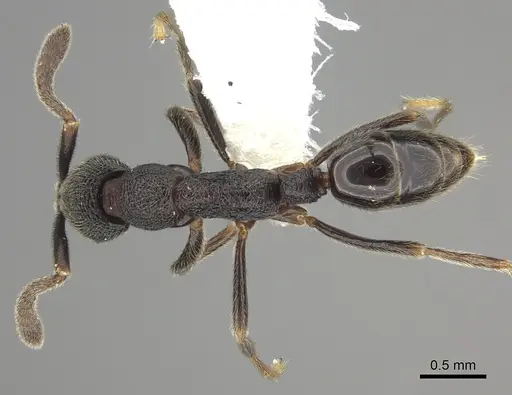
INBIOCRI001279787
View on AntWeb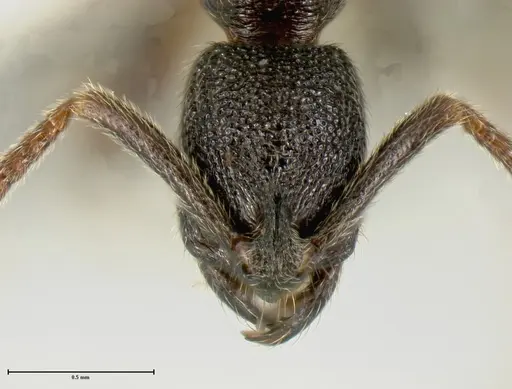
Literature
Loading...Loading products...