

Simopelta curvata
- Scientific Name
- Simopelta curvata
- Tribe
- Ponerini
- Subfamily
- Ponerinae
- Author
- Mayr, 1887
- Distribution
- Found in 1 countries
Simopelta curvata Overview
Simopelta curvata is an ant species of the genus Simopelta. It is primarily documented in 1 countries , including Brazil. Detailed taxonomic data and occurrence records can be further explored via authoritative databases such as AntWeb or the Global Biodiversity Information Facility (GBIF).
Simopelta curvata
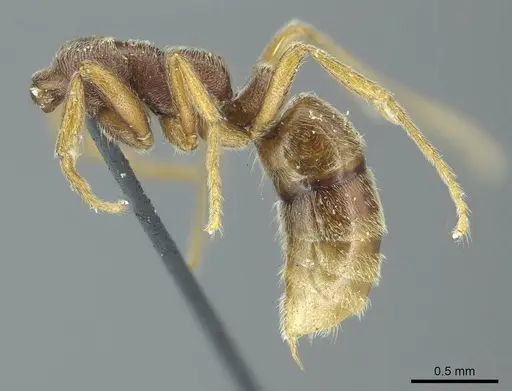
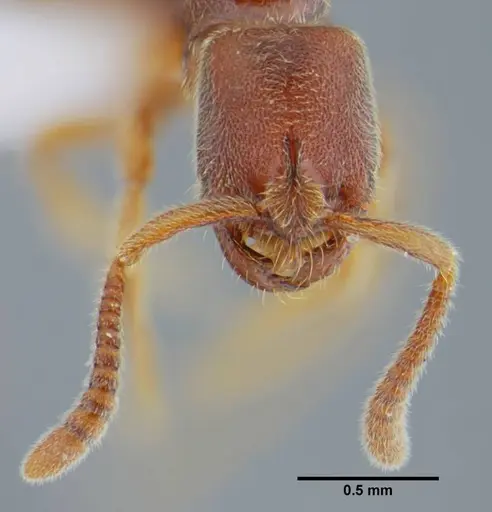
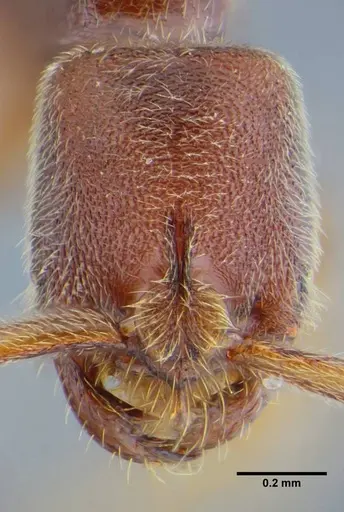
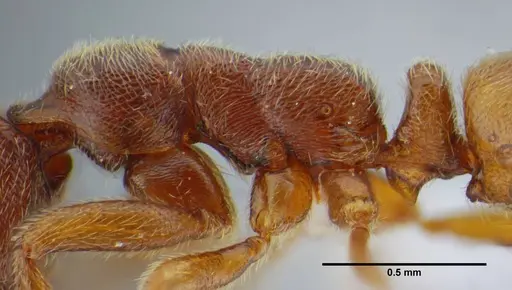
Simopelta curvata is a tiny predatory ant species native to southern Brazil, measuring just 3.5mm in total length [1]. Workers are a distinctive ferrugineous red color with four well-developed teeth on their mandibles, and they bear long erect hairs on their mandibles and the underside of their abdomen [1]. This species is nearly identical in appearance to the closely related Simopelta pergandei, but can be distinguished by its four-toothed mandibles (versus three in S. pergandei) and the narrow process on the front of its clypeus [2].
This is one of the least studied ant species in the hobby, with almost no biological data available. What we do know is that S. curvata is a subterranean species, researchers have only collected it using underground sampling methods in Santa Catarina, Brazil [3]. It lives in subtropical forest edges adjacent to pastureland [4]. As a Ponerinae ant, it has a functional stinger and is predatory in nature, though exact prey preferences are unknown.
Quick Summary
- Difficulty: Expert
- Origin & Habitat: Southern Brazil (Mato Grosso, Santa Catarina, São Paulo), subtropical forest edges and pasture adjacent areas [3][4][1]
- Colony Type: Unknown, only worker caste has been described, colony structure, queen presence, and reproductive biology are completely unstudied [1]
- Size & Growth:
- Queen: Unknown, only workers have been described, queen size not documented [1]
- Worker: 3.5mm total length [1]
- Colony: Unknown, no colony size data exists for this species [1]
- Growth: Unknown
- Development: Unknown, development has never been studied for this species (No data exists on founding, brood development, or colony growth. Estimates based on related Simopelta species suggest 2-3 months but this is highly uncertain.)
- Antkeeping:
- Temperature: Based on its subtropical Brazilian habitat, aim for 22-26°C. Provide a gentle temperature gradient so ants can self-regulate. Room temperature in most homes should work if within this range.
- Humidity: Subterranean species require high humidity, keep nest substrate consistently moist but not waterlogged. These ants live in forest floor environments in Brazil, so think damp soil conditions.
- Diapause: Unknown, no research on seasonal requirements. Southern Brazil experiences mild winters, so a slight cooldown period may be beneficial but is not well-understood.
- Nesting: As a subterranean species, they likely prefer enclosed nests with moist substrate. Test tubes with cotton-plugged water reservoirs or plaster nests work well. Provide deep substrate for tunneling.
- Behavior: Ponerinae ants are typically predatory and have functional stingers. This species is small but can deliver a sting if handled roughly. They are likely nocturnal or crepuscular foragers based on their small eye size [1]. Escape prevention is critical due to their tiny 3.5mm size, they can squeeze through remarkably small gaps. Expect secretive, ground-nesting behavior typical of subterranean ants.
- Common Issues: complete lack of biological data makes captive care highly speculative, tiny size means escapes are likely without fine mesh barriers, no confirmed diet, unknown what they accept in captivity, colony structure unknown, may be single-queen or multi-queen, cannot confirm diapause requirements, winter care is uncertain
Appearance and Identification
Simopelta curvata workers are tiny ants measuring just 3.5mm in total length [1]. They are a distinctive ferrugineous red color throughout their body. The most distinguishing feature is their four-toothed mandibles, which separates them from the similar S. pergandei (which has only three teeth). Their clypeus (the plate covering the front of the head) has a sharp pointed process in the middle. The head is slightly wider toward the front, with a nearly straight back edge. Eyes are very small, only 0.03mm in diameter, and positioned far back from the front of the head [1]. Long erect hairs (up to 0.15mm) are present on the mandibles and the underside of the gaster, while shorter hairs cover the rest of the body. The body surface is moderately shiny with fine punctures and faint striations.
Distribution and Habitat
This species is known only from southern Brazil, specifically the states of Mato Grosso, Santa Catarina, and São Paulo [1]. Researchers have collected specimens exclusively using subterranean sampling methods (TSBF), indicating this is a ground-nesting, subterranean species [3]. It has been found in the western region of Santa Catarina, particularly around São Miguel do Oeste and Chapecó. Available data shows it occurs in forest fragments adjacent to pastureland, with a very low frequency of occurrence (0.01 in forest-pasture edges) [4]. This suggests it prefers relatively undisturbed forest floor microhabitats.
What We Don't Know
This is one of the least studied ant species available in the antkeeping hobby. Literally nothing is known about: the queen caste (only workers have been described), male caste, colony structure and size, founding behavior, diet preferences, nuptial flight timing, development timeline, or overwintering requirements [1]. The female and male castes remain unknown to science. This makes keeping Simopelta curvata a true pioneer effort, you will essentially be learning alongside researchers. Any successful captive husbandry would represent novel scientific contribution. Approach this species as an exploratory project rather than a straightforward keeper.
Housing and Nesting
As a subterranean species collected only through underground sampling, Simopelta curvata needs enclosed nests with moist substrate. Test tubes with cotton-plugged water reservoirs work well for founding colonies. For established colonies, plaster nests or acrylic nests with deep soil chambers mimic their natural underground environment. The nest should be kept dark, these ants are likely light-sensitive given their subterranean lifestyle. Provide a foraging area with moist soil or sand substrate. Escape prevention is critical due to their tiny 3.5mm size, use fine mesh barriers and tight-fitting lids. [1][3]
Feeding and Diet
Diet is completely unconfirmed for this species. As a Ponerinae ant, it likely has typical predatory habits, Ponerinae ants are generally predators that hunt small invertebrates. However, specific prey preferences are unknown. Based on related Simopelta species and its tiny size, it probably accepts very small prey items like springtails, tiny mites, and small insect larvae. Sugar acceptance is uncertain, some Ponerinae will take honey or sugar water, while others are strictly predatory. Start with small live prey (springtails are a safe bet) and experiment with sugar sources cautiously. Do not rely on sugar as a primary food source until acceptance is confirmed.
Temperature and Seasonal Care
Based on its subtropical Brazilian habitat (Santa Catarina, São Paulo), aim for temperatures in the 22-26°C range. Southern Brazil experiences mild winters, so a slight temperature reduction during winter months may be appropriate but is not confirmed to be required. Provide a temperature gradient so the ants can choose their preferred zone. A heating cable on one side of the nest can help maintain warmth if your room temperature is below 22°C. Place the heating on top of the nest, not underneath, to avoid drying out the substrate. Monitor colony behavior, if they consistently avoid the heated area, reduce temperature. [1]
Defense and Handling
As a member of the Ponerinae subfamily, Simopelta curvata has a functional stinger. While tiny, they can deliver a sting if threatened or handled roughly. These are not aggressive ants by nature, they are secretive subterranean foragers. However, when disturbed or cornered, they may sting. Use caution when cleaning the enclosure or moving colonies. If stung, the pain is likely mild given the ant's tiny size, but individual reactions vary. Always use gentle handling techniques and never grab ants with bare hands.
Frequently Asked Questions
How big do Simopelta curvata colonies get?
Unknown, no colony size data exists for this species. Only workers have ever been described, the queen caste remains unknown to science [1]. Any information about maximum colony size would be pure speculation.
What do Simopelta curvata ants eat?
Diet is completely unconfirmed. As a Ponerinae ant, they are likely predatory on small invertebrates. Based on their tiny 3.5mm size, they probably accept springtails, tiny mites, and small insect larvae. Sugar acceptance is uncertain, some Ponerinae take honey while others are strictly predatory. Start with live micro-prey and test sugar sources cautiously [1].
Are Simopelta curvata good for beginners?
No, this is an expert-level species due to the complete lack of biological data. Nothing is known about their founding behavior, diet preferences, colony structure, or seasonal requirements. Keeping this species successfully would require significant trial and error. Beginners should choose species with well-documented care requirements instead.
Can I keep Simopelta curvata in a test tube?
Yes, test tubes work well for this species. As a subterranean ant, they prefer enclosed, humid environments. Use a test tube with a cotton-plugged water reservoir. Due to their tiny 3.5mm size, ensure the cotton is packed tightly and use fine mesh on any air holes to prevent escapes.
How long does it take for Simopelta curvata to develop from egg to worker?
Unknown, development has never been studied for this species. Based on related Simopelta species and Ponerinae development patterns, a rough estimate would be 6-10 weeks at optimal temperature, but this is highly speculative. The queen caste hasn't even been described, so captive breeding would be pioneering work [1].
Do Simopelta curvata need hibernation?
Unknown, no research exists on their seasonal requirements. Southern Brazil has mild winters, so a slight temperature reduction during winter may be beneficial but is not confirmed to be required. Observe your colony's behavior and adjust accordingly. Do not force a full diapause without evidence this species requires it.
Where is Simopelta curvata found in the wild?
Southern Brazil, specifically Mato Grosso, Santa Catarina, and São Paulo states. They are subterranean ants found in forest fragments adjacent to pastureland in the western Santa Catarina region [3][4][1].
Why is Simopelta curvata so hard to find in the wild?
They are subterranean, researchers have only collected them using underground sampling methods (TSBF), not by searching on the surface or in trees [3]. This makes them extremely difficult to find and study, which explains why so little is known about their biology.
Can I keep multiple Simopelta curvata queens together?
Unknown, the queen caste hasn't even been described, so we have no information about whether this species is single-queen (monogyne) or multi-queen (polygyne). Combining unrelated foundresses is not recommended without evidence they can coexist.
What temperature should I keep Simopelta curvata at?
Based on their subtropical Brazilian habitat, aim for 22-26°C. Provide a temperature gradient so ants can self-regulate. Most homes should be suitable if room temperature falls within this range. Use a heating cable on one side of the nest if needed, placed on top rather than underneath to avoid drying.
References

This caresheet is licensed under CC BY-SA 4.0 .
CASENT0915937
View on AntWeb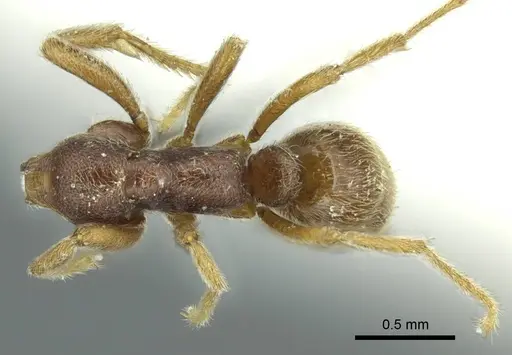
UFV-LABECOL-000383
View on AntWeb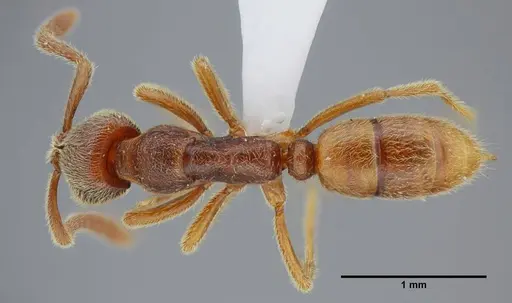
Literature
Loading...Loading products...