

Royidris diminuta
- Scientific Name
- Royidris diminuta
- Tribe
- Crematogastrini
- Subfamily
- Myrmicinae
- Author
- Bolton & Fisher, 2014
- Distribution
- Found in 1 countries
Royidris diminuta Overview
Royidris diminuta is an ant species of the genus Royidris. It is primarily documented in 1 countries , including Madagascar. Detailed taxonomic data and occurrence records can be further explored via authoritative databases such as AntWeb or the Global Biodiversity Information Facility (GBIF).
Royidris diminuta
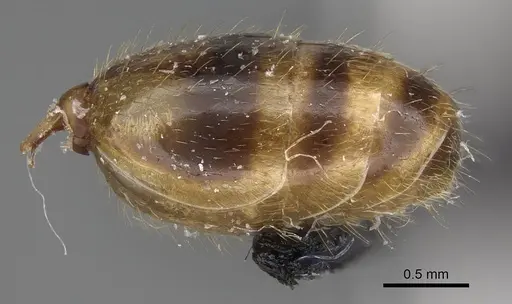
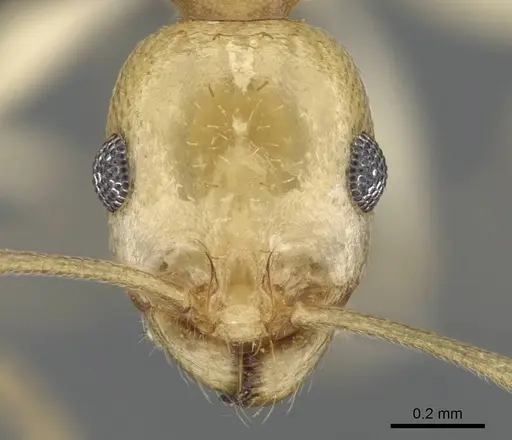
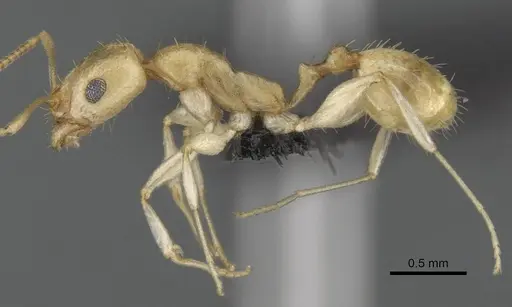
Royidris diminuta is an exceptionally tiny ant species endemic to Madagascar, with workers measuring just 2.8-3.0mm in length [1]. These ants belong to the Myrmicinae subfamily and are part of the notorthotenes species group. They were formally described in 2014 by Bolton and Fisher, who noted that while they closely resemble the larger Royidris notorthotenes in morphology, there is a distinct size gap between them with no intermediate forms observed [1]. The species was discovered nesting under stones in the spiny forest habitat of the Mahafaly Plateau in southern Madagascar [1]. Queens are dramatically larger at 6.8mm and are alate (winged) when virgin, making them easily distinguishable from the minute workers [1]. This is one of the smallest ant species in Madagascar and represents a fascinating example of island dwarfism in ants.
Quick Summary
- Difficulty: Medium
- Origin & Habitat: Endemic to the Mahafaly Plateau in southern Madagascar (Toliara Province). They nest under stones in spiny forest thickets, a unique dry forest ecosystem characterized by succulent plants and thorny vegetation [1].
- Colony Type: Colony structure is unconfirmed. Only single queens have been documented in collected specimens. Males have never been collected [1].
- Size & Growth:
- Queen: 6.8mm [1]
- Worker: 2.8-3.0mm [1]
- Colony: Unknown, no colony size data available
- Growth: Unknown, growth rate has not been studied
- Development: Unknown, development timeline has not been documented (Based on typical Myrmicinae patterns, expect 4-8 weeks at tropical temperatures, but this is an estimate)
- Antkeeping:
- Temperature: Based on their Madagascan spiny forest habitat, aim for warm conditions around 24-28°C. Madagascar is tropical, so they likely tolerate higher temperatures. Provide a temperature gradient if possible.
- Humidity: Spiny forest is a relatively dry habitat. Keep substrate moderately humid but allow drying periods between waterings. Avoid waterlogging. Provide a shallow water source.
- Diapause: Unknown, no data on overwintering requirements. As a tropical species, they likely do not require true diapause but may have reduced activity during cooler periods.
- Nesting: In nature they nest under stones in soil. In captivity, a small test tube setup or mini Y-tong nest works well. The tiny worker size (under 3mm) means chambers should be appropriately scaled. Provide soil or sand as nesting material.
- Behavior: Behavior is poorly documented. They are likely generalist foragers typical of Myrmicinae. Their tiny size means excellent escape prevention is essential, they can squeeze through standard mesh. Expect shy, non-aggressive temperament based on small size and lack of defensive morphology.
- Common Issues: tiny size makes escape prevention critical, standard mesh may not contain them, limited information means care is largely based on inference from related species, wild-caught colonies may have collection-related stress, slow growth typical of small colonies may frustrate beginners, humidity balance is tricky, they come from dry forest but nest under stones
Housing and Nest Setup
Because Royidris diminuta workers are among the smallest ants you can keep (under 3mm), housing requires careful consideration. A small test tube setup works well for founding colonies, use a standard test tube with a cotton ball separating the water reservoir from the nesting area. For established colonies, a mini Y-tong (acrylic) nest with appropriately sized chambers is ideal. The chambers should be small and tight-fitting, these tiny ants can escape through gaps that would hold back larger species. Escape prevention is critical: use fluon on rim edges and consider fine mesh (at least 0.5mm) on any ventilation holes. A small outworld area allows for feeding. Because they nest under stones in the wild, you could also use a naturalistic setup with a thin layer of soil and flat stones on top, but this makes observation more difficult. [1]
Feeding and Diet
The natural diet of Royidris diminuta has not been studied, but as Myrmicinae they are likely omnivorous. In captivity, offer small protein sources: tiny insects like fruit flies, small mealworms cut into pieces, or pinhead crickets. Sugar water or honey water should be available at all times, these ants need carbohydrates for energy. Given their minute size, prey items should be appropriately scaled. Live prey is preferred as they are likely active foragers. Feed small amounts every 2-3 days and remove uneaten food to prevent mold. The spiny forest habitat is relatively resource-scarce, so avoid overfeeding. A shallow water dish (like a bottle cap) provides drinking water.
Temperature and Humidity
As a Madagascan species from a tropical region, Royidris diminuta prefers warm conditions. Keep the nest area at 24-28°C. A small heating cable on one side of the nest can create a gentle gradient if your room temperature is cooler. They come from the spiny forest, which is a dry ecosystem, so humidity should be moderate rather than high. Keep the test tube water reservoir filled but not overflowing, the nesting area should stay relatively dry. Some moisture in the substrate is needed, but avoid constant dampness. A small water dish in the outworld helps with humidity control. Room temperature (around 22-25°C in many homes) is likely suitable for this species. [1]
Colony Development and Growth
The queen measures 6.8mm while workers are only 2.8-3.0mm, this is a dramatic size difference even by ant standards [1]. No worker dimorphism has been observed, meaning all workers are roughly the same tiny size [1]. Males have never been collected, so nuptial flight behavior is unknown [1]. Colony development has not been documented, but based on similar tiny Myrmicinae, expect a relatively slow initial growth. The first workers (nanitics) will be very small. Colonies likely remain small, probably under a few hundred workers at maximum based on the tiny worker size and limited data from related species. Patience is key with this species as growth will be slower than larger ants.
Handling and Observation
Observing Royidris diminuta requires good lighting and magnification, these ants are truly tiny. A magnifying glass or macro lens on your phone helps with photography. When moving colonies, use gentle techniques as these small ants can be injured more easily than larger species. They are not aggressive and likely have minimal defensive capabilities (no stingers in Myrmicinae, they may use chemical defense or bite). Handle gently and avoid disturbing the nest frequently. The queen is significantly larger than workers and should be handled with extra care during any colony transfers. Their small size makes them fascinating to observe under magnification but challenging to work with.
Frequently Asked Questions
How long does it take for Royidris diminuta to have first workers?
The exact development timeline is unknown. Based on typical Myrmicinae patterns at tropical temperatures (24-28°C), expect first workers in approximately 4-8 weeks after the queen lays eggs. This is an estimate, actual timing may vary.
What do Royidris diminuta ants eat?
They likely eat small insects and sugar sources. Offer tiny insects like fruit flies, small mealworm pieces, or pinhead crickets. Provide sugar water or honey water constantly. Remove uneaten prey to prevent mold.
Are Royidris diminuta good for beginners?
This species is challenging for beginners due to its tiny size and limited available care information. Escape prevention is critical and difficult. If you're experienced with very small ants (like Pheidole or Solenopsis), this could be a rewarding challenge. Otherwise, start with larger, better-documented species.
Do Royidris diminuta ants sting?
Royidris belongs to Myrmicinae, which includes many ants with stingers. However, the stinging capability of this specific genus is not documented. They are small and unlikely to pose any danger to keepers. Handle gently regardless.
How big do Royidris diminuta colonies get?
Colony size is unknown but likely remains small, probably under a few hundred workers given their minute worker size (2.8-3.0mm). They are one of the smallest ant species in Madagascar.
Can I keep multiple Royidris diminuta queens together?
This has not been documented. Only single queens have been found in the wild. Do not attempt to combine unrelated queens, this often leads to fighting. Keep one queen per colony.
Do Royidris diminuta need hibernation?
As a tropical Madagascar species, they likely do not require true hibernation. They may have reduced activity during cooler periods. Keep them warm year-round (24-28°C).
References

This caresheet is licensed under CC BY-SA 4.0 .
CASENT0002419
View on AntWeb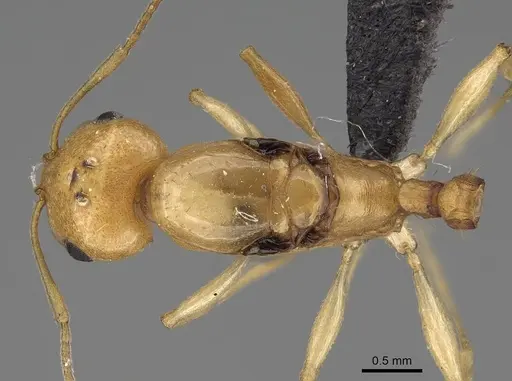
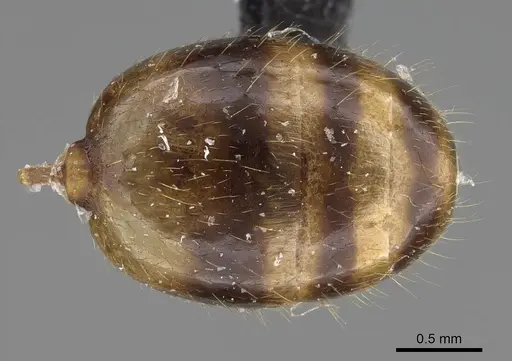
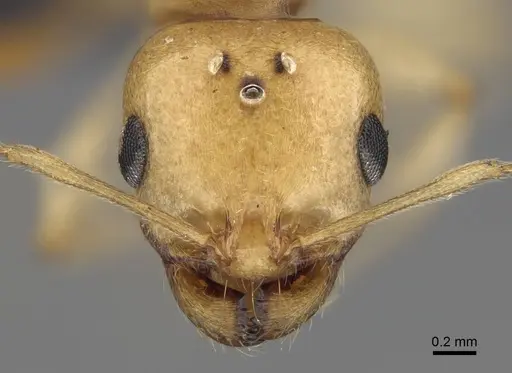
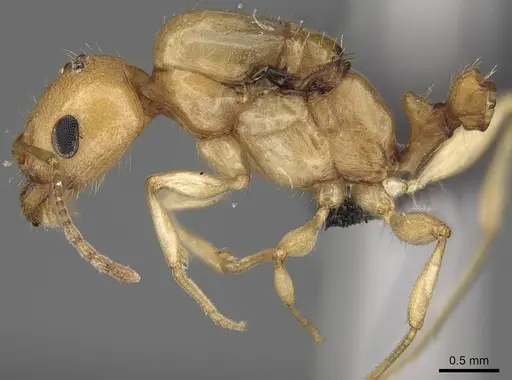
CASENT0002420
View on AntWeb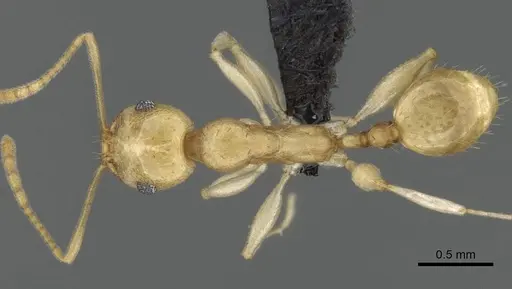
Literature
Loading...Loading products...