

Rogeria pellecta
- Scientific Name
- Rogeria pellecta
- Tribe
- Solenopsidini
- Subfamily
- Myrmicinae
- Author
- Kempf, 1963
- Distribution
- Found in 1 countries
Rogeria pellecta Overview
Rogeria pellecta is an ant species of the genus Rogeria. It is primarily documented in 1 countries , including Brazil. Detailed taxonomic data and occurrence records can be further explored via authoritative databases such as AntWeb or the Global Biodiversity Information Facility (GBIF).
Rogeria pellecta
Rogeria pellecta is a tiny ant species native to southern Brazil, specifically the Atlantic Forest regions of Santa Catarina State. Workers measure just 3.4-3.7mm in total length, making them one of the smaller ant species you'll encounter [1]. They have a yellowish-brown coloration with the gaster slightly darker, and their most distinctive features include a notched clypeus, prominent metapleural lobes, and a well-developed sting apparatus . This species belongs to the germaini-group within the genus Rogeria and is only known from leaf litter samples collected in the Nova Teutônia region [1]. The genus Rogeria contains small, cryptic ants that are rarely seen but play important roles in forest ecosystems as scavengers and omnivores in the leaf litter layer [2].
Quick Summary
- Difficulty: Hard
- Origin & Habitat: Native to the Atlantic Forest of southern Brazil, specifically Santa Catarina State. Found at elevations of 300-500m in leaf litter samples (berlesate) from forest floor habitats [1].
- Colony Type: Unknown, only worker specimens have been collected. No queens or colony structure has been documented in scientific literature .
- Size & Growth:
- Queen: Unknown, no queen specimens have been described
- Worker: 3.4-3.7mm total length, with WL (mesosoma length) of 0.90-0.99mm
- Colony: Unknown, colony size has not been studied
- Growth: Unknown, no development data available
- Development: Unknown, development has not been studied for this species (No data on egg-to-worker timeline exists. Related small Myrmicinae typically require 4-8 weeks at warm temperatures, but this is an estimate for similar species rather than confirmed for R. pellecta)
- Antkeeping:
- Temperature: Likely 20-26°C based on typical Atlantic Forest conditions, no specific data available. Start in the mid-range and observe colony activity [3]
- Humidity: Requires high humidity consistent with Brazilian Atlantic Forest leaf litter environments. Keep substrate consistently moist but not waterlogged [3]
- Diapause: Unknown, no studies on seasonal behavior. Southern Brazil has mild winters, so diapause may be minimal or absent [3]
- Nesting: Natural nesting occurs in leaf litter and rotting wood. In captivity, a Y-tong (AAC) nest or moist plaster nest with small chambers works well for their tiny size. They need tight passages scaled to their 3-4mm body size [3]
- Behavior: These are tiny, cryptic ants that live in leaf litter and forage primarily on the forest floor. Based on guild classification, they are litter omnivores and scavengers, meaning they likely eat small insects, honeydew, and organic debris [2]. Their small size makes them excellent escape artists, you must use fine mesh and tight-fitting barriers. They have a functional sting, though given their tiny size, the sting is unlikely to penetrate human skin effectively. They are not aggressive and will likely flee from disturbance rather than attack. Activity level is moderate, they forage slowly and carefully through their territory.
- Common Issues: tiny size means escapes are likely without fine mesh barriers, no colony or queen information makes captive breeding uncertain, very rare in the hobby, wild colonies are the only source, slow growth and small colony sizes typical of the genus, high humidity requirements can lead to mold if ventilation is poor
Natural History and Distribution
Rogeria pellecta is one of the rarest ant species in the hobby, known only from a handful of worker specimens collected in southern Brazil. The type locality is Nova Teutônia in Santa Catarina State, with additional specimens from nearby Ibicaré and Seara, all collected by the legendary ant collector Fritz Plaumann between 1958-1960 [1]. This species is part of the germaini-group, which is characterized by specific morphological features including the sting apparatus structure . Related species include Rogeria germaini, Rogeria lacertosa, and Rogeria sicaria, which occur in the same southern Brazil/Paraguay region . The species has also been recorded from Venezuela (Táchira State), suggesting a wider but patchy Neotropical distribution [4]. They inhabit the leaf litter layer of Atlantic Forest and likely other humid forest types, where they forage among decomposing material [1].
Identification and Morphology
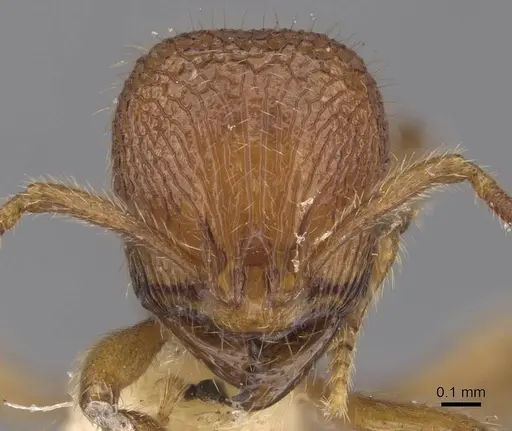
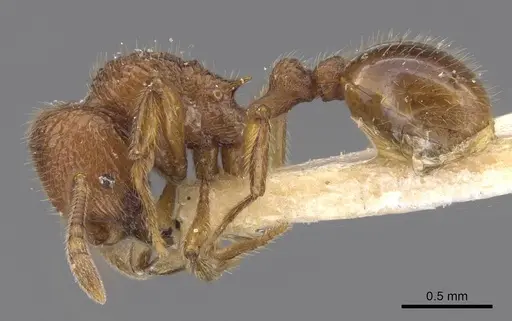
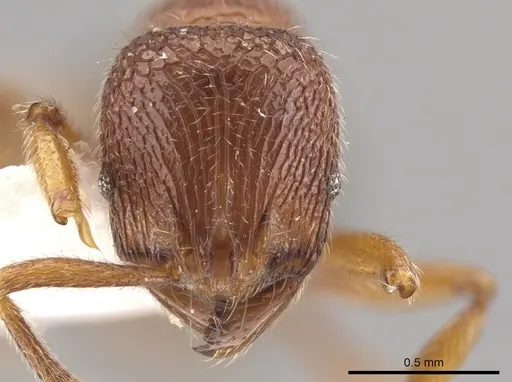
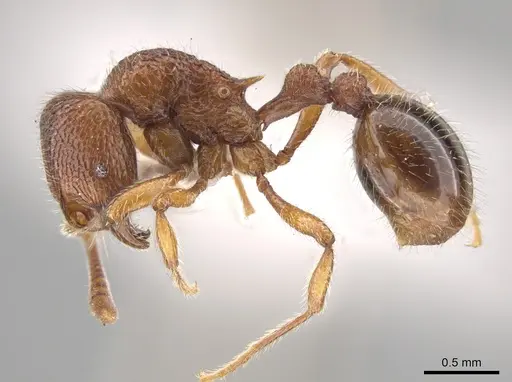
Workers of Rogeria pellecta are tiny at 3.4-3.7mm total length, with a mesosoma (WL) of 0.90-0.99mm . The head is slightly longer than wide (CI 0.87-0.88), with longitudinally rugose laterodorsa and a distinct median notch on the clypeus . Their eyes are small but present, with 16-21 facets. The mesosoma has coarse areolate to rugose-areolate sculpture on the promesonotum, and the metanotal groove is distinct . One of the most distinctive features is the well-developed sting apparatus, the sting and lancets are strong and acute, with the sting shaft having a dorsal flange . The petiolar node arises gradually from the peduncle, and the postpetiole is vestigially areolate. Body color is yellowish-brown, with the gaster slightly darker and legs often lighter and more yellowish . They lack erect hairs on the scapes but have erect and decumbent pilosity on the dorsa of the head, mesosoma, nodes, and gaster .
Housing and Nest Setup
Given their tiny size and leaf litter habitat, Rogeria pellecta requires careful housing setup. Use a nest with very small chambers and narrow passages, standard test tube setups may be too large, and Y-tong (AAC) nests with fine chambers or custom plaster nests work better [3]. The nest material should retain moisture well, as these ants come from humid forest floor environments. Provide a water reservoir but avoid flooding, a small test tube water reservoir with a cotton plug works well. Because they are only 3-4mm long, escape prevention is critical. Use fine mesh (at least 0.5mm or smaller) on any openings, and ensure all connections between the nest and outworld are sealed. The outworld should be simple and small, these tiny ants don't need much space. Add some leaf litter or small debris to the outworld to provide foraging enrichment.
Feeding and Diet
Based on guild classification as litter omnivores and scavengers, Rogeria pellecta likely accepts a varied diet including small insects, honeydew, and organic matter [2]. In captivity, you can offer tiny prey items like fruit flies, pinhead crickets, and small mealworms. They will likely accept sugar sources like honey water or sugar water, though given their tiny size, offer these in very small amounts in a shallow container to prevent drowning. Feed them small prey items 2-3 times per week, and remove any uneaten food promptly to prevent mold. Because they are so small, even a single fruit fly is a substantial meal. Monitor their feeding response, if they ignore certain foods, try alternatives. Avoid overfeeding, as small colonies can be overwhelmed by large prey items.
Temperature and Seasonal Care
No specific temperature data exists for Rogeria pellecta, but they likely prefer warm, humid conditions matching their Atlantic Forest origin [1]. Aim for temperatures in the 20-26°C range, this covers typical tropical to subtropical forest floor conditions. A slight temperature gradient allows the ants to choose their preferred zone. Avoid temperatures below 15°C or above 30°C. Southern Brazil experiences mild winters, so diapause may be minimal or unnecessary, but if you keep them in a temperate climate, a slight reduction in temperature during winter months (around 15-18°C for 2-3 months) may be appropriate. Monitor colony activity, if they become less active in winter, this suggests a rest period is beneficial. Maintain high humidity (70-80%) to match their leaf litter habitat.
Frequently Asked Questions
How long does it take for Rogeria pellecta to develop from egg to worker?
The egg-to-worker timeline is unknown, no scientific study has documented development for this species. Related small Myrmicinae typically take 4-8 weeks at warm temperatures (24-26°C), but this is an estimate rather than confirmed data for R. pellecta.
Can I keep Rogeria pellecta in a test tube setup?
Test tubes can work but may be too large for these tiny 3-4mm ants. A Y-tong (AAC) nest with small chambers or a moist plaster nest provides better scaling. If using test tubes, use small-diameter tubes with tight cotton plugs and ensure excellent escape prevention with fine mesh.
How big do Rogeria pellecta colonies get?
Colony size is unknown, no scientific study has documented maximum colony size. Based on similar litter-dwelling Myrmicinae, colonies likely reach dozens to a few hundred workers rather than large colonies.
Are Rogeria pellecta good for beginners?
No, this species is considered difficult and is not recommended for beginners. They are extremely rare in the hobby, with no queen or colony information available, and their tiny size requires specialized care and excellent escape prevention.
What do Rogeria pellecta eat?
Based on their guild classification as litter omnivores and scavengers, they likely eat small insects, honeydew, and organic debris [2]. In captivity, offer tiny prey like fruit flies, small mealworms, and sugar sources like honey water.
Do Rogeria pellecta need hibernation?
Diapause requirements are unknown. Southern Brazil has mild winters, so a true hibernation may not be necessary. If kept in temperate climates, a slight temperature reduction (15-18°C) for 2-3 months during winter may be appropriate.
Why are Rogeria pellecta so rare in the antkeeping hobby?
This species has only ever been collected a handful of times, all by Fritz Plaumann in the late 1950s [1]. No queens have ever been described, and the limited distribution in southern Brazil makes wild collection difficult. They remain one of the rarest species in scientific collections.
What temperature should I keep Rogeria pellecta at?
No specific data exists, but aim for 20-26°C based on their Atlantic Forest origin. Start around 24°C and observe colony behavior. Avoid temperatures below 15°C or above 30°C. A slight gradient allows ants to regulate their own temperature.
References

This caresheet is licensed under CC BY-SA 4.0 .
CASENT0913968
View on AntWeb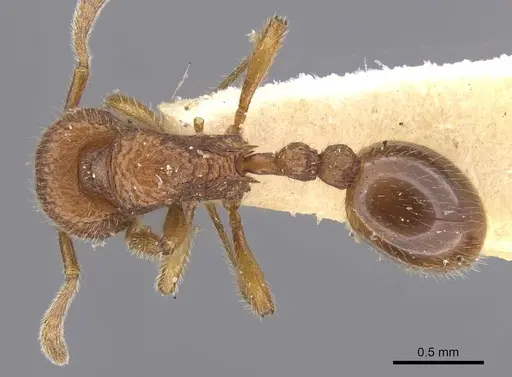
MZSP67220
View on AntWeb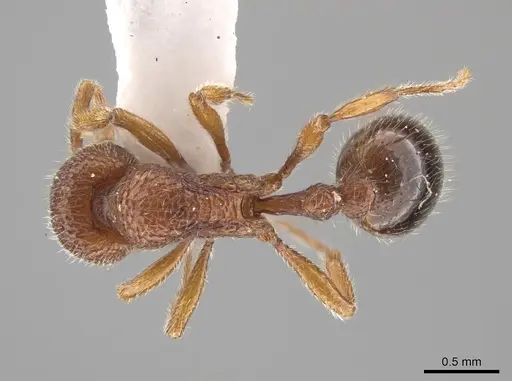
Literature
Loading...Loading products...