

Rhytidoponera mimica
- Scientific Name
- Rhytidoponera mimica
- Tribe
- Ectatommini
- Subfamily
- Ectatomminae
- Author
- Ward, 1984
- Distribution
- Found in 1 countries
Rhytidoponera mimica Overview
Rhytidoponera mimica is an ant species of the genus Rhytidoponera. It is primarily documented in 1 countries , including New Caledonia. Detailed taxonomic data and occurrence records can be further explored via authoritative databases such as AntWeb or the Global Biodiversity Information Facility (GBIF).
Rhytidoponera mimica
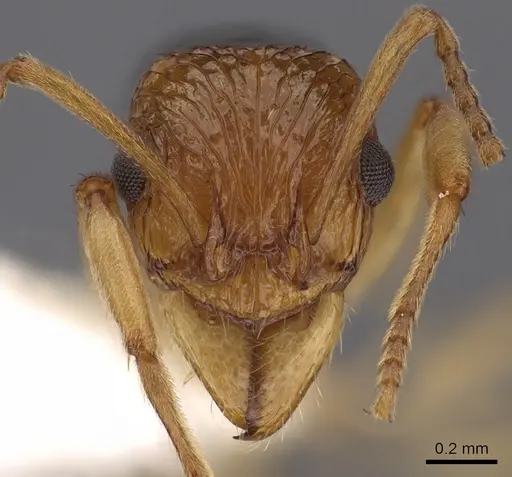
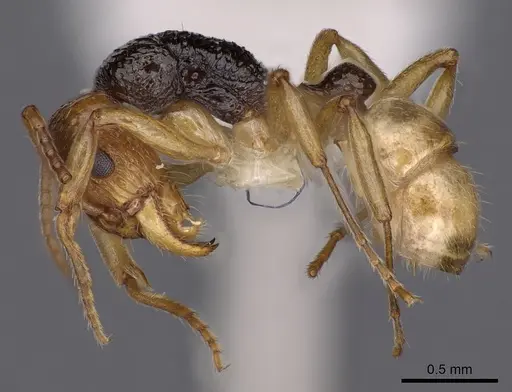
Rhytidoponera mimica is a small, striking ant native to New Caledonia, measuring just 0.86-0.92mm in head width [1]. Workers display a bold orange and black coloration that serves as a warning to predators, this is Mullerian mimicry, meaning they genuinely dangerous rather than pretending to be. The bright coloring is shared with Camponotus irritans croceomaculatus, another ant that forages in the same low vegetation, and both species can deliver a painful sting [1]. This is one of the most visually distinctive Rhytidoponera species found on the island, with a dark mesosoma contrasting sharply against a lighter head and pale legs.
This species remains poorly studied in captivity, with only workers currently described in scientific literature. They inhabit gully rainforest at around 300 meters elevation, nesting in vertical soil banks beside streams and foraging on low vegetation [1]. Their small size and potent sting make them an interesting but challenging species for experienced antkeepers.
Quick Summary
- Difficulty: Expert
- Origin & Habitat: New Caledonia, specifically Col d'Amoss at 300m elevation in gully rainforest, surrounded by niaouli (Melaleuca) scrub [1]. Workers foraged on low vegetation in the same habitat where Camponotus irritans croceomaculatus occurs, suggesting they prefer humid, shaded forest understory conditions.
- Colony Type: Unknown, only workers have been described. The colony structure (single-queen or multi-queen) has not been documented in scientific literature.
- Size & Growth:
- Queen: Unknown, queens have not been described [1]
- Worker: 0.86-0.92mm head width (HW), with body length around 5-6mm estimated from proportions [1]
- Colony: Unknown, no colony size data available
- Growth: Unknown, no development data exists for this species
- Development: Unknown, no direct observations of colony development exist (No published data on egg-to-worker development time. Related Rhytidoponera species suggest 6-10 weeks at tropical temperatures, but this is entirely speculative for R. mimica.)
- Antkeeping:
- Temperature: Aim for 24-28°C, these are tropical rainforest ants from New Caledonia. A gentle gradient allowing workers to self-regulate is ideal.
- Humidity: High humidity is essential, they naturally nest beside streams in gully rainforest. Keep substrate consistently moist but not waterlogged, with humidity around 70-80%.
- Diapause: Unlikely, New Caledonia has no true winter. Maintain warm conditions year-round.
- Nesting: Natural nesting occurs in vertical soil banks beside streams. In captivity, a naturalistic setup with moist soil or a well-humidified acrylic/plaster nest works well. They forage on vegetation, so include vertical space for climbing.
- Behavior: Workers are active foragers on low vegetation, meaning they will readily climb and explore vertical spaces. They possess a functional stinger and can deliver a painful sting, this is not a docile species. Their bright coloration is honest signaling of this defense. Escape prevention is critical due to their tiny size, they can squeeze through standard mesh. They are likely moderately aggressive when threatened and will defend their nest vigorously.
- Common Issues: tiny size makes escape likely without fine mesh barriers, no published care information means trial-and-error is required, high humidity needs can lead to mold if ventilation is poor, sting pain may cause stress to handlers, handle with caution, queen and colony structure unknown, founding may be challenging
Natural History and Distribution
Rhytidoponera mimica is endemic to New Caledonia, an island in the southwestern Pacific Ocean. The species was described by P.S. Ward in 1984 from specimens collected at Col d'Amoss, a location at approximately 300 meters elevation [1]. The type locality consists of gully rainforest, a humid, shaded forest environment, surrounded by niaouli (Melaleuca) scrubland. Two nests were discovered in vertical soil banks beside a stream, indicating this species prefers moist microhabitats near water sources [1]. Workers were observed foraging on low vegetation, typically within the first meter above ground, often in the same locations where Camponotus irritans croceomaculatus forages [1]. This shared foraging habitat and nearly identical coloration represents Mullerian mimicry, both species are genuinely dangerous (R. mimica can sting, and Camponotus species can bite and spray formic acid), so predators learn to avoid the orange-black color pattern after encountering either ant [1].
Identification and Appearance
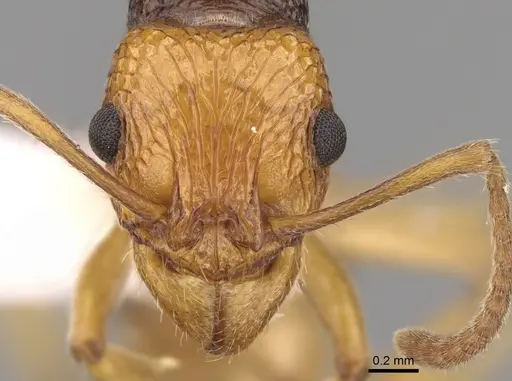
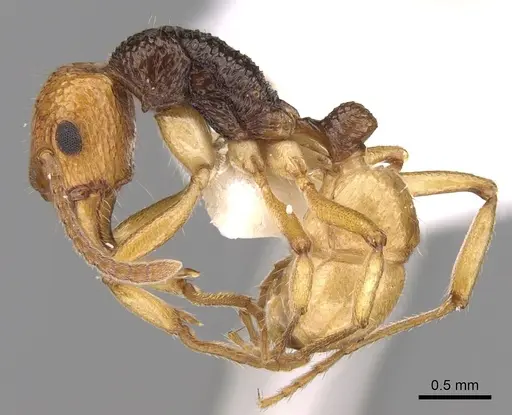
Workers of Rhytidoponera mimica are distinctive among New Caledonian Rhytidoponera species due to their striking coloration. The mesosoma (middle body section) is dark brown to black, while the head is a contrasting light ferrugineous brown. The gaster (abdomen), legs, and mandibles are a paler luteous brown, creating strong contrast with the dark mesosoma [1]. This bold pattern closely resembles Camponotus irritans croceomaculatus, making them appear nearly identical in the field. Workers measure approximately 0.86-0.92mm in head width, making them relatively small ants [1]. The species can be distinguished from relatives by the combination of small size, a relatively high and narrow petiolar node, and a slender spine-like subpetiolar process. The gaster has a shiny appearance with weak striolate sculpture [1].
Defense and Sting
Rhytidoponera mimica workers can inflict a painful sting, this is not a species to handle carelessly. The bright orange and black coloration is honest aposematic signaling, meaning it genuinely indicates danger to potential predators rather than being a bluff [1]. This is different from Batesian mimicry, where a harmless species copies the appearance of a dangerous one. In Mullerian mimicry, multiple dangerous species share the same warning colors, so predators only need to learn once to avoid all of them. When keeping this species, expect defensive behavior when the nest is disturbed. Workers will likely pursue and sting perceived threats. Always use caution during nest maintenance and avoid handling directly. The sting pain level is not documented, but related Rhytidoponera species are known for painful stings.
Housing and Nesting
In their natural habitat, R. mimica nests in vertical soil banks beside streams in gully rainforest [1]. For captive care, replicate these conditions with a naturalistic setup using moist soil or a well-humidified acrylic/plaster formicarium. The key requirements are high humidity (aim for 70-80%) and consistent moisture in the nesting area. Since workers forage on low vegetation in the wild, provide vertical climbing space in the outworld, they will explore upward rather than just across the ground. Escape prevention is critical due to their tiny size, standard mesh may not be sufficient. Use fine mesh barriers and ensure all connections are secure. A water test tube setup works for founding colonies, but transition to a naturalistic setup as the colony grows to accommodate their humidity needs.
Feeding and Diet
No specific dietary studies exist for R. mimica. As a Rhytidoponera species, they are likely generalist predators and scavengers, similar to other Ectatomminae ants. In the wild, they forage on low vegetation where they likely hunt small invertebrates and collect honeydew from aphids or scale insects. In captivity, offer a varied diet including small live prey (fruit flies, pinhead crickets, mealworms) and sugar sources (honey water, sugar water). Given their small size, prey items should be appropriately scaled. Observe feeding behavior to determine preferences, some colonies accept protein readily while others may be more selective. Remove uneaten prey after 24-48 hours to prevent mold.
Temperature and Humidity Requirements
As a tropical species from New Caledonia, R. mimica requires warm temperatures year-round. Aim for 24-28°C in the nesting area, with a slight gradient allowing workers to self-regulate if they prefer cooler conditions. New Caledonia has a tropical climate without true winter, so no diapause or hibernation period is needed. Maintain these temperatures consistently, avoid drafts and sudden temperature drops. Humidity is perhaps more critical than temperature for this species. Their natural habitat in gully rainforest is constantly humid, and they nest beside streams. Keep the nesting substrate consistently moist but not waterlogged. Allow some areas to dry slightly to give workers choice, but the majority should remain damp. Poor humidity leads to desiccation and colony loss. [1]
Frequently Asked Questions
How do I keep Rhytidoponera mimica ants?
This is an expert-level species due to limited available care information. Provide high humidity (70-80%), warm temperatures (24-28°C), and a naturalistic setup with moist soil. They nest in vertical soil banks beside streams in the wild, so replicate these conditions. Escape prevention is critical due to their tiny size, use fine mesh barriers. No published captive breeding information exists, so be prepared for a learning curve.
Does Rhytidoponera mimica have a queen?
Queens have not been described in scientific literature for this species, only workers are currently known [1]. This means we do not know the queen's size, appearance, or whether colonies are single-queen or multi-queen. Finding a mated queen for sale would be extremely difficult given how rarely this species is collected.
Do Rhytidoponera mimica ants sting?
Yes, workers can inflict a painful sting. This is not a species to handle casually. Their bright orange and black coloration is honest aposematic signaling, it genuinely warns predators of their ability to sting, rather than being a bluff. When disturbed, they will defend their nest vigorously [1].
What do Rhytidoponera mimica ants eat?
No specific dietary studies exist. Based on related species, offer small live prey (fruit flies, tiny crickets, mealworms) and sugar sources (honey water, sugar water). Scale prey to their tiny worker size, items should be no larger than they can handle. Remove uneaten food promptly to prevent mold in the humid conditions they require.
How big do Rhytidoponera mimica colonies get?
Unknown, no colony size data has been published. The workers are small (0.86-0.92mm head width), and only two natural nests have ever been documented [1]. Without more data, we cannot estimate maximum colony size. Expect small to moderate colony sizes based on the small worker size.
Where is Rhytidoponera mimica found?
This species is endemic to New Caledonia, an island in the southwestern Pacific. They have only been collected at Col d'Amoss at approximately 300 meters elevation in gully rainforest [1]. The habitat consists of humid, shaded forest surrounded by Melaleuca scrub, with nests found in vertical soil banks beside streams.
Can beginners keep Rhytidoponera mimica?
No, this species is not suitable for beginners. There is virtually no published captive care information, queens are not commercially available, and their small size combined with high humidity requirements makes them challenging. Additionally, their painful sting requires careful handling. This species is for experienced antkeepers who can handle uncertainty and provide specialized care.
Do Rhytidoponera mimica need hibernation?
No, New Caledonia has a tropical climate with no true winter. Maintain warm temperatures (24-28°C) year-round. There is no diapause requirement for this species.
Why is Rhytidoponera mimica orange and black?
Their striking coloration is Mullerian mimicry, they genuinely dangerous (they can sting) and share their warning colors with another dangerous ant species, Camponotus irritans croceomaculatus, that forages in the same areas [1]. Predators learn to avoid the orange-black pattern after encountering either ant, providing mutual protection for both species.
How long does it take for Rhytidoponera mimica to develop from egg to worker?
Unknown, no development data exists for this species. Related Rhytidoponera species in tropical environments typically develop in 6-10 weeks, but this is entirely speculative for R. mimica. Without any captive breeding records, we cannot provide reliable estimates.
What is the best nest type for Rhytidoponera mimica?
A naturalistic setup with moist soil in a vertical configuration best matches their natural nesting in vertical soil banks. Alternatively, a well-humidified acrylic or plaster nest with chambers that retain moisture works. The critical factor is maintaining high humidity (70-80%) without stagnation. Provide vertical climbing space in the outworld since they forage on low vegetation in the wild.
Is Rhytidoponera mimica aggressive?
They are defensive and will sting when threatened. Their bright coloration signals this danger honestly. They are not typically aggressive toward humans unless the nest is disturbed, but any perceived threat will trigger defensive behavior. Handle with caution and use proper protection during nest maintenance.
References

This caresheet is licensed under CC BY-SA 4.0 .
CASENT0281324
View on AntWeb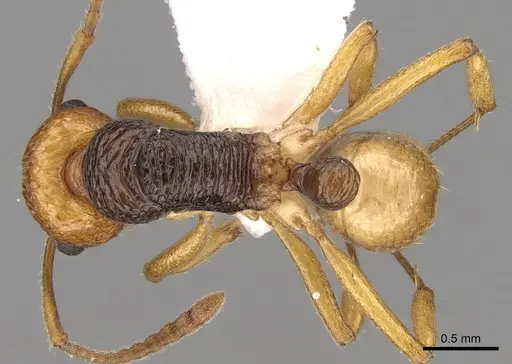
CASENT0900543
View on AntWeb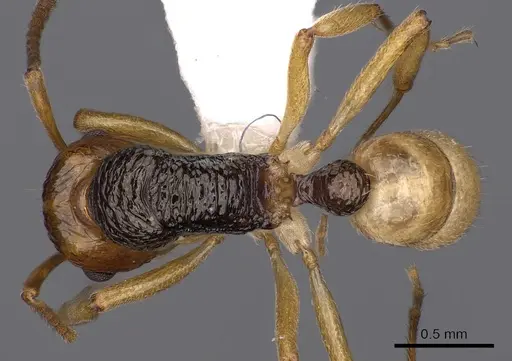
Literature
Loading...Loading products...