

Rhytidoponera aquila
- Scientific Name
- Rhytidoponera aquila
- Tribe
- Ectatommini
- Subfamily
- Ectatomminae
- Author
- Ward, 1984
- Distribution
- Found in 1 countries
Rhytidoponera aquila Overview
Rhytidoponera aquila is an ant species of the genus Rhytidoponera. It is primarily documented in 1 countries , including New Caledonia. Detailed taxonomic data and occurrence records can be further explored via authoritative databases such as AntWeb or the Global Biodiversity Information Facility (GBIF).
Rhytidoponera aquila
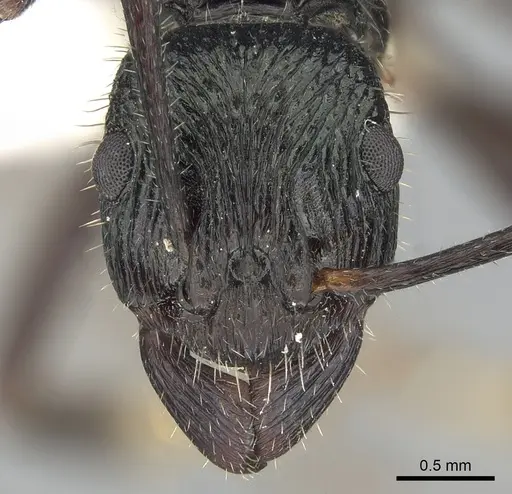
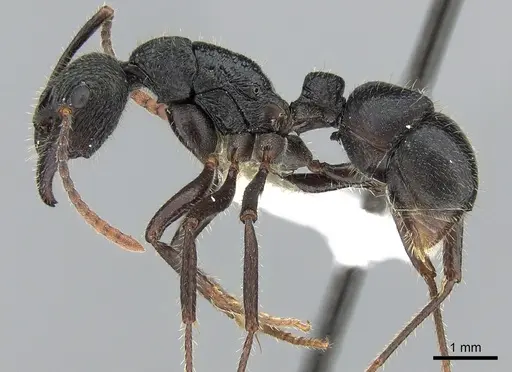
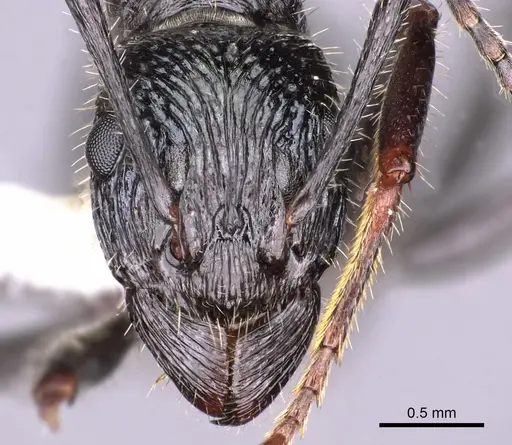
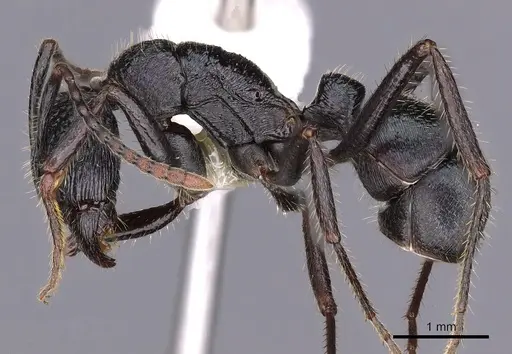
Rhytidoponera aquila is a small, striking ant native only to the rainforests of New Caledonia. Workers measure 1.45-1.58mm in head width and have a distinctive violaceous-black (purple-black) body with fine iridescence. The most notable feature is the dense striate sculpture that covers most of the head and mesosoma, giving these ants a uniquely textured appearance. Their legs, mandibles, and antennae are dark brown, becoming lighter toward the tips [1][2].
This species is known only from the rainforest-covered hills near Touho in southern New Caledonia, found at elevations between 270-400 meters. Workers forage on the ground and in low vegetation, while colonies nest directly in soil. The Touho population is genetically distinct, carrying a unique superoxide dismutase (SOD-1) allele not found in any other Rhytidoponera species in the region [2].
Quick Summary
- Difficulty: Medium
- Origin & Habitat: New Caledonia, rainforest hills near Touho at 270-400m elevation [2]
- Colony Type: Unconfirmed colony structure, only known from limited worker specimens
- Size & Growth:
- Queen: Undescribed, only workers known
- Worker: 1.45-1.58mm head width,2.50-2.68mm Weber's length [2]
- Colony: Unknown, no colony size data available
- Growth: Unknown
- Development: Unconfirmed, estimated 6-10 weeks based on related Ectatomminae species (No direct development data exists for this species. Estimates based on genus-level patterns for small tropical ants.)
- Antkeeping:
- Temperature: Aim for 22-26°C, keep warm and stable, typical of tropical rainforest species
- Humidity: Keep substrate consistently moist but not waterlogged, rainforest species prefers damp conditions
- Diapause: Unknown, tropical species from stable climate may not require formal hibernation
- Nesting: Nests directly in soil in nature, test tube setups work well for founding colonies, naturalistic setups with soil substrate for established colonies
- Behavior: Workers forage on the ground and in low vegetation. As an Ectatomminae ant, they have a functional stinger and can deliver a painful sting if handled roughly. Small size means escape prevention is important, use tight-fitting lids and appropriate barriers. Temperament is not well-documented but related species are typically moderately aggressive when disturbed.
- Common Issues: limited distribution means wild colonies are rarely available, this species is not commonly kept, no colony size data makes it hard to plan for growth expectations, founding behavior unconfirmed, queens may be claustral but this needs verification, tropical species may be sensitive to temperature drops, avoid cool conditions, escape prevention needed despite small size, workers can squeeze through small gaps
Natural History and Distribution
Rhytidoponera aquila is endemic to New Caledonia, found only in the rainforest-covered hills near the town of Touho in the southern part of the island. The species was described by P.S. Ward in 1984 based on workers collected at elevations between 270-400 meters. What makes this species particularly interesting is its genetic distinction, the Touho population carries a unique SOD-1 allele not found in any other member of the Rhytidoponera fulgens group [2].
Workers have been observed foraging both on the ground and in low vegetation, suggesting they are generalist foragers. Nests have been found directly in soil, with at least one confirmed nest-site record from the original collection data. The distinctive striate sculpture on the head and mesosoma separates this species from the related opaciventris complex found farther west in New Caledonia [2].
Identification and Appearance
Rhytidoponera aquila workers are small but distinctive. Head width ranges from 1.45-1.58mm, with a Weber's length of 2.50-2.68mm. The body is violaceous-black, a purple-black coloration with fine, scattered iridescence that gives the ants a slightly metallic sheen in good light.
The most diagnostic feature is the dense striate sculpture. The head and mesosoma are covered in fine longitudinal striation overlaying coarser rugae, while the abdomen (gaster) shows distinctive concentric transverse striation. The legs, mandibles, and antennae are dark brown, becoming lighter toward their tips. Eyes are slightly protruding, and the pronotum is relatively slender compared to related species [2].
Housing and Nesting
In the wild, this species nests directly in soil in rainforest environments. For captive care, standard test tube setups work well for founding colonies. Use a test tube with a water reservoir (filled about 1/3) and cotton plug, keeping the tube horizontal so the queen can retreat to the humid end as needed.
For established colonies, a naturalistic setup with a soil substrate works best, this mimics their natural nesting preference. Keep the substrate consistently moist but not waterlogged. A layer of leaf litter or debris on the surface provides foraging enrichment. Because they forage in low vegetation in the wild, adding some vertical structure or plants to the outworld can encourage natural foraging behavior.
Feeding and Diet
While specific feeding observations are not documented for R. aquila, related Rhytidoponera species are generalist predators and scavengers. Offer a varied diet including small live prey (fruit flies, pinhead crickets, small mealworms) and protein sources. Sugar water or honey can be offered occasionally, though many Ectatomminae prefer protein-rich foods.
Feed small prey items appropriate to worker size, these are not large ants, so prey should be appropriately sized. Remove uneaten prey after 24-48 hours to prevent mold. A constant supply of clean water is essential.
Temperature and Care
As a tropical rainforest species from New Caledonia, Rhytidoponera aquila prefers warm, stable conditions. Aim for temperatures in the 22-26°C range. Avoid temperatures below 20°C or sudden fluctuations.
Because they come from a stable tropical climate, formal hibernation is likely not required. However, slightly cooler temperatures during the dry season might be appropriate if the colony shows reduced activity. Monitor your colony, if workers become less active, reduce feeding and disturbance rather than attempting to force activity.
Defense and Handling
Rhytidoponera belongs to the subfamily Ectatomminae, which includes ants with functional stingers. While this species is small, workers can deliver a painful sting if threatened or crushed. Handle gently and avoid provoking defensive responses.
For their small size, use appropriate escape prevention, tight-fitting lids on test tubes, fine mesh on any openings. Despite being small, they are active foragers and will explore any gaps in their enclosure.
Frequently Asked Questions
How long does it take for Rhytidoponera aquila to produce first workers?
The egg-to-worker timeline is unconfirmed for this species. Based on related Ectatomminae patterns and their small size, expect approximately 6-10 weeks from egg to first nanitic worker at optimal temperature (around 24°C). Growth may be slower if temperatures are suboptimal.
Can I keep multiple Rhytidoponera aquila queens together?
Colony structure is unconfirmed for this species, only workers have been documented, and queen caste has not been described. Combining unrelated queens is not recommended since we don't know their founding behavior. If you obtain a dealate queen, house her alone until workers emerge.
Do Rhytidoponera aquila ants sting?
Yes, as an Ectatomminae ant, they have a functional stinger and can deliver a painful sting. However, they are small and typically not aggressive unless directly threatened. Handle gently and avoid crushing workers.
What do Rhytidoponera aquila ants eat?
While not directly studied, related Rhytidoponera species are generalist predators and scavengers. Feed small live prey (fruit flies, small crickets, mealworms) and offer protein sources. Sugar water or honey can be accepted occasionally. Remove uneaten prey after 24-48 hours.
How big do Rhytidoponera aquila colonies get?
Colony size is unknown, no mature colony data exists for this species. Given their small worker size (1.45-1.58mm) and limited range, colonies are probably modest in size, likely under a few hundred workers at maturity.
Are Rhytidoponera aquila good for beginners?
This species is rated Medium difficulty. While not extremely demanding, the lack of documented care information makes it more challenging than established species. Limited availability from wild colonies is also a factor. Experienced antkeepers comfortable with research-based care will have better success.
Do Rhytidoponera aquila need hibernation?
Hibernation requirements are unknown. As a tropical species from stable New Caledonian rainforests, they likely do not require formal diapause. Slightly cooler conditions during natural seasonal changes may be appropriate, but avoid cold temperatures below 18°C.
Why are my Rhytidoponera aquila dying?
Common causes include: temperature stress (too cold or fluctuating), improper humidity (too dry or waterlogged), poor escape prevention leading to colony loss, and unsuitable prey size. Also ensure the queen is healthy and fed, founding colonies are vulnerable. Review each parameter and adjust gradually.
Where is Rhytidoponera aquila found in the wild?
This species is endemic to New Caledonia, found only in the rainforest hills near Touho at elevations of 270-400 meters. It is one of the most restricted ant species in the region, known only from this small area [2][1].
References

This caresheet is licensed under CC BY-SA 4.0 .
CASENT0281307
View on AntWeb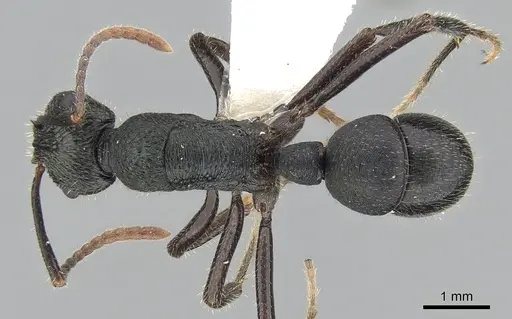
CASENT0900535
View on AntWeb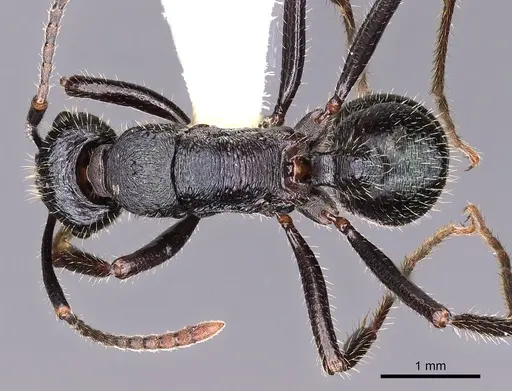
Literature
Loading...Loading products...