

Pseudomyrmex triplarinus
- Scientific Name
- Pseudomyrmex triplarinus
- Tribe
- Pseudomyrmecini
- Subfamily
- Pseudomyrmecinae
- Author
- Weddell, 1850
- Distribution
- Found in 8 countries
Pseudomyrmex triplarinus Overview
Pseudomyrmex triplarinus is an ant species of the genus Pseudomyrmex. It is primarily documented in 8 countries , including Bolivia, Plurinational State of, Brazil. Detailed taxonomic data and occurrence records can be further explored via authoritative databases such as AntWeb or the Global Biodiversity Information Facility (GBIF).
Pseudomyrmex triplarinus
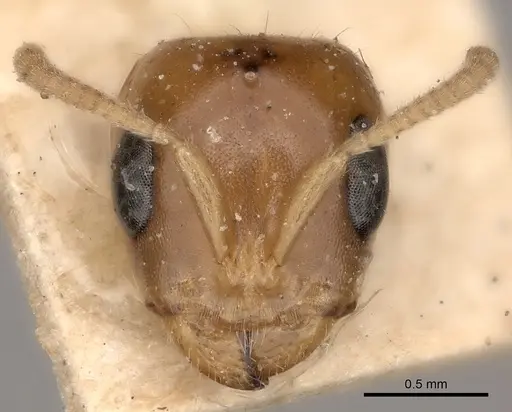
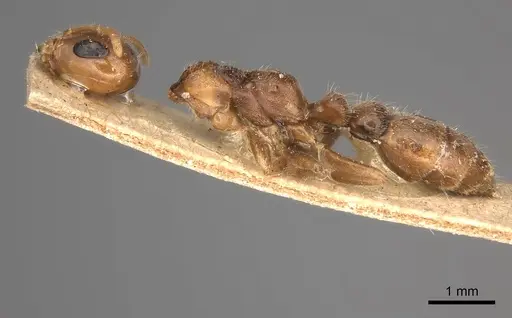
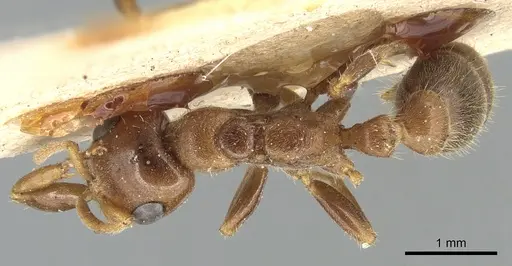
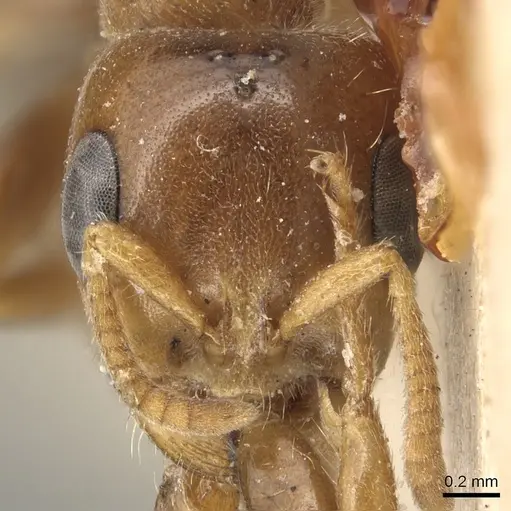
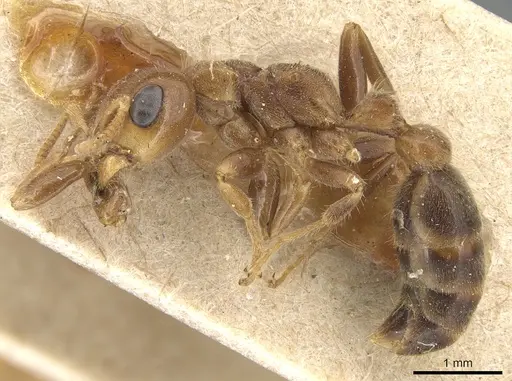
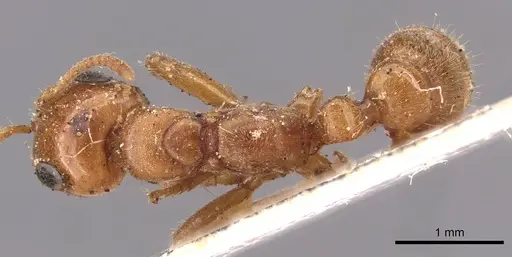
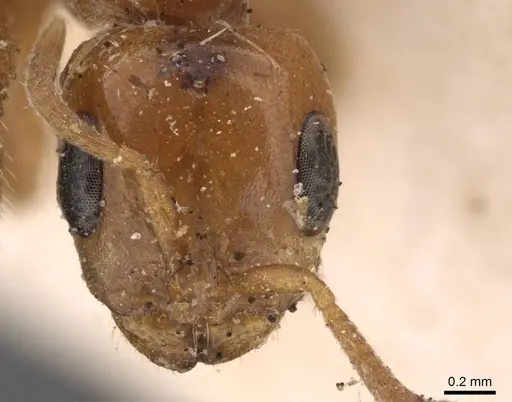
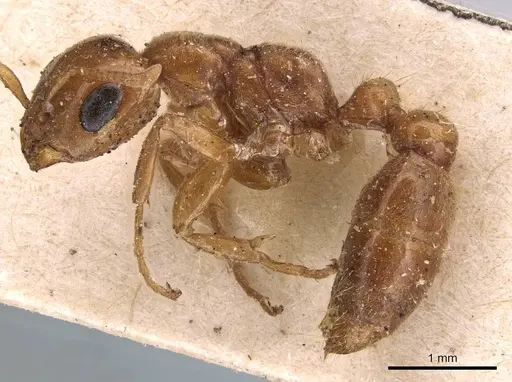
Pseudomyrmex triplarinus is a relatively large ant species native to the Neotropics, with workers measuring 1.00-1.41mm in head width and 0.82-1.23mm in hind tibia length [1]. Workers have a broad head covered with fine punctures, relatively long legs, and abundant standing hairs on the mesosoma and tibiae. Body color ranges from light yellow-brown to dark brown, with the head typically concolorous with or only slightly darker than the mesosoma [1]. This species is an obligate plant-ant that lives exclusively inside Triplaris trees (Polygonaceae), making its home in specialized cavities called domatia within the stems and branches [2][3].
What makes P. triplarinus particularly notable is its fierce defensive behavior. Workers readily attack and sting anything that contacts their host tree, clearing vegetation from the base of the tree and patrolling actively, especially in late afternoon and early evening hours [1][4]. Their venom contains potent anti-inflammatory compounds called myrmexins and causes intense, long-lasting pain [5]. Unlike many ants, these do not leave their tree to hunt, they feed entirely within the domatia on coccids they tend, honeydew from those coccids, and nematodes in the tree internodes [4].
Quick Summary
- Difficulty: Expert
- Origin & Habitat: Neotropical region including Argentina, Bolivia, Brazil, Colombia, Ecuador, and Peru. This species is an obligate symbiont of Triplaris trees (Polygonaceae), living inside domatia (specialized cavities) within the stems and branches of its host plant [1][6]. Found in tropical forests across the Amazon basin to southern Colombia and the pantanal of southwestern Brazil [1].
- Colony Type: Likely monogyne (single queen) based on typical Pseudomyrmex patterns. Colonies inhabit a single host tree throughout their lifespan with physical contact maintained with that individual plant [2].
- Colony: Monogyne
- Founding: Claustral
- Size & Growth:
- Queen: 1.46-1.60mm head width,1.19-1.41mm hind tibia length [1]
- Worker: 1.00-1.41mm head width,0.82-1.23mm hind tibia length [1]
- Colony: Maximum colony size approximately 10,000 workers (log10 = 4) based on typical Pseudomyrmecinae patterns [7]
- Growth: Moderate, estimated 6-10 weeks from egg to first worker based on genus-level data
- Development: 6-10 weeks (estimated based on typical Pseudomyrmex development) (Development timeline not directly studied for this species. Estimates based on genus-level data for tropical Pseudomyrmex species.)
- Antkeeping:
- Temperature: Keep at 24-28°C, these are tropical ants from rainforest habitats [4]. Use a heating cable on one side of the nest to create a gentle gradient.
- Humidity: High humidity required, think humid tropical forest. Keep the nest substrate consistently moist but not waterlogged. Mist occasionally and provide a water tube.
- Diapause: No, as a tropical species, they do not require hibernation. Maintain warm conditions year-round.
- Nesting: This is the critical challenge, P. triplarinus is an obligate plant-dwelling ant that requires access to domatia or hollow plant stems. Standard test tubes and formicaria are NOT suitable. A naturalistic setup with hollow bamboo, artificial domatia, or a custom-built plant-stem mimic is required. They will not thrive in conventional nests.
- Behavior: Extremely aggressive and defensive. Workers will attack and sting anything that contacts their host tree or approaches the nest [1][4]. They maintain continuous patrols, especially in late afternoon and early evening, and will actively defend against intruders including leaf-cutter ants [4]. Escape risk is moderate, workers are relatively large (over 1mm) but they rarely leave the nest structure. The sting is potent and painful, causing intense pain lasting approximately 8 hours with moderate edema [5]. These ants do not forage in the open, they remain within their host plant structure.
- Common Issues: Sting inflicts intense, long-lasting pain, these ants should be handled with extreme caution and proper protective equipment, Nesting is extremely challenging, they require domatia or hollow plant stems, not standard formicaria, Cannot be kept in conventional test tubes or acrylic nests, they need naturalistic plant-based housing, Tropical temperature requirements must be maintained year-round without cooling periods, Colonies may be difficult to establish from wild-caught queens due to their specialized host-plant dependency
Housing and Nesting Requirements
This is the most critical aspect of keeping Pseudomyrmex triplarinus. Unlike most ant species that can be housed in test tubes or acrylic formicaria, P. triplarinus is an obligate plant-dwelling ant that requires access to hollow plant structures or artificial domatia [2][3]. In the wild, they inhabit cavities inside Triplaris tree stems and branches, with entrances being perpendicular slits located about 120° around the stem from the base of the leaf above [8].
For captive housing, you will need to create a naturalistic setup. Options include: hollow bamboo sections, custom-made acrylic or plaster nests with narrow chambers mimicking stem interiors, or a live Triplaris plant (though this is impractical for most keepers). The nest chambers should be dark and enclosed, with multiple entrance slits. Because they do not leave the tree to forage [4], all food must be provided within or directly adjacent to the nest structure. This species is NOT suitable for beginners precisely because of these specialized housing requirements.
Feeding and Diet
In the wild, P. triplarinus does not leave its host tree to hunt or forage externally [4]. Instead, the colony feeds entirely within the domatia on three primary food sources: coccids (scale insects) that co-inhabit the tree cavities, honeydew produced by those coccids, and nematodes that feed on ant refuse in the tree internodes [4]. The ants actively tend and protect the coccids, even transporting them to safe locations if the tree is damaged or attacked [4].
In captivity, you cannot replicate their natural diet exactly. Offer sugar water or honey water in cotton wicks placed near the nest entrances. You may also attempt to establish a small coccid colony within the setup, though this is complex. Protein should be offered sparingly, small pieces of insects can be placed near nest entrances, but expect limited acceptance since they do not naturally hunt outside their tree. Monitor closely and remove uneaten food to prevent mold.
Temperature and Seasonal Care
As a Neotropical species from tropical forests, P. triplarinus requires warm, stable temperatures year-round. Maintain the nest area at 24-28°C, with a slight gradient allowing workers to regulate their body temperature [4]. A heating cable placed on one side of the nest (on top of the nest, not underneath, to avoid drying) can provide this warmth.
Unlike temperate ant species, these ants do not require hibernation or diapause. They are active year-round in their tropical habitat. However, they do show reduced activity during rainy periods [4], so you might reduce misting frequency during 'rainy season' simulations. Keep humidity high, these ants evolved in the humid understory of tropical forests. Avoid temperature drops below 22°C and ensure humidity remains consistently elevated.
Behavior and Defense
Pseudomyrmex triplarinus is among the most aggressive ant species kept in captivity. Workers readily attack and sting anything that contacts their host tree or approaches the nest [1][4]. They maintain active patrols, particularly during late afternoon and early evening hours [4], and will aggressively defend against intruders including leaf-cutter ants that come too close to the host tree [4].
The sting is notably potent. Their venom contains 12 proteins with molecular weights between 100,000 and 4,200 Daltons, exhibiting intense phospholipase activity [5]. A sting causes instantaneous and intense pain lasting approximately eight hours, with moderate edema at sting sites [5]. Unlike some other ants (such as Solenopsis invicta), there is no significant pustule formation or surrounding inflammation [5]. The venom also contains myrmexins, six proteins with anti-inflammatory properties that actually inhibit edema [5][9].
When working with this species, always use proper protective equipment including gloves and eye protection. Never open the nest without preparation, and consider whether you need to work with this species at all given the sting risk.
Colony Establishment
Establishing a P. triplarinus colony in captivity presents significant challenges. Queens are obligate symbionts of Triplaris trees, and their founding behavior likely depends on locating appropriate host plant structures. In the wild, colonies show long-term physical contact with a single host plant individual throughout their lifespan [2].
If you obtain a founding queen, she will need access to suitable hollow structures immediately. A claustral queen (one who seals herself in and lives off stored fat reserves) will seal herself into a chamber and raise the first workers alone. However, without access to domatia-like structures, success is unlikely. Wild-caught colonies may contain coccids that are essential for their nutrition, these should be maintained if possible [4].
Given the extreme difficulty of replicating their natural habitat, P. triplarinus is not recommended for most antkeepers. This species is best appreciated through observation in its natural habitat or by expert myrmecologists with the resources to create proper naturalistic setups.
Frequently Asked Questions
Can I keep Pseudomyrmex triplarinus in a test tube?
No. Pseudomyrmex triplarinus is an obligate plant-dwelling ant that requires access to hollow plant stems or artificial domatia. Standard test tubes and formicaria are completely unsuitable. You will need a naturalistic setup with hollow bamboo, custom-built stem mimics, or similar structures that replicate their natural Triplaris tree cavities.
How long does it take for the first workers to emerge?
Based on typical Pseudomyrmex development, expect approximately 6-10 weeks from egg to first worker at optimal tropical temperatures (24-28°C). This is an estimate as the specific development timeline has not been directly studied for this species.
Do Pseudomyrmex triplarinus ants sting?
Yes, and the sting is extremely painful. Workers will readily attack and sting anything that contacts their host tree. The venom causes intense pain lasting approximately 8 hours with moderate edema. Unlike fire ant stings, there are no pustules or significant surrounding inflammation. These ants should be handled with extreme caution.
Are Pseudomyrmex triplarinus good for beginners?
No. This species is rated Expert difficulty due to several factors: they require specialized domatia-based housing that cannot be replicated with standard formicaria, they have extremely potent stings that cause intense long-lasting pain, and they have unique dietary requirements tied to coccid-tending. This species is not recommended for anyone without significant antkeeping experience and proper protective equipment.
What do Pseudomyrmex triplarinus eat?
In the wild, they feed entirely within their host tree on coccids they tend, honeydew from those coccids, and nematodes in tree internodes. They do not leave the tree to forage. In captivity, offer sugar water or honey water. You might attempt to maintain a coccid colony within the setup. Protein acceptance is likely limited.
Do Pseudomyrmex triplarinus need hibernation?
No. As a tropical species from Neotropical forests, they do not require hibernation or diapause. Maintain warm, stable temperatures year-round (24-28°C). They may reduce activity during simulated rainy periods.
How big do Pseudomyrmex triplarinus colonies get?
Based on typical Pseudomyrmecinae patterns, colonies can reach approximately 10,000 workers [7]. However, this species is obligately tied to a single host tree, so colony size may be limited by the available domatia space within the Triplaris tree.
Why are my Pseudomyrmex triplarinus dying?
The most likely cause is unsuitable housing. Without access to hollow plant structures or domatia-like chambers, colonies will fail to thrive. Other common issues include: temperatures below 22°C, low humidity, and stress from improper handling. Also ensure you are not offering inappropriate food, they do not forage externally and may not accept standard ant foods.
Can I keep multiple queens together?
This is not recommended and likely unnecessary. Based on typical Pseudomyrmex patterns, this species forms single-queen colonies. Additionally, their specialized host-plant dependency means multiple queens would require multiple suitable host structures, which is impractical in captivity.
When will Pseudomyrmex triplarinus alates (reproductives) appear?
The timing of nuptial flights has not been documented for this species. As a tropical species, reproductives likely emerge during the warm season. However, establishing a colony to reproductive maturity in captivity is extremely challenging given their specialized housing requirements.
References

This caresheet is licensed under CC BY-SA 4.0 .
Literature
Loading...Loading products...