

Pseudomyrmex ereptor
- Scientific Name
- Pseudomyrmex ereptor
- Tribe
- Pseudomyrmecini
- Subfamily
- Pseudomyrmecinae
- Author
- Ward & Branstetter, 2022
- Distribution
- Found in 0 countries
Pseudomyrmex ereptor Overview
Pseudomyrmex ereptor is an ant species of the genus Pseudomyrmex. It is primarily documented in 0 countries . Detailed taxonomic data and occurrence records can be further explored via authoritative databases such as AntWeb or the Global Biodiversity Information Facility (GBIF).
Pseudomyrmex ereptor
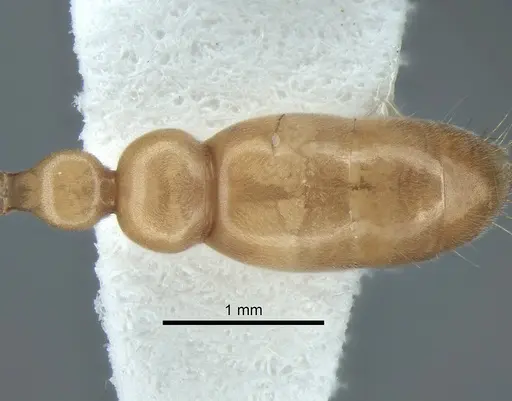
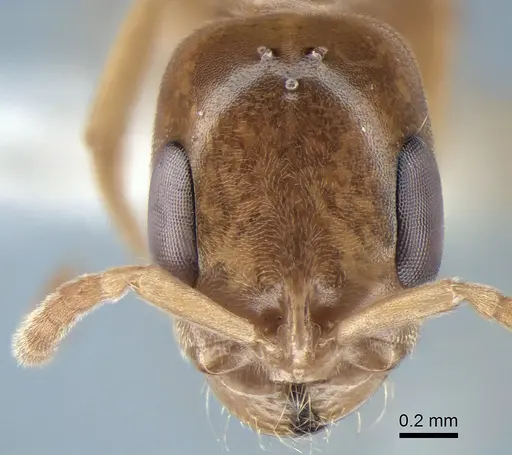
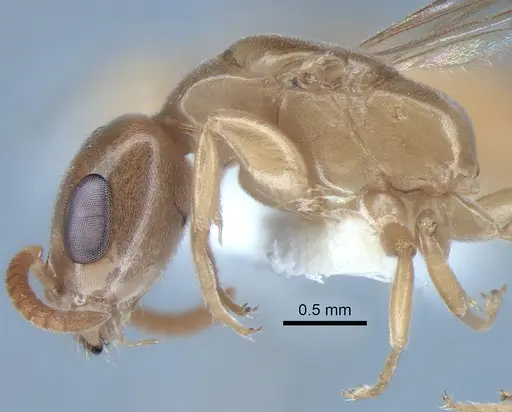
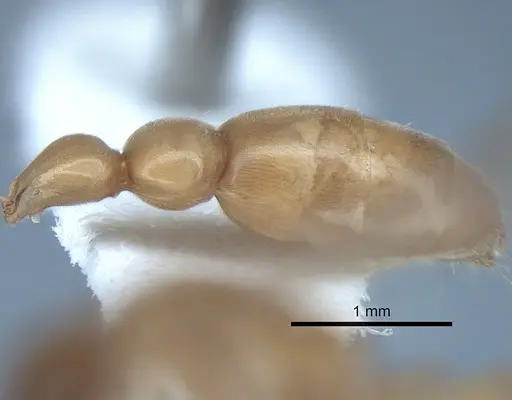
Pseudomyrmex ereptor is an extremely rare social parasite known from a single specimen, an alate queen collected in Veracruz, Mexico. This tiny ant measures just 1.25mm in head length and 0.76mm in leg length, making it one of the smallest Pseudomyrmex species known [1]. Unlike most ants, P. ereptor is workerless, it has no worker caste and cannot establish its own colony. Instead, it lives as an inquiline parasite within nests of its host species, Pseudomyrmex elongatulus, relying entirely on host workers for survival [1]. The species was only discovered in 2022 through genetic analysis of a specimen that had been sitting in a museum collection since 1985. The queen has distinctive morphological features including smooth, shiny mandibles (unlike the striated mandibles of its host) and an unusually broad, ovorectangular postpetiole [1]. This species represents a fascinating example of social parasitism in ants, but its extreme rarity and parasitic lifestyle make it completely unsuitable for antkeeping.
Quick Summary
- Difficulty: Expert
- Origin & Habitat: Veracruz, Mexico (Los Tuxtlas,10 km NNW Sontecomapan) at 500m elevation in tropical rainforest [1]. The single known specimen was collected from a dead twig attached to a liana, which contained a nest of the host species P. elongatulus.
- Colony Type: Workerless inquiline parasite, colonies consist only of reproductive queens that live within host colonies. No workers of their own are produced. This is an obligate social parasite that cannot survive without a host colony.
- Queen: Socially parasitic
- Size & Growth:
- Queen: 1.25mm head length,0.76mm leg length [1]
- Worker: Workerless species, no workers produced
- Colony: Unknown, only known from a single queen specimen
- Growth: Unknown
- Development: Not applicable, this is a workerless species that produces no workers of its own (As an inquiline parasite, this species relies entirely on host workers to raise its brood. No worker development occurs in the parasite colony.)
- Antkeeping:
- Temperature: Unknown, no captive specimens have ever been kept. Based on its Mexican rainforest origin, likely requires warm, humid conditions similar to other lowland tropical ants (25-28°C).
- Humidity: Unknown, requires high humidity consistent with tropical rainforest habitat
- Diapause: Unknown, no data available
- Nesting: This species cannot be kept in captivity. As an obligate inquiline parasite, it requires a living host colony (Pseudomyrmex elongatulus) to survive. There are no established captive husbandry methods for this species.
- Behavior: This is a social parasite that invades and lives within colonies of Pseudomyrmex elongatulus. The queen relies entirely on host workers for food and brood care. Unlike some social parasites that kill the host queen, inquiline parasites like P. ereptor typically coexist with the host colony, laying their own eggs that are raised by host workers. This species has no defensive workers and cannot forage for itself.
- Common Issues: This species cannot be kept in captivity, it is an obligate social parasite requiring a host colony that does not exist in antkeeping, Only one specimen has ever been found, making this one of the rarest ant species in the world, No workers are produced, the species has no worker caste and cannot function independently, Even if a host colony could be obtained, combining parasite queens with hosts has never been documented or attempted, The species has never been observed in captivity and no care guidelines exist
Why This Species Cannot Be Kept
Pseudomyrmex ereptor is absolutely not suitable for antkeeping under any circumstances. This species is an obligate social parasite, specifically a workerless inquiline that can only survive within colonies of its host species, Pseudomyrmex elongatulus. Unlike typical ants that you can collect, raise, and observe, P. ereptor has no workers of its own and cannot establish an independent colony. The queen relies entirely on host workers to feed her and raise her brood. There is no established method for maintaining this species in captivity, and attempting to do so would require maintaining a living host colony and successfully introducing the parasite, something that has never been documented or studied. Furthermore, with only a single specimen ever collected, this species is among the rarest ants in the world and is not available through any legitimate source. [1]
Biology and Discovery
The entire scientific knowledge of Pseudomyrmex ereptor comes from a single alate queen collected in 1985 from a nest of Pseudomyrmex elongatulus in Veracruz, Mexico. The specimen sat in a museum collection (UNAM) for nearly 40 years before being identified as a new species through genetic analysis in 2022. The discovery was remarkable because the queen was initially misidentified as a variant of P. elongatulus, but DNA sequencing revealed it as a distinct species that diverged from its host approximately 1.4 million years ago [1]. The fact that only one queen was found in the nest suggests she was a recent arrival, inquiline parasites typically establish by infiltrating host colonies during nuptial flights. The absence of a dealate (winged) host queen in the nest is not unusual, as Pseudomyrmex colonies often consist of multiple disconnected nests (polydomous) across different twigs on a single plant.
Identification and Morphology
P. ereptor can be distinguished from its host P. elongatulus by several key features. The most notable is its extremely small size, the queen has a head length of just 1.25mm and leg length of 0.76mm, compared to P. elongatulus queens which measure 1.37-1.42mm and 0.90-0.94mm respectively [1]. The mandibles are smooth and shiny with scattered punctures, while P. elongatulus has striated (grooved) mandibles. The postpetiole (the segment behind the petiole) is unusually broad and ovorectangular in shape, with a ratio of postpetiole width to leg length of 1.01,compared to the slender 0.78-0.83 ratio in P. elongatulus [1]. The entire body is uniformly light orange-brown in color. These morphological differences, combined with genetic analysis, confirmed that P. ereptor is a valid species rather than simply a variant of its host.
Related Species and Conservation
Pseudomyrmex ereptor belongs to the P. elongatus species group and is phylogenetically sister to all sampled populations of P. elongatulus, meaning it represents an ancient lineage that diverged approximately 1.4 million years ago [1]. The species is known only from its type locality in the Los Tuxtlas region of Veracruz, Mexico, a biodiversity hotspot that has been heavily deforested. Given that only a single specimen has ever been found, very little is known about the species' true range, population size, or conservation status. It is possible the species is extremely rare, exists in very low densities, or has already gone extinct. The Los Tuxtlas region has experienced significant habitat loss, which may threaten whatever populations of this species may exist. There are no legal protections specifically for P. ereptor, and it is not listed in CITES or any Mexican endangered species categories.
Frequently Asked Questions
Can I keep Pseudomyrmex ereptor as a pet ant?
No. This species cannot be kept in captivity. It is a workerless inquiline parasite that requires a living host colony (Pseudomyrmex elongatulus) to survive. There are no established methods for maintaining this species, and it has never been kept in captivity. Additionally, only a single specimen has ever been found, making the species extremely rare and unavailable.
Where can I get Pseudomyrmex ereptor ants?
You cannot obtain this species. Only one specimen has ever been collected, and it was discovered in 1985 in Veracruz, Mexico. The species is not available through any ant supplier, breeder, or online vendor. It is one of the rarest ant species in the world and is known only from museum collections.
Why does P. ereptor have no workers?
P. ereptor is a social parasite, specifically an inquiline parasite. Like other inquiline species, it has evolved to live within host colonies and has lost the ability to produce its own workers. Instead, the parasite queen lays eggs that are raised by host workers. This is an obligate lifestyle, the parasite cannot survive without the host colony.
What does Pseudomyrmex ereptor eat?
As an inquiline parasite, P. ereptor does not forage for itself. The queen is fed by host workers, and her brood is raised by host workers. The specific feeding behavior has never been observed, but like other Pseudomyrmex species, the host likely feeds on honeydew and small insects.
How big do Pseudomyrmex ereptor colonies get?
This is unknown. Only a single queen specimen has ever been found, and the species produces no workers. The colony structure (how many queens coexist, whether multiple colonies merge) has never been studied. Inquiline parasites typically maintain small populations within host colonies to avoid detection and rejection.
Do Pseudomyrmex ereptor ants sting?
This is unknown. The species is only known from a single museum specimen, and no live observations have ever been made. As a parasitic queen, it would have no reason to defend the colony since it has no workers. Related Pseudomyrmex species can sting, but the sting is typically too small to penetrate human skin.
Is Pseudomyrmex ereptor endangered?
The conservation status of this species is unknown. It has only been recorded from a single location in Veracruz, Mexico, and has not been seen since 1985. The Los Tuxtlas region has experienced significant deforestation, which may threaten the species if any populations remain. No formal conservation assessment has been conducted.
Can I catch Pseudomyrmex ereptor in the wild?
This would be extremely unlikely and not recommended. The species has only been found once in over a century of ant collecting in its known range. Additionally, collecting rare native species can contribute to their decline. If you are interested in observing this species, the best approach is to support conservation efforts in its native habitat.
What is the difference between an inquiline and a slave-making ant?
Inquiline parasites like P. ereptor live peacefully within host colonies and lay their own eggs, which are raised by host workers. They do not kill the host queen and typically do not replace the host workforce. Slave-making ants (dulotic species) raid other ant colonies and steal brood, raising the captured workers as slaves that perform all the labor for the colony. P. ereptor is an inquiline, not a slave-maker.
Are there other Pseudomyrmex parasites?
Yes, social parasitism has evolved multiple times within Pseudomyrmex. The P. elongatulus group to which P. ereptor belongs shows evidence of parasitic relationships. Other ant genera also contain inquiline parasites, including Strongylognathus (in the Tetramorium genus), Teleutomyrmex (in the Tetramorium genus), and Anergates (in the Tetramorium genus). Social parasitism is relatively rare but has evolved independently multiple times across the ant family.
References

This caresheet is licensed under CC BY-SA 4.0 .
CASENT0863524
View on AntWeb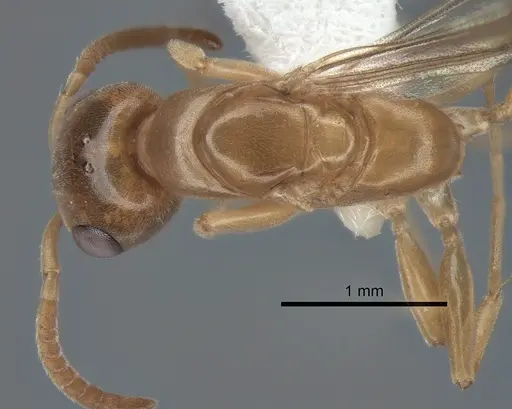
Literature
Loading...Loading products...