

Protalaridris bordoni
- Scientific Name
- Protalaridris bordoni
- Tribe
- Attini
- Subfamily
- Myrmicinae
- Author
- Lattke, 2018
- Distribution
- Found in 1 countries
Protalaridris bordoni Overview
Protalaridris bordoni is an ant species of the genus Protalaridris. It is primarily documented in 1 countries , including Venezuela, Bolivarian Republic of. Detailed taxonomic data and occurrence records can be further explored via authoritative databases such as AntWeb or the Global Biodiversity Information Facility (GBIF).
Protalaridris bordoni
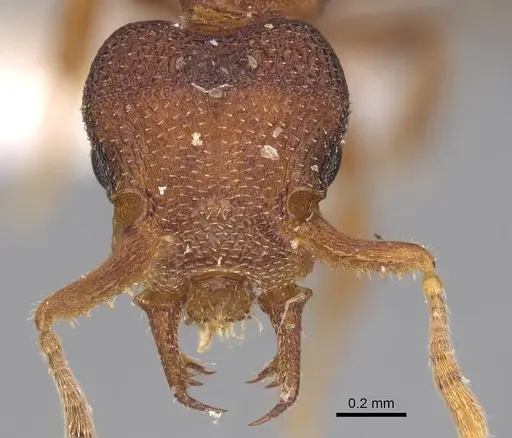
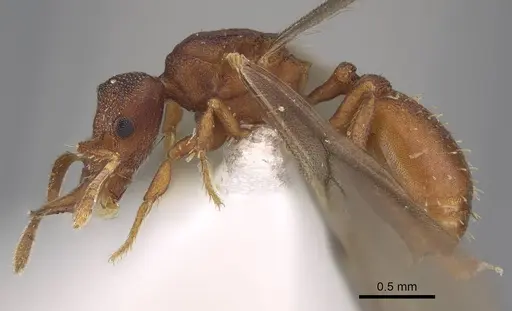
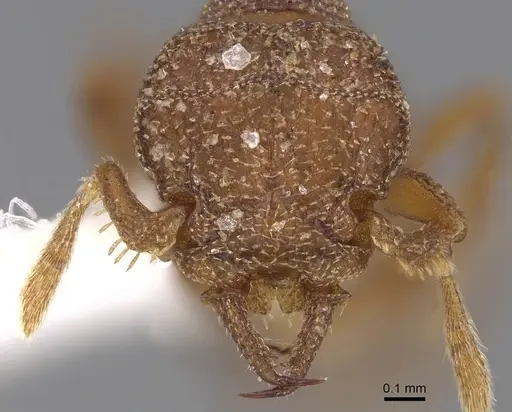
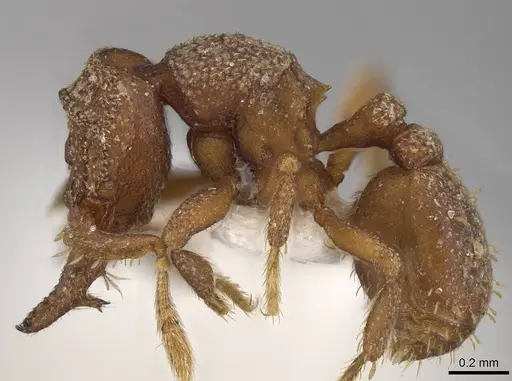
Protalaridris bordoni is an extraordinarily rare ant species described in 2018,known only from a single cloud forest location in Henri Pittier National Park, Venezuela [1]. Workers are tiny at just 0.62-0.68mm in head width, making them among the smallest ants in the Myrmicinae subfamily [1]. Their most striking feature is a pair of extraordinarily complex mandibles that form a cage-like structure with a prominent ventromedially directed tooth, earning the genus its ominous common name 'deadly mandibles' [1]. They have extremely reduced eyes, appearing as just a single ommatidium (one eye cell), suggesting they rely little on vision [1][2]. Their body is often covered in a layer of accumulated debris and dirt, particularly in cuticular grooves [2]. This species was discovered living alongside Protalaridris punctata, with specimens found only 10 meters apart along the same sampling transect, the only location where two Protalaridris species are known to co-occur [1][2].
Quick Summary
- Difficulty: Expert
- Origin & Habitat: Henri Pittier National Park, Aragua, Venezuela (Coastal Cordillera) at 1200-1450m elevation in cloud forest [1][2]. This is a montane tropical forest environment with high humidity and moderate temperatures.
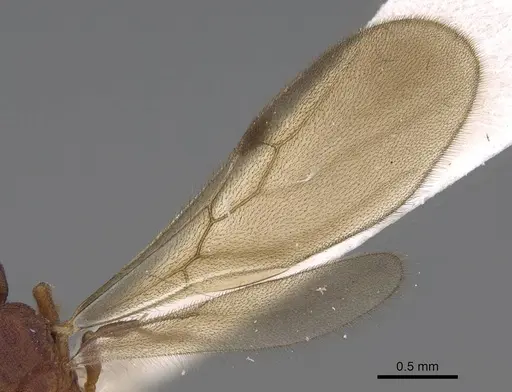
- Colony Type: Unknown colony structure, only six workers and a single dealate queen have ever been collected [1]. The queen measures 0.78mm in head width [1]. No information exists on whether colonies are single-queen (monogyne) or multi-queen (polygyne).
- Size & Growth:
- Queen: 0.78mm head width [1]
- Worker: 0.62-0.68mm head width [1]
- Colony: Unknown, only six workers and one queen have ever been collected in the wild [1]
- Growth: Unknown
- Development: Unknown, no captive breeding has been documented [1] (Development timeline is completely unstudied. Based on related Myrmicinae patterns and their tiny size, development likely takes 4-8 weeks at optimal temperature, but this is entirely speculative.)
- Antkeeping:
- Temperature: Cloud forest habitat suggests they prefer cool, stable conditions, likely 18-22°C. Start at room temperature (around 20°C) and observe colony activity [1].
- Humidity: Cloud forest species require high humidity, aim for 70-85% relative humidity. Keep the nest substrate consistently moist but not waterlogged [1].
- Diapause: Unknown, no seasonal data exists for this species. The Venezuelan cloud forest has mild seasonal variation, so they may not require a true diapause period. Monitor for seasonal slowdowns.
- Nesting: In the wild, found in leaf litter and soil samples [1][2]. A naturalistic setup with moist soil or a small plaster/acrylic nest with tight chambers scaled to their tiny size would be appropriate. Their minute size means they need very small passages and chambers.
- Behavior: Behavior is unstudied in captivity. The complex mandible structure with the prominent ventral tooth suggests predatory behavior, they likely capture small prey [1]. Their extremely reduced eyes (single ommatidium) indicate they rely on chemical/tactile senses rather than vision. Being Attini tribe members, they may have fungal associations, though their unusual mandibles suggest they may be predatory specialists. Escape prevention is critical due to their minute size, they can easily slip through standard barriers. No information exists on aggression levels or sting capability.
- Common Issues: this species has never been kept in captivity, no care protocols exist, tiny size makes escape prevention extremely difficult, standard barriers will fail, high humidity requirements create mold risk in enclosed nests, no information on what foods they accept, feeding is entirely speculative, only known from a single wild population, wild collection is unlikely and potentially illegal
Discovery and Rarity
Protalaridris bordoni was only described in 2018,making it one of the most recently discovered ant species in Venezuela [1]. The entire known population comes from a tiny area in Henri Pittier National Park, the Rancho Grande sector at elevations between 1200-1450 meters [1]. This species is named in honor of Carlos Bordon (1921-2012), an amateur entomologist who generously collected and shared specimens from this park for decades [1]. What makes this species extraordinary is that only six workers and a single queen have ever been collected across all scientific sampling [1]. This makes it one of the rarest ants in the world, with virtually no ecological data beyond where they were found in leaf litter and soil samples [1]. No antkeeper has ever successfully maintained a colony of this species, there is simply no captive care information available. If you somehow obtained specimens, you would be pioneering all aspects of their husbandry [1].
Unique Morphology
The most remarkable feature of Protalaridris bordoni is its extraordinarily complex mandible structure [1]. Unlike typical ant mandibles that simply open and close, these form what researchers describe as a 'cage', the main mandible works together with a prominent ventromedially directed tooth to create a trap-like mechanism [1]. The dorsal mandibular margin has 2-3 small denticles, and the ventral internal margin has an additional stout tooth [1]. This elaborate structure strongly suggests predatory behavior, these ants are likely specialized hunters rather than generalists [1]. Their eyes are equally unusual: reduced to essentially a single ommatidium (one light-sensitive cell), making them nearly blind compared to most ants [1][2]. This extreme eye reduction is rare among ants and suggests they navigate and hunt using chemical signals rather than vision. Workers measure just 0.62-0.68mm in head width, they are truly minute ants that would easily slip through gaps invisible to the naked eye [1]. Many specimens have a distinctive coating of light-colored debris accumulated on their body, particularly in cuticular grooves and impressions [2].
Natural Habitat and Environment
Protalaridris bordoni is known only from cloud forest in the Coastal Cordillera of Venezuela [1]. This habitat is characterized by persistent mist or cloud cover, high ambient humidity, and moderate temperatures that rarely get extreme [1]. The type locality at La Cumbre sits at approximately 1450 meters elevation, this is montane forest with cool, damp conditions [1]. Both Protalaridris species found at this site (P. bordoni and P. punctata) were collected from leaf litter and soil samples, indicating they are ground-nesting ants that live in the forest floor layer [1][2]. The cloud forest floor is rich in organic matter, consistently moist, and provides stable temperatures year-round. These conditions translate to captive care requirements: high humidity (70-85%), cool to moderate temperatures (18-22°C), and a naturalistic setup with moist substrate. The fact that both species were found only 10 meters apart suggests they occupy slightly different microhabitats within this narrow zone [1].
Taxonomy and Relationships
Protalaridris belongs to the tribe Attini within the Myrmicinae subfamily, the same tribe that includes leaf-cutter ants and fungus-growers [1]. However, the genus appears to be an unusual member of this group. While typical Attini cultivate fungus as their primary food source, the extraordinary mandible morphology of Protalaridris suggests a different ecological niche [1]. The complex 'cage' mandibles with their prominent ventral tooth are unlike anything seen in typical fungus-growing ants and strongly indicate predatory specialization [1]. The deep anteromedian labral cleft (the gap in their upper lip) is another distinctive feature that may relate to their feeding mechanics [1][2]. The genus was previously known only from fossil records until living specimens were discovered in Venezuela, making this a remarkable rediscovery [1]. Their placement in Attini remains somewhat controversial given their unusual morphology, they may represent a relict lineage with specialized hunting behavior that diverged early from other Attini [1].
Feeding and Diet Speculation
What Protalaridris bordoni eats in the wild is completely unstudied, no gut content analysis or feeding observations have been published [1]. However, their extraordinary mandible morphology provides strong clues. The complex cage-like mandible with its prominent ventral tooth is a predatory adaptation, not a tool for processing plant material [1]. Related ants with specialized mandibles typically hunt small arthropods, springtails, or other minute invertebrates. Given their tiny size (workers under 1mm), their prey would likely be microscopic soil organisms, possibly springtails, mites, or tiny insects [1]. If they do retain Attini affiliation, they might also have fungal associations, but the predatory mandibles suggest this is unlikely. For captive care, you would need to experiment with tiny live prey: springtails, grain mites, small fruit fly larvae, or other micro-arthropods. Sugar sources are unlikely to be accepted given their presumed predatory nature. Success with any food would be a genuine discovery, there is no baseline to work from [1].
Housing and Escape Prevention
Housing Protalaridris bordoni presents extreme challenges due to their minute size, workers are only 0.62-0.68mm in total measurement [1]. Standard ant keeping equipment is designed for ants at least 3-5mm in size. These ants would slip through the gaps in standard test tube setups, formicarium connections, and essentially any commercial escape barrier. If you somehow obtained specimens, you would need to improvise extremely tight housing: custom-made acrylic nests with sub-millimeter chamber tolerances, carefully sealed with petroleum jelly or other fine barriers [1]. A naturalistic setup with a very shallow soil layer and tight-fitting glass cover might be more feasible than traditional formicarium designs. The high humidity requirements of cloud forest species also create condensation and mold challenges in enclosed nests. This is absolutely an expert-level species requiring specialized equipment and extensive experience with minute ant species, there is no margin for error with something this rare and poorly understood [1].
Frequently Asked Questions
Can I keep Protalaridris bordoni as a pet?
No. This species has never been kept in captivity by anyone, there is no care information, no established protocols, and no source for obtaining colonies. Only six workers and one queen have ever been collected, all by professional researchers. This is not a species available in the antkeeping hobby [1].
What do Protalaridris bordoni ants eat?
This is entirely unknown, no feeding observations exist. Their complex predatory mandibles suggest they hunt small prey rather than eat sugar or fungus. If you somehow kept them, you would need to experiment with tiny live prey like springtails, mites, or fruit fly larvae. Any accepted food would be a genuine discovery [1].
How big do Protalaridris bordoni colonies get?
Unknown. Only six workers and one queen have ever been collected in the wild. Based on their tiny size and related Myrmicinae, colonies might reach 50-200 workers at maturity, but this is entirely speculative [1].
What temperature and humidity do Protalaridris bordoni need?
Based on their cloud forest habitat at 1200-1450m elevation in Venezuela, they likely need cool temperatures (18-22°C) and high humidity (70-85%). However, this is inferred from habitat, not from captive studies, no one has kept this species successfully [1].
Are Protalaridris bordoni good for beginners?
Absolutely not. This is among the most difficult ant species to keep conceptually, there is zero captive care information, they require extremely specialized conditions, and they are among the rarest ants on Earth. Even experienced antkeepers would have no reference point for their care [1].
Where is Protalaridris bordoni found?
Only in Henri Pittier National Park, Venezuela, specifically the Rancho Grande sector at elevations between 1200-1450 meters in cloud forest. This is the only known location for this species anywhere in the world [1].
How long do Protalaridris bordoni take to develop from egg to worker?
Unknown, no captive breeding has ever been documented. Based on their tiny size and related Myrmicinae, development might take 4-8 weeks at optimal temperature, but this is entirely a guess. There is no scientific data on their development timeline [1].
Can I find Protalaridris bordoni in the wild?
Extremely unlikely. They have only been collected by professional researchers using specialized sampling techniques in a protected national park. The known population is tiny, and they are minute leaf-litter ants that would be nearly impossible to find even by experts [1].
Do Protalaridris bordoni need hibernation?
Unknown. The cloud forest of Venezuela has mild seasons, so they may not require a true diapause. However, no seasonal data exists, there are no observations of their behavior throughout the year [1].
References

This caresheet is licensed under CC BY-SA 4.0 .
CASENT0248768
View on AntWeb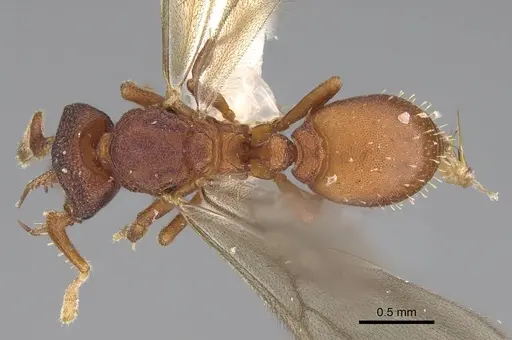
CASENT0248771
View on AntWeb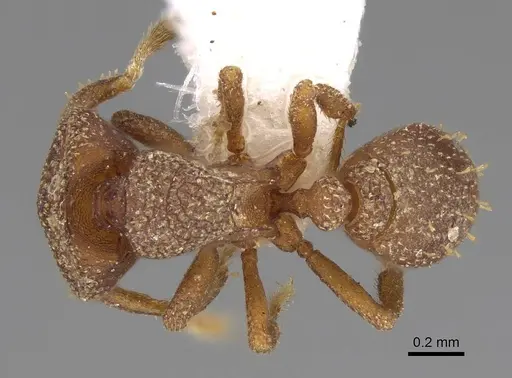
Literature
Loading...Loading products...