

Proformica longipilosa
- Scientific Name
- Proformica longipilosa
- Tribe
- Formicini
- Subfamily
- Formicinae
- Author
- Galkowski <i>et al.</i>, 2017
- Distribution
- Found in 1 countries
Proformica longipilosa Overview
Proformica longipilosa is an ant species of the genus Proformica. It is primarily documented in 1 countries , including France. Detailed taxonomic data and occurrence records can be further explored via authoritative databases such as AntWeb or the Global Biodiversity Information Facility (GBIF).
Proformica longipilosa
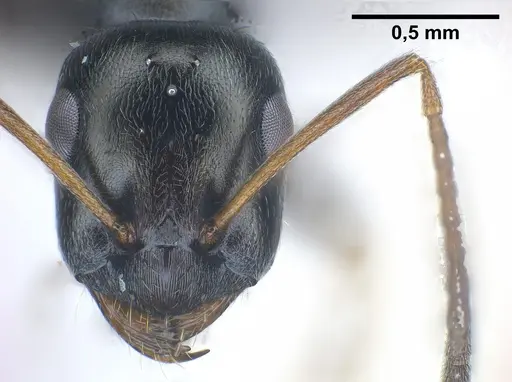
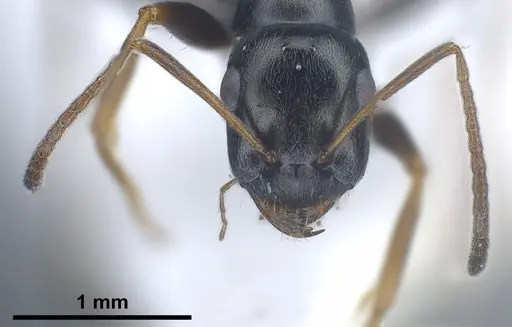
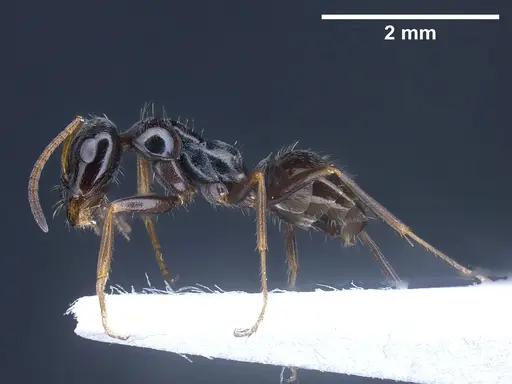
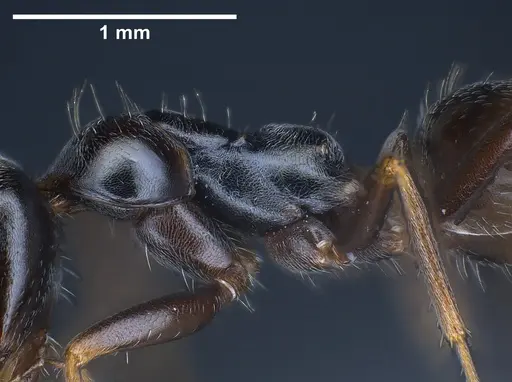
Proformica longipilosa is a small, recently described ant species from southern France. Workers are black with brown tibiae, scape, and mandibles, and are covered in remarkably long erect hairs that give them a fuzzy appearance, this is how they got their name ('longipilosa' means 'long-haired'). They vary greatly in size, with minor workers being quite small and major workers significantly larger. The cuticle is smooth and shiny, especially on the head. Queens are slightly larger than the largest workers, measuring 1.5-1.8mm in head width, and have dense pubescence covering their body [1].
This species was only formally described in 2017,previously being confused with the related Proformica nasuta. It lives in mountainous regions of southern France, particularly on limestone plateaus and scree slopes. Colonies are polygynous, meaning they have multiple queens. They nest under stones and are commonly found at high elevations around 1400m, though some populations exist at lower elevations below 600m [1][2].
Quick Summary
- Difficulty: Medium
- Origin & Habitat: Southern France, specifically the southern pre-Alps mountains. Found on limestone plateaus and mountains (Plateau de Calern, Plateau de Caussols, Gréolières, Mont Ventoux) above 1000m, with some populations in lower elevation localities around 500-600m. Habitat consists of limestone scree with sparse Pinus, Juniperus, and Lavandula [1][2].
- Colony Type: Polygynous, colonies contain multiple queens working together. Queens have full spermatheca, many mature oocytes, and more than 15 ovarioles per ovary indicating high reproductive capacity. Repletes (food-storing workers) are present in colonies [1][3].
- Colony: Polygyne
- Size & Growth:
- Queen: 1.5-1.8mm (CW 1530-1770 µm) [1]
- Worker: Minor: 0.5-0.9mm, Media/Major: 0.9-1.5mm (CW 540-1530 µm) [1]
- Colony: Unknown in captivity, wild colonies likely moderate size based on polygynous structure
- Growth: Moderate, estimated based on related Formica species
- Development: Estimated 6-10 weeks based on related Formica species patterns (Development time not directly studied for this species. Related Formica ants typically take 6-10 weeks from egg to worker at optimal temperatures.)
- Antkeeping:
- Temperature: Keep around 20-24°C with a slight gradient. This species comes from mountainous regions of southern France with moderate temperatures, so they likely prefer cooler conditions than many tropical ants. A heating cable on one side of the nest can create a comfortable gradient [1][2].
- Humidity: Moderate humidity around 50-60%. Their natural habitat is limestone scree with sparse vegetation, not particularly wet. Keep the nest substrate lightly moist but allow some drying between waterings. Good drainage is important to prevent waterlogging [2].
- Diapause: Yes, as a mountain species from southern France, they require a winter dormancy period. Reduce temperature to 10-15°C for 2-3 months during winter, mimicking natural seasonal cycles. Keep them in a cool location like an unheated garage or basement during this period.
- Nesting: Natural nesting is under stones in limestone scree. In captivity, a Y-tong (AAC) nest or plaster nest works well. They prefer narrow chambers and will do well in test tube setups initially. Provide a shallow water foraging area and ensure escape prevention, while not tiny, they can still escape through small gaps.
- Behavior: Generally peaceful and non-aggressive. As a polygynous species, colonies are established with multiple queens from the start. Workers are active foragers but not particularly aggressive toward keepers. They have a well-developed stinger but it's too small to penetrate human skin effectively. Escape risk is moderate, they're small but not among the tiniest ants, so standard escape prevention measures should suffice. Workers are polymorphic (varying greatly in size), with minor workers being quite small and major workers significantly larger [1].
- Common Issues: winter dormancy is essential, skipping hibernation will weaken colonies over time, polygynous colonies may have queen conflicts during establishment, monitor for aggression, small minor workers may escape through standard mesh, use fine mesh barriers, limited availability as a newly described species, may be difficult to source, specific temperature needs are not well-documented, start moderate and observe colony preferences
Housing and Nest Setup
Proformica longipilosa naturally nests under stones in limestone scree habitats. For captivity, a Y-tong (acrylic) nest or plaster nest works well, these provide the dark, enclosed spaces they prefer. They do well in test tube setups for founding colonies, then can be moved to formicarium-style nests as the colony grows. Because workers vary greatly in size (from tiny minors to chunky majors), provide chambers that accommodate both sizes. A shallow water foraging area is appreciated, and always ensure a sugar water station is available. Escape prevention should be moderate, they're not among the smallest ants but can still squeeze through gaps, so check your setup regularly [2][1].
Feeding and Diet
Like other Formicinae ants, P. longipilosa likely has a mixed diet. They probably consume honeydew from aphids in captivity (offer sugar water or honey water), and need protein from insects. Based on related Formica species, they likely accept a wide range of prey including small crickets, mealworms, and fruit flies. Feed protein sources 2-3 times per week and keep sugar water constantly available. They are not specialized predators, so standard ant feeding protocols should work well. Observe your colony's preferences, some individuals may favor certain foods over others.
Temperature and Seasonal Care
This is a mountain species from southern France, so they prefer cooler temperatures than many common ant pets. Keep the nest area around 20-24°C with a gentle gradient so workers can choose their preferred temperature. A small heating cable on one part of the nest can provide warmth while leaving other areas cooler. During winter, they require a true diapause, reduce temperatures to 10-15°C for 2-3 months. This can be achieved by moving the colony to an unheated garage, basement, or refrigerator (if properly monitored). Skipping hibernation will weaken the colony and may affect queen fertility over time. Their natural habitat at 1400m altitude experiences cold winters, so this dormancy period is biologically necessary [1][2].
Colony Structure and Queens
Proformica longipilosa is polygynous, meaning colonies naturally have multiple queens. This is unusual compared to many ant species that have single queens. In the wild, colonies have been observed with multiple reproductive queens, each with well-developed ovaries and spermatheca. Queens are slightly larger than the largest workers (1.5-1.8mm head width) and have dense pubescence covering their body. They appear to be winged but may have reduced wings. When keeping this species, you may receive colonies with multiple queens, this is normal and they should be kept together. The presence of repletes (food-storing workers with distended abdomens) has been documented in wild colonies, indicating they can store food for lean periods [1][3].
Growth and Development
The development timeline for P. longipilosa has not been directly studied. Based on related Formica species, expect approximately 6-10 weeks from egg to first worker at optimal temperatures. Workers are highly polymorphic, the smallest minor workers have elongated heads, while media and major workers have shorter, more typical ant-shaped heads. This size variation develops as the colony matures, with major workers appearing as the colony grows. Growth rate is likely moderate, not particularly fast but steady with good feeding. Nanitics (first workers) will be on the smaller side, with larger workers developing as the colony expands [1].
Frequently Asked Questions
How long does it take for Proformica longipilosa to produce first workers?
The exact timeline is unconfirmed, but based on related Formica species, expect 6-10 weeks from egg to first worker at room temperature (around 20-24°C). The first workers (nanitics) will be small minor workers.
Do Proformica longipilosa ants need hibernation?
Yes, they require a winter dormancy period. As a mountain species from southern France, they need 2-3 months at 10-15°C during winter. Skip hibernation at your own risk, it will weaken the colony over time.
Can I keep multiple Proformica longipilosa queens together?
Yes, this is normal, P. longipilosa is polygynous, meaning colonies naturally have multiple queens. Unlike many ant species where multiple queens fight, these queens coexist peacefully.
What do Proformica longipilosa ants eat?
They likely have a mixed diet similar to related Formica species. Offer sugar water or honey water constantly, and protein (small insects like fruit flies, mealworms, or crickets) 2-3 times per week.
Are Proformica longipilosa good for beginners?
This is a medium-difficulty species. They're not as challenging as some exotic tropical ants, but their hibernation requirements and status as a recently described species with limited availability make them better suited for keepers with some experience.
How big do Proformica longipilosa colonies get?
Colony size in captivity is not well-documented. In the wild, they are polygynous colonies of moderate size. Expect colonies to grow steadily with good care, but they likely won't reach the massive sizes of some Formica species.
What temperature should I keep Proformica longipilosa at?
Keep them around 20-24°C with a gentle gradient. They come from mountainous regions of southern France and prefer cooler conditions than many tropical ant species. A heating cable on part of the nest can provide warmth options.
When should I move Proformica longipilosa from a test tube to a formicarium?
Move them when the colony reaches around 20-30 workers or when the test tube becomes crowded. They prefer enclosed nests, so a Y-tong or plaster nest works well.
References

This caresheet is licensed under CC BY-SA 4.0 .
ANTWEB1041288
View on AntWeb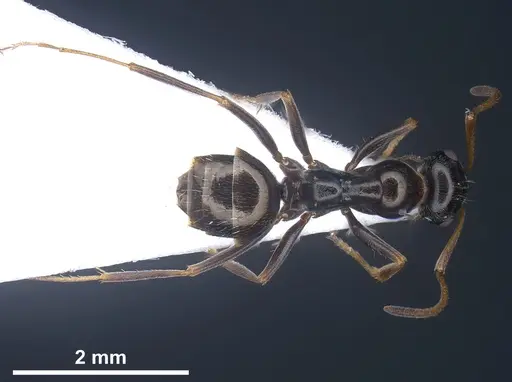
Literature
Loading...Loading products...