

Proceratium google
- Scientific Name
- Proceratium google
- Tribe
- Proceratiini
- Subfamily
- Proceratiinae
- Author
- Fisher, 2005
- Distribution
- Found in 1 countries
Proceratium google Overview
Proceratium google is an ant species of the genus Proceratium. It is primarily documented in 1 countries , including Madagascar. Detailed taxonomic data and occurrence records can be further explored via authoritative databases such as AntWeb or the Global Biodiversity Information Facility (GBIF).
Proceratium google
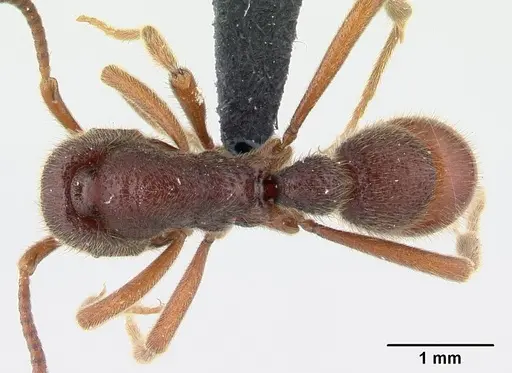
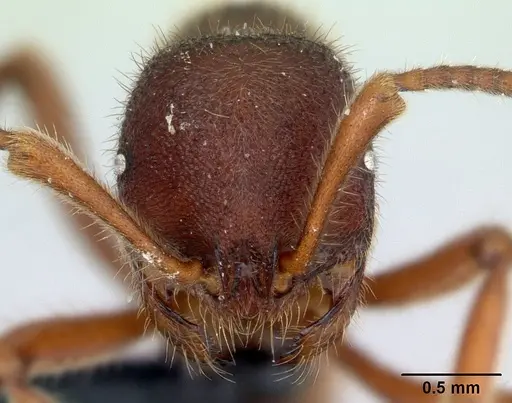
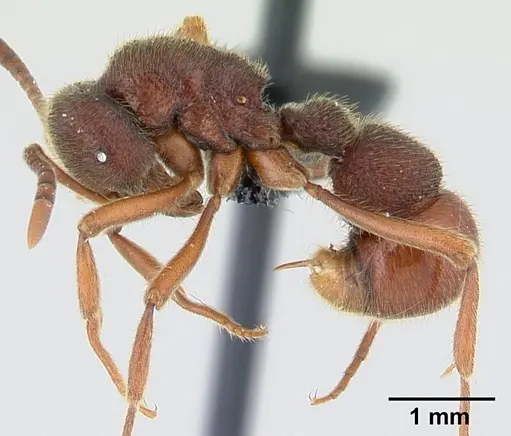
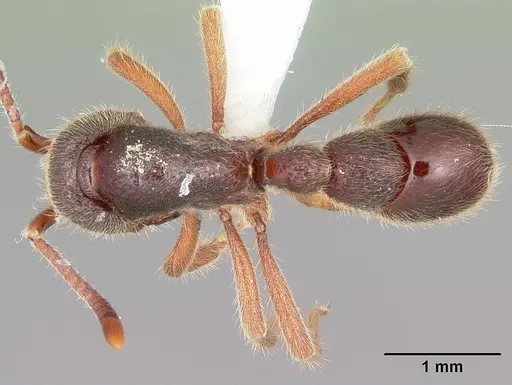
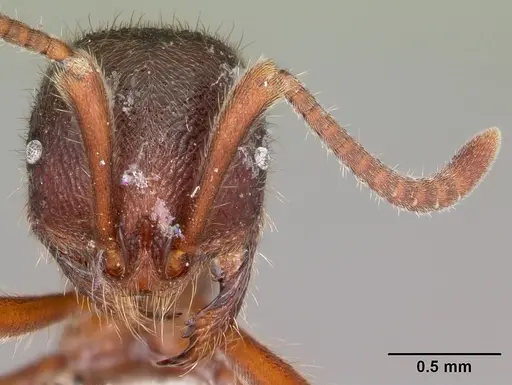
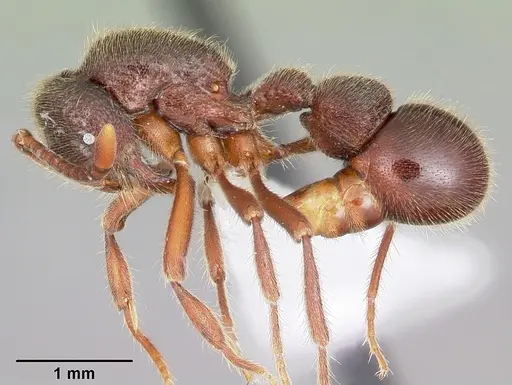
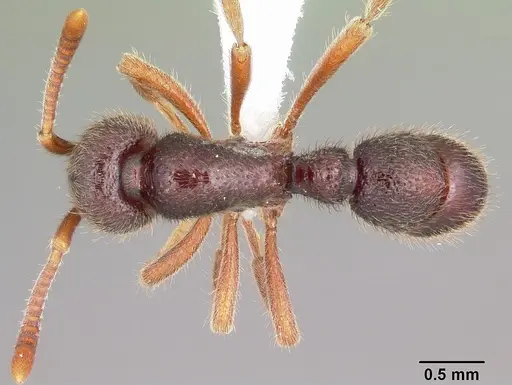
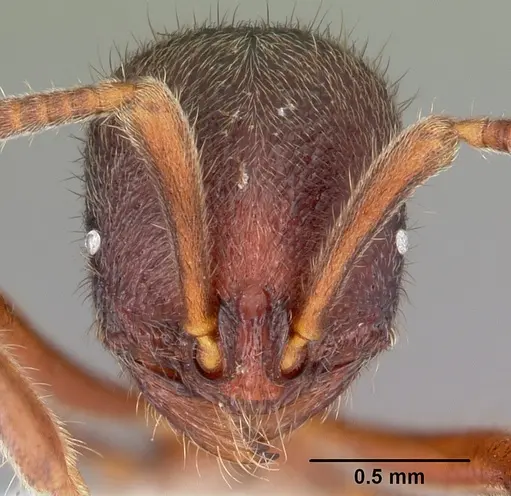
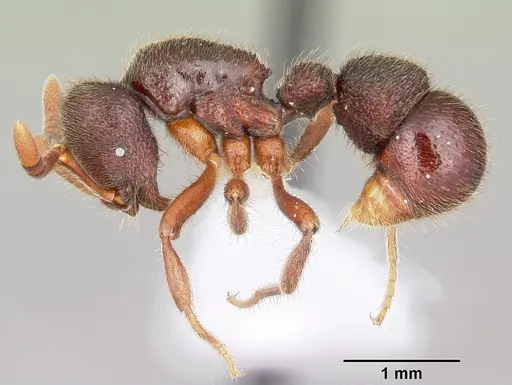
Proceratium google is an extremely rare ant species known only from a single isolated mountain in northeastern Madagascar. Workers are tiny at around 1.2mm in total length, with a distinctive appearance featuring a large, protruding eye that projects beyond the head margin,12-segmented antennae, and a low nodiform petiole. The body is covered in dense granulate-foveolate sculpture, giving it a textured appearance, while the abdomen is smoother and shinier. This species was discovered in 1994 and described in 2005,named in recognition of Google's support for biodiversity data. What makes P. google particularly fascinating is its suspected diet, it's believed to be a specialist predator of spider eggs, a rare and specialized feeding strategy that earned it the apt 'Google' name for its ability to hunt down obscure prey. Only five worker specimens have ever been collected, all from montane rainforest at elevations between 1200-1565m [1][2].
Quick Summary
- Difficulty: Expert
- Origin & Habitat: Known only from the Reserve Spéciale Anjanaharibe-Sud in northeastern Madagascar, at elevations of 1200-1565m in montane rainforest. This is an extremely restricted range, the species has never been found in nearby mountains despite extensive collecting efforts [1][2][3].
- Colony Type: Unknown. Only the worker caste has been described. Queen, male, and larvae are unknown, so colony structure and founding behavior cannot be confirmed [1][2].
- Size & Growth:
- Queen: Unknown, queen has not been described [1].
- Worker: Workers measure approximately 1.15-1.24mm head length,1.02-1.07mm head width [1][2].
- Colony: Unknown, only five worker specimens have ever been collected [1].
- Growth: Unknown
- Development: Unknown, larvae have never been described. Based on related Proceratium species, estimate 6-10 weeks at optimal temperature, but this is a rough guess. (Development timeline is unconfirmed. Related Proceratium species typically take several months from egg to adult worker.)
- Antkeeping:
- Temperature: Unknown for this species. Based on montane rainforest habitat in Madagascar (cool, humid highlands), aim for temperatures in the low-to-mid 20s°C (around 20-24°C). Provide a gradient so ants can choose their preferred temperature.
- Humidity: Based on montane rainforest origin, this species likely requires high humidity. Keep the nest substrate consistently moist but not waterlogged. Montane environments are typically damp with frequent mist and clouds.
- Diapause: Unknown. Madagascar doesn't experience harsh winters, but montane areas at 1500m elevation may have cooler seasonal periods. Observe colony activity patterns to determine if a cooling period is beneficial.
- Nesting: In the wild, workers were collected from sifted leaf litter in montane rainforest. This suggests they nest in soil and decaying organic matter in shaded, humid microhabitats. A naturalistic setup with moist soil or a plaster/acrylic nest with high humidity would likely work well. Avoid dry conditions.
- Behavior: Nothing is known about the behavior of P. google specifically. Based on the genus Proceratium, these ants are cryptic, slow-moving, and docile. They are specialized predators that hunt spider eggs and other small arthropods. They are not aggressive and unlikely to sting humans. Their large, protruding eye is unusual among ants and may be an adaptation for hunting in low-light conditions within leaf litter. Escape risk is low, they are tiny and slow-moving, but small size still warrants secure containment.
- Common Issues: this species has never been kept in captivity, there is no established care protocol, only five worker specimens exist in museum collections, making wild colonies essentially unavailable, queen and colony founding behavior is completely unknown, humidity requirements may be critical, dry conditions likely fatal, specialized diet (spider eggs) may be difficult to replicate in captivity, extremely restricted range means specimens are essentially unavailable to collectors
Why Proceratium google is So Rare
This species represents one of the most poorly known ants in the world. Only five worker specimens have ever been collected, all from a single expedition to the Reserve Spéciale Anjanaharibe-Sud in northeastern Madagascar in 1994. Despite extensive collecting efforts in nearby mountains including the famous Marojejy Massif, no additional specimens have been found. This extreme rarity could be due to several factors: the species may have a genuinely restricted geographic range limited to this single mountain, it may exist in very low population densities, or it may have highly specific microhabitat requirements that make it difficult to locate. The montane rainforest at 1200-1565m elevation creates a unique environment with high humidity, cool temperatures, and dense vegetation that this species appears to require [1][2].
The Spider Egg Hunter
Proceratium google is suspected to be a specialist predator of spider eggs, a remarkably specialized feeding strategy among ants. The genus name 'Proceratium' and this species' name 'google' (chosen for the search engine's ability to find obscure things) both reference this unique hunting ability. Most ants are generalist scavengers and predators, but Proceratium species have evolved specialized morphology and behavior for hunting spider eggs in leaf litter and soil. Their large, protruding eyes may help them locate spider egg cases in the dim light of the forest floor. In captivity, you would likely need to offer small live prey such as springtails, spider eggs (if available), or other tiny arthropods. This specialized diet makes them challenging to keep, they cannot simply be fed standard ant foods [1][2].
Identifying Features
Proceratium google can be distinguished from its only known Madagascan relative Proceratium diplopyx by the shape of abdominal segment IV. In P. google, this segment is evenly rounded posteriorly without any concave notch near the tip. In P. diplopyx, there is a distinctive deep notch. Workers have a unique combination of features: a large, clear, convex eye that actually projects beyond the margin of the head (unusual for ants),12-segmented antennae with a short scape that doesn't reach the back of the head,4-toothed mandibles, and a low nodiform petiole without a peduncle. The body is covered in dense granulate-foveolate sculpture (a pitted, textured surface) while the abdomen is smoother and shinier. Fine yellow-white hairs cover the body [1][2][3].
Housing Recommendations
Since no captive care information exists for this species, recommendations must be based on related Proceratium species and the known habitat. These ants were collected from sifted leaf litter in montane rainforest, suggesting they live in moist soil and decaying organic matter. A naturalistic setup with a deep layer of moist soil and leaf litter would best approximate their natural environment. Alternatively, a plaster or acrylic nest with high humidity chambers would work. The key requirements appear to be: high humidity (montane rainforest is consistently damp), cool temperatures (around 20-24°C), darkness (they live in leaf litter and soil), and small live prey. Avoid dry conditions entirely. Escape prevention is easy since they are tiny and slow-moving, but secure lids are still recommended [1][2].
Legal and Ethical Considerations
Proceratium google is known only from a protected area in Madagascar (Reserve Spéciale Anjanaharibe-Sud). Export of specimens would likely be prohibited under Madagascar's wildlife protection laws, and international trade is regulated under CITES. This species has never been found in sufficient numbers to support any collection for the antkeeping hobby. If by some chance a colony became available through scientific channels, it would require proper permits. For antkeepers, this species represents an example of the many fascinating ants that remain beyond our reach, treasures of Madagascar's unique biodiversity that are best appreciated through documentation and research rather than captivity [1][2].
Frequently Asked Questions
Can I keep Proceratium google ants?
No. This species has never been kept in captivity and is essentially unavailable. Only five worker specimens exist in museum collections worldwide, all collected from a single expedition in 1994. The species has never been found again despite extensive searching in Madagascar.
What do Proceratium google ants eat?
They are suspected to be specialist predators of spider eggs. In the wild, they likely hunt spider egg cases in leaf litter and soil. This specialized diet would be extremely difficult to replicate in captivity. Related Proceratium species accept small live arthropods like springtails.
How big do Proceratium google colonies get?
Unknown. Only five worker specimens have ever been collected, and no colony has ever been observed. Related Proceratium species typically have small colonies of perhaps a few dozen to a few hundred workers.
Where does Proceratium google live?
Only known from the Reserve Spéciale Anjanaharibe-Sud in northeastern Madagascar, at elevations of 1200-1565m in montane rainforest. It has never been found anywhere else despite extensive collecting efforts.
Do Proceratium google ants sting?
Proceratium ants have stingers but are extremely docile and not aggressive toward humans. Their stinger is too small to penetrate human skin effectively. These are cryptic, slow-moving ants that prefer to hide rather than defend.
What temperature do Proceratium google ants need?
Unconfirmed, but based on their montane rainforest habitat at 1200-1565m elevation, they likely prefer cool to moderate temperatures around 20-24°C. Avoid warm conditions, they come from a cool, humid highland environment.
Are Proceratium google ants good for beginners?
No. This is an expert-level species that has never been kept in captivity. There is no established care protocol, and the specialized diet (spider eggs) would be nearly impossible to provide. Additionally, the species is essentially unavailable to collectors.
How long do Proceratium google workers live?
Unknown. No study has ever documented the lifespan of this species. Related Proceratium species may live several years for queens and several months to over a year for workers.
Do Proceratium google ants need hibernation?
Unknown. Madagascar doesn't have harsh winters, but montane areas at 1500m elevation experience cooler seasonal periods. There is no data on whether this species has any diapause requirement.
Why is it called Proceratium google?
It was named in recognition of Google's support for biodiversity data and conservation efforts. The name also reflects the species' suspected ability to hunt down obscure prey (spider eggs), similar to how a search engine finds hard-to-locate information. The name is treated as a noun in apposition, not a Latin adjective.
References

This caresheet is licensed under CC BY-SA 4.0 .
Literature
Loading...Loading products...