

Proceratium diplopyx
- Scientific Name
- Proceratium diplopyx
- Tribe
- Proceratiini
- Subfamily
- Proceratiinae
- Author
- Brown, 1980
- Distribution
- Found in 1 countries
Proceratium diplopyx Overview
Proceratium diplopyx is an ant species of the genus Proceratium. It is primarily documented in 1 countries , including Madagascar. Detailed taxonomic data and occurrence records can be further explored via authoritative databases such as AntWeb or the Global Biodiversity Information Facility (GBIF).
Proceratium diplopyx
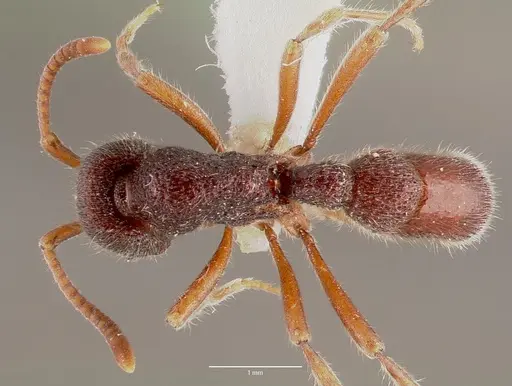
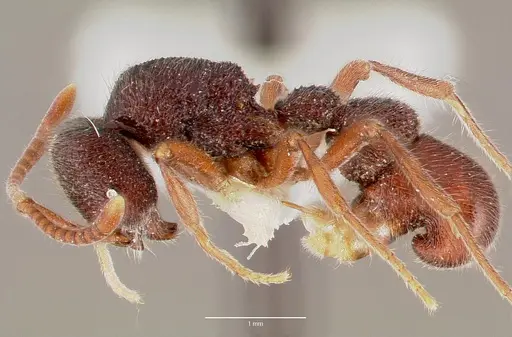
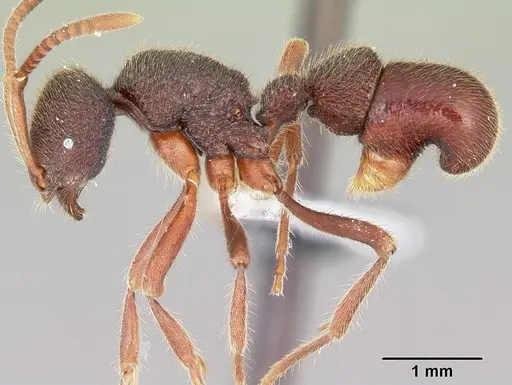
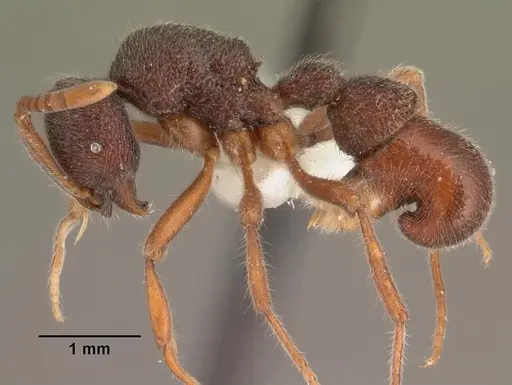
Proceratium diplopyx is a remarkable and unusual ant species native to Madagascar, found in rainforest habitats at elevations around 825-1000 meters [1]. This species stands out as the most distinctive member of the stictum clade due to its bizarre gastral morphology, the first gastral segment is greatly hypertrophied and produced into a downcurved 'false apex' that immediately sets it apart from all other Proceratium species [2]. Workers are relatively large for the genus at 5.86mm total length, with a reddish-brown coloration, coarse foveolate-granulate sculpture, and distinctive propodeal teeth [2]. The eyes are present but relatively small with a single convex facet. This is an expert-level species with limited availability in the antkeeping hobby, best suited for advanced keepers interested in unusual morphological adaptations.
Quick Summary
- Difficulty: Expert
- Origin & Habitat: Madagascar rainforest, specifically found in Baie d'Antongil region at 1000m elevation and Masoala Peninsula at 825m [1][3]. This is a high-elevation rainforest species requiring humid, warm conditions.
- Colony Type: Colony structure is unconfirmed. Proceratium genus typically forms single-queen (monogyne) colonies, but this has not been documented for P. diplopyx specifically.
- Size & Growth:
- Queen: Unknown, only workers have been described [2]
- Worker: 5.86mm total length (HL 1.44mm, HW 1.24mm) [2]
- Colony: Unknown, no colony size data available
- Growth: Unknown, no development data available for this species
- Development: Unconfirmed, no direct development data exists. Based on typical Proceratium patterns, expect 8-12 weeks at optimal temperature. (Development timeline is unconfirmed for this species. Related Proceratium species typically take 2-3 months from egg to worker at room temperature.)
- Antkeeping:
- Temperature: Inferred: Aim for 22-26°C based on Madagascar rainforest origin and related Proceratium species. A gentle gradient is recommended. Monitor colony activity to adjust.
- Humidity: Inferred: High humidity required, think damp rainforest floor. Keep nest substrate consistently moist but not waterlogged. Humidity around 70-85% is likely appropriate.
- Diapause: Unknown, no data on overwintering requirements. Being from Madagascar (tropical), they may not require true hibernation but may have seasonal activity patterns.
- Nesting: Inferred: Likely nests in rotting wood or soil in nature. In captivity, a naturalistic setup with moist substrate or a Y-tong/plaster nest with high humidity works well. Avoid dry conditions.
- Behavior: Temperament is not documented but Proceratium ants are typically non-aggressive and secretive. They are slow-moving and likely nocturnal or crepuscular. Escape risk is moderate given their 5.86mm size, standard barriers should suffice, but vigilance is still important. They are likely predatory on small arthropods.
- Common Issues: limited availability makes colonies difficult to acquire, no species-specific care data exists, keepers must extrapolate from genus patterns, high humidity requirements can lead to mold issues if ventilation is poor, slow growth may lead to keeper impatience and overfeeding, wild-caught colonies may have parasites that are difficult to treat
Appearance and Identification
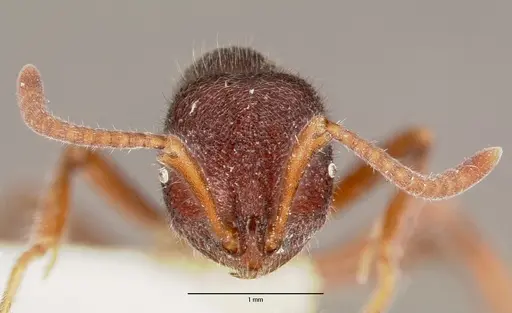
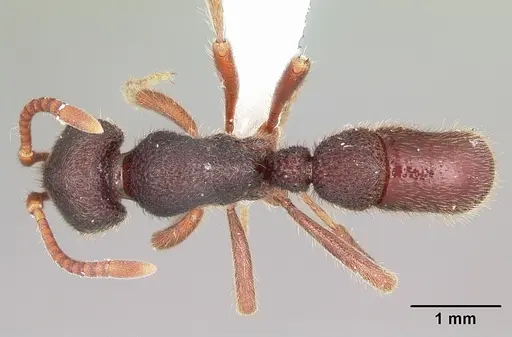
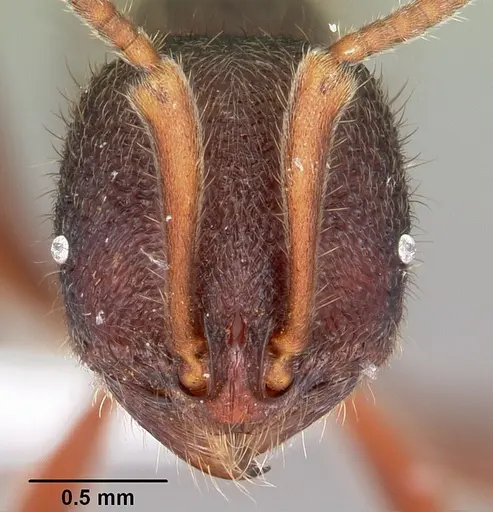
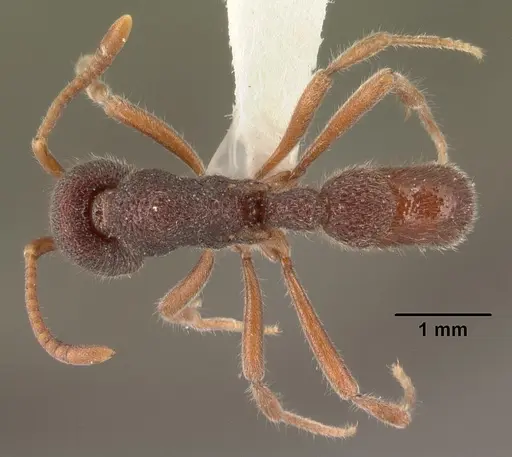
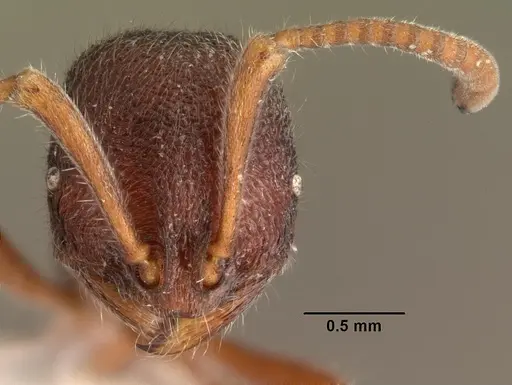
Proceratium diplopyx is one of the most visually distinctive ants in the entire genus. Workers reach 5.86mm in total length, making them relatively large compared to many Proceratium species [2]. The most striking feature is the greatly hypertrophied first gastral segment (abdomen) that extends posteriorly into a downcurved 'false apex', this unique morphology immediately distinguishes it from all other Proceratium species [2]. Workers have a reddish-brown coloration with coarse sculpture consisting of irregular foveolate-granulation on the head, mesosoma, petiole, and postpetiole. The first gastral tergite is notably smoother with only sparse granulation. The propodeum bears distinctive pointed teeth, and the eyes are present but small with a single convex facet [2]. This species is part of the stictum clade but is considered distinctive enough that Brown (1980) initially suggested it might represent its own species group.
Distribution and Habitat
This species is endemic to Madagascar, known only from the eastern rainforest regions. The type locality is Iaraka in the Baie d'Antongil area at 1000m elevation in Prov. Tamatave [2]. Additional specimens have been collected from the Masoala Peninsula at 825m elevation [1]. This indicates a preference for mid-to-high elevation rainforest habitats. The elevational range of 825-1000m suggests these ants prefer cooler, more humid conditions than lowland tropical species. In captivity, this translates to needing good humidity and moderate temperatures without extreme heat.
Feeding and Diet
While specific dietary data for P. diplopyx is not available, Proceratium ants are generally predatory or omnivorous, feeding on small arthropods and their remains. Brown (1980) mentioned dietary notes in the original description, suggesting this aspect was noted but the details are not captured in the available literature. In captivity, you should offer small live prey such as springtails, fruit flies, and other tiny arthropods. Sugar sources like honey water may be accepted but are not a primary food source for this genus. Feed protein prey 2-3 times per week and remove uneaten prey promptly to prevent mold. Given their larger worker size compared to many Proceratium species, they may be able to handle slightly larger prey items.
Temperature and Humidity Requirements
Being a Madagascar rainforest species found at 825-1000m elevation, Proceratium diplopyx likely requires warm and humid conditions. Based on the elevational range and related species, aim for temperatures in the 22-26°C range with a gentle gradient allowing the ants to choose their preferred zone. Avoid temperatures above 30°C. Humidity should be high, around 70-85% relative humidity or equivalent substrate moisture. The nest substrate should remain consistently damp but never waterlogged. Poor ventilation combined with high humidity can lead to mold problems, so ensure adequate airflow while maintaining moisture. A naturalistic setup with live moss or a well-designed plaster/acrylic nest with a water reservoir works well for maintaining these conditions.
Colony Structure and Development
The colony structure of Proceratium diplopyx has not been documented. Most Proceratium species form single-queen colonies (monogyne), but this cannot be confirmed for this specific species. Similarly, founding behavior is unconfirmed, however, claustral founding (where the queen seals herself in and raises the first workers alone on stored fat reserves) is typical for the genus. Colony size is unknown as no mature colonies have been described. Development time is also unconfirmed, though related Proceratium species typically require 8-12 weeks from egg to worker at optimal temperatures. The first workers (nanitics) will likely be smaller than mature workers. This species should be considered an expert-level species due to the lack of specific care documentation and the specialized conditions likely required.
Behavior and Temperament
Proceratium ants are generally non-aggressive, slow-moving, and secretive. They are likely nocturnal or crepuscular, spending most of their time hidden within the nest or foraging quietly. The unusual gastral morphology may serve a defensive function, the hypertrophied first gastral segment could potentially be used to block the nest entrance or deter predators. Workers are relatively large at 5.86mm, which may reduce some escape concerns compared to tiny ant species, but standard escape prevention measures should still be used. These ants are not aggressive toward keepers and pose no danger. They are unlikely to sting, and even if they could, their stingers are too small to penetrate human skin effectively.
Frequently Asked Questions
How long does it take for Proceratium diplopyx to produce first workers?
The egg-to-worker timeline is unconfirmed for this specific species. Based on typical Proceratium genus patterns, expect approximately 8-12 weeks at optimal temperature (around 24°C). The first workers will likely be smaller (nanitics) than fully mature workers.
What do Proceratium diplopyx ants eat?
Specific dietary data is not documented, but Proceratium ants are typically predatory on small arthropods. In captivity, offer small live prey like springtails, fruit flies, and other micro-arthropods. They may occasionally accept sugar water or honey, but protein prey should be the primary food source.
What temperature and humidity do Proceratium diplopyx need?
Based on their Madagascar rainforest origin at 825-1000m elevation, aim for temperatures of 22-26°C with high humidity around 70-85%. Keep the nest substrate consistently moist but not waterlogged. A gentle temperature gradient allows the colony to self-regulate.
Are Proceratium diplopyx good for beginners?
No. This is an expert-level species due to the complete lack of species-specific care documentation. Keepers must extrapolate from genus patterns and related species. The high humidity requirements and limited availability also make this a challenging species for beginners.
How big do Proceratium diplopyx colonies get?
Colony size is unknown, no mature colony data exists for this species. Based on the worker size (5.86mm) being relatively large for the genus, colonies may reach several hundred workers, but this is an estimate only.
Do Proceratium diplopyx ants sting?
Proceratium ants have stingers but are not aggressive. Even if they did attempt to sting, their stingers are typically too small to penetrate human skin effectively. They are considered harmless to keepers.
Can I keep multiple Proceratium diplopyx queens together?
The colony structure (monogyne vs polygyne) is unconfirmed for this species. Most Proceratium are single-queen colonies. Combining unrelated queens is not recommended as it has not been documented and could result in aggression.
What type of nest is best for Proceratium diplopyx?
A naturalistic setup with moist substrate or a Y-tong/plaster nest with high humidity works well. Avoid dry conditions. The nest should have chambers scaled to their 5.86mm worker size with adequate depth for moisture retention.
Where is Proceratium diplopyx found in the wild?
This species is endemic to Madagascar, known only from eastern rainforest regions at 825-1000m elevation. The type locality is Baie d'Antongil (Iaraka) in Prov. Tamatave, with additional records from Masoala Peninsula.
Does Proceratium diplopyx need hibernation?
Diapause requirements are unknown. Being from Madagascar (tropical), they likely do not require true hibernation. However, they may have seasonal activity patterns. If kept in a temperate climate, a slight reduction in temperature during winter months may be appropriate, but avoid cold temperatures below 15°C.
References

This caresheet is licensed under CC BY-SA 4.0 .
Literature
Loading...Loading products...