

Proceratium caledonicum
- Scientific Name
- Proceratium caledonicum
- Tribe
- Proceratiini
- Subfamily
- Proceratiinae
- Author
- de Andrade, 2003
- Distribution
- Found in 1 countries
Proceratium caledonicum Overview
Proceratium caledonicum is an ant species of the genus Proceratium. It is primarily documented in 1 countries , including New Caledonia. Detailed taxonomic data and occurrence records can be further explored via authoritative databases such as AntWeb or the Global Biodiversity Information Facility (GBIF).
Proceratium caledonicum
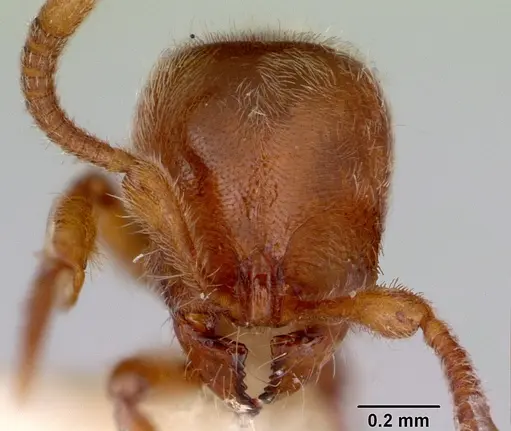
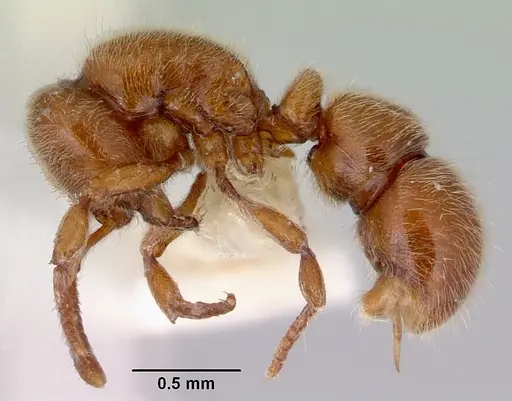
Proceratium caledonicum is an extremely rare ant species native to New Caledonia, a French territory in the South Pacific. Workers measure just 2.94mm in total length, making them one of the smaller ant species you'll encounter. They have a distinctive yellow-light brown coloration with a largely shining body surface covered in minute piligerous punctures. The frontal carinae are very narrow, and the eyes are small and barely visible beneath the integument. This species belongs to the silaceum clade and resembles Proceratium politum and Proceratium terraealtae, though it can be distinguished by its narrower frontal carinae and longer erect hairs. Only a handful of specimens have ever been collected, all from rainforest litter samples at Mt Koghis near Noumea at around 500m elevation [1][2].
Quick Summary
- Difficulty: Expert
- Origin & Habitat: New Caledonia (Mt Koghis, near Noumea), rainforest habitat at 500m elevation. Collected from rainforest litter through berlesate sampling [1][2].
- Colony Type: Unknown, colony structure has not been documented for this species. Based on genus patterns, likely single-queen colonies.
- Size & Growth:
- Queen: Unconfirmed, no queen specimens have been described
- Worker: 2.94mm total length (TL) [2]
- Colony: Unknown, only worker specimens have been collected
- Growth: Unknown, estimated slow based on genus patterns
- Development: Unknown, estimated 8-12 weeks based on typical Proceratium development patterns (No direct development data exists for this species. Proceratium species typically develop slowly due to their specialized predatory lifestyle.)
- Antkeeping:
- Temperature: Unknown for this species. Based on New Caledonia's tropical climate, aim for 22-26°C with a gentle gradient. Monitor colony activity to adjust.
- Humidity: High humidity required, rainforest species. Keep nest substrate consistently moist but not waterlogged. Think damp forest floor conditions.
- Diapause: Unknown, likely minimal or no true diapause given the tropical location, but may have reduced activity during cooler months.
- Nesting: Natural nesting is in rainforest litter and soil. In captivity, a moist plaster or soil-based nest works well. They prefer tight, dark chambers and should be kept away from direct light.
- Behavior: Proceratium ants are cryptic, subterranean predators. They are not aggressive and rarely come to the surface. Workers are slow-moving and likely forage through leaf litter and soil. Escape prevention is important despite their small size, they can squeeze through tiny gaps. They possess a functional sting but are too small to pose any threat to humans. Based on genus behavior, they likely hunt small soil arthropods and may tend aphids for honeydew.
- Common Issues: very limited availability, this species is rarely available in the antkeeping hobby, no established care protocols, keepers must experiment with conditions, slow growth means colonies take years to develop, wild-caught colonies may have parasites given how rarely they're collected, rainforest humidity requirements can lead to mold issues if ventilation is poor
Why This Species Is Challenging
Proceratium caledonicum is not a species for beginners. It represents one of the rarest ants in the antkeeping hobby, with only a handful of specimens ever collected from the wild. There is essentially no established care protocol for this species, everything you do will be experimental. The lack of documented colony information means you'll be relying on genus-level knowledge and your own observations to figure out what works. This makes it a species for experienced antkeepers who enjoy the challenge of pioneering care for rarely kept species. The difficulty is compounded by their slow growth rate and the fact that colonies will take years to develop from founding to any significant size [2].
Housing and Nest Preferences
In the wild, Proceratium caledonicum lives in rainforest litter, so replicate those conditions in captivity. A moist soil or plaster nest works well, something that holds humidity consistently without flooding. They prefer tight, dark chambers and will avoid brightly lit areas. Keep the nest in a dark location away from direct sunlight and vibrations. Because they're subterranean, they don't need much vertical space but do need room for the colony to expand. A test tube setup with a moist cotton ball can work for founding colonies, but transfer to a more naturalistic setup once the colony reaches 10-15 workers. The key is maintaining constant, high humidity while avoiding stagnant air that causes mold [2].
Feeding and Diet
Based on genus behavior, Proceratium caledonicum is likely a specialized predator on small soil arthropods like springtails, mites, and other micro-invertebrates found in leaf litter. Offer small live prey appropriate to their size, fruit flies, pinhead crickets, and especially springtails are good options. They may also accept honeydew from small aphids, though this is unconfirmed. Do not expect them to readily accept sugar water or honey, Proceratium species are not typically sugar-loving ants. Feed small prey items every few days, removing any uneaten prey after 24 hours to prevent mold. The key is variety and appropriately sized live prey [2].
Temperature and Humidity
New Caledonia has a tropical climate, so aim for warm, humid conditions. Target temperatures in the 22-26°C range, with a slight gradient if possible so the ants can choose their preferred spot. A heating cable on one side of the nest can help maintain warmth, but place it on top of the nest rather than underneath to avoid drying out the substrate. Humidity is critical, keep the nest substrate consistently moist like a damp forest floor. The substrate should feel damp to the touch but not have standing water. Mist occasionally if needed, but rely on substrate moisture rather than misting. Good ventilation is essential to prevent mold while maintaining humidity [2].
Understanding the Silaceum Clade
Proceratium caledonicum belongs to the silaceum clade, a group of Proceratium species characterized by their largely shining body surface. Within this clade, it most closely resembles Proceratium politum and Proceratium terraealtae. The key distinguishing features are its very narrow frontal carinae (about 1/4 of head width), longer erect hairs compared to P. politum, and a SI (scape index) of 64.2. Understanding this classification helps because it tells us this species shares behavioral traits with its relatives, cryptic lifestyle, predatory feeding, and preference for moist forest floor habitats [2].
Frequently Asked Questions
How hard is Proceratium caledonicum to keep?
This is an expert-level species. There is essentially no established care protocol, colonies are rarely available, and you'll be experimenting with conditions. Only attempt this if you're an experienced antkeeper who enjoys pioneering care for rare species.
Where does Proceratium caledonicum come from?
It is endemic to New Caledonia, a French territory in the South Pacific. Only a few specimens have ever been collected, all from Mt Koghis near Noumea at around 500m elevation in rainforest litter.
How big do Proceratium caledonicum colonies get?
Unknown, colony size has not been documented. Based on related Proceratium species, colonies likely remain small with under 100 workers even at maturity.
What do Proceratium caledonicum ants eat?
Based on genus behavior, they are likely specialized predators on small soil arthropods. Offer small live prey like springtails, fruit flies, and pinhead crickets. Sugar sources are likely not accepted.
Do Proceratium caledonicum ants sting?
They possess a functional sting but are too small (2.94mm) to penetrate human skin or cause any pain. They are completely harmless to keepers.
What temperature do Proceratium caledonicum ants need?
Unconfirmed specifically, but based on New Caledonia's tropical climate, aim for 22-26°C. Start in the middle of this range and adjust based on colony activity.
How long does it take for Proceratium caledonicum to develop from egg to worker?
Unknown, no development data exists for this species. Based on typical Proceratium development, estimate 8-12 weeks at optimal temperature, but this is a rough guess.
Can I keep Proceratium caledonicum in a test tube?
A test tube can work for founding colonies with a moist cotton ball, but transfer to a soil or plaster nest once the colony reaches 10-15 workers. They need high humidity that test tubes struggle to maintain long-term.
Is Proceratium caledonicum aggressive?
No, Proceratium ants are cryptic and non-aggressive. They are subterranean predators that avoid confrontation. Workers are slow-moving and focused on hunting small prey.
Do Proceratium caledonicum queens need to hibernate?
Unknown, unlikely given the tropical climate of New Caledonia. They may have reduced activity during cooler months but likely don't require a true diapause.
How do I establish a Proceratium caledonicum colony?
This is challenging since colonies are rarely available. If you obtain a founding queen, keep her in a small, humid setup with minimal disturbance. She will likely seal herself in (if claustral) and raise the first workers alone. Be patient, growth is very slow.
Why is Proceratium caledonicum so rare in the hobby?
Only a handful of specimens have ever been collected from the wild. The species was only described in 2003 and is endemic to a limited range in New Caledonia. Combined with their cryptic, subterranean lifestyle, they simply aren't encountered often enough to enter the antkeeping trade.
References

This caresheet is licensed under CC BY-SA 4.0 .
CASENT0172099
View on AntWeb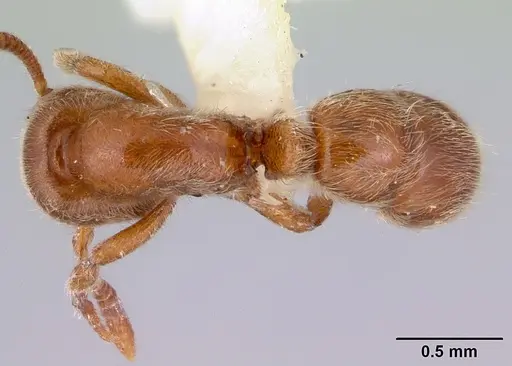
Literature
Loading...Loading products...