

Proceratium bruelheidei
- Scientific Name
- Proceratium bruelheidei
- Tribe
- Proceratiini
- Subfamily
- Proceratiinae
- Author
- Staab <i>et al.</i>, 2018
- Distribution
- Found in 1 countries
Proceratium bruelheidei Overview
Proceratium bruelheidei is an ant species of the genus Proceratium. It is primarily documented in 1 countries , including China. Detailed taxonomic data and occurrence records can be further explored via authoritative databases such as AntWeb or the Global Biodiversity Information Facility (GBIF).
Proceratium bruelheidei
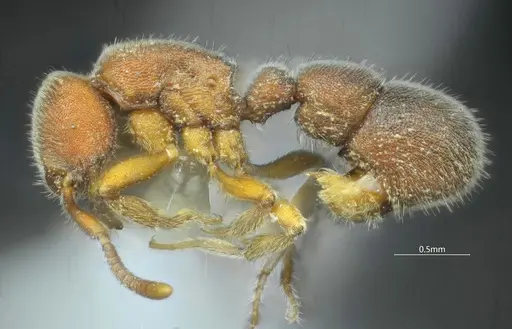
Proceratium bruelheidei is a tiny cryptic ant species from subtropical China, recently described in 2018. Workers measure just 3.6-4.0mm and have a distinctive orange-brown to reddish-brown coloration with abundant long erect hairs covering their bodies. The species belongs to the Proceratiinae subfamily and is recognized by its strongly recurved fourth abdominal segment and relatively large size compared to other Proceratium species. Found only in Jiangxi and Zhejiang provinces, these ants inhabit early successional tree plantations in subtropical mixed forests at elevations between 122-617 meters. This is a newly described species with no direct observations of its biology in the wild, all known specimens come from leaf litter Winkler extractions in experimental forest plots.
Quick Summary
- Difficulty: Expert
- Origin & Habitat: China (Jiangxi and Zhejiang provinces) in early successional tree plantations within subtropical mixed forest at 122-617m elevation [1][2]
- Colony Type: Unknown colony structure, no observations of wild colonies exist. Based on genus patterns, likely single-queen colonies.
- Size & Growth:
- Queen: 4.72mm [2], single queen measured
- Worker: 3.61-4.00mm [1]
- Colony: Unknown, no colony size data exists
- Growth: Unknown, no development data available
- Development: Unknown, no direct observations. Based on related Proceratium species and small colony size, estimate 6-10 weeks at optimal temperature. (No developmental data exists for this species. Estimates based on genus patterns for small cryptic ants.)
- Antkeeping:
- Temperature: Keep around 22-26°C. This range reflects their subtropical Chinese origin in Jiangxi/Zhejiang provinces. Provide a gentle gradient so ants can self-regulate.
- Humidity: Maintain moderate to high humidity (60-80%). Their natural habitat in subtropical mixed forest with leaf litter suggests they prefer damp conditions. Keep nest substrate consistently moist but not waterlogged.
- Diapause: Likely required, subtropical Chinese ants typically experience a winter rest period. Reduce temperature to 15-18°C for 2-3 months during winter months.
- Nesting: Use a naturalistic setup with moist substrate (soil/leaf litter mix) or a Y-tong/plaster nest with tight chambers. Their tiny size and cryptic nature mean they need secure, dark spaces. Avoid large open areas.
- Behavior: No documented behavioral observations exist for this species. Based on genus patterns, they are likely slow-moving, cryptic predators that forage in leaf litter and soil. Their tiny size (under 4mm) makes escape likely, use fine mesh and tight-fitting barriers. They likely have a functional stinger but being so small, it likely cannot penetrate human skin. Expect shy, non-aggressive temperament.
- Common Issues: no biological data exists, this is an entirely new species with zero documented care information, escape prevention is critical due to their tiny 3-4mm size, slow growth and cryptic behavior may frustrate keepers expecting visible activity, no confirmed diet acceptance, must experiment with small live prey, hibernation requirements are inferred, not confirmed, risk of colony failure due to unknown specific needs
Discovery and Taxonomy
Proceratium bruelheidei was formally described in 2018 by Staab, Xu, and Hita Garcia based on specimens collected during leaf litter ant surveys in China's BEF-China experimental tree plantations. The species name honors German botanist Professor Helge Bruelheide for his work establishing the BEF-China project. All type specimens came from early successional tree plantations in Jiangxi Province, with one additional specimen from Zhejiang's Gutianshan National Nature Reserve. The species belongs to the Proceratium itoi clade and is most similar to Proceratium kepingmai, from which it differs in head shape, propodeal sculpture, and hair length [1].
Natural Habitat
This species has only been found in early successional tree plantations in subtropical mixed forest in southeastern China. The type locality in Jiangxi Province had trees that were just six years old with a mean diameter at breast height of 5.6cm. The ground had approximately 55% litter cover, indicating relatively open soil conditions with moderate leaf litter. A single specimen was also collected from Gutianshan National Nature Reserve in Zhejiang, from a young secondary forest stand that was clear-cut less than 20 years prior. This suggests P. bruelheidei prefers early successional habitats with relatively open ground cover, though further sampling is needed to confirm these habitat preferences [1][2].
Identification and Morphology
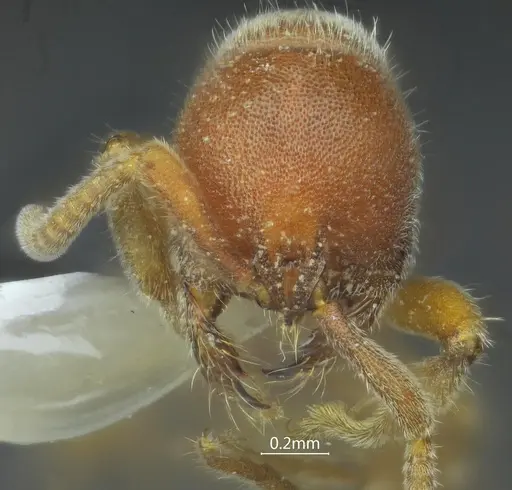
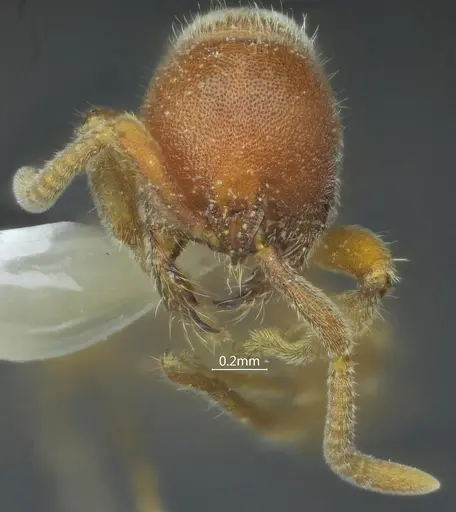
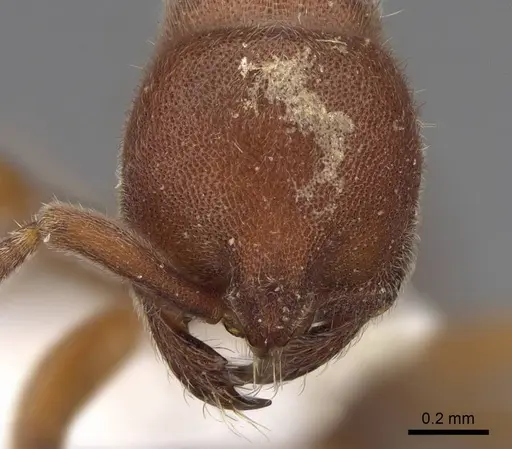
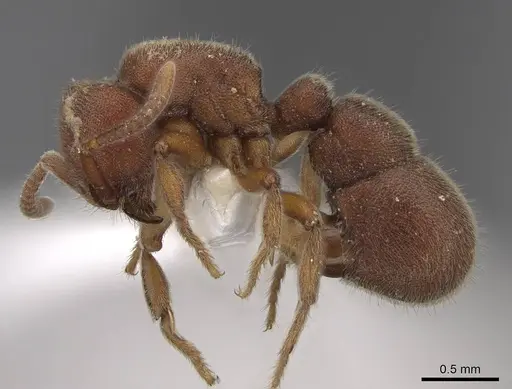
Workers measure 3.61-4.00mm total length, making them relatively large for the genus Proceratium. They have a distinctive appearance with abundant long erect hairs on the dorsal body surface, scapes, and legs, these hairs are longer than the maximum dorsoventral diameter of the metafemur. The head has straight to weakly convex sides with a convex vertex. The frontal carinae are well-developed with large lamellae extending laterally above the antennal insertions. The fourth abdominal segment is very strongly recurved (IGR 0.24-0.26). Body color is uniformly orange-brown to reddish-brown, with the vertex of the head slightly darker. The queen measures 4.72mm and has large eyes with over 80 ommatidia [1][2].
Housing and Nest Setup
Due to their tiny size (under 4mm) and cryptic nature, Proceratium bruelheidei requires careful housing. A naturalistic setup with a soil/leaf litter mixture works well, replicating their natural leaf litter habitat. Alternatively, a Y-tong or plaster nest with small, tight chambers provides appropriate housing. The nest area must remain consistently moist but never waterlogged, these ants come from damp subtropical forest leaf litter. Use excellent escape prevention including fine mesh barriers and tight-fitting lids, as their small size allows them to squeeze through tiny gaps. Provide a dark, quiet location as these cryptic ants prefer darkness and will not thrive in brightly lit areas.
Feeding and Diet
No direct observations of feeding behavior exist for this species. However, Proceratium ants are typically predators that specialize on small arthropods and likely accept small live prey such as springtails, fruit flies, and other micro-arthropods. Based on genus patterns, they likely accept protein sources but may not readily take sugar water. Start by offering small live prey and observe acceptance. Remove uneaten prey after 24-48 hours to prevent mold. Feed small amounts every few days, adjusting based on colony consumption.
Temperature and Seasonal Care
Maintain temperatures around 22-26°C, reflecting their subtropical Chinese origin in Jiangxi and Zhejiang provinces. Provide a temperature gradient so workers can self-regulate by moving between warmer and cooler areas. During winter (roughly November-February), likely provide a diapause period by reducing temperatures to 15-18°C for 2-3 months. This mimics the seasonal conditions in their native range. Monitor colony activity levels, if workers become sluggish, the temperature may be too low, if they avoid the heated areas, it may be too warm.
Frequently Asked Questions
How long does it take for Proceratium bruelheidei to produce first workers?
The egg-to-worker timeline is completely unknown for this species, no developmental observations exist. Based on related Proceratium species and their small colony size, expect approximately 6-10 weeks at optimal temperature. However, this is purely an estimate with no direct data supporting it.
What do Proceratium bruelheidei ants eat?
No feeding observations exist for this species. Based on genus patterns, they are predators that likely accept small live prey such as springtails, fruit flies, and tiny arthropods. Sugar acceptance is uncertain. Start with small live prey and experiment to see what your colony accepts.
Are Proceratium bruelheidei good for beginners?
No. This is an expert-level species due to several factors: it was only described in 2018 with zero documented biology, no confirmed diet acceptance, unknown colony structure, and no established husbandry protocols in captivity. There are many better-documented species available for beginners.
Do Proceratium bruelheidei ants sting?
They have a well-developed sting, but being only 3-4mm in size, the sting likely cannot penetrate human skin. Based on genus patterns, they are not aggressive and will flee rather than attack.
How big do Proceratium bruelheidei colonies get?
Colony size is completely unknown, no wild colony data exists. Based on related Proceratium species and their cryptic, leaf-litter-dwelling lifestyle, colonies are likely small, possibly under 100 workers.
Can I keep multiple Proceratium bruelheidei queens together?
No documented information exists about colony founding or queen behavior. Without data, combining unrelated queens is not recommended. The colony structure (single-queen vs multi-queen) has not been studied.
Do Proceratium bruelheidei need hibernation?
Likely yes, based on their subtropical Chinese origin. Provide a winter rest period of 2-3 months at reduced temperatures (15-18°C) during the winter months. This is inferred from their native range, not directly studied.
What is the best nest type for Proceratium bruelheidei?
A naturalistic setup with moist soil/leaf litter or a Y-tong/plaster nest with small, tight chambers works best. They need dark, humid conditions with secure hiding spaces. Avoid large open areas that would stress these tiny cryptic ants.
Why is my Proceratium bruelheidei colony not growing?
Multiple possibilities exist: diet may not be accepted (try different small live prey), humidity may be wrong (they need consistently moist substrate), temperature may be outside their preferred range, or the colony may simply be too new with no established protocols. This species has no documented captive husbandry, you are essentially pioneering its care.
Where is Proceratium bruelheidei found in the wild?
Only in southeastern China, specifically Jiangxi Province (near Xingangshan) and Zhejiang Province (Gutianshan National Nature Reserve). They live in early successional tree plantations in subtropical mixed forest at elevations of 122-617 meters.
References

This caresheet is licensed under CC BY-SA 4.0 .
CASENT0790023
View on AntWeb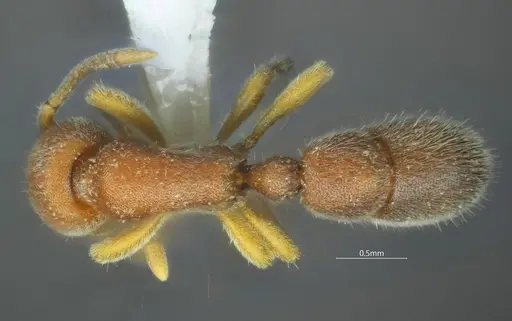
CASENT0790028
View on AntWeb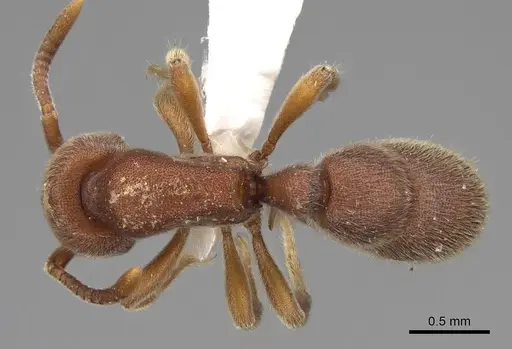
Literature
Loading...Loading products...