

Proceratium kepingmai
- Scientific Name
- Proceratium kepingmai
- Tribe
- Proceratiini
- Subfamily
- Proceratiinae
- Author
- Staab <i>et al.</i>, 2018
- Distribution
- Found in 0 countries
Proceratium kepingmai Overview
Proceratium kepingmai is an ant species of the genus Proceratium. It is primarily documented in 0 countries . Detailed taxonomic data and occurrence records can be further explored via authoritative databases such as AntWeb or the Global Biodiversity Information Facility (GBIF).
Proceratium kepingmai
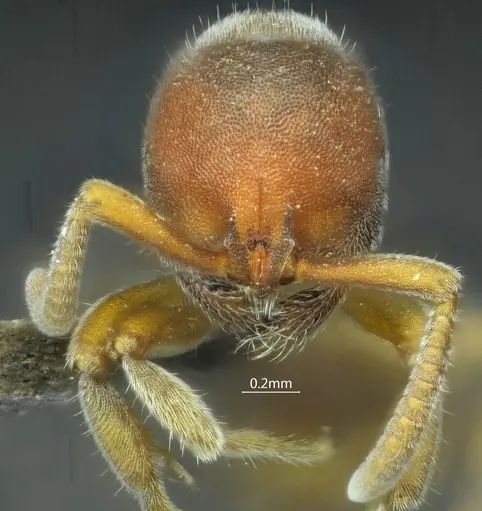
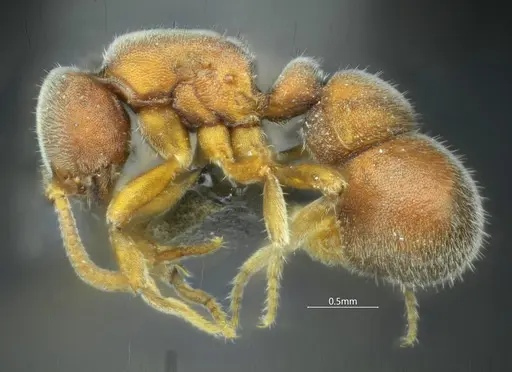
Proceratium kepingmai is a rare and recently described ant species from the subtropical forests of southeastern China. Workers are relatively large for the genus at 4.39-4.54 mm, with a distinctive appearance featuring very reduced eyes (just a single tiny ommatidium), a dark frontal furrow, and densely punctured body surface. The abdomen is notably large and recurved, giving these ants an army-ant-like appearance. They belong to the Proceratium itoi clade and represent the largest species in that group. This species is known from only two specimens collected in old-growth secondary subtropical forest in Jiangxi and Zhejiang provinces, with no documented observations of their biology or behavior in the wild [1][2].
Quick Summary
- Difficulty: Expert
- Origin & Habitat: Southeastern China (Jiangxi and Zhejiang provinces) in secondary subtropical mixed evergreen broad-leaved forest at 270-665m elevation. The Gutianshan National Nature Reserve where specimens were collected features over 250 woody plant species on sloped terrain, dominated by evergreen species like Castanopsis eyrei and Cyclobalanopsis glauca [1][2].
- Colony Type: Unknown. Colony structure (single queen vs multiple queens) has not been documented for this species. Based on typical Proceratium patterns, colonies are likely founded by a single queen [1].
- Size & Growth:
- Queen: Unknown, no queen has been described. Based on Proceratium genus patterns, queens are likely 6-8mm. Signal as estimated.
- Worker: 4.39-4.54 mm [1]
- Colony: Unknown, only two worker specimens have ever been collected. Related Proceratium species typically form small colonies of several dozen to a few hundred workers.
- Growth: Unknown. Signal as estimated based on genus patterns, likely moderate growth rate typical of Proceratium.
- Development: Unknown. Based on typical Proceratium development and subtropical climate, estimate 8-12 weeks at optimal temperature. Signal as estimated. (No direct development data exists for this species. This is an estimate based on genus-level patterns and related species from similar climates.)
- Antkeeping:
- Temperature: Based on their subtropical Chinese habitat (approximately 29°N latitude,270-665m elevation), aim for warm conditions around 22-26°C. Adjust based on colony activity, if workers appear sluggish, increase slightly, if they avoid heated areas, reduce temperature. Signal as inferred from habitat.
- Humidity: Subtropical forest floor conditions. Keep nest substrate consistently moist but not waterlogged. Provide a gradient with slightly drier areas available. Expect 60-80% relative humidity. Signal as inferred from habitat.
- Diapause: Unknown if this species requires a winter rest period. The subtropical climate of their range (southern China) suggests they may not need a true diapause, but related temperate Proceratium species do overwinter. Monitor colony behavior, if they become less active in winter, provide cooler temperatures (15-18°C) for several months. Signal as unknown.
- Nesting: In the wild, they were collected from leaf litter in secondary subtropical forest using Winkler extraction. In captivity, a naturalistic setup with moist soil/leaf litter or a well-humidified acrylic/plaster nest works well. They prefer tight, enclosed spaces scaled to their body size. Signal as inferred from genus patterns and collection method.
- Behavior: No direct behavioral observations exist for this species. Based on typical Proceratium behavior, these are likely cryptic, slow-moving predators that forage on the forest floor. They probably hunt small arthropods and are not aggressive. Their large curved abdomen and reduced eyes suggest a specialized predatory lifestyle. Escape risk is moderate, they are not strong climbers but can squeeze through small gaps. Signal as inferred from genus patterns.
- Common Issues: no captive breeding history, this is one of the least-studied ant species in captivity, with no established husbandry protocols, very small known population, only two specimens ever collected means biological data is extremely limited, slow growth potential, related Proceratium species grow slowly, which can frustrate keepers expecting rapid colony development, humidity management, forest-floor species are prone to mold if kept too wet, but can desiccate if too dry, escape prevention, while not tiny, their small size and cryptic behavior mean they can escape through standard barriers if not careful
Discovery and Rarity
Proceratium kepingmai is an exceptionally rare species that was only formally described in 2018. The entire scientific knowledge of this ant comes from just two worker specimens, a holotype collected in Jiangxi Province near Xingangshan in March 2015,and a paratype collected in Zhejiang Province at the Gutianshan National Nature Reserve in April 2015. The species name is a tribute to Professor Keping Ma, a Chinese botanist who helped establish the BEF-China project and promoted biodiversity research in China. All specimens were collected in old-growth secondary subtropical forest, an ecosystem Professor Ma extensively studied [1][2].
Identification and Appearance
This is the largest species in the Proceratium itoi clade, with workers measuring 4.39-4.54 mm in total length. Their most distinctive feature is the extremely reduced eyes, just a single tiny ommatidium, giving an ocular index of only 2-3. The head has weakly convex sides that are broadest at eye level, and the frontal furrow is conspicuously darker than the surrounding head surface. The propodeal declivity (the sloping rear section of the middle body) is densely punctured and mostly opaque, unlike the smoother surface of its closest relative P. bruelheidei. Body color is uniformly orange-brown to reddish-brown. They have erect hairs on their scapes and body, though these are relatively sparse compared to related species [1][2].
Natural Habitat
Both known specimens were collected in secondary mixed evergreen broad-leaved forest of relatively advanced age, indicated by the presence of large trees. The Gutianshan National Nature Reserve in Zhejiang is one of the larger remaining fragments of subtropical broad-leaved forest in southeastern China, covering about 8000 hectares with over 250 recorded woody species. The forest is on sloped terrain and dominated by evergreen species including Castanopsis eyrei, Cyclobalanopsis glauca, Machilus thunbergii, and Schima superba. Approximately 50% of woody species are deciduous. The ants were collected using Winkler leaf litter extraction, confirming they live in the forest floor leaf litter layer [1][3].
Proceratium Biology and Care Assumptions
Since no direct observations exist for P. kepingmai specifically, keepers must rely on what is known about the Proceratium genus as a whole. Proceratium ants are often called 'army ant mimics' due to their large, recurved abdomen that resembles army ants. They are specialized predators that hunt small arthropods on the forest floor. Queens are typically claustral, they seal themselves in a chamber and survive on stored fat until their first workers emerge. Colonies are usually small, typically under a few hundred workers. These ants are cryptic and slow-moving, not aggressive, and they do not form large aggressive swarms. They prefer stable, humid conditions similar to their forest floor habitat [3].
Housing and Nesting
For captive care, provide a naturalistic setup that mimics the forest floor environment. A well-humidified acrylic or plaster nest with chambers scaled to their size (4-5mm passages) works well. Alternatively, a naturalistic setup with moist soil and leaf litter allows for more natural foraging behavior. Keep the nest area consistently humid but ensure ventilation prevents mold buildup. A water tube or moisture reservoir connected to the nest helps maintain humidity. Since they are poor climbers, standard barrier methods are usually sufficient, but ensure all connections are secure [3].
Feeding
Based on genus-level behavior, P. kepingmai is likely a predator that hunts small arthropods. Offer small live prey such as fruit flies, pinhead crickets, small mealworms, and other tiny insects. They probably accept protein-rich foods readily but may ignore sugar sources, as Proceratium are not typically honeydew feeders. Offer prey 2-3 times per week and remove uneaten items within 24 hours to prevent mold. Since their natural diet is unknown, be prepared to experiment with different prey types to find what they accept best [3].
Temperature and Seasonal Care
Maintain temperatures around 22-26°C, reflecting their subtropical Chinese habitat at approximately 29°N latitude. A slight temperature gradient allows workers to self-regulate. If you observe workers consistently avoiding heated areas, reduce temperature, if they cluster near warmth, you can increase slightly. Whether they require a winter rest period is unknown, the subtropical climate suggests they may remain active year-round, but monitor for seasonal slowdowns. If the colony becomes less active in winter months, providing cooler temperatures (15-18°C) for 2-3 months may be beneficial [1].
Frequently Asked Questions
How long does it take for Proceratium kepingmai to produce first workers?
The egg-to-worker timeline is unknown for this species, no development data exists. Based on typical Proceratium patterns and their subtropical climate, expect approximately 8-12 weeks at optimal temperature (22-26°C). This is an estimate since no captive breeding has been documented.
Can I keep Proceratium kepingmai in a test tube setup?
Yes, a test tube setup can work for founding colonies. Use a test tube with a water reservoir sealed with cotton, providing humidity. Ensure the tube is dark enough, these cryptic ants prefer dark, enclosed spaces. However, a naturalistic or acrylic nest may be better for long-term colony growth as they need space for hunting and the large abdomen they develop.
What do Proceratium kepingmai ants eat?
Their exact diet is unknown, but based on Proceratium genus behavior, they are predators. Offer small live prey like fruit flies, pinhead crickets, small mealworms, and other tiny insects. They likely ignore sugar sources. Remove uneaten prey within 24 hours.
Are Proceratium kepingmai ants aggressive?
No direct observation exists, but Proceratium species are not aggressive. They are cryptic, slow-moving predators that avoid confrontation. Their large stingers suggest they may sting if threatened, but they are not territorial or aggressive toward humans.
Do Proceratium kepingmai ants need hibernation?
This is unknown. Their subtropical habitat in southeastern China suggests they may not need a true diapause. However, if you notice reduced activity in winter, providing cooler temperatures (15-18°C) for 2-3 months may be appropriate.
How big do Proceratium kepingmai colonies get?
Colony size is unknown, only two worker specimens have ever been collected. Based on related Proceratium species, colonies likely remain small, probably reaching several dozen to a few hundred workers at maximum.
Is Proceratium kepingmai a good species for beginners?
No. This is an expert-level species due to the complete lack of captive breeding history. No established husbandry protocols exist, and all care must be based on genus-level assumptions. There is no guarantee that standard Proceratium care will work for this specific species.
Can I keep multiple Proceratium kepingmai queens together?
This is unknown. Colony structure has not been documented for this species. Proceratium species are typically monogyne (single queen), but combining unrelated queens is not recommended without evidence they can found colonies pleometrotically.
What makes Proceratium kepingmai different from other Proceratium?
P. kepingmai is the largest member of the P. itoi clade and has the most reduced eyes in that group (just a single ommatidium). It can be distinguished from similar species by its densely punctured propodeal declivity, dark frontal furrow, and the shape of its petiolar node. It is also one of the rarest, known from only two specimens ever collected.
References

This caresheet is licensed under CC BY-SA 4.0 .
CASENT0790031
View on AntWeb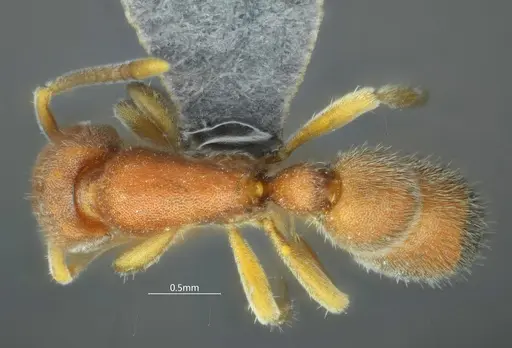
Literature
Loading...Loading products...