

Pristomyrmex tsujii
- Scientific Name
- Pristomyrmex tsujii
- Tribe
- Crematogastrini
- Subfamily
- Myrmicinae
- Author
- Sarnat & Economo, 2013
- Distribution
- Found in 2 countries
Pristomyrmex tsujii Overview
Pristomyrmex tsujii is an ant species of the genus Pristomyrmex. It is primarily documented in 2 countries , including Fiji, Wallis and Futuna. Detailed taxonomic data and occurrence records can be further explored via authoritative databases such as AntWeb or the Global Biodiversity Information Facility (GBIF).
Pristomyrmex tsujii
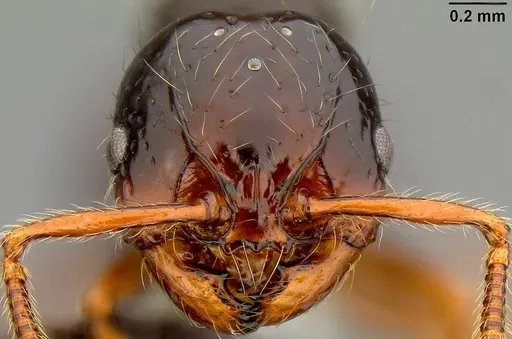
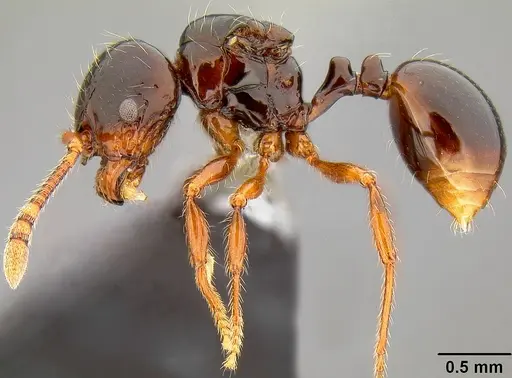
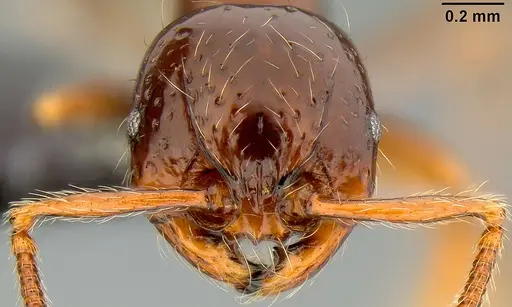
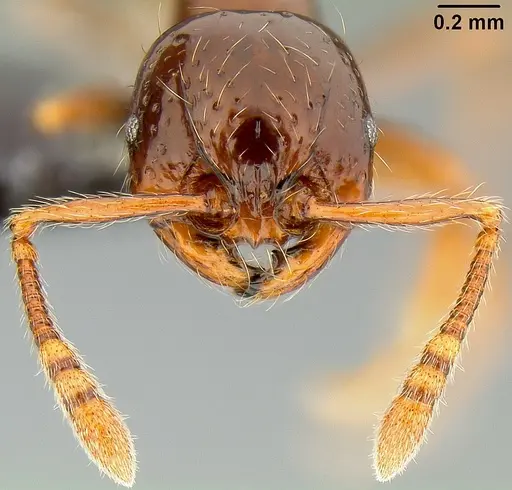
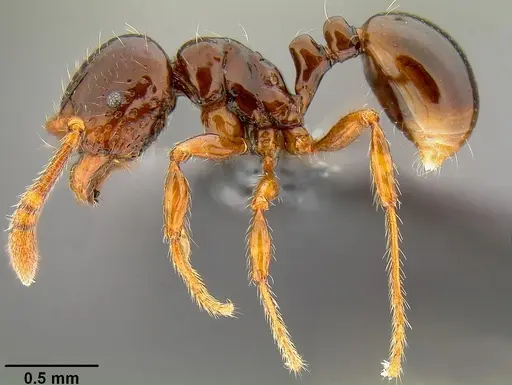
Pristomyrmex tsujiii is a small, shiny reddish-brown ant endemic to the Fijian archipelago. Workers measure 2.63-3.35mm with a polished appearance and distinctive foveae (small pits) on the head. The propodeum (the section behind the mesonotum) lacks strong spines, instead showing small denticles or being completely unarmed, this distinguishes them from their only Fijian congener, Pristomyrmex mandibularis. The species forms colonies with both winged alate queens and wingless ergatoid queens, a relatively rare trait in ants where the ergatoids serve as replacement reproductives if the primary queen dies. These ants inhabit leaf litter in primary rainforests across multiple Fijian islands, though they can tolerate some forest disturbance.
Quick Summary
- Difficulty: Unknown, no captive husbandry data available
- Origin & Habitat: Endemic to Fiji islands (Gau, Koro, Vanua Levu, Viti Levu, Taveuni) in the Pacific. Found in leaf litter of primary rainforest, though also collected from secondary forests and forest fragments. Workers are typically collected through litter sifting, with occasional foragers found under stones or on fallen trees [1][2].
- Colony Type: Colonies contain ergatoid (wingless) queens alongside potential alate queens. The ergatoid queens have distended gasters suggesting functional ovaries, likely serving as replacement reproductives within established colonies. Whether ergatoids can found independent colonies remains unknown [1].
- Size & Growth:
- Queen: Alate queens: 3.67-3.94mm, Ergatoid queens: 3.25mm [1]
- Worker: 2.63-3.35mm [1]
- Colony: Unknown, workers are rarely encountered in the field, suggesting small to moderate colony sizes [1]
- Growth: Unknown
- Development: Unconfirmed, no captive development data exists for this species (Development timeline has not been studied. Related Pristomyrmex species in the levigatus group may provide rough estimates, but specific data is lacking.)
- Antkeeping:
- Temperature: Based on Fijian rainforest habitat (tropical), keep at 24-28°C. This is an inferred estimate since no captive temperature studies exist for this species.
- Humidity: High humidity preferred, these are leaf litter ants from rainforest environments. Keep substrate consistently moist but not waterlogged. Provide a gradient with damp and drier areas.
- Diapause: Unlikely, as a tropical species from Fiji, they probably do not require a diapause period. However, slight seasonal slowing may occur if room temperature drops.
- Nesting: In captivity, provide a naturalistic setup with moist substrate (soil/leaf litter mix) or a Y-tong/plaster nest with chambers scaled to their small size. They prefer dark, humid nesting areas similar to their natural leaf litter habitat. Test tube setups can work but monitor for drying.
- Behavior: Workers are small at 2.6-3.4mm and appear to be docile based on their cryptic leaf-litter lifestyle. They are not aggressive and likely forage individually or in small groups on the forest floor. Escape risk is moderate due to their small size, use standard barrier methods. The ergatoid queen system suggests they may be tolerant of some colony disturbance. Males were frequently caught in Malaise traps, indicating nuptial flights occur but timing is unknown [1].
- Common Issues: no captive husbandry data exists, this species has never been kept in captivity, so all care recommendations are estimates based on related species, ergatoid queen function is unclear, we don't know if they can found independent colonies or only serve as replacement reproductives, field collections are rare, this suggests colonies are small or populations are sparse, which may make captive establishment difficult, tropical humidity requirements mean drying out is a major risk, must monitor substrate moisture carefully, nuptial flight timing is unknown, cannot predict when alates will emerge for breeding
Species Identification and Distinction
Pristomyrmex tsujiii is one of only two Pristomyrmex species known from Fiji, the other being P. mandibularis. The key identifying feature is the lack of strong propodeal spines: workers of P. tsujii have either small denticles or no spines at all, while P. mandibularis has prominent spines. Workers are polished reddish-brown with distinctive foveae (small pits) on the head. The antenna has 11 segments with a 3-segmented club. The clypeus has a tridentate (three-toothed) anterior margin. Petiole is nodiform (knob-shaped) and taller than long [1].
Natural History and Distribution
This species is endemic to the Fijian archipelago, found on the islands of Gau, Koro, Vanua Levu, Viti Levu, and Taveuni. Workers are almost exclusively collected from leaf litter samples through sifting, though occasional foragers are found under stones or on fallen trees. The species prefers primary rainforest but has been collected from secondary forests and forest fragments, indicating some tolerance for habitat disturbance. Notably, workers are rarely encountered despite the species being widely distributed across Fiji, suggesting either small colony sizes or cryptic behavior. Males are collected more frequently in Malaise traps, indicating they are more active/visible during nuptial flights [1].
Colony Structure and Reproduction
Pristomyrmex tsujiii exhibits an interesting reproductive system with multiple queen castes. Colonies contain both alate (winged) queens and ergatoid (wingless) queens. The ergatoid queens have strongly distended gasters (abdomens) that are presumed to contain functional ovaries, suggesting they serve as replacement reproductives within established colonies. However, it remains unknown whether ergatoid queens can found independent colonies or if they only function as backup reproductives when the primary queen dies. Similarly, it is unclear whether ergatoid and alate queens coexist in the same nest. This dual-queen system is relatively rare among ants and makes this species particularly interesting for study [1].
Housing and Nesting in Captivity
Since no captive husbandry records exist for this species, care recommendations must be inferred from its natural habitat. As a leaf-litter ant from Fijian rainforests, they require high humidity and dark nesting conditions. A naturalistic setup with a moist soil/leaf litter mixture works well, or alternatively a Y-tong/plaster nest with appropriately scaled chambers. The small worker size (2.6-3.4mm) means chambers and passages should be proportionally sized. Test tubes can work but require careful moisture monitoring to prevent drying. Provide a humidity gradient with damp substrate areas and slightly drier retreat spaces. Escape prevention should be adequate for their small size, standard barriers are likely sufficient [1].
Feeding and Diet
The diet of Pristomyrmex tsujiii in the wild has not been studied, but related Pristomyrmex species are typically omnivorous, feeding on small insects, honeydew, and nectar. In captivity, offer a varied diet including small live prey (fruit flies, pinhead crickets, springtails), protein sources, and sugar water or honey. Start with small portions and observe acceptance. As small ants, prey items should be appropriately sized. The cryptic leaf-litter lifestyle suggests they may be opportunistic foragers [1].
Temperature and Seasonal Care
As a tropical species from Fiji (near the equator), Pristomyrmex tsujiii requires warm, stable temperatures. Based on the Fijian climate, aim for 24-28°C with minimal variation. A slight temperature gradient allows the colony to self-regulate. Diapause is unlikely given the tropical habitat, though slight seasonal slowing may occur if ambient temperatures drop. No specific data exists on their temperature tolerance or preferences, monitor colony behavior and adjust accordingly. Avoid temperatures below 20°C for extended periods [1].
Challenges and Considerations
This species presents significant challenges for antkeepers. Pristomyrmex tsujiii has never been documented in captive husbandry, meaning all care recommendations are educated guesses based on related species and natural history data. The ergatoid queen system raises questions about colony founding that remain unanswered. Workers are rarely encountered in the wild, suggesting colonies may be small or difficult to establish. Additionally, being endemic to Fiji means this species may face export restrictions. Prospective keepers should consider whether they can source colonies ethically and whether their setup can meet the humidity and temperature requirements of a tropical leaf-litter ant [1].
Frequently Asked Questions
Is Pristomyrmex tsujii available for antkeepers?
This species is extremely rare in the antkeeping hobby. It is endemic to Fiji and has never been documented in captive husbandry. Even in the wild, workers are rarely encountered. If available at all, it would likely be through specialized importers or breeders, and may face export restrictions from Fiji.
How do I care for Pristomyrmex tsujii?
Since no captive data exists, care must be estimated. Keep at 24-28°C with high humidity (rainforest conditions). Use a naturalistic setup with moist substrate or a Y-tong nest with small chambers. Feed small live prey, protein, and sugar water. This is essentially experimental husbandry, expect to adjust based on colony response.
What do Pristomyrmex tsujii eat?
Diet is unconfirmed for this species. Based on related Pristomyrmex, they likely accept small insects, honeydew, and nectar. Offer small live prey (fruit flies, springtails), protein sources, and sugar water. Start with varied offerings to test acceptance.
How big do Pristomyrmex tsujii colonies get?
Colony size is unknown. Workers are rarely encountered in the field, suggesting small to moderate colony sizes. The maximum colony size in the wild has not been documented.
Do Pristomyrmex tsujii queens found colonies independently?
This is unknown. Colonies have both alate (winged) and ergatoid (wingless) queens. The ergatoids appear to have functional ovaries, suggesting they may serve as replacement reproductives. Whether ergatoids can found independent colonies has not been studied.
What makes Pristomyrmex tsujii different from other ants?
This is one of only two Pristomyrmex species in Fiji and has an unusual dual-queen system with both winged and wingless queens. The lack of strong propodeal spines distinguishes it from its closest relative. Workers have a distinctive polished, reddish-brown appearance with foveae (pits) on the head.
Do Pristomyrmex tsujii need hibernation?
No. As a tropical species from Fiji near the equator, they do not require hibernation or diapause. Keep them at warm, stable temperatures year-round (24-28°C).
Are Pristomyrmex tsujii good for beginners?
No. This species is not recommended for beginners. There is zero captive husbandry data, making care entirely experimental. The species is extremely rare, and basic biology like founding behavior and colony size remains unknown.
Where is Pristomyrmex tsujii found?
Pristomyrmex tsujiii is endemic to Fiji, found on the islands of Gau, Koro, Vanua Levu, Viti Levu, and Taveuni. They live in leaf litter in primary rainforest, though they tolerate some habitat disturbance.
How do I identify Pristomyrmex tsujii?
Workers are small (2.6-3.4mm), shiny reddish-brown ants with small pits (foveae) on the head. The key feature is the propodeum lacking strong spines, it either has small denticles or is completely unarmed. The antenna has 11 segments with a 3-segmented club. This distinguishes them from P. mandibularis which has prominent spines.
References

This caresheet is licensed under CC BY-SA 4.0 .
CASENT0171143
View on AntWeb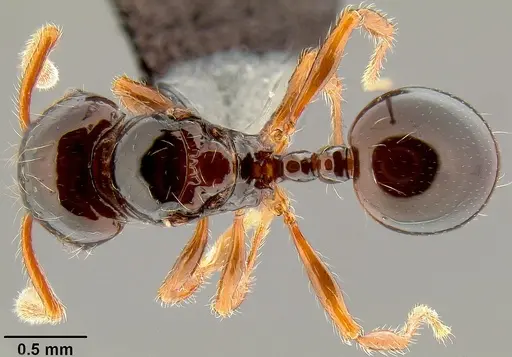
CASENT0171144
View on AntWeb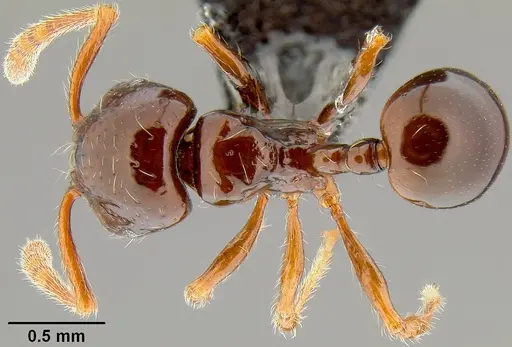
Literature
Loading...Loading products...