

Pristomyrmex mandibularis
- Scientific Name
- Pristomyrmex mandibularis
- Tribe
- Crematogastrini
- Subfamily
- Myrmicinae
- Author
- Mann, 1921
- Distribution
- Found in 2 countries
Pristomyrmex mandibularis Overview
Pristomyrmex mandibularis is an ant species of the genus Pristomyrmex. It is primarily documented in 2 countries , including Fiji, Wallis and Futuna. Detailed taxonomic data and occurrence records can be further explored via authoritative databases such as AntWeb or the Global Biodiversity Information Facility (GBIF).
Pristomyrmex mandibularis
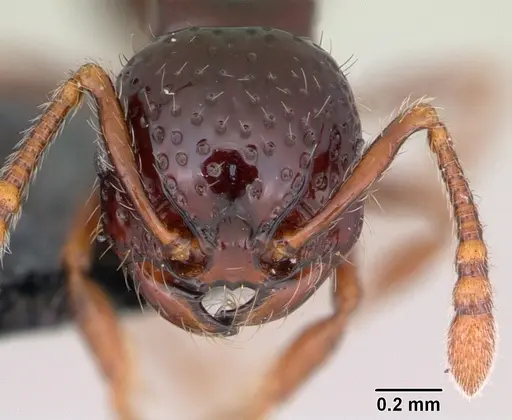
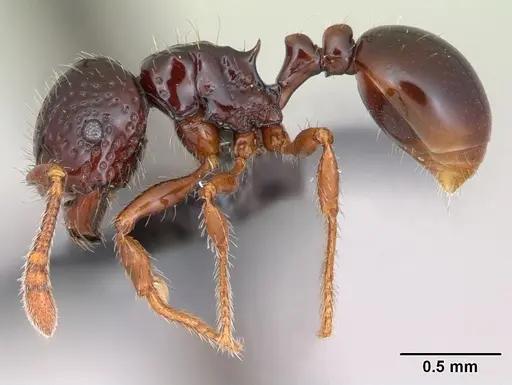
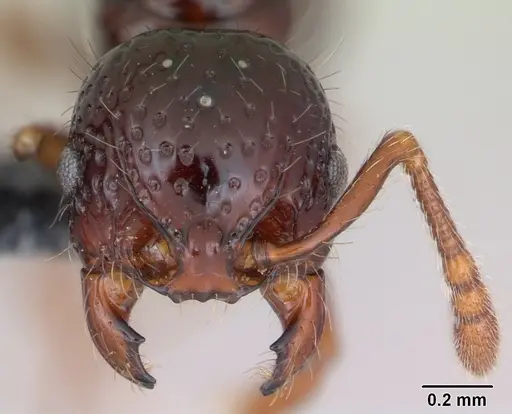
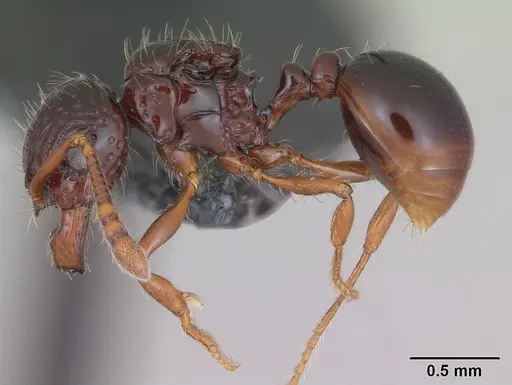
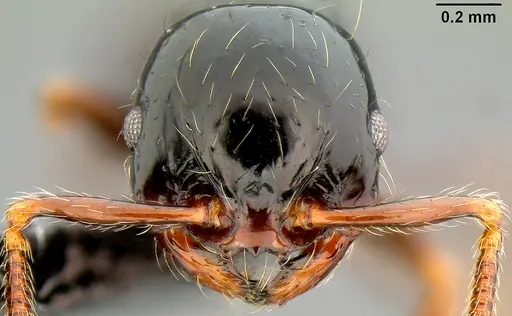
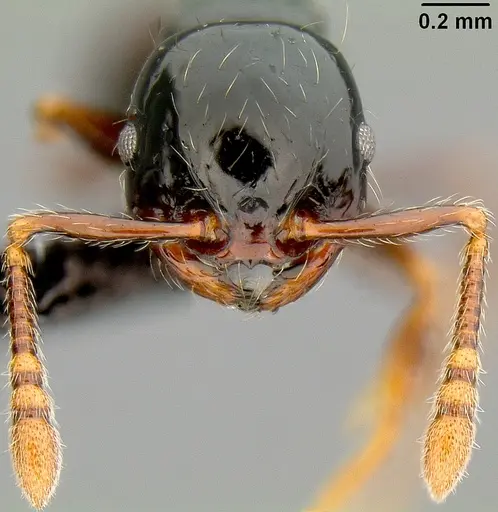
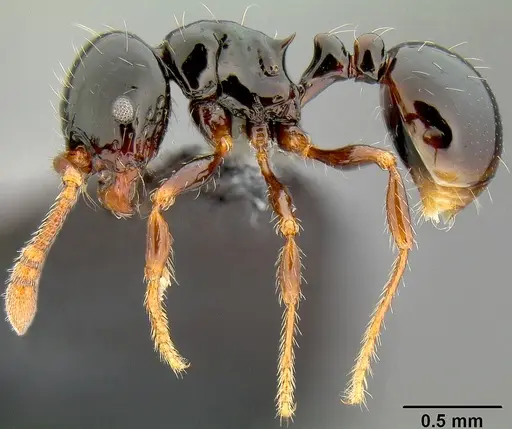
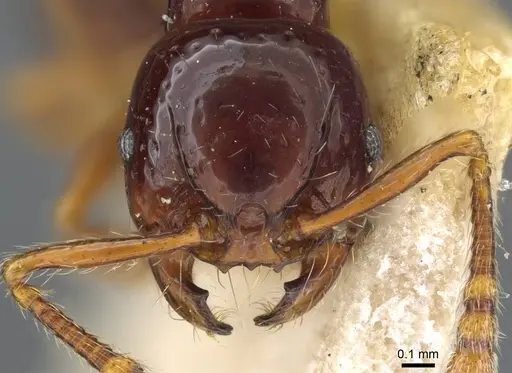
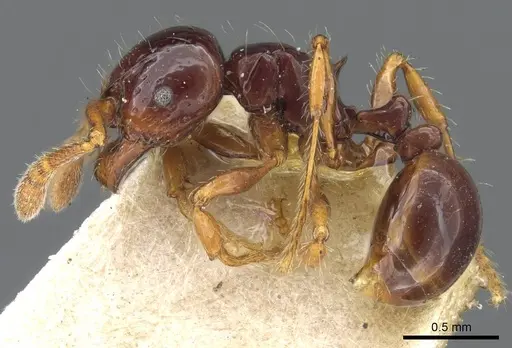
Pristomyrmex mandibularis is a small, shiny Myrmicine ant endemic to the Fiji Islands. Workers measure 2.68-3.49mm with a robust build, distinctive propodeal spines, and mandibles bearing four teeth. Their color ranges from reddish-brown to blackish-brown, with significant variation across the archipelago, reddish specimens tend to have more foveae (tiny pits) on the face while darker specimens are smoother [1]. This species is one of only two Pristomyrmex species known from Fiji, making it unmistakable in its range. A unique trait is the presence of ergatoid queens, wingless replacement queens with a single ocellus, which is rare within the genus. Colonies are small, typically nesting under stones or in rotting logs in rainforest habitats [1][2].
Quick Summary
- Difficulty: Medium
- Origin & Habitat: Endemic to Fiji Islands, found across multiple islands including Viti Levu, Taveuni, Vanua Levu, Ovalau, Kadavu, Koro, Lakeba, Moala, Ovalau, and Gau. Inhabits rainforest environments, with workers collected from litter sifting and small colonies nesting under stones or in rotting logs [1][2][3].
- Colony Type: Small colonies with ergatoid (wingless) queen caste. The species has documented ergatoid queens that can serve as replacement reproductives if the primary queen dies. Colony structure appears to be single-queen (monogyne) based on typical Pristomyrmex patterns, though this is inferred.
- Colony: Monogyne
- Size & Growth:
- Queen: 3.22-3.65mm for alate queens, ergatoid queens ~3.32-3.40mm [2]
- Worker: 2.68-3.49mm
- Colony: Small colonies, likely under 100 workers based on field observations of small colony sizes [2]
- Growth: Unknown, no development data available
- Development: Unconfirmed, no direct development data exists for this species. Based on typical Myrmicinae patterns in tropical species, estimate 4-8 weeks at optimal temperature. (Development timeline has not been directly studied. Estimates based on related Pristomyrmex species and general Myrmicinae development patterns.)
- Antkeeping:
- Temperature: Tropical species, aim for 22-27°C. Start in this range and adjust based on colony activity. Fiji is warm year-round, so no hibernation is needed.
- Humidity: Rainforest species, keep nest substrate moderately humid. Allow for some variation with drier areas available. Mist occasionally but avoid waterlogging.
- Diapause: No, as a tropical endemic species, they do not require hibernation. Maintain warm temperatures year-round.
- Nesting: In nature they nest under stones and in rotting logs. A naturalistic setup with flat stones over moist substrate, or a Y-tong/plaster nest with narrow chambers works well. They are small but robust, standard ant nest dimensions are appropriate.
- Behavior: Workers are active foragers, likely hunting small prey and collecting honeydew. They have propodeal spines which may serve as a defense mechanism. Their small colony size and tropical origin suggest moderate activity levels. Escape risk is moderate due to their small size, use standard barrier methods but no special escape prevention is required beyond standard practices.
- Common Issues: small colony size means slower population growth, patience is required, tropical species may struggle if temperatures drop below 20°C, no direct research on diet, experimental feeding may be needed, ergatoid queen presence suggests they can replace lost queens but colony survival during queen loss is uncertain, field-collected colonies may have parasites or stress from collection
Natural History and Distribution
Pristomyrmex mandibularis is a true Fijian endemic, it is found nowhere else on Earth. The species occurs across the Fijian archipelago on islands including Viti Levu (the largest island), Taveuni, Vanua Levu, Ovalau, Kadavu, Koro, Lakeba, Moala, and Gau [1]. They inhabit rainforest environments and are typically collected through litter sifting (berlesates) or by finding their small nests under stones [1][2].
One of the most interesting aspects of this species is its morphological variation across the islands. Workers range from reddish-brown with heavily foveate (pitted) faces to darker specimens that are nearly smooth [1]. This variation is not random, specimens from western mountain ranges tend toward the more foveate appearance while those from southeastern Viti Levu are smoother. Interestingly, both extremes can occur on the same island (Koro) without intermediates, which initially suggested they might be separate species. However, intermediate specimens found elsewhere indicate some gene flow between populations [1].
The presence of ergatoid (wingless) queens is notable, this is uncommon in the genus Pristomyrmex. These ergatoid queens have only one ocellus (simple eye) and can serve as replacement reproductives if the primary queen is lost.
Housing and Nest Preferences
In their natural habitat, Pristomyrm mandibularis nests under stones and in rotting logs within rainforest litter [1][2]. For captive care, a naturalistic setup works well, a layer of moist soil or plaster with flat stones on top provides the humid, sheltered environment they prefer. A Y-tong (acrylic) nest with narrow chambers and a water reservoir also works, as the species is small but not extremely tiny.
Because they come from a tropical rainforest, they need consistent warmth and humidity. Keep the nest substrate moist but not waterlogged, the goal is damp earth that doesn't dry out quickly. A small water test tube connected to the nest area helps maintain humidity. Avoid letting the nest dry out completely, but also ensure there's no standing water.
Given their small colony size, start with a modest setup. You can expand as the colony grows, but these ants never reach massive populations, so a compact nest is appropriate.
Feeding and Diet
The specific dietary requirements of Pristomyrmex mandibularis have not been studied in detail. Based on typical Pristomyrmex genus behavior, they are likely generalist feeders that consume small insects and tend aphids for honeydew.
For captive feeding, offer a varied diet: small live prey like fruit flies, pinhead crickets, or mealworms (cut appropriately small) provides protein. Sugar water, honey, or diluted honeydew can be offered as an energy source. Since they are small ants, prey items should be appropriately sized.
Start with offering protein once or twice per week, with a constant sugar source available. Remove any uneaten prey after 24-48 hours to prevent mold. Observe whether your colony accepts different food types, some antkeepers report that Pristomyrmex species can be selective, so don't be discouraged if initial offerings are ignored. Experiment with different prey sizes and types to find what your colony prefers.
Temperature and Seasonal Care
As a tropical species endemic to Fiji, Pristomyrmex mandibularis requires warm conditions year-round. Fiji maintains temperatures between 22-28°C (72-82°F) throughout the year, so your ant setup should reflect this.
Keep the nest area in the low-to-mid 20s Celsius (around 23-27°C). A heating cable or mat on one side of the nest can create a gentle gradient if your room temperature runs cooler, but ensure there's also an unheated area so ants can regulate their temperature by moving between warmer and cooler zones.
No hibernation or winter rest period is needed, this is a tropical species that remains active year-round when kept warm. Sudden temperature drops below 20°C could stress or kill the colony. Monitor with a thermometer placed near the nest.
High humidity is important alongside warmth. The rainforest environment they inhabit is humid, so aim for 60-80% relative humidity in the nest area. This can be achieved through moist substrate and occasional misting, but ensure adequate ventilation to prevent mold buildup.
Colony Structure and Reproduction
Pristomyrmex mandibularis forms small colonies with a single queen. A notable feature is the presence of ergatoid queens, wingless females that develop from regular worker larvae and can serve as replacement reproductives if the primary queen dies. This is different from most ant species where only the founding queen reproduces.
The ergatoid queens of this species are distinctive: they have only one ocellus (simple eye) on the head, unlike the three ocelli found on alate (winged) queens. They closely resemble workers but are slightly larger and have the wing-less condition.
Colony size remains small throughout the life of the colony, likely under 100 workers even in mature colonies [2]. This is typical for the genus and reflects their ecological niche in forest floor habitats. The small colony size means growth will be slower than many common pet ant species, requiring patience from the keeper.
Alate (winged) queens and males are produced for nuptial flights. Males are smaller (2.55-3.22mm) and darker than workers [2]. The timing of nuptial flights in Fiji's tropical climate is not well documented but likely occurs during the warmer, wetter months.
Behavior and Temperament
Workers of Pristomyrmex mandibularis are active foragers that search for food across the forest floor. They possess propodeal spines, pointed projections on the rear of their mesosoma, which likely serve as a defense mechanism against predators or rival colonies.
Their temperament is not specifically documented, but Pristomyrmex species are generally not aggressive toward humans. They will defend their nest if threatened, but being small ants, their ability to sting or bite is minimal. The spines may be used for defense rather than offense.
The species is not known to be particularly escape-prone, but standard precautions should still be taken. Use barrier methods appropriate for small ants (fluon on smooth surfaces, tight-fitting lids) to prevent escapes.
Their small colony size and tropical requirements make them best suited for intermediate antkeepers who are comfortable maintaining warm, humid conditions year-round. They are not difficult to keep, but the lack of captive breeding information means some experimentation may be needed.
Frequently Asked Questions
How long does it take for Pristomyrmex mandibularis to develop from egg to worker?
The exact development timeline is unconfirmed, no direct research exists for this species. Based on typical Myrmicinae development patterns for tropical species, estimate approximately 4-8 weeks from egg to first worker at optimal temperature (around 25°C). Expect this to vary based on exact temperature and colony health.
What do Pristomyrmex mandibularis eat?
Their exact diet is not documented, but based on typical Pristomyrmex behavior, they likely accept small insects (fruit flies, pinhead crickets, small mealworms) for protein and sugar sources (honey water, sugar water, honeydew). Start with protein offerings once or twice weekly and keep a constant sugar source available.
Do Pristomyrmex mandibularis ants sting?
They are small Myrmicinae ants with propodeal spines that may be used for defense. However, they are not considered dangerous to humans and their small size means any potential sting would be minimal. They are not aggressive toward keepers.
What temperature do Pristomyrmex mandibularis need?
Keep them warm, aim for 22-27°C (72-80°F). As a tropical Fijian species, they do not tolerate cool temperatures. No hibernation is needed. A heating cable on one side of the nest can help maintain warmth if your room temperature is below this range.
How big do Pristomyrmex mandibularis colonies get?
Colonies remain small, likely under 100 workers even at maturity. This is typical for the genus and their forest floor niche. Growth is slower than many common pet ant species, so patience is required.
Can I keep multiple queens together?
This species appears to be monogyne (single-queen) in structure, with ergatoid queens serving as replacement reproductives within established colonies. Combining unrelated foundress queens has not been documented and is not recommended.
What humidity do Pristomyrmex mandibularis require?
As a rainforest species, they need moderate to high humidity, aim for 60-80%. Keep the nest substrate consistently moist but not waterlogged. Allow some drying between waterings but don't let it dry completely.
Are Pristomyrmex mandibularis good for beginners?
They are rated as medium difficulty. While not overly demanding, they require warm, humid tropical conditions year-round and have slower growth than many beginner species. The lack of captive breeding information also means some experimentation may be needed.
What type of nest should I use for Pristomyrmex mandibularis?
A naturalistic setup with flat stones over moist soil works well since they nest under stones in the wild. A Y-tong (acrylic) nest or plaster nest with narrow chambers also works. Keep the nest humid and ensure the chambers are appropriately sized for their small worker size (2.68-3.49mm).
References

This caresheet is licensed under CC BY-SA 4.0 .
CASENT0171044
View on AntWeb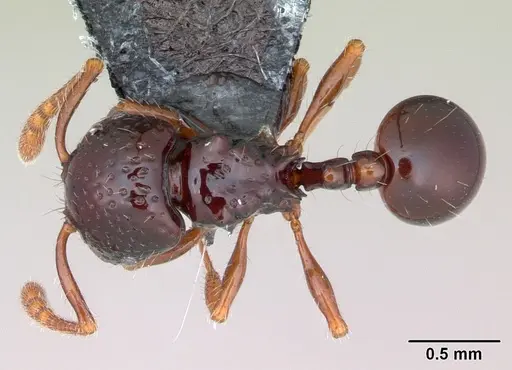
CASENT0171100
View on AntWeb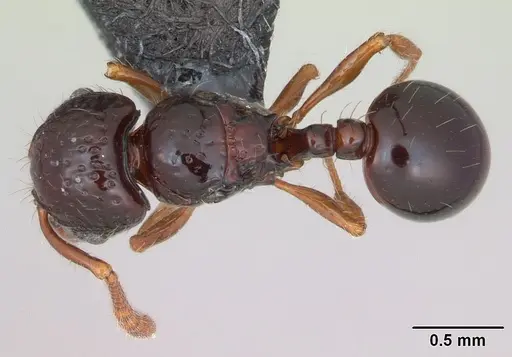
CASENT0171142
View on AntWeb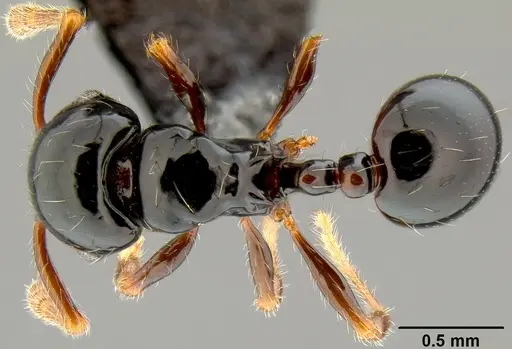
CASENT0905848
View on AntWeb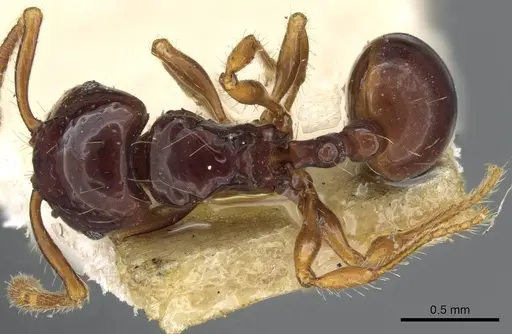
Literature
Loading...Loading products...