

Pristomyrmex divisus
- Scientific Name
- Pristomyrmex divisus
- Tribe
- Crematogastrini
- Subfamily
- Myrmicinae
- Author
- Wang, 2003
- Distribution
- Found in 1 countries
Pristomyrmex divisus Overview
Pristomyrmex divisus is an ant species of the genus Pristomyrmex. It is primarily documented in 1 countries , including Philippines. Detailed taxonomic data and occurrence records can be further explored via authoritative databases such as AntWeb or the Global Biodiversity Information Facility (GBIF).
Pristomyrmex divisus
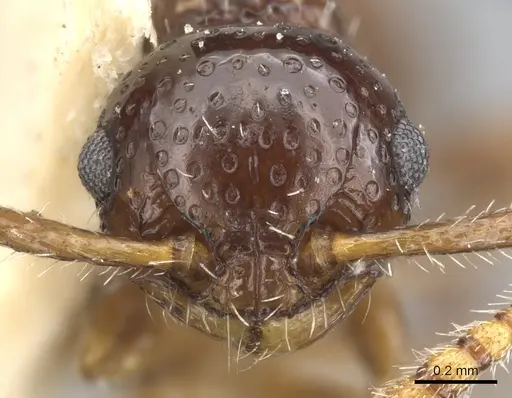
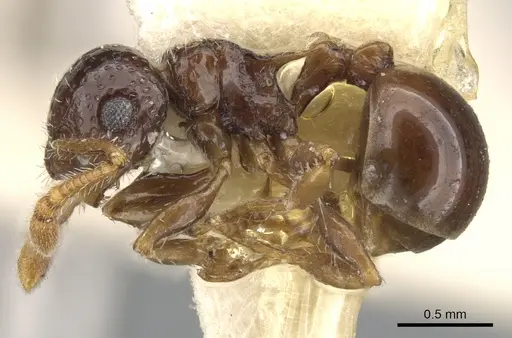
Pristomyrmex divisus is a small, reddish-brown ant endemic to the Philippines, specifically found in the Dumaguete area of Negros Oriental. Workers measure 3.0-3.4mm in total length, making them a relatively small Myrmicinae species. They have distinctive features including a deep median longitudinal furrow on the alitrunk (middle body section), well-developed propodeal spines, and a foveolate (pitted) dorsal surface on the head. The species belongs to the Punctatus group and is closely related to Pristomyrmex pulcher from Malaysia. This ant is part of a genus that is poorly studied in terms of biology, and no specific information exists about their colony structure, founding behavior, or captive care requirements.
Quick Summary
- Difficulty: Unknown, likely Moderate due to limited data
- Origin & Habitat: Endemic to the Philippines, specifically recorded from Dumaguete in Negros Oriental. As a tropical species from this region, they likely inhabit warm, humid forest environments [1][2].
- Colony Type: Unknown, no documented colony structure for this species
- Size & Growth:
- Queen: Undescribed, no queen measurements available
- Worker: 3.0-3.4mm total length [1]
- Colony: Unknown, no colony size data available
- Growth: Unknown
- Development: Unconfirmed, no development data available. Based on typical Myrmicinae patterns from similar small tropical ants, estimate 4-8 weeks at optimal temperature. (Development timeline is entirely unstudied for this species. The estimate is based on genus-level inference.)
- Antkeeping:
- Temperature: Likely 24-28°C based on tropical Philippine origin. Start in this range and observe colony activity. As a Dumaguete species, they likely prefer warm, stable conditions.
- Humidity: Likely moderate to high (60-80%) based on tropical forest habitat. Keep substrate consistently moist but not waterlogged.
- Diapause: Unlikely, as a tropical Philippine species, they probably do not require a diapause period. However, some seasonal slowing may occur during cooler months.
- Nesting: No specific natural nesting data. Based on related Pristomyrmex species, they likely nest in soil, rotting wood, or under stones in humid microhabitats. A small test tube setup or acrylic nest with moist substrate would be a reasonable starting point.
- Behavior: No specific behavioral observations documented. Pristomyrmex genus members are typically predatory or scavenging Myrmicinae with moderate aggression. Their small size (3mm) suggests they may be active foragers. Escape prevention should be considered due to their small stature.
- Common Issues: No biological data means all care parameters are estimates, expect a learning curve, Without documented diet preferences, finding accepted foods may require experimentation, Small colony size makes them vulnerable to stress, handle minimally, Tropical species may be sensitive to temperature drops, maintain warm conditions, Lack of documented captive breeding success means founding may be challenging
Species Identification and Range
Pristomyrmex divisus is a Philippine endemic first described by Wang in 2003. The workers are 3.0-3.4mm in total length with a uniform reddish-brown coloration. Key identification features include the well-developed lateral portions of the clypeus (the area just above the mandibles), a deep median longitudinal furrow running along the dorsal alitrunk, and scattered foveolate punctures on the head. The propodeal spines are long and acute, while the pronotum lacks spines entirely. This species is part of the Punctatus group and is most easily distinguished from its close relative P. pulcher by the presence of the median alitrunk furrow and the scattered head punctures versus the rugoreticulum pattern found in P. pulcher. The species has only been recorded from Dumaguete in Negros Oriental, making it a rare and geographically restricted ant. [1][2]
Housing and Nest Setup
Since no specific natural nesting data exists for this species, you will need to make educated guesses based on the genus and their tropical origin. A small test tube setup works well for founding colonies, fill a test tube about one-third with water, plug with cotton, and place the queen in the humid chamber. For established colonies, a small acrylic nest or a naturalistic setup with moist soil would be appropriate. Given their Philippine origin, they likely prefer humid conditions. Keep the nest substrate moist but not waterlogged, and provide a small water source. Because workers are only about 3mm long, ensure your setup has no gaps that could allow escapes, even small openings can be exploited by these tiny ants.
Feeding and Diet
The diet of Pristomyrmex divisus has not been documented in scientific literature. Based on typical Pristomyrmex genus behavior, they are likely predatory or omnivorous, feeding on small insects, honeydew, and scavenged protein sources. For captive care, start with small live prey items like fruit flies, pinhead crickets, or small mealworms. They may also accept sugar water or honey as an energy source. Since this is an unstudied species, be prepared to experiment with different food items. Offer protein foods 2-3 times per week and keep a sugar source available continuously. Remove uneaten food after 24-48 hours to prevent mold issues in the humid nest environment.
Temperature and Humidity Requirements
As a tropical ant from the Philippines (Dumaguete lies near the equator at low latitude), Pristomyrmex divisus almost certainly requires warm, humid conditions. Aim for temperatures in the 24-28°C range, this matches their natural environment in Negros Oriental. A heating cable on one side of the nest can create a gentle gradient if your room temperature falls below this range. For humidity, target 60-80% relative humidity within the nest. This can be achieved by keeping the substrate moist and ensuring the setup is not in a location with excessive airflow or air conditioning. Monitor the colony's activity level as a guide, if workers seem sluggish or cluster together excessively, the temperature may be too low.
Colony Development and Growth
No data exists on the development timeline of Pristomyrmex divisus. The egg-to-worker timeline is entirely unstudied for this species. Based on typical Myrmicinae patterns for small tropical ants (around 3mm worker size), you can reasonably expect development to take somewhere between 4-8 weeks under optimal conditions (around 26°C). The first workers (nanitics) will likely be smaller than mature workers. Since nothing is known about founding behavior, assume the queen will seal herself in during claustral founding (the most common pattern in Myrmicinae), living off her stored fat reserves until the first workers emerge. Be patient, with no species-specific data, expect a learning curve and potentially slower growth than more commonly kept ants.
Frequently Asked Questions
How long does it take for Pristomyrmex divisus to produce first workers?
The development timeline is unconfirmed for this species. Based on typical patterns for small Myrmicinae tropical ants, expect approximately 4-8 weeks from egg to worker at optimal temperature (around 26°C). However, this is purely an estimate since no specific data exists for P. divisus.
What do Pristomyrmex divisus ants eat?
Their diet has not been documented. Based on genus patterns, they likely accept small live prey (fruit flies, small crickets), and may consume honey or sugar water. Start with protein prey items 2-3 times weekly and offer a constant sugar source. Experiment to see what they accept.
What temperature should I keep Pristomyrmex divisus at?
Aim for 24-28°C based on their tropical Philippine origin. The Dumaguete region is warm year-round, so they likely do not tolerate cool conditions. Use a heating cable if needed to maintain warmth.
Do Pristomyrmex divisus ants need hibernation?
Unlikely. As a tropical species from the Philippines, they probably do not require a diapause period. Some seasonal slowing during cooler months may occur, but active overwintering in a heated room should be fine.
How big do Pristomyrmex divisus colonies get?
Colony size is unknown, no data exists on maximum colony size for this species. Based on their small worker size (3mm) and the genus, colonies likely remain relatively modest, possibly under a few hundred workers.
Is Pristomyrmex divisus a good species for beginners?
This is not recommended for beginners. The species has no documented captive care information, meaning all parameters must be estimated. This makes successful keeping more challenging than established species with known requirements.
Can I keep multiple Pristomyrmex divisus queens together?
Not documented. No information exists about colony structure or whether they are single-queen or multi-queen. Without data, combining unrelated queens is not recommended.
Do Pristomyrmex divisus ants sting?
Stinging ability is not documented for this species. As Myrmicinae, they have a stinger, but given their tiny size (3mm), any sting would likely be negligible to humans. Their small stature means they are not considered dangerous.
What humidity level do Pristomyrmex divisus need?
Likely 60-80% based on their tropical forest origin. Keep the nest substrate consistently moist but not waterlogged. Monitor for condensation and mold as indicators of humidity balance.
When should I move Pristomyrmex divisus to a formicarium?
No species-specific guidance exists. For small Myrmicinae, wait until the colony reaches at least 15-20 workers and the test tube shows signs of crowding or waste buildup. Always ensure the formicarium has appropriately sized chambers for their tiny 3mm workers.
References

This caresheet is licensed under CC BY-SA 4.0 .
CASENT0901709
View on AntWeb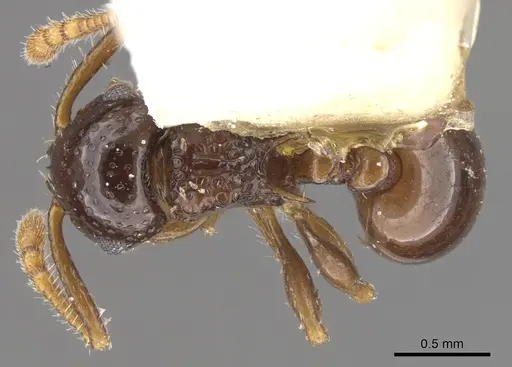
Literature
Loading...Loading products...