

Pristomyrmex curvulus
- Scientific Name
- Pristomyrmex curvulus
- Tribe
- Crematogastrini
- Subfamily
- Myrmicinae
- Author
- Wang, 2003
- Distribution
- Found in 0 countries
Pristomyrmex curvulus Overview
Pristomyrmex curvulus is an ant species of the genus Pristomyrmex. It is primarily documented in 0 countries . Detailed taxonomic data and occurrence records can be further explored via authoritative databases such as AntWeb or the Global Biodiversity Information Facility (GBIF).
Pristomyrmex curvulus
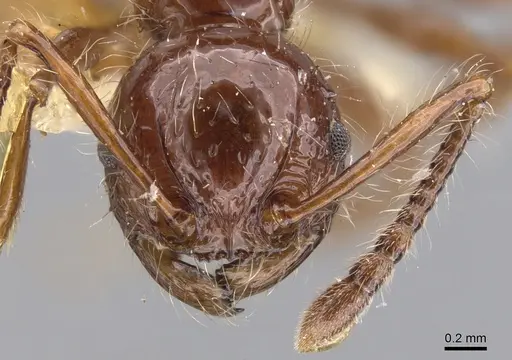
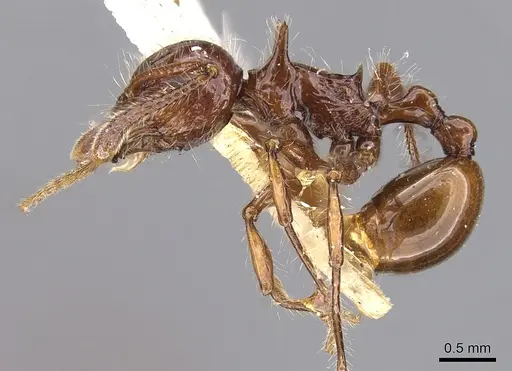
Pristomyrmex curvulus is a small, striking ant species endemic to the Philippines, specifically found in the Negros Oriental region around Dumaguete and Cuernos de Negros [1]. Workers measure 4.6-5.3mm and have a distinctive appearance featuring exceptionally long pronotal spines (0.38-0.44mm) that are among the longest in the genus, paired with much shorter propodeal spines [1][2]. Their body is reddish-brown to light yellow, with smooth and shining dorsal surfaces on the head and alitrunk, and the first gastral tergite lacks erect hairs [1]. Queens are larger at around 6.16mm and lack the pronotal spines seen in workers while having a lateral longitudinal ruga on each side of the petiole.
This species belongs to the Pristomyrmex quadridens species group and is closely related to P. longispinus and P. bicolor, from which it can be distinguished by its smooth dorsal surfaces, the presence of a median longitudinal carina on the clypeus, and the characteristic spine length ratios [2]. Unfortunately, almost nothing is known about their biology in the wild, no data exists on their diet, colony structure, nuptial flights, or nesting preferences. This makes them a challenging species for keepers who enjoy observing and discovering behaviors that may be unique to this poorly studied ant.
Quick Summary
- Difficulty: Expert
- Origin & Habitat: Endemic to the Philippines, specifically Negros Oriental region (Dumaguete, Cuernos de Negros). Found in tropical forest habitats [1].
- Colony Type: Unknown, colony structure has not been documented in scientific literature. Based on typical Pristomyrmex patterns, likely single-queen colonies.
- Size & Growth:
- Queen: 6.16mm, from original description
- Worker: 4.6-5.3mm [1], measured specimens
- Colony: Unknown, no colony size data exists for this species
- Growth: Unknown
- Development: Unknown, no development data exists for this species. Estimates based on similar tropical Myrmicinae suggest 4-8 weeks at optimal temperature. (Development timeline is unconfirmed. Related Pristomyrmex species typically develop relatively quickly in warm conditions.)
- Antkeeping:
- Temperature: Keep warm, roughly 24-28°C. This is a tropical Philippine species, so it needs consistently warm conditions similar to other Indomalayan ants. A heating cable on one side of the nest can create a suitable gradient.
- Humidity: Keep moderately humid, around 60-80%. The Philippines has a humid tropical climate, so aim for damp but not waterlogged substrate. Provide a water tube for drinking water.
- Diapause: No, this is a tropical species from the Philippines with no cold season in its native habitat. Do not hibernate them.
- Nesting: No specific data exists on natural nesting preferences. Based on related species and the smooth, shining body texture, they likely prefer enclosed spaces like rotting wood or soil cavities. A Y-tong (AAC) nest or plaster nest works well for Philippine Myrmicinae. Keep the nest chambers modestly humid.
- Behavior: Temperament is unknown but Pristomyrmex species are generally not aggressive and are considered relatively docile. Workers are moderate-sized (4.6-5.3mm) so escape prevention should be standard, they are not tiny enough to require fine mesh but should still be contained with proper barriers. No data exists on their defensive behaviors or sting capability, Myrmicinae generally have functional stingers, but specific behavior is unstudied.
- Common Issues: no biological data exists, keepers are essentially pioneering captive care for this species, unknown diet acceptance means you may need to experiment with various foods, slow colony growth is expected given the lack of documented development data, wild-caught colonies may have parasites or diseases with no known treatment, difficulty establishing foundress colonies, queen behavior during founding is completely unstudied
Housing and Nest Setup
Since Pristomyrmex curvulus is endemic to the humid tropical Philippines, aim for a nest setup that maintains consistent warmth and moderate humidity. A Y-tong (AAC) nest or plaster formicarium works well, both hold humidity while allowing you to observe the colony. The workers are 4.6-5.3mm, so standard test tube setups work for founding colonies, though you may want to move them to a proper formicarium once the colony reaches 20-30 workers. Ensure the nest has a water reservoir to maintain humidity without needing frequent misting. A small outworld for foraging allows you to observe their behavior and offer food. Standard escape prevention (fluon on rim edges) is sufficient since they are not tiny ants. [1]
Feeding and Diet
The diet of Pristomyrmex curvulus is completely unstudied in both wild and captive conditions. Based on typical Pristomyrmex feeding habits and related Myrmicinae, they likely accept standard ant foods including sugar sources (honey, sugar water) and protein (dead insects, mealworms, crickets). Start by offering a drop of honey or sugar water and observe acceptance. For protein, offer small insects like fruit flies, pinhead crickets, or mealworms. Since nothing is known about their preferences, be prepared to experiment. Some Pristomyrmex species are known to be predatory or scavengers, so live prey may be accepted. Remove uneaten food after 24-48 hours to prevent mold.
Temperature and Seasonal Care
Keep Pristomyrmex curvulus at warm temperatures between 24-28°C. This is a tropical species from the Philippines where year-round temperatures rarely drop below 20°C. Room temperature in most homes (20-24°C) may be acceptable, but providing a slight warmth boost with a heating cable on one side of the nest can encourage activity and potentially faster brood development. Do not hibernate this species, there is no evidence they require a diapause period, and cold exposure could be fatal. Maintain stable temperatures without major fluctuations, as tropical ants are not adapted to temperature swings. [1]
Colony Establishment
Establishing a colony of Pristomyrmex curvulus presents unique challenges since nothing is known about their founding behavior. Assume claustral founding (queen seals herself in and lives off stored fat reserves) as is typical for Myrmicinae, provide a claustrated setup with a quiet, dark location. The queen measures 6.16mm, making her a moderate-sized queen. Offer no food during the founding stage until the first workers emerge. Once workers arrive (timing unknown, estimate 4-8 weeks based on similar species), you can begin offering sugar water and small protein items. Colony growth will likely be slow until you discover their optimal care conditions through experimentation.
Behavior and Observation
Since Pristomyrmex curvulus has never been kept in captivity according to available literature, keepers will be making original observations. Pristomyrmex species are generally described as docile and non-aggressive, but specific behaviors of P. curvulus are unknown. Their most distinctive physical feature is the exceptionally long pronotal spines, these are likely used for defense or intraspecific combat. Workers are moderate-sized (4.6-5.3mm) and should be easily observable. The first gastral tergite lacks erect hairs, giving them a relatively smooth appearance compared to many Myrmicinae. Keep detailed notes on their behavior, food preferences, and development to contribute to our understanding of this species. [1][2]
Frequently Asked Questions
How long does it take for Pristomyrmex curvulus to have first workers?
The exact development time is unknown, no scientific data exists for this species. Based on similar tropical Myrmicinae, expect first workers in approximately 4-8 weeks after the queen lays eggs, assuming optimal warm temperatures around 26°C. The actual time may vary significantly as you discover what works best for this species.
What do Pristomyrmex curvulus ants eat?
Their diet is completely unstudied. Based on related Pristomyrmex species, they likely accept sugar water or honey as an energy source and protein from small insects. Start with a drop of honey/sugar water and small insects like fruit flies or pinhead crickets. Observe what they accept and remove uneaten food after 24 hours.
Do Pristomyrmex curvulus ants need hibernation?
No, this is a tropical Philippine species that has never experienced cold winters in its native habitat. Do not hibernate them. Keep them warm year-round at 24-28°C.
Are Pristomyrmex curvulus good for beginners?
No, this is an expert-level species. Almost nothing is known about their biology, diet preferences, colony development, or specific care requirements. You will be essentially pioneering captive care for this species, which requires experience with ant keeping and a willingness to experiment.
How big do Pristomyrmex curvulus colonies get?
The maximum colony size is unknown, no scientific data exists on colony size for this species. Related Pristomyrmex species typically reach several hundred to a few thousand workers. Expect moderate colony growth over many months to years.
Can I keep multiple Pristomyrmex curvulus queens together?
The colony structure is unconfirmed. No data exists on whether they are monogyne (single queen) or polygyne (multiple queens). Based on typical Pristomyrmex patterns, they are likely single-queen colonies. Do not attempt combining unrelated foundress queens until more is known about their social structure.
What temperature should I keep Pristomyrmex curvulus at?
Keep them warm at 24-28°C. This is a tropical Philippine species that needs consistently warm conditions. Room temperature may be acceptable, but a slight heat boost with a heating cable on part of the nest can encourage activity and potentially faster development.
Do Pristomyrmex curvulus ants sting?
Stinging behavior is unstudied for this specific species. As Myrmicinae, they have the anatomical capability to sting, but Pristomyrmex species are generally considered docile. Do not expect aggressive stinging behavior, but treat them with standard caution.
When will Pristomyrmex curvulus nuptial flights occur?
Nuptial flight timing is completely unknown. As a Philippine tropical species, they may have asynchronous or year-round mating flights rather than a specific seasonal pattern. No collection data exists to indicate flight timing.
Why are my Pristomyrmex curvulus dying?
Without any documented care requirements, colony failures are likely due to suboptimal conditions. Common issues may include: temperatures too cold (keep above 24°C), humidity too low (Philippines are humid), or unsuitable food. Also consider that wild-caught colonies may carry parasites or diseases with no known treatment. Experiment with conditions and keep detailed records of what works.
References

This caresheet is licensed under CC BY-SA 4.0 .
CASENT0901716
View on AntWeb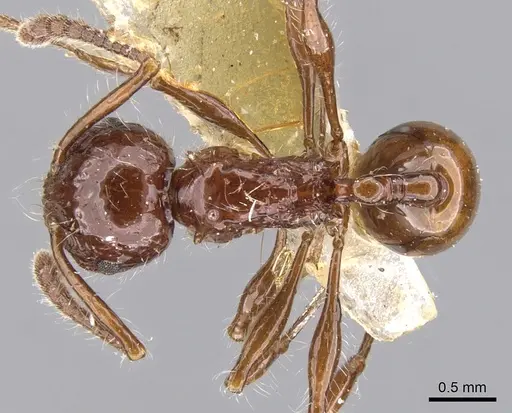
Literature
Loading...Loading products...