

Prenolepis dugasi
- Scientific Name
- Prenolepis dugasi
- Tribe
- Lasiini
- Subfamily
- Formicinae
- Author
- Forel, 1911
- Distribution
- Found in 0 countries
Prenolepis dugasi Overview
Prenolepis dugasi is an ant species of the genus Prenolepis. It is primarily documented in 0 countries . Detailed taxonomic data and occurrence records can be further explored via authoritative databases such as AntWeb or the Global Biodiversity Information Facility (GBIF).
Prenolepis dugasi
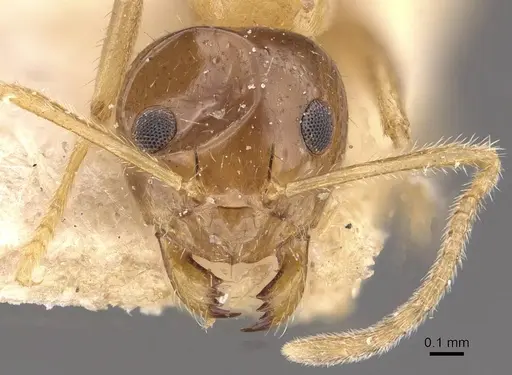
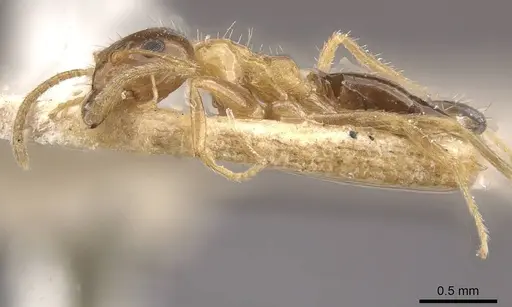
Prenolepis dugasi is a tiny ant species native to Vietnam, measuring just 2.53-2.80mm in total worker length [1]. Workers are light to medium brown, with the gaster and sometimes the head darker than the mesosoma. They have a smooth, shiny cuticle and distinctive erect macrosetae across the head, mesosoma, and gaster. One of their most unusual features is the presence of three small ocelli on the head, a trait that helps distinguish them from the similar but larger Prenolepis melanogaster [1]. The head is roughly as long as it is broad with a subtriangular shape, and the scapes are about as long as the head is wide [1].
Nothing is known about the biology of Prenolepis dugasi, including colony structure, founding behavior, or care requirements [2]. This makes keeping this species an act of pioneering, with no established protocols available.
Quick Summary
- Difficulty: Hard
- Origin & Habitat: Vietnam in the Indomalaya region [1]. Specific habitat preferences are unconfirmed.
- Colony Type: Unconfirmed, colony structure has not been documented in scientific literature
- Size & Growth:
- Antkeeping:
- Behavior: Undocumented, no behavioral observations have been published [2]. Their small size (2.53-2.80mm [1]) means escape prevention is critical.
- Common Issues: escape prevention is critical due to small size [1]., temperature and humidity needs are unknown, requiring careful monitoring [2]., diet preferences are undocumented, so observe what the colony accepts.
Identification and Appearance
Prenolepis dugasi is one of the smaller ant species you might encounter, with workers measuring just 2.53-2.80mm in total length [1]. The workers have a distinctive appearance: light to medium brown body with the gaster (the rear segment) and sometimes the head darker than the mesosoma (the middle section). Their cuticle is smooth and shiny, giving them a somewhat polished look [1]. One of the most notable identification features is the presence of three small ocelli (simple eyes) on the head, this is unusual within the genus and helps separate P. dugasi from similar species like P. melanogaster, which has no ocelli at all [1]. They have long, erect hairs (macrosetae) scattered across the head, mesosoma, and gaster, plus abundant shorter suberect setae on their antennae scapes and legs [1]. The head is roughly as long as it is broad, with a subtriangular shape, and the antennae scapes are about as long as the head width is wide [1]. A unique feature is a single tooth on the clypeus (the face area) with an erect seta projecting from it [1].
Distribution and Habitat
Prenolepis dugasi is known from Vietnam in the Indomalaya region [1]. The type locality is recorded as 'Cochinchine Française, Region de Moïs' in Vietnam [1]. Beyond this geographic record, no specific habitat information has been documented in the scientific literature. The species was originally described by Forel in 1911 and has undergone taxonomic revisions, moving through Paratrechina (Nylanderia) before being placed in its current genus Prenolepis by Williams and LaPolla in 2018 [1]. The Indomalaya region encompasses tropical and subtropical climates, suggesting this species likely inhabits warm, humid environments. However, without field observations, we can only speculate about its specific microhabitat preferences, whether it prefers forest floors, disturbed areas, or specific elevation ranges remains unknown.
Current State of Knowledge
It must be stated clearly: almost nothing is known about the biology of Prenolepis dugasi. AntWiki explicitly notes 'Nothing is known about the biology of this species', and our research data confirms this gap. We have detailed morphological descriptions of workers from 2018 [1], but no published information on colony structure, founding behavior, diet, temperature preferences, humidity needs, seasonal activity patterns, or any aspect of their daily lives. This makes keeping P. dugasi essentially an act of pioneering, you will be learning alongside the scientific community. The genus-level data from related species can provide some educated guesses, but each colony will essentially be an experiment. This species is best suited for experienced antkeepers who enjoy documenting and contributing to our understanding of poorly studied species. If you're a beginner, you may want to start with better-documented species first.
Housing and Nesting Recommendations
Since no specific data exists on nesting preferences for Prenolepis dugasi [2], general antkeeping practices apply. Start with a small test tube setup for founding colonies. Ensure tight connections to prevent escape due to small size [1]. Keep nest substrate moderately moist, but specific humidity needs are unknown [2].
Feeding and Diet
No specific dietary data exists for Prenolepis dugasi [2]. Based on general Formicinae patterns, they may accept sugar sources and small insects, but observe what the colony accepts.
Temperature and Seasonal Care
No specific thermal data exists for P. dugasi [2]. Keep colonies warm, but exact needs are unconfirmed. Diapause is unknown [2].
Frequently Asked Questions
How long does it take for Prenolepis dugasi to go from egg to worker?
Unknown, no development data exists for this species [2].
Can I keep multiple Prenolepis dugasi queens together?
Unknown, no data on colony structure for this species [2].
What do Prenolepis dugasi ants eat?
Unknown, no dietary data exists for this species [2].
What temperature should I keep Prenolepis dugasi at?
Unknown, no thermal data exists for this species [2].
Do Prenolepis dugasi need hibernation or diapause?
Unknown, no seasonal data exists for this species [2].
How big do Prenolepis dugasi colonies get?
Unknown, no colony size data has been documented for this species [2].
Is Prenolepis dugasi a good species for beginners?
No, this species is not recommended for beginners due to lack of data and no established care protocols [2].
How do I identify Prenolepis dugasi workers?
Workers are tiny at 2.53-2.80mm total length, light to medium brown with darker gaster. Key identification features include three small ocelli on the head, a single clypeal tooth with an erect seta, and suberect setae on the scapes [1].
When do Prenolepis dugasi nuptial flights occur?
Unknown, no published data exists on reproduction timing for this species [2].
Report an Issue
The current care sheet is based fully on literature. See inconsistencies, or something that's incorrect? Please , it will be resolved after review from an admin. Contributing to the blogs tab also helps providing information, to make us be able to further improve the caresheets. Thank you for your support!
References

This caresheet is licensed under CC BY-SA 4.0 .
CASENT0911004
View on AntWeb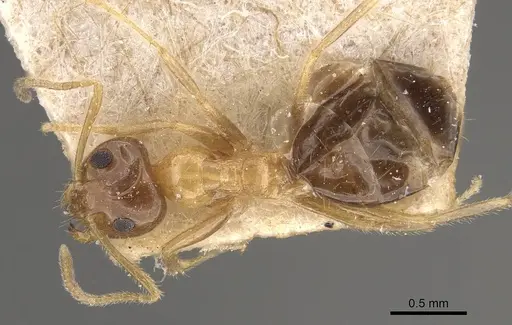
Literature
Loading...Loading products...