

Prenolepis melanogaster
- Scientific Name
- Prenolepis melanogaster
- Tribe
- Lasiini
- Subfamily
- Formicinae
- Author
- Emery, 1893
- Distribution
- Found in 2 countries
Prenolepis melanogaster Overview
Prenolepis melanogaster is an ant species of the genus Prenolepis. It is primarily documented in 2 countries , including China, Thailand. Detailed taxonomic data and occurrence records can be further explored via authoritative databases such as AntWeb or the Global Biodiversity Information Facility (GBIF).
Prenolepis melanogaster
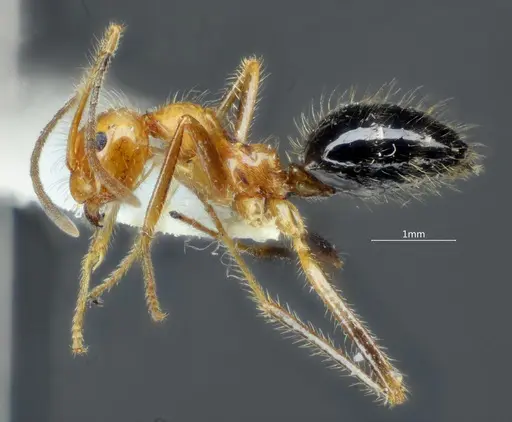
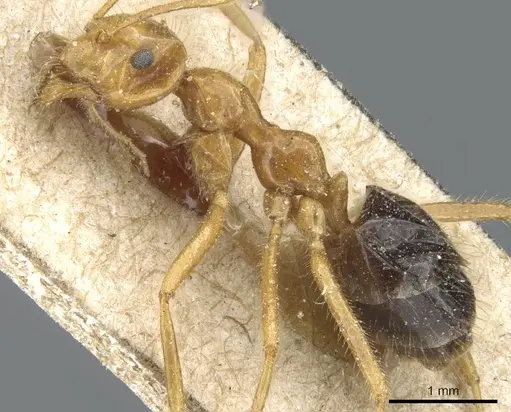
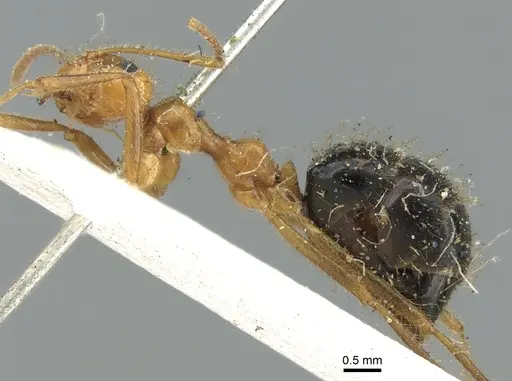
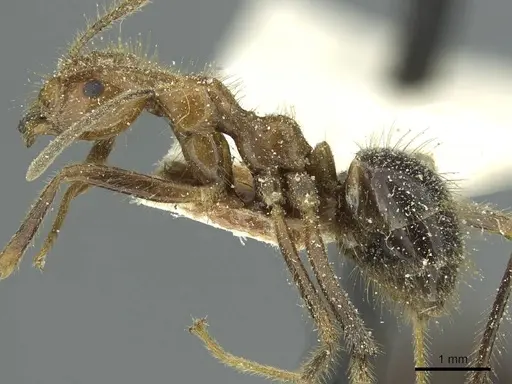
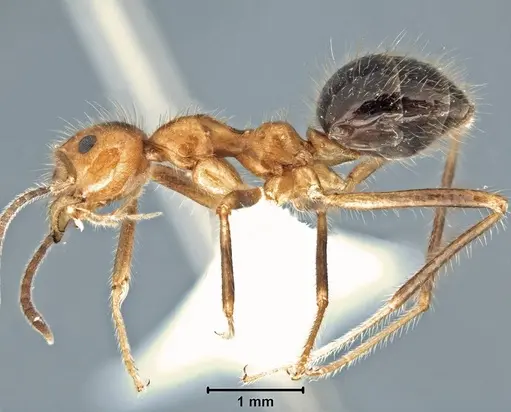
Prenolepis melanogaster is a relatively large ant species with workers measuring approximately 4.3-4.9 mm in total length [1]. Workers have a yellow-brown head and mesosoma contrasting with a dark brown to black gaster, and the body is covered in abundant long erect hairs [1][2]. The head is broader than long with eyes spaced far apart [1]. This species is found across Southeast Asia and East Asia, including India, Myanmar, Thailand, Vietnam, southern China, and Korea [3][4][5][6]. It is a primary forest specialist, restricted to intact forest habitats [7], and is classified as a cold climate specialist [8].
Quick Summary
- Difficulty: Expert
- Origin & Habitat: Southeast Asia and East Asia, found in India, Myanmar, Thailand, Vietnam, Yunnan province China, and southern Korea. This is a primary forest specialist that requires intact forest habitat and is not found in secondary forest or rubber plantations [7][3][4][5].
- Colony Type: Colony structure is unconfirmed, no data on queen number or social structure for this species.
- Size & Growth:
- Queen:{.size-link} Unknown, no documented queen measurements for this species.
- Worker:{.size-link} ~4.3-4.9 mm [1]
- Colony: Unknown, no colony size data exists for this species
- Growth: Unknown, development timeline has not been studied
- Development: Unconfirmed, no direct data exists. (Development timeline is unconfirmed for this species.)
- Antkeeping:
- Temperature: Keep around 20-24°C based on cold climate specialist classification [8]. Provide a temperature gradient allowing the colony to choose their preferred zone.
- Humidity: Keep nest substrate moderately moist but not waterlogged, as they are from forest habitats [7].
- Diapause: Likely yes, as a cold climate specialist from temperate regions, colonies probably require a winter rest period, but this is inferred and not directly documented [8].
- Nesting: In nature, they likely nest in soil or rotting wood in forest floor habitats. In captivity, a Y-tong (AAC) nest or plaster nest with moderate moisture works well.
- Behavior: Temperament is unconfirmed, but Prenolepis species are generally not aggressive. Escape risk is moderate due to worker size (4-6 mm), so standard escape prevention measures should suffice. They have been observed preying on mango leaf-cutting weevil larvae [2].
- Common Issues: this species is potentially invasive, so keep only in native regions to prevent ecological damage [8][3]., biology is largely unknown, making care challenging and success uncertain [9]., primary forest specialist may be sensitive to habitat disturbance and require stable conditions [7]., cold climate preference may struggle in warm rooms above 26°C [8]., founding behavior is unconfirmed, claustral vs semi-claustral is unknown.
Appearance and Identification
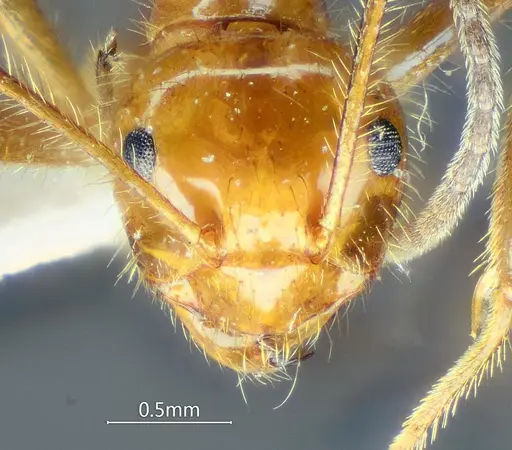
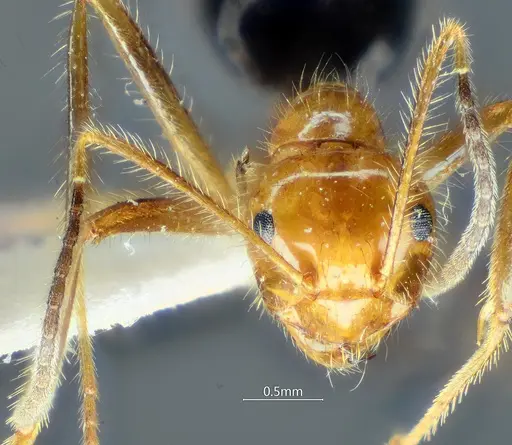
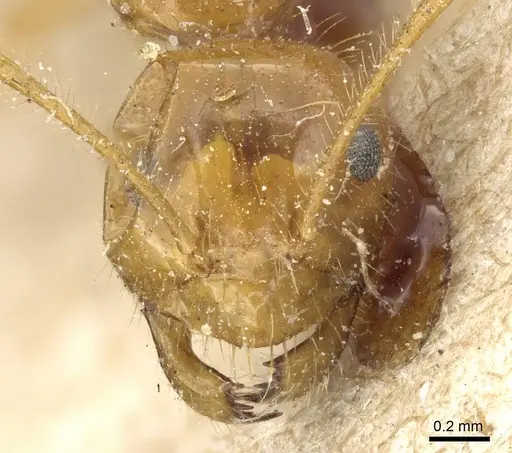
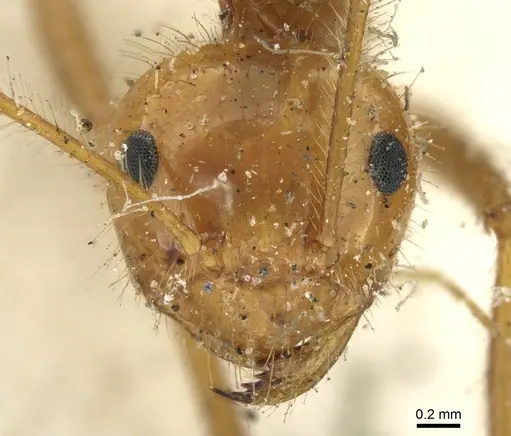
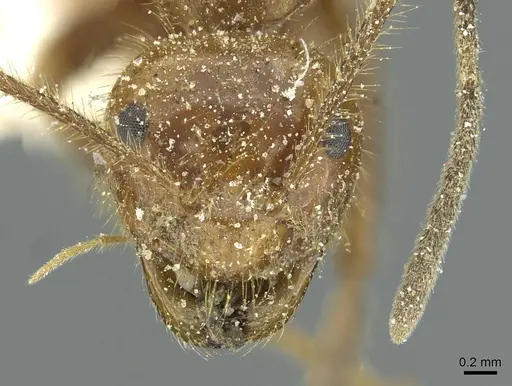
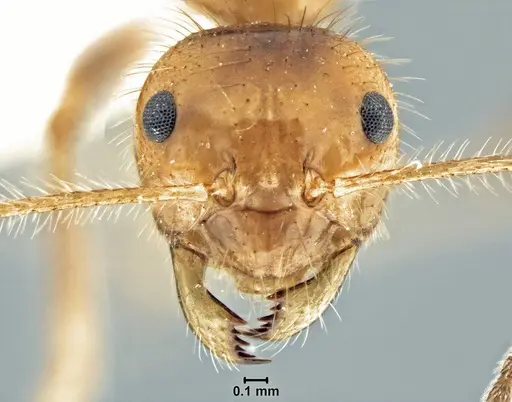
Prenolepis melanogaster workers are relatively large ants measuring approximately 4.3-4.9 mm in total length [1]. They have a two-tone coloration with a yellow-brown head and mesosoma contrasting against a dark brown to black gaster [1][2]. The head is rounded and slightly broader than long, with large round eyes placed far apart [1]. The entire body is covered in abundant long yellow standing hairs [2]. The mandibles have 6 teeth, and the scapes extend well beyond the back of the head [6]. The propodeum has a rounded dorsal face in profile view [6].
Distribution and Habitat
This species is found across Southeast Asia and East Asia, including India, Myanmar, Thailand, Vietnam, southern China, and southern Korea [3][4][5][6]. They are a primary forest specialist, restricted to intact forest environments and not found in secondary growth forests or agricultural areas like rubber plantations [7].
Feeding and Diet
P. melanogaster is predatory based on observations of workers preying on mango leaf-cutting weevil larvae in China [2]. For captive care, offer protein foods like small insects along with sugar sources such as honeydew or sugar water.
Temperature and Seasonal Care
Prenolepis melanogaster is classified as a cold climate specialist, preferring cooler conditions around 20-24°C [8]. Avoid temperatures above 26°C. Given their distribution includes temperate regions, they likely require a winter rest period (diapause) when temperatures drop.
Nesting in Captivity
In their natural forest floor habitat, these ants likely nest in soil or rotting wood [7]. For captive breeding, a Y-tong (AAC) nest or plaster formicarium with moderate humidity works well. Keep the nest substrate consistently moist but not waterlogged.
Challenges and Unknown Biology
This is one of the least-studied ant species in the hobby. AntWiki states that nothing is known about the biology of Prenolepis melanogaster, meaning there is no documented information on colony founding, development timeline, or precise care requirements [9]. This makes them a challenging species to keep, and success is not guaranteed.
Frequently Asked Questions
How long does it take for Prenolepis melanogaster to produce first workers?
The egg-to-worker timeline is unconfirmed, no research exists on their development. Based on related species, it might take several weeks, but this is uncertain.
Can I keep Prenolepis melanogaster in a test tube setup?
Yes, a test tube setup can work for founding colonies. Keep the tube moderately humid and maintain temperatures around 20-24°C [8]. Once the colony grows, consider moving to a proper formicarium.
What temperature do Prenolepis melanogaster ants need?
Keep them around 20-24°C. As a cold climate specialist, they prefer cooler conditions and may struggle above 26°C [8].
How big do Prenolepis melanogaster colonies get?
Maximum colony size is unknown, no colony size data exists for this species.
Are Prenolepis melanogaster good for beginners?
No, this species is not recommended for beginners due to unknown biology and potential invasive status. It is an advanced species for experienced antkeepers [9].
What do Prenolepis melanogaster eat?
They are predatory based on observations of hunting weevil larvae [2]. Feed small insects like fruit flies or mealworms as protein sources, plus sugar water or honey for energy.
Do Prenolepis melanogaster need hibernation?
Likely yes, as a cold climate specialist, they probably require a winter rest period, but this is inferred and not directly documented [8].
Can I keep multiple Prenolepis melanogaster queens together?
This is unknown. Colony structure has not been documented for this species. Do not attempt combining unrelated queens without documented success.
Why are my Prenolepis melanogaster dying?
Without documented captive care, diagnosing problems is difficult. Common issues may include temperatures too high, incorrect humidity, or stress from disturbance. This species may not thrive in captivity given how little we know [9].
Report an Issue
The current care sheet is based fully on literature. See inconsistencies, or something that's incorrect? Please , it will be resolved after review from an admin. Contributing to the blogs tab also helps providing information, to make us be able to further improve the caresheets. Thank you for your support!
References

This caresheet is licensed under CC BY-SA 4.0 .
ANTWEB1060624
View on AntWeb
CASENT0905675
View on AntWeb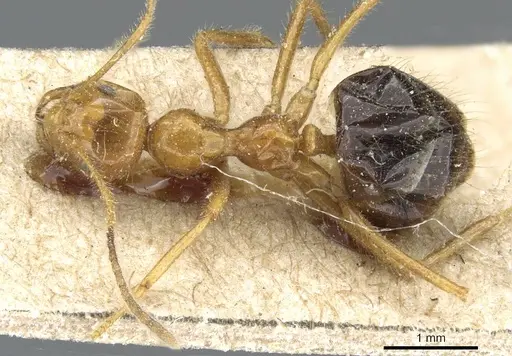
CASENT0906258
View on AntWeb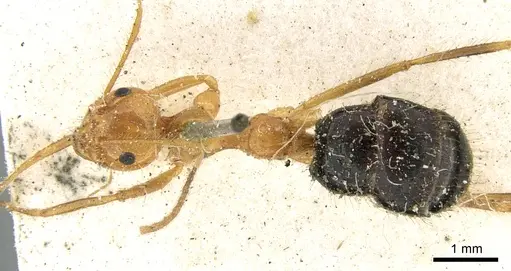
CASENT0912316
View on AntWeb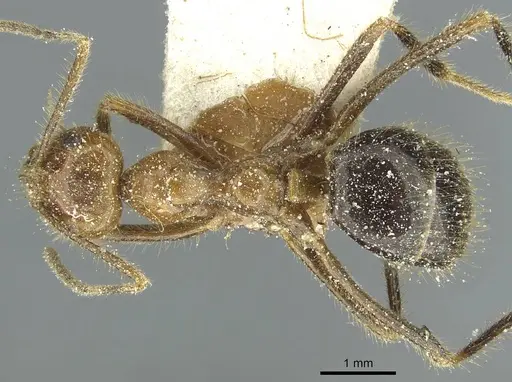
USNMENT00755078
View on AntWeb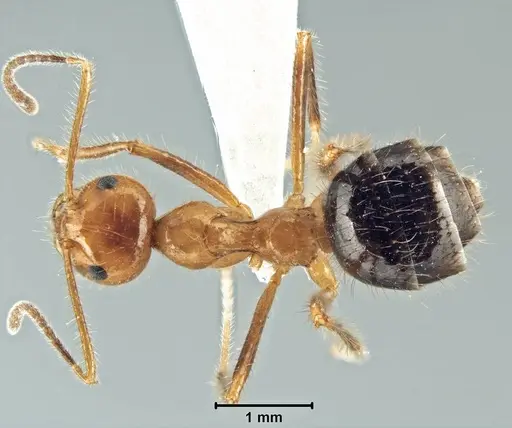
Literature
Loading...Loading products...