

Ponera woodwardi
- Scientific Name
- Ponera woodwardi
- Tribe
- Ponerini
- Subfamily
- Ponerinae
- Author
- Taylor, 1967
- Distribution
- Found in 1 countries
Ponera woodwardi Overview
Ponera woodwardi is an ant species of the genus Ponera. It is primarily documented in 1 countries , including Samoa. Detailed taxonomic data and occurrence records can be further explored via authoritative databases such as AntWeb or the Global Biodiversity Information Facility (GBIF).
Ponera woodwardi
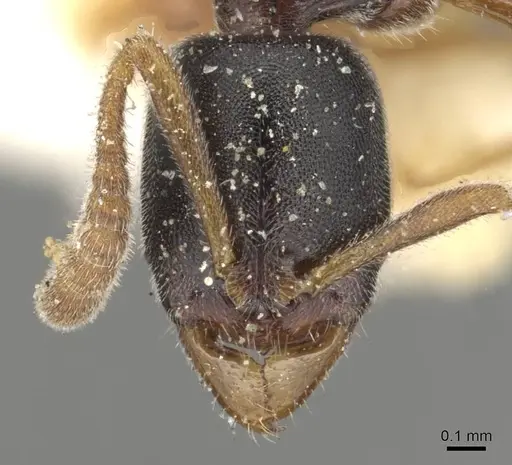
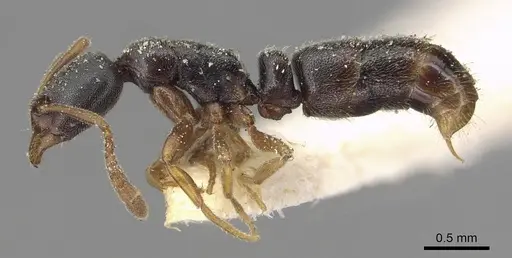
Ponera woodwardi is a small, dark brown ponerine ant endemic to the mountains of central Upolu, Samoa. Workers measure 0.53-0.60mm in head width and are distinctive for their relatively narrow heads (CI 76-81) and exceptionally long scapes that clearly exceed the occipital border (SI 98-102), a unique combination among medium-sized Ponera species [1]. The species also features a distinct median clypeal tooth and somewhat enlarged eyes with 5-8 facets. Queens are similarly characterized by narrow heads and long scapes, with HW 0.60-0.61mm. This ant is known only from the Afiamalu-Malololelei area at 650-700m elevation, making it a true island endemic with a very restricted range [2][3].
Quick Summary
- Difficulty: Expert
- Origin & Habitat: Samoan island of Upolu, specifically the Afiamalu-Malololelei mountain area at 650-700m elevation. Found in tropical rainforest, nesting under moss on logs and standing trees, and within rotting wood fragments on the forest floor [1].
- Colony Type: Single-queen (monogyne) colonies. The colony structure of this species has not been extensively studied, but based on typical Ponera patterns, colonies likely have one functional queen.
- Colony: Monogyne
- Founding: Claustral
- Size & Growth:
- Queen: 0.60-0.61mm head width [1]
- Worker: 0.53-0.60mm head width [1]
- Colony: Unknown, no colony size data available in literature
- Growth: Unknown, no development timing data available
- Development: Unknown, no direct development data exists for this species. Based on typical Ponera genus patterns, expect 6-10 weeks at optimal temperature, but this is an estimate. (Development timeline has not been directly studied. Larvae have 3 pairs of dorsal abdominal 'door knob' tubercles, and pupae of all castes are enclosed in cocoons [1].)
- Antkeeping:
- Temperature: Keep at 24-28°C as a starting point. This species comes from Samoa's tropical mountains at 650-700m elevation, so it prefers warm but not extreme conditions. Create a gentle temperature gradient so ants can self-regulate.
- Humidity: High humidity required, these are rainforest ants. Keep nest substrate consistently moist but not waterlogged. Provide a humidity gradient with a moist nesting area and slightly drier foraging area.
- Diapause: Unknown, no documented diapause or hibernation behavior exists for this species. As a tropical species from stable elevations in Samoa, diapause may not be required. Monitor colony activity for seasonal changes.
- Nesting: In nature, they nest in rotting wood fragments and under moss on logs. In captivity, a naturalistic setup with rotting wood or cork works well. A Y-tong or plaster nest with added moisture chambers can also work. The key is providing humid, wood-based nesting material.
- Behavior: This is a shy, non-aggressive species typical of the Ponera genus. Workers are small and slow-moving. They are predatory, typical of Ponerinae, but their exact prey preferences are unknown. Escape prevention should be moderate, they are small but not particularly active escape artists. The species shows ecological flexibility, being more abundant in disturbed forest areas than in pristine rainforest [1].
- Common Issues: complete lack of captive husbandry information means all care is experimental, feeding may be difficult, observation colonies refused small insects and diplopods in the original study [1], extremely restricted natural range makes wild collection unlikely, humidity requirements may be difficult to maintain consistently, colony size and growth rate are unknown, making it hard to plan for expansion
Natural History and Distribution
Ponera woodwardi is one of the rarest ants in captivity, known only from the mountains of central Upolu in Samoa. The entire known range consists of the Afiamalu-Malololelei area at 650-700m elevation [1]. This restricted distribution makes the species particularly interesting from a conservation perspective. In the wild, they inhabit tropical rainforest, with nests found under moss on logs and standing trees, as well as within rotting wood fragments on the forest floor. The species shows an interesting ecological pattern: it is more abundant in disturbed, partly cleared forest areas than in adjacent undisturbed rainforest [1]. This may indicate some tolerance for human-modified environments, though the species remains rare even in suitable habitat. Specimens have been collected from moss as high as 15m above ground level in tree canopy berlesates, suggesting this species may nest at various heights.
Nest Preferences and Housing
In their natural habitat, Ponera woodwardi nests in preformed cavities within rotting wood, both in fallen branch fragments on the forest floor and under thick moss covering logs [1]. The type colony was found in a rotting branch fragment about 35cm long and 8-10cm in diameter. The nest was diffuse, with adults and brood distributed throughout the more rotted half of the branch in crack crevices or beetle galleries. For captive care, provide a naturalistic setup with rotting wood pieces or cork as the primary nesting material. A Y-tong or plaster nest can work if supplemented with wood fragments or moss. The key requirement is maintaining consistently high humidity within the nesting chamber while allowing for some ventilation to prevent mold. The nest should have tight-fitting barriers as these are small ants, though they are not particularly active escape artists compared to some other Ponera species.
Feeding and Diet Challenges
This is perhaps the most challenging aspect of keeping Ponera woodwardi. Taylor's original field study noted that feeding could not be induced in observation colonies despite presentation of numerous small insects and other arthropods [1]. On one occasion, apparent middens of small diplopods were discovered near colony nuclei, but similar diplopods were not accepted in observation nests. This suggests the species may have specialized prey preferences that are difficult to replicate in captivity. As a Ponerinae ant, they are predatory and likely feed on small soil arthropods in the wild. Start by offering small live prey such as springtails, fruit flies, or tiny crickets. Sugar sources may or may not be accepted, offer occasionally but do not rely on them. Be prepared for experimental feeding trials, and accept that this species may be difficult to maintain on standard ant diets.
Temperature and Humidity Requirements
As a tropical species from Samoa's mountain forests at 650-700m elevation, Ponera woodwardi requires warm and humid conditions. The elevation suggests they experience warm but not extreme temperatures, with perhaps slightly cooler conditions than lowland tropical areas. Aim for temperatures in the 24-28°C range as a starting point, with a temperature gradient allowing workers to self-regulate. Humidity is critical, these are rainforest ants that naturally experience high ambient moisture. Keep the nest substrate consistently moist but avoid waterlogging. Provide a humidity gradient with a moist nesting area and slightly drier foraging area. Monitor for condensation and mold, which can indicate excessive humidity, but also watch for desiccation signs. Given the complete lack of captive husbandry data, these recommendations are based on typical Ponera genus requirements and the species' natural history. [1]
Unique Larval Structures
One of the most distinctive biological features of Ponera woodwardi is the presence of 3 pairs of dorsal abdominal 'door knob' tubercles on the larvae [1]. These tubercles are a characteristic feature of some Ponera species and are thought to play a role in brood care or feeding behavior. The pupae of all castes are enclosed in cocoons, which is typical for the genus. These structures may be visible in well-established colonies and represent an interesting aspect of this species' biology that can be observed in captivity. The presence of cocoons means you should expect longer development times compared to species with naked pupae, as the cocoon must be constructed.
Conservation and Availability
Ponera woodwardi is a true island endemic with one of the most restricted ranges of any ant species. It is known only from the Afiamalu-Malololelei area of central Upolu, Samoa, and has never been found elsewhere despite extensive collecting at various elevations and locations across Samoa and neighboring islands [1][2]. The species may have contracted its range to higher elevations due to competition with the introduced ant Hypoponera confinis, which occupies similar ecological niches at lower elevations [1]. This makes the species particularly vulnerable to environmental changes. For antkeepers, this means the species is extremely unlikely to be available in the hobby, and any colonies would likely be wild-caught imports that are difficult to obtain. If you do acquire this species, it represents a significant conservation responsibility.
Frequently Asked Questions
Is Ponera woodwardi available in the antkeeping hobby?
No, this species is extremely rare in the hobby and likely almost never available. It is endemic to a very restricted area in Samoa (the Afiamalu-Malololelei mountains on Upolu at 650-700m elevation) and has never been found elsewhere despite extensive collecting.
How do I care for Ponera woodwardi ants?
Care is entirely experimental as no captive husbandry information exists. Provide high humidity (rainforest conditions), warm temperatures (24-28°C), and nesting in rotting wood or similar material. Feeding is the biggest challenge, observation colonies refused most offered prey. Start with small live prey like springtails and be prepared to experiment.
What do Ponera woodwardi ants eat?
They are predatory but their exact diet is unknown. In Taylor's study, they refused small insects and diplopods. As a Ponerinae, they likely eat small soil arthropods. Offer small live prey and sugar sources experimentally.
How big do Ponera woodwardi colonies get?
Colony size is unknown, no data exists on maximum colony size for this species. Based on typical Ponera patterns, colonies are likely modest in size, possibly under 100 workers.
What temperature do Ponera woodwardi ants need?
Keep them warm at 24-28°C as a starting point. They come from Samoa's tropical mountains, so they prefer warm but not extreme conditions. Provide a temperature gradient for self-regulation.
Do Ponera woodwardi ants need hibernation?
Diapause is not documented for this species. As a tropical species from stable elevations in Samoa, they likely do not require a hibernation period. Monitor colony activity for any seasonal changes.
How long does it take for Ponera woodwardi to develop from egg to worker?
The egg-to-worker timeline is completely unknown for this species. Based on typical Ponera genus patterns, expect 6-10 weeks at optimal temperature, but this is an estimate. Pupae are enclosed in cocoons, which extends development time.
Can I keep multiple Ponera woodwardi queens together?
This has not been studied. Based on typical Ponera patterns, single-queen colonies are most likely. Combining unrelated queens is not recommended without evidence they can coexist.
Is Ponera woodwardi a good species for beginners?
No, this is an expert-level species due to complete lack of captive care information, potential feeding difficulties, and the fact that it is almost never available in the antkeeping hobby. It should only be attempted by very experienced keepers with access to field-collected colonies.
References

This caresheet is licensed under CC BY-SA 4.0 .
CASENT0915300
View on AntWeb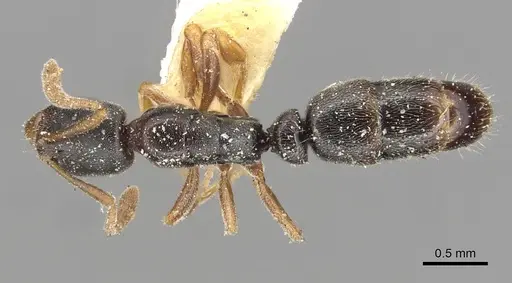
Literature
Loading...Loading products...