

Polyrhachis ugiensis
- Scientific Name
- Polyrhachis ugiensis
- Subgenus
- Cyrtomyrma
- Tribe
- Camponotini
- Subfamily
- Formicinae
- Author
- Mann, 1919
- Distribution
- Found in 1 countries
Polyrhachis ugiensis Overview
Polyrhachis ugiensis is an ant species of the genus Polyrhachis. It is primarily documented in 1 countries , including Solomon Islands. Detailed taxonomic data and occurrence records can be further explored via authoritative databases such as AntWeb or the Global Biodiversity Information Facility (GBIF).
Polyrhachis ugiensis
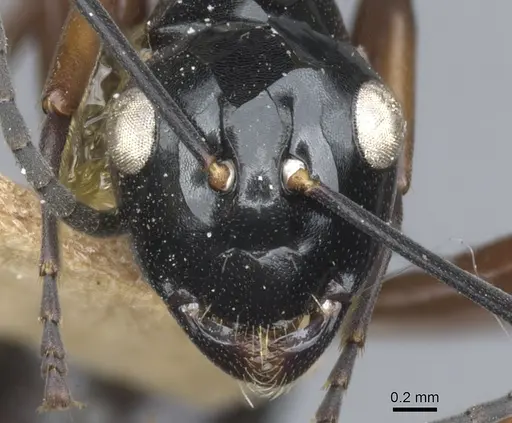
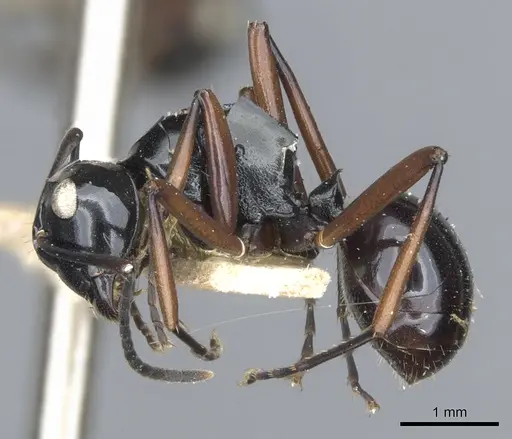
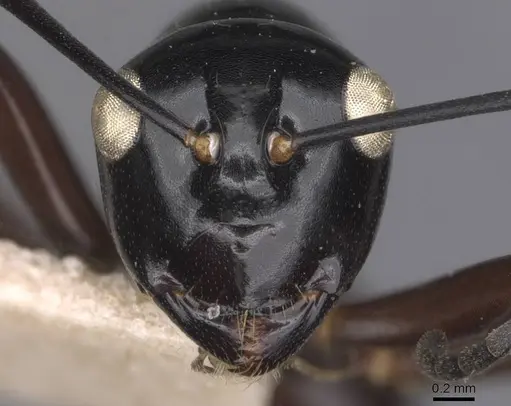
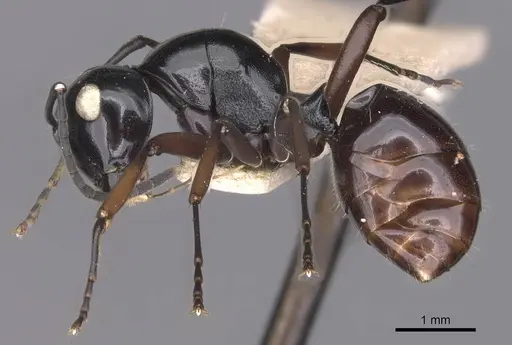
Polyrhachis ugiensis is a spiny ant species from the Solomon Islands, measuring 5.5-6mm in worker length [1]. Workers have a distinctive appearance with reddish-brown femora and tibiae, black tarsi, and black antennae with a brown tip on the last segment. The pronotal dorsum is notably convex, and the lateral petiolar spines are greatly reduced compared to similar species like P. fulakora [1]. This species belongs to the subgenus Cyrtomyrma and is endemic to the Solomon Islands, where it has been recorded from Ugi, San Cristoval, Three Sisters, and Makira [2][3]. Nothing is known about the specific biology of this species, making it a challenging but potentially interesting species for experienced antkeepers who enjoy working with less-documented species.
Quick Summary
- Difficulty: Expert
- Origin & Habitat: Solomon Islands (Ugi, San Cristoval, Three Sisters, Makira), tropical island environment
- Colony Type: Unconfirmed colony structure. Based on typical Polyrhachis patterns, likely single-queen colonies, but this has not been documented for this specific species.
- Size & Growth:
- Queen: Unknown for this species, Polyrhachis queens typically range 8-12mm
- Worker: 5.5-6mm [1]
- Colony: Unknown, no colony size data exists for this species
- Growth: Unknown, no development data exists for this species
- Development: Unknown, no direct development data exists. Based on related tropical Polyrhachis species, estimate 6-10 weeks at optimal temperature (This is a pure estimate based on genus-level patterns for tropical Polyrhachis species. No species-specific data exists.)
- Antkeeping:
- Temperature: Keep warm at 24-28°C. Solomon Islands are tropical, so these ants need consistent warmth
- Humidity: Maintain moderate to high humidity (60-80%). Tropical island environment suggests they prefer damp conditions
- Diapause: Unlikely, Solomon Islands have no true winter, so diapause is probably not required
- Nesting: Likely semi-arboreal or ground-nesting in the Solomon Islands. A naturalistic setup with both ground space and vertical climbing options works well. Y-tong nests or plaster nests with moisture reservoirs are suitable captive options
- Behavior: Behavior is unstudied. Based on typical Polyrhachis behavior, they are likely moderately active foragers with moderate aggression when defending the nest. Workers are medium-sized (5.5-6mm) so escape prevention should be good but is not as critical as for tiny species. They likely forage for nectar, honeydew, and small insects
- Common Issues: no biological data exists, everything about their care is inferred from genus patterns and may be incorrect, unknown founding behavior, claustral vs semi-claustrl is unconfirmed, unknown colony structure, whether they are single-queen or multi-queen is unstudied, slow growth is likely, poorly studied species often have longer development times, risk of colony failure due to mismatched conditions, without species-specific data, getting conditions right is challenging
Natural History and Distribution
Polyrhachis ugiensis is endemic to the Solomon Islands, a tropical archipelago in Oceania. The species was first described in 1919 by William Morton Mann from specimens collected on Ugi Island, San Cristoval, and the Three Sisters islands [2]. More recent surveys have also recorded the species on Makira Island [3]. The species was originally described as a subspecies of Polyrhachis rastellata but was raised to full species status in 1938 by Donisthorpe [1]. The type material indicates collection from multiple locations across the eastern Solomon Islands, including coastal areas and inland sites. Nothing is known about the species' nesting preferences, colony size, or behavior in the wild, this is one of the least studied Polyrhachis species.
Identification and Related Species
Polyrhachis ugiensis is most similar to Polyrhachis fulakora, another Solomon Islands species. The key distinguishing feature is the pronotal dorsum shape: in P. ugiensis it is much more convex, especially anteriorly where it rises almost vertically from the pronotal collar before continuing in a convex outline to the promesonotal suture. In P. fulakora, the pronotal dorsum is only weakly convex [1]. Additionally, the lateral petiolar spines in P. ugiensis are greatly reduced, sometimes appearing as mere angles, while in P. fulakora they are more developed. Both species differ from the closely allied Polyrhachis johnsoni in having the greatest width of the pronotal dorsum at or about the middle of its length, whereas P. johnsoni has its greatest width across or just below the humeri [1]. Workers measure 5.5-6mm and have distinctive reddish-brown legs with black tarsi and black antennae with a brown tip.
Housing and Nesting
Since nothing is known about the specific nesting preferences of P. ugiensis, housing recommendations must be based on genus-level patterns and the species' tropical origin. Provide a nest that can maintain both warmth and humidity, a Y-tong (acrylic) nest or plaster nest with a water reservoir works well. Include a moisture gradient so ants can choose their preferred humidity zone. The outworld should allow for both ground foraging and climbing opportunities, as many Polyrhachis species are semi-arboreal. Use a test tube setup for founding colonies, transitioning to a proper nest once the colony reaches 15-20 workers. Ensure excellent escape prevention, while workers at 5.5-6mm are not tiny, they are agile and determined. Use fluon on container edges and ensure any connections between nest and outworld are secure.
Feeding and Diet
Polyrhachis species are typically omnivorous, feeding on nectar, honeydew, and small insects. Provide a varied diet including sugar sources (honey water or sugar water offered on a regular basis) and protein sources (small live or frozen insects like fruit flies, pinhead crickets, or mealworms). Since this species is from the Solomon Islands, they likely have year-round foraging activity and do not store food for winter. Feed every 2-3 days, removing uneaten prey after 24 hours. Fresh water should always be available. Start with small prey items and observe acceptance before offering larger options. The tropical origin suggests they may have higher moisture requirements, consider providing water gel or moist cotton in addition to a water source.
Temperature and Seasonal Care
As a Solomon Islands species, P. ugiensis requires warm conditions year-round. Maintain temperatures between 24-28°C consistently. Avoid temperatures below 22°C as this could stress the colony. Use a heating cable or mat on one side of the nest to create a temperature gradient, allowing workers to self-regulate by moving between warmer and cooler areas. Do not provide a diapause period, the Solomon Islands have no winter and these ants have not evolved any cold tolerance. Room temperature within the target range is acceptable, if your room is cooler, targeted heating is necessary. Monitor colony behavior: if workers are consistently clustered near the heat source, increase temperature slightly, if they avoid the heated area, reduce heat.
Challenges and Expert-Level Considerations
P. ugiensis is listed as Expert difficulty because absolutely no species-specific biological data exists, every aspect of care must be inferred from genus patterns and related species. This makes successful keeping more challenging and experimental. The lack of data means you may encounter issues that more documented species would not present. Document your observations carefully, successful breeding and raising of this species would contribute valuable knowledge to the antkeeping community. Consider starting with a small colony (10-20 workers) rather than a founding queen, so you can observe their preferences before investing heavily. Be prepared to experiment with temperature, humidity, and diet to find what works best. The species' limited distribution (only Solomon Islands) also means wild-caught colonies are rarely available, making captive propagation particularly valuable.
Frequently Asked Questions
How long does it take for Polyrhachis ugiensis to produce first workers?
The egg-to-worker timeline is completely unknown for this species, no development data exists. Based on related tropical Polyrhachis species, estimate 6-10 weeks at optimal temperature (24-28°C), but this is a rough guess. Actual development could be faster or slower.
What do Polyrhachis ugiensis ants eat?
Based on typical Polyrhachis diet, offer sugar sources (honey water or sugar water) regularly and protein (small insects like fruit flies, pinhead crickets, or mealworms) several times per week. Fresh water should always be available.
What temperature do Polyrhachis ugiensis ants need?
Keep them warm at 24-28°C consistently. Solomon Islands are tropical with no winter, so these ants need year-round warmth. Avoid temperatures below 22°C.
Do Polyrhachis ugiensis need hibernation or diapause?
No, the Solomon Islands have no winter, so this species has not evolved any diapause requirement. Keep them at warm temperatures year-round.
How big do Polyrhachis ugiensis colonies get?
Colony size is unknown, no colony size data exists for this species. Based on typical Polyrhachis patterns, colonies likely reach several hundred workers over several years.
Is Polyrhachis ugiensis good for beginners?
No, this species is rated Expert difficulty precisely because nothing is known about its biology. Every aspect of care must be inferred from genus patterns, making successful keeping more challenging and experimental. Beginners should start with better-documented species.
Can I keep multiple Polyrhachis ugiensis queens together?
Colony structure is unconfirmed for this species. Polyrhachis species are typically single-queen (monogyne), but multi-queen arrangements have not been studied. Do not combine unrelated queens without documented evidence that they will accept each other.
What size nest does Polyrhachis ugiensis need?
Start with a test tube setup for founding colonies. Once the colony reaches 15-20 workers, transition to a Y-tong or plaster nest with a water reservoir to maintain humidity. Include both horizontal chambers and vertical climbing space.
Why is my Polyrhachis ugiensis colony dying?
Without species-specific data, diagnosing problems is difficult. Check temperature (should be 24-28°C), humidity (should be moderate to high,60-80%), and food variety. Stress from incorrect conditions is the most likely cause. Consider that this species may have requirements significantly different from inferred recommendations.
References

This caresheet is licensed under CC BY-SA 4.0 .
CASENT0903415
View on AntWeb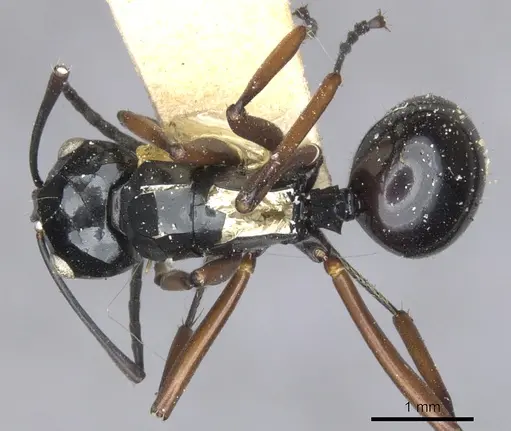
CASENT0905543
View on AntWeb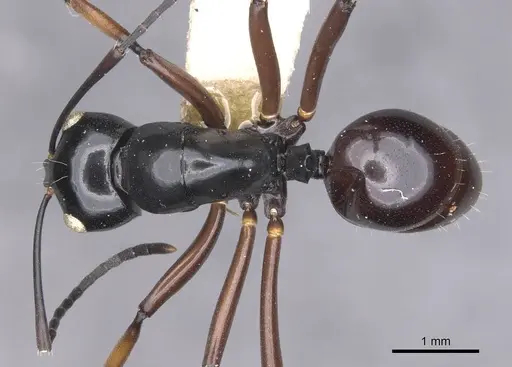
Literature
Loading...Loading products...