

Polyrhachis spinicola
- Scientific Name
- Polyrhachis spinicola
- Subgenus
- Myrma
- Tribe
- Camponotini
- Subfamily
- Formicinae
- Author
- Forel, 1894
- Distribution
- Found in 4 countries
Polyrhachis spinicola Overview
Polyrhachis spinicola is an ant species of the genus Polyrhachis. It is primarily documented in 4 countries , including Malawi, Mozambique, Eswatini. Detailed taxonomic data and occurrence records can be further explored via authoritative databases such as AntWeb or the Global Biodiversity Information Facility (GBIF).
Polyrhachis spinicola
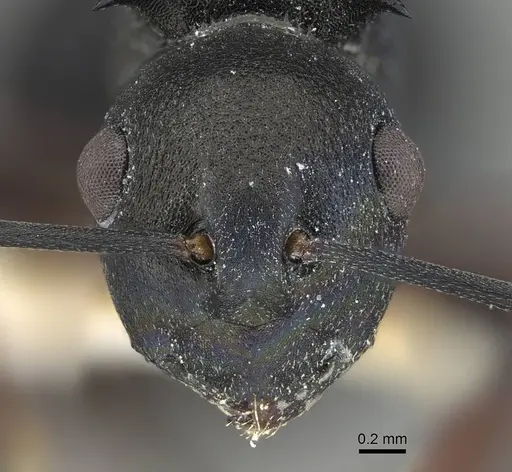
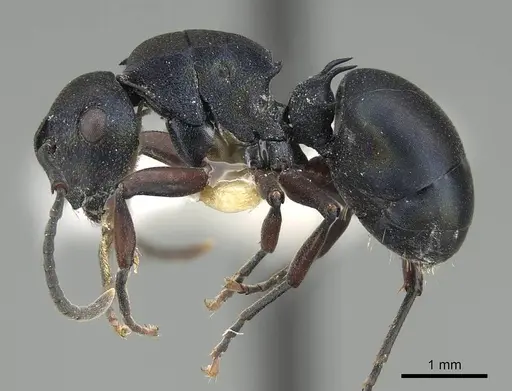
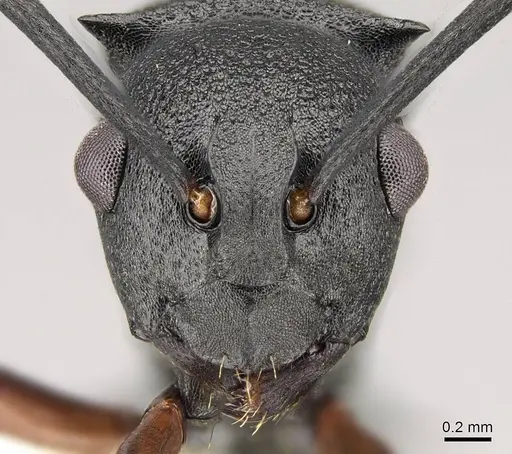
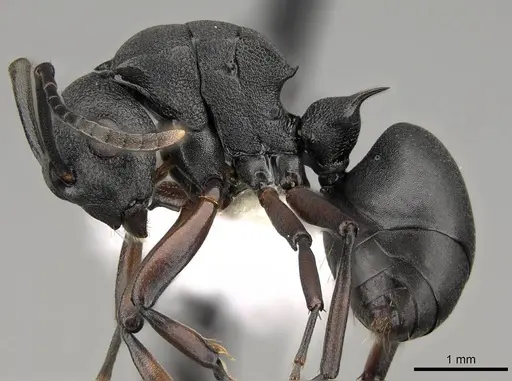
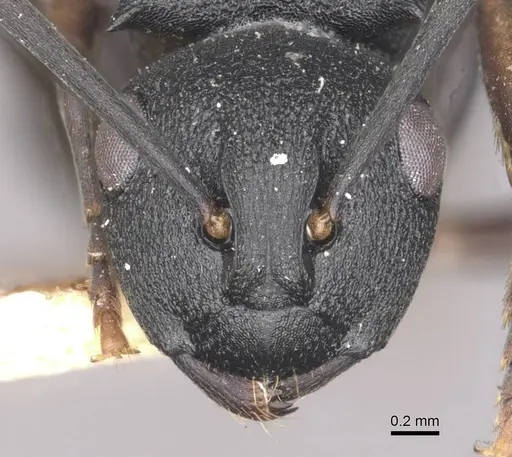
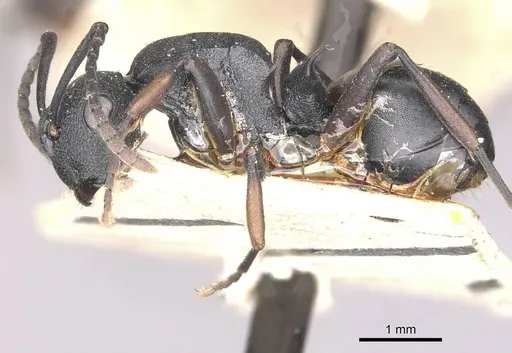
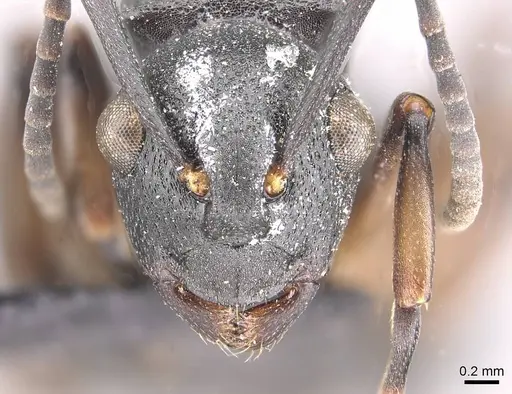
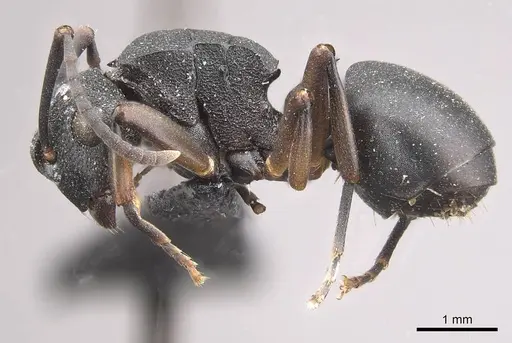
Polyrhachis spinicola is a medium-sized ant belonging to the Formicinae subfamily, recognizable by its distinctive spiny protrusions. Workers measure 6.1-7.0mm and feature four prominent spines on the petiole (the narrow waist segment), plus spines on the pronotum and propodeum. Their body is black with reddish-brown to yellowish legs and antennae tips, creating a striking two-tone appearance. This species belongs to the Polyrhachis viscosa species-group and is found across the Afrotropical region including South Africa, Mozambique, Kenya, and the Democratic Republic of Congo. [1]
What makes this species particularly interesting is its association with savannah trees. Historical records show these ants in acacia thorns and citrus trees, though it's unclear whether they actively nest inside these structures or simply forage there. Their spiny morphology likely provides defense against predators, and their dark coloration with contrasting leg colors makes them visually distinctive among African ants. [2][3]
Quick Summary
- Difficulty: Medium
- Origin & Habitat: Afrotropical region, found in Democratic Republic of Congo, Eswatini, Kenya, Mozambique, and South Africa. Inhabits savannah environments where it has been found in association with acacia trees and citrus trees. The natural habitat consists of warm, semi-arid to savannah landscapes typical of eastern and southern Africa. [1][3]
- Colony Type: Colony structure is not well-documented in scientific literature. Based on typical Polyrhachis patterns, this species likely forms single-queen colonies (monogyne), though multi-queen arrangements have been observed in some related species. Further research is needed to confirm the exact colony structure. [1]
- Colony: Monogyne
- Founding: Claustral
- Size & Growth:
- Queen: Approximately 6-7mm based on worker size scaling and related Polyrhachis species, estimated from worker measurements [1]
- Worker: 6.1-7.0mm [1]
- Colony: Colony size is not well-documented. Based on related species in the viscosa group, colonies likely reach several hundred workers. [1]
- Growth: Moderate, based on typical Formicinae development patterns [1]
- Development: Estimated 6-8 weeks based on typical Formicinae development at warm temperatures (25-28°C). This is an inference from related Camponotini species, as specific development data for P. spinicola is not available. [1] (Development time is estimated based on genus-level patterns. Actual timing may vary with temperature conditions.)
- Antkeeping:
- Temperature: Keep at 24-28°C (warm room temperature). As a tropical African species, they prefer warm conditions. A heating cable on one side of the nest can create a temperature gradient, allowing workers to regulate their own exposure. Avoid temperatures below 20°C for extended periods. [1]
- Humidity: Moderate humidity around 50-70%. Provide a water tube as a moisture source. Being associated with savannah environments, they are more tolerant of drier conditions than rainforest species. Allow the nest to partially dry between rehydration. [1]
- Diapause: Likely minimal or no true diapause. As a tropical species from southern Africa, they may experience reduced activity during cooler winter months but do not require hibernation. Keep them at room temperature year-round with slight reduction in feeding during winter. [1]
- Nesting: In captivity, they do well in Y-tong (acrylic) nests or plaster nests with moderate humidity. Their natural association with tree cavities and thorns suggests they prefer enclosed nests with narrow chambers. Avoid overly wet substrates, they prefer drier conditions compared to many other ants. [1]
- Behavior: Polyrhachis spinicola is generally calm and not aggressive toward keepers. Workers are moderately active foragers, searching for food both on the ground and potentially in vegetation. Their spiny morphology provides natural defense, and they are not known to be particularly aggressive. Escape risk is moderate, they are medium-sized ants that can be contained with standard barrier methods, but ensure connections between nest and outworld are secure. They are not known to be significant stingers, though some Polyrhachis species can deliver mild bites. [1]
- Common Issues: colonies may struggle if kept too cold, maintain warm temperatures above 24°C, overly humid conditions can be harmful, this is a savannah species that prefers drier nesting conditions, wild-caught colonies may carry parasites that can devastate captive populations, slow initial founding phase, claustral queens need patience during the first few months, escape prevention should be moderate, medium-sized ants can fit through small gaps
Nest Preferences and Housing
In the wild, Polyrhachis spinicola has been found in association with acacia trees (particularly in thorns) and citrus trees. While it's unclear whether they actively nest inside these plant structures or simply forage there, this suggests they prefer enclosed, protected spaces typical of tree-dwelling ants. [1]
For captive care, Y-tong (acrylic) nests work well for this species. The chambers should be appropriately sized for 6-7mm workers, not too large, as these ants prefer cozy spaces. Plaster nests with built-in water channels can also work, but avoid making the substrate too wet. Given their savannah origin, err on the drier side. Provide a connected outworld for foraging with standard escape barriers. [1]
Feeding and Diet
Polyrhachis ants are typically omnivorous, feeding on honeydew, nectar, and small insects in the wild. For captive colonies, offer a varied diet including sugar water or honey as a constant energy source, and protein-rich foods like mealworms, small crickets, or other insects 2-3 times per week. [1]
Being medium-sized ants, they can handle prey items of moderate size. Remove uneaten prey after 24-48 hours to prevent mold. Fresh fruit can occasionally be offered as a nectar source. Observe your colony's preferences, some colonies favor protein while others consume more sugar. Adjust feeding frequency based on colony size and activity levels. [1]
Temperature and Seasonal Care
As a species from the Afrotropical region, Polyrhachis spinicola thrives in warm conditions. Maintain temperatures between 24-28°C for optimal colony health and development. A heating cable placed on part of the nest can create a beneficial temperature gradient, allowing ants to self-regulate by moving between warmer and cooler areas. [1]
Unlike temperate species, they do not require true hibernation. During winter months, you can slightly reduce temperatures (to around 20-22°C) and reduce feeding frequency, but active cooling is not necessary. Avoid any risk of frost or prolonged cold exposure. Room temperature in most homes is suitable, though you may need supplemental heating in cooler climates. [1]
Behavior and Colony Dynamics
Polyrhachis spinicola workers are moderately active and generally calm in temperament. Their distinctive spines serve as a defensive adaptation, making them less vulnerable to predators. These ants are foragers, actively searching for food in their environment. [1]
Colony founding appears to follow the typical claustral pattern where the queen seals herself in a chamber, lays eggs, and raises the first brood using stored fat reserves. The first workers (nanitics) are typically smaller than mature workers. Once the first workers emerge, the colony enters a growth phase with brood development continuing as long as temperatures remain suitable. [1]
Handling and Temperament
This species is considered manageable and not particularly aggressive. Workers may investigate your hand or tools when the nest is open, but they are not prone to mass attacks or sustained aggression. Their spines provide natural defense, reducing their likelihood of biting or stinging when handled. [1]
For routine maintenance like feeding and water checks, use gentle movements and avoid disturbing the nest directly. If you need to move the colony, allow workers to evacuate on their own rather than shaking them out. Standard antkeeping practices apply, minimize vibrations and sudden disturbances. [1]
Frequently Asked Questions
How long does it take for Polyrhachis spinicola to raise first workers?
Based on typical Formicinae development, expect 6-8 weeks from egg to first worker at warm temperatures (25-28°C). The queen will remain sealed in her founding chamber until the first workers emerge. Patience is essential during this founding phase, do not disturb the queen or attempt to check on eggs, as this can cause her to abandon or consume the brood. [1]
What temperature do Polyrhachis spinicola ants need?
Keep them warm at 24-28°C. This is a tropical African species that thrives in warm conditions. A heating cable on part of the nest creates a gradient that ants can use to regulate their temperature. Avoid temperatures below 20°C for extended periods. [1]
Do Polyrhachis spinicola ants need hibernation?
No, they do not require true hibernation. As a tropical species, they remain active year-round with proper warmth. You may notice slightly reduced activity during winter months, but this is normal seasonal variation, not a diapause requirement. Simply maintain normal temperatures and reduce feeding slightly. [1]
What do Polyrhachis spinicola ants eat?
They are omnivorous. Offer sugar water or honey as a constant energy source, and protein (insects like mealworms, crickets) 2-3 times per week. They will also accept fruit occasionally. Remove uneaten food promptly to prevent mold. [1]
Are Polyrhachis spinicola ants good for beginners?
They are rated as medium difficulty. They are more tolerant of drier conditions than many ants, which makes them somewhat forgiving of beginner mistakes with humidity. However, they do require warm temperatures and patience during the founding phase. They are calm-natured and visually striking with their spines. [1]
How big do Polyrhachis spinicola colonies get?
Based on related species in the viscosa group, colonies likely reach several hundred workers. The exact maximum is not well-documented in scientific literature. Growth is moderate, expect several months to a year before you see significant numbers. [1]
Can I keep Polyrhachis spinicola in a test tube?
Test tubes work well for founding colonies. Use a standard test tube setup with a water reservoir (cotton ball) and ensure the queen has a dark, quiet space to establish her chamber. Once the colony reaches 20-30 workers, consider moving them to a more spacious formicarium or Y-tong nest. [1]
What humidity level do Polyrhachis spinicola need?
Moderate humidity around 50-70%. Being a savannah species, they are more tolerant of drier conditions than rainforest ants. Allow the nest to partially dry between rehydration. A water tube provides constant access to moisture. Avoid overly wet substrates. [1]
Where is Polyrhachis spinicola found in the wild?
This species is native to the Afrotropical region, specifically found in the Democratic Republic of Congo, Eswatini, Kenya, Mozambique, and South Africa. They inhabit savannah environments and have been found in association with acacia trees and citrus trees. [1][3]
References

This caresheet is licensed under CC BY-SA 4.0 .
CASENT0217803
View on AntWeb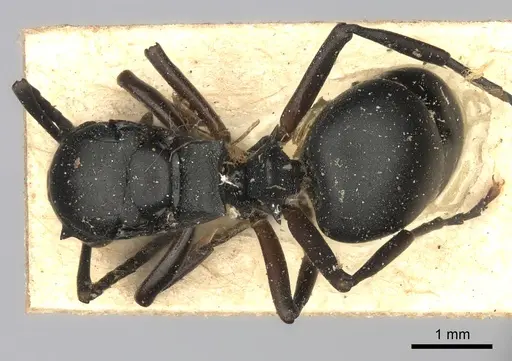
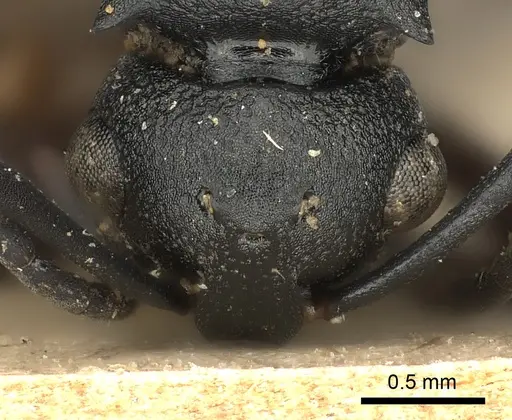
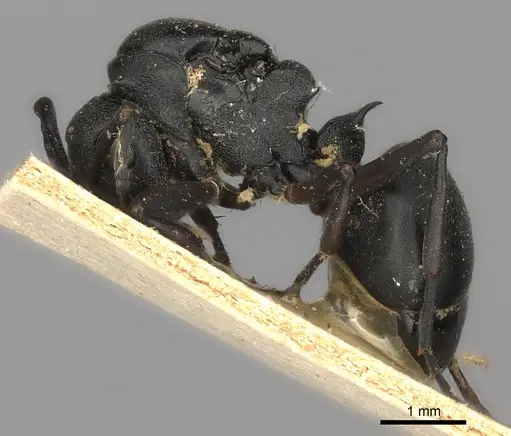
CASENT0227574
View on AntWeb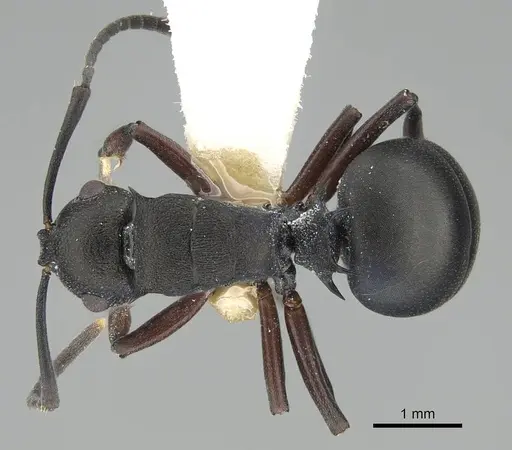
CASENT0281456
View on AntWeb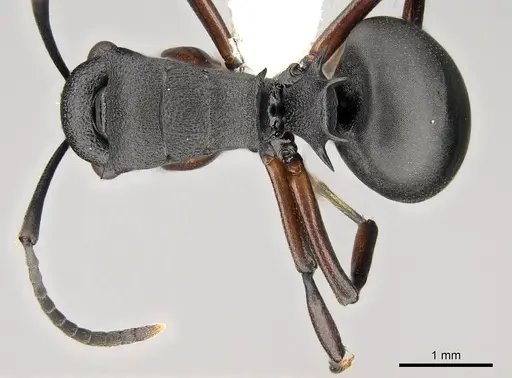
CASENT0910946
View on AntWeb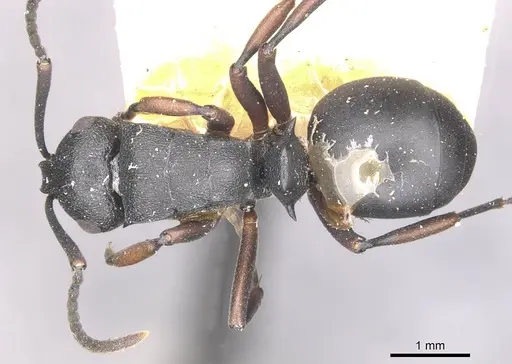
CASENT0910952
View on AntWeb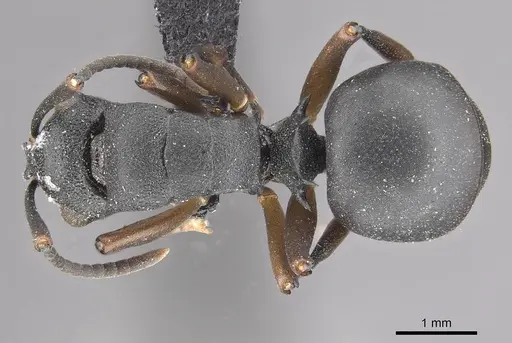
Literature
Loading...Loading products...