

Polyrhachis mindanaensis
- Scientific Name
- Polyrhachis mindanaensis
- Tribe
- Camponotini
- Subfamily
- Formicinae
- Author
- Emery, 1923
- Distribution
- Found in 1 countries
Polyrhachis mindanaensis Overview
Polyrhachis mindanaensis is an ant species of the genus Polyrhachis. It is primarily documented in 1 countries , including Philippines. Detailed taxonomic data and occurrence records can be further explored via authoritative databases such as AntWeb or the Global Biodiversity Information Facility (GBIF).
Polyrhachis mindanaensis
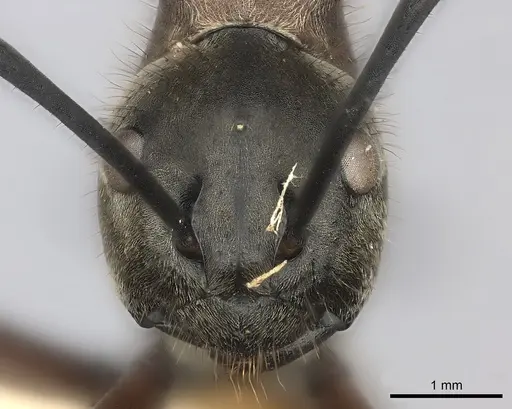
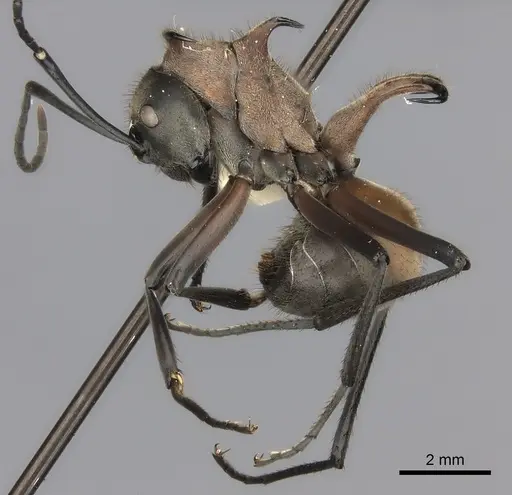
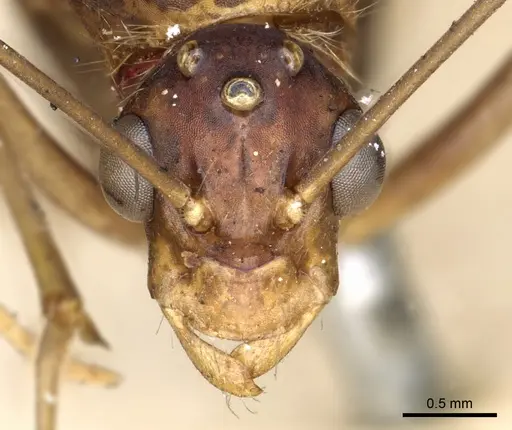
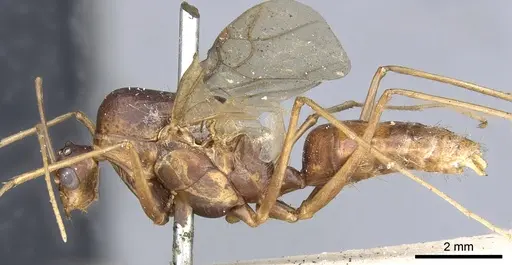
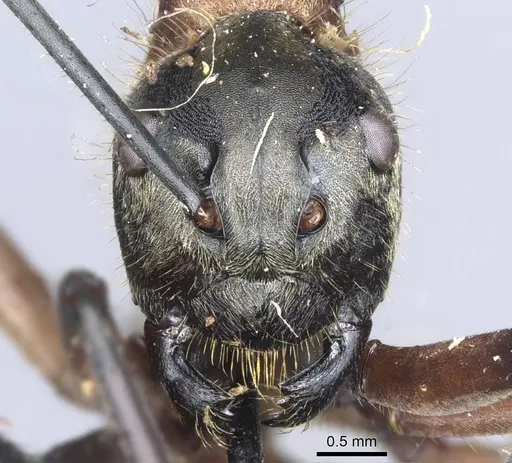
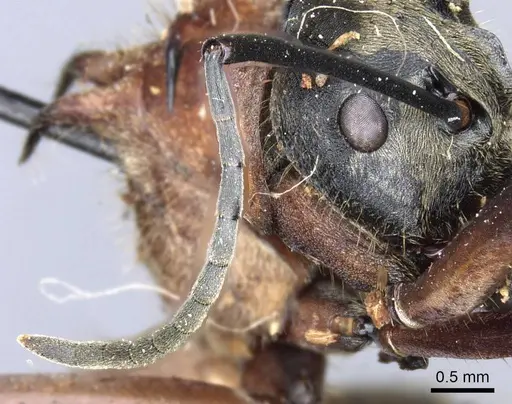
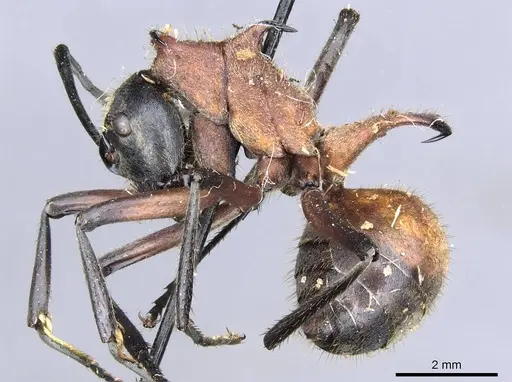
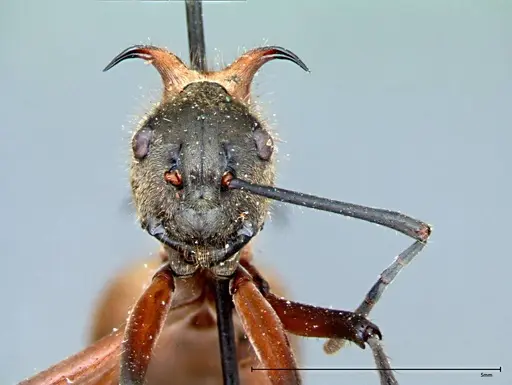
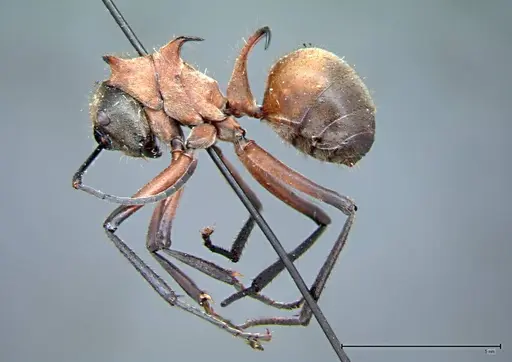
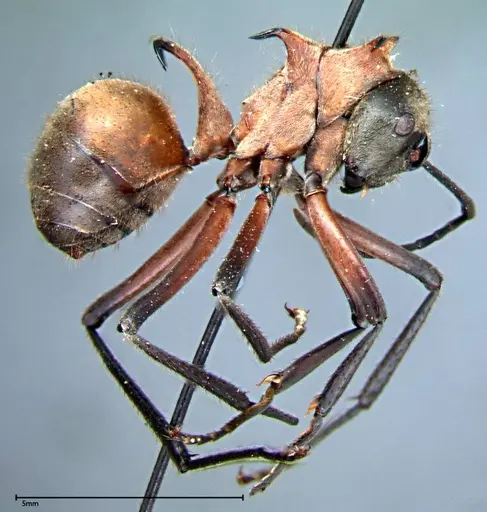
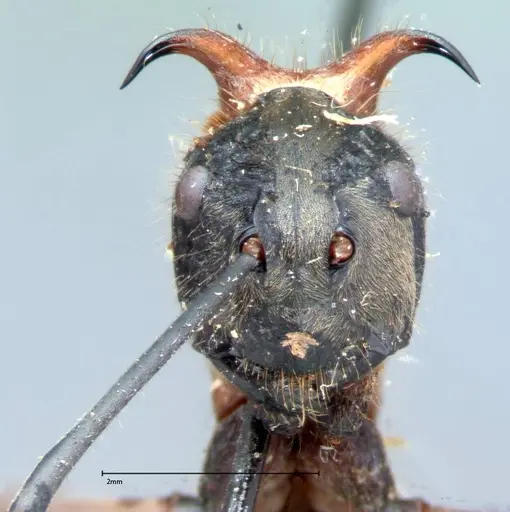
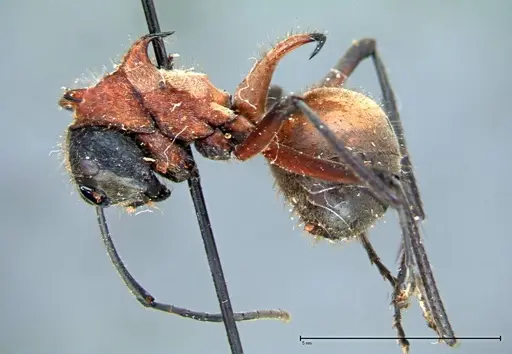
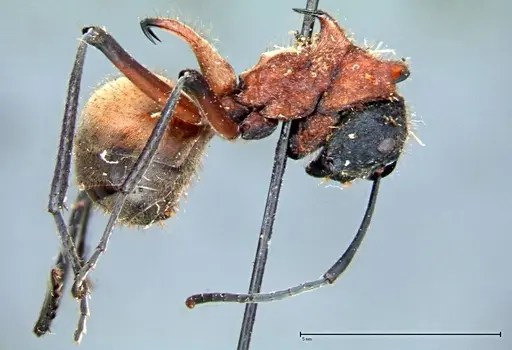
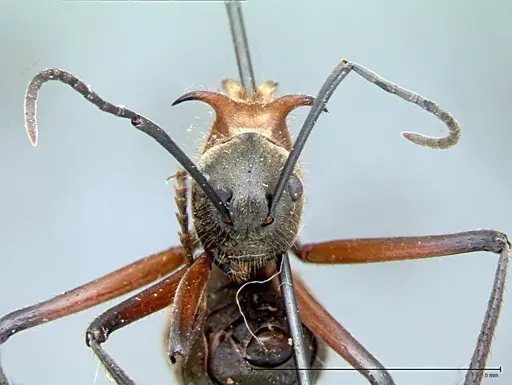
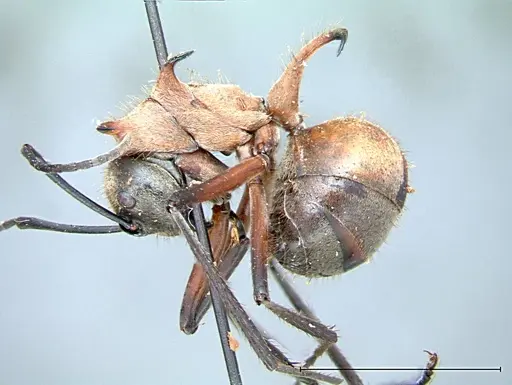
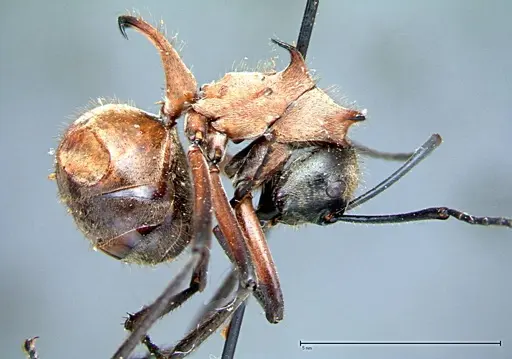
Polyrhachis mindanaensis is a relatively large ant species endemic to the Philippines, found across nine islands including Luzon, Mindanao, and Palawan [1]. Workers measure 10.94-12.10 mm in total length with a distinctive appearance featuring widely divergent petiolar (waist) spines and a dull, opaque body [1]. The species is black with a light reddish-brown blotch along the pronotal margin and sports abundant golden hairs on all dorsal body surfaces [2]. This ant belongs to the bihamata species group and is considered a morphological intermediate between Polyrhachis bihamata and Polyrhachis ypsilon, though most characters suggest closer relation to P. bihamata [1].
As a Formicinae ant, P. mindanaensis defends itself by spraying formic acid rather than stinging, this makes them less dangerous to handle but still best approached with care. The species shows considerable morphological variability across its range [3], and being endemic to the Philippines, it requires tropical conditions in captivity. Males and immature stages remain undescribed in scientific literature [2].
Quick Summary
- Difficulty: Medium
- Origin & Habitat: Endemic to the Philippines, confirmed from nine islands: Batan, Leyte, Luzon, Mindoro, Mindanao, Negros, Palawan, Panay, and Samar [1]. In nature, they likely nest in rotting wood or under stones in forested areas, typical of Polyrhachis species.
- Colony Type: Likely monogyne (single-queen colonies), which is typical for Polyrhachis species. Colony structure in the wild has not been extensively documented.
- Colony: Monogyne
- Founding: Claustral
- Size & Growth:
- Queen: ~13.91 mm [1]
- Worker: 10.94-12.10 mm [1]
- Colony: Unknown, no colony size data available. Based on related Polyrhachis species, likely reaches several hundred workers.
- Growth: Moderate, inferred from tropical species patterns
- Development: 6-10 weeks (estimated based on typical Polyrhachis development) (Direct development data unavailable for this species. Related Polyrhachis species typically develop from egg to worker in 6-10 weeks under warm tropical conditions.)
- Antkeeping:
- Temperature: Keep at 24-28°C, these are tropical Philippines ants requiring warm conditions. A heating cable on one side of the nest creates a suitable gradient.
- Humidity: High humidity preferred, aim for 70-80%. Keep the nest substrate consistently moist but not waterlogged. Provide a water tube for drinking.
- Diapause: No, being a tropical species from the Philippines, they do not require hibernation. Maintain warm temperatures year-round.
- Nesting: Y-tong (AAC) nests work well for their size. They may also accept naturalistic setups with rotting wood or cork bark. Avoid dry conditions.
- Behavior: Generally calm and non-aggressive for their size. As Formicinae, they can spray formic acid when threatened, this is their primary defense. Workers are active foragers. Escape risk is moderate due to their size, standard barrier methods work well.
- Common Issues: tropical species may struggle in cool rooms, maintain warmth consistently, can spray formic acid when handled roughly, handle gently to avoid irritation, wild-caught colonies may have parasites, quarantine and observe new colonies, high humidity needs mean mold can be an issue if ventilation is poor, limited availability since they're endemic to the Philippines and rarely exported
Housing and Nest Setup
Polyrhachis mindanaensis does well in Y-tong (AAC) nests due to their moderate size. The chambers should be appropriately scaled, not too tight, but with passages narrow enough that workers feel secure. A water tube attached to the nest provides drinking water and helps maintain humidity. For the outworld, a standard foraging area works fine. Because they're a tropical species, avoid placing the nest near air conditioning vents or in cool rooms. Some keepers successfullly use naturalistic setups with cork bark or rotting wood pieces, which mimic their natural forest floor habitat. Ensure your escape prevention is adequate, while not tiny, they can still squeeze through gaps in poorly maintained setups. [1][2]
Temperature and Heating
Being endemic to the Philippines, these ants need warm conditions to thrive. Aim for 24-28°C in the nest area, this supports normal activity and brood development. A small heating cable placed on one side of the nest creates a gentle temperature gradient that allows ants to regulate their own exposure to warmth. Monitor with a thermometer placed near the nest. Unlike temperate species, they do not need cooler conditions in winter. If your room temperature stays above 24°C year-round, no additional heating may be needed. Below 22°C consistently, you may see reduced activity and slower brood development. Avoid temperature fluctuations, stability is key for tropical species. [1]
Feeding and Diet
Like most Polyrhachis species, these ants are omnivorous. Offer a protein source such as small crickets, mealworms, or other feeder insects 2-3 times per week. They also accept sugar sources, a drop of honey water or sugar water should be readily taken. Fresh fruit occasionally is also appreciated. Remove any uneaten protein after 24-48 hours to prevent mold. A constant sugar water or honey water supply is recommended. In the wild, they likely forage for honeydew from aphids and scale insects, plus small arthropods. Feed more generously as the colony grows, but always remove spoiled food promptly. [2]
Humidity Requirements
High humidity is essential for this tropical species. Target 70-80% relative humidity in the nest area. Keep the nest substrate consistently moist, check regularly and rehydrate when the surface begins drying. A water tube connected to the nest helps maintain moisture through evaporation. However, avoid creating standing water or waterlogged conditions, which can drown brood and encourage mold. Good ventilation helps prevent mold while maintaining humidity. If you see condensation constantly pooling, reduce watering frequency. If the nest dries too quickly, consider covering part of the ventilation to reduce airflow. [1]
Defense and Handling
As members of the Formicinae subfamily, P. mindanaensis defends itself by spraying formic acid rather than using a stinger. This is less dangerous than a sting but can still cause skin irritation. When handling these ants or working with the colony, move slowly and gently to avoid triggering their defense response. If you do get sprayed, wash the affected area with soap and water. The spray has a characteristic pungent odor. These ants are not particularly aggressive but will defend their nest if threatened. They're larger than many common pet ants, so their formic acid spray can be more noticeable. [2]
Colony Development
Queens measure approximately 13.91 mm, making them significantly larger than workers at 10.94-12.10 mm [1]. The claustral founding type means the queen seals herself in a chamber and raises her first brood without leaving to forage, she survives on stored fat reserves until nanitic (first) workers emerge. Development from egg to first worker likely takes 6-10 weeks under optimal warm conditions, though this specific timeline has not been documented for this species. Expect slow initial growth during founding as the queen alone tends to a small batch of eggs. Once workers emerge, growth typically accelerates. Colony size in the wild is not documented, but related Polyrhachis species commonly reach several hundred workers.
Frequently Asked Questions
Can I keep Polyrhachis mindanaensis in a test tube?
A test tube setup can work for founding colonies, but you'll need to upgrade to a proper nest (Y-tong or naturalistic) once the colony reaches 15-20 workers. Test tubes dry out quickly, and these tropical ants need consistent humidity. If using a test tube for founding, wrap it in damp paper towels and monitor moisture closely.
How long does it take for the first workers to emerge?
The egg-to-worker timeline is not directly documented for this species, but based on related Polyrhachis species, expect 6-10 weeks at optimal temperatures (24-28°C). The queen is claustrally sealed in and raises the first brood alone. Initial growth is slow, be patient during the founding phase.
What temperature do they need?
Keep them at 24-28°C. These are tropical Philippines ants requiring warm conditions year-round. A heating cable on one side of the nest creates a suitable gradient. Avoid temperatures below 22°C for extended periods.
Are Polyrhachis mindanaensis good for beginners?
They are rated as medium difficulty. They're more challenging than common temperate species like Lasius or Camponotus because they require consistent warmth and humidity year-round. If you can maintain tropical conditions, they're a rewarding species to keep.
Do they need hibernation?
No, being a tropical species from the Philippines, they do not require diapause or hibernation. Maintain warm temperatures (24-28°C) throughout the year. Cooler conditions will slow their metabolism and may harm the colony.
How big do colonies get?
Colony size is not well documented for this species. Based on related Polyrhachis species, colonies likely reach several hundred workers. They are not known for reaching the massive colony sizes of some other Formicinae.
Can I keep multiple queens together?
Polyrhachis species are typically monogyne (single queen). Combining unrelated queens is not recommended and has not been documented for this species. If you acquire multiple foundress queens, house them separately.
What do they eat?
Offer protein (small crickets, mealworms, or other feeder insects) 2-3 times per week. They also readily accept sugar sources, honey water or sugar water should be available constantly. Remove uneaten protein after 24-48 hours to prevent mold.
Where are they found in the wild?
Polyrhachis mindanaensis is endemic to the Philippines, found on nine islands including Luzon, Mindanao, Leyte, Negros, Palawan, and others [1]. They are not found anywhere else in the world.
Why are my ants dying?
Common causes include: temperatures below 22°C (tropical species need warmth), low humidity causing desiccation, mold from overwatering or poor ventilation, or stress from excessive disturbance. Check temperature and humidity first. Also ensure they're getting adequate protein and sugar.
When should I move them to a formicarium?
Move from a founding setup (test tube or small container) to a proper nest once the colony reaches 15-30 workers. The nest should have appropriately sized chambers and a water source. Y-tong nests work well for this species.
References

This caresheet is licensed under CC BY-SA 4.0 .
CASENT0217783
View on AntWeb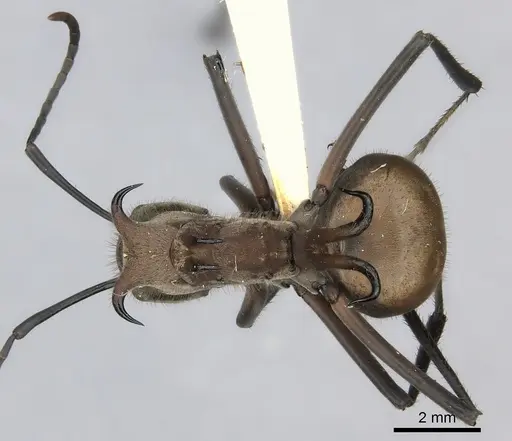
CASENT0903294
View on AntWeb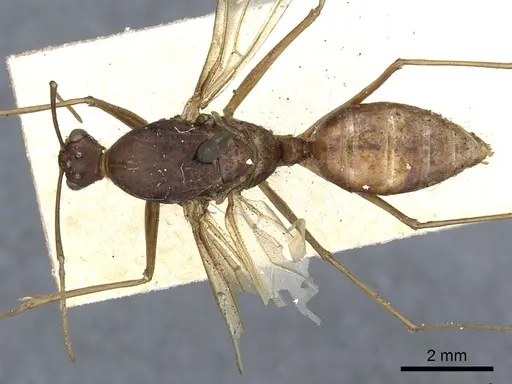
CASENT0905549
View on AntWeb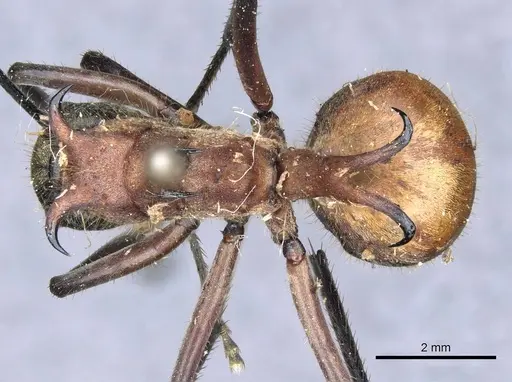
FOCOL0079
View on AntWeb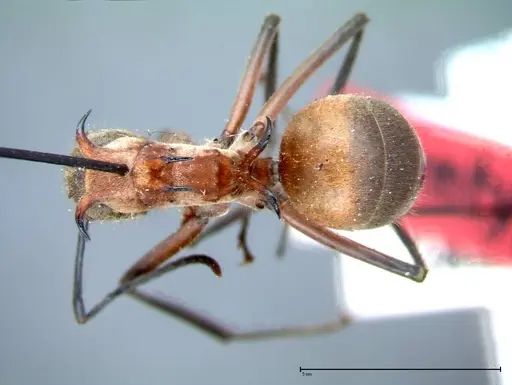
FOCOL0080
View on AntWeb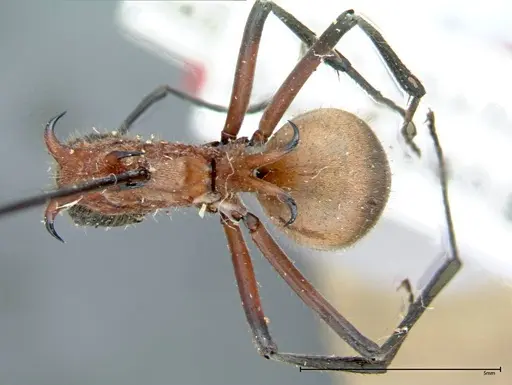
FOCOL0081
View on AntWeb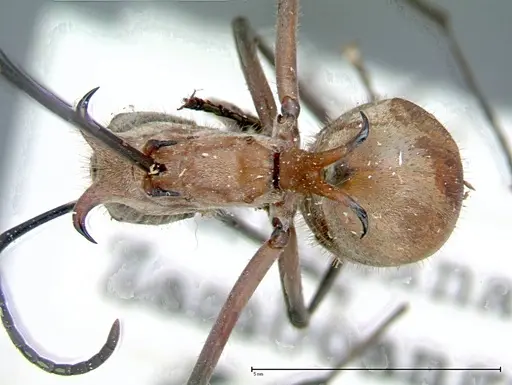
Literature
Loading...Loading products...