

Polyrhachis hirta
- Scientific Name
- Polyrhachis hirta
- Subgenus
- Myrmhopla
- Tribe
- Camponotini
- Subfamily
- Formicinae
- Author
- Viehmeyer, 1914
- Distribution
- Found in 1 countries
Polyrhachis hirta Overview
Polyrhachis hirta is an ant species of the genus Polyrhachis. It is primarily documented in 1 countries , including Papua New Guinea. Detailed taxonomic data and occurrence records can be further explored via authoritative databases such as AntWeb or the Global Biodiversity Information Facility (GBIF).
Polyrhachis hirta
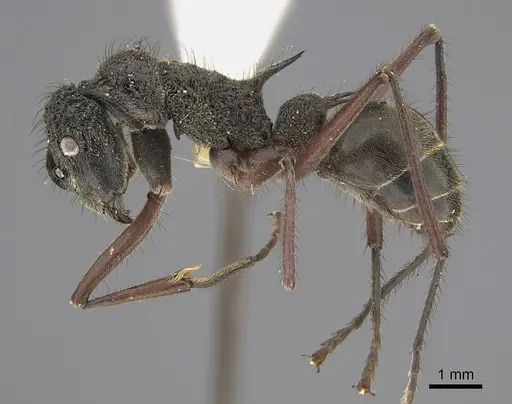
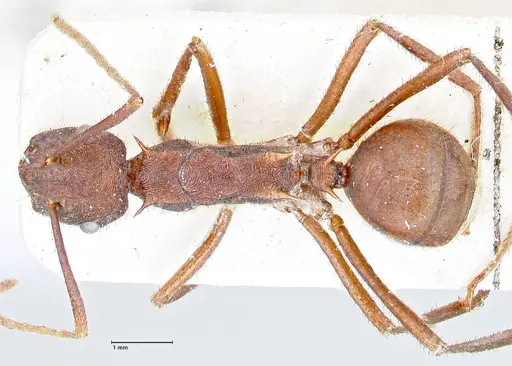
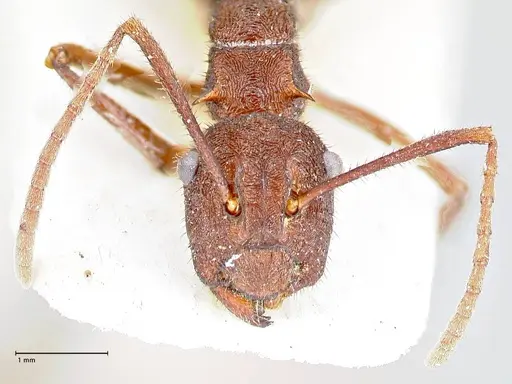
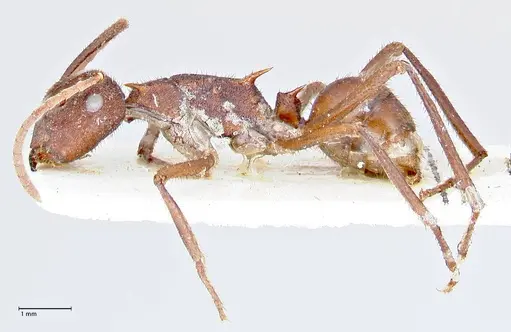
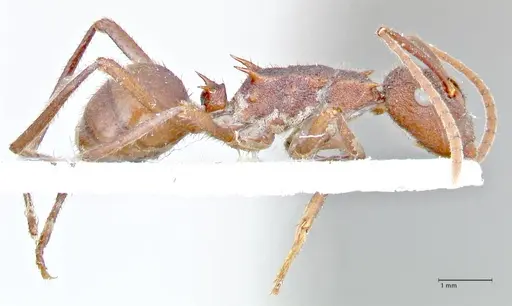
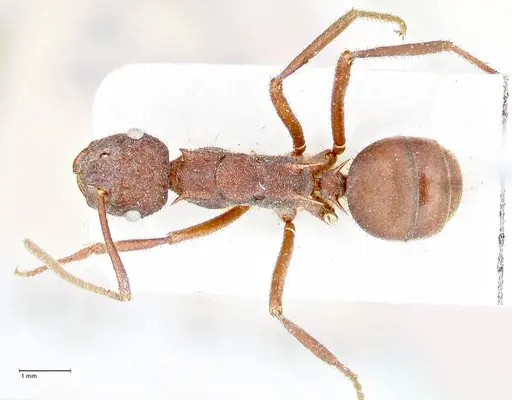
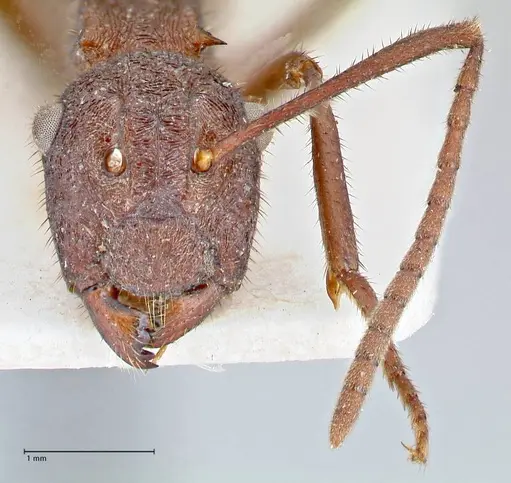
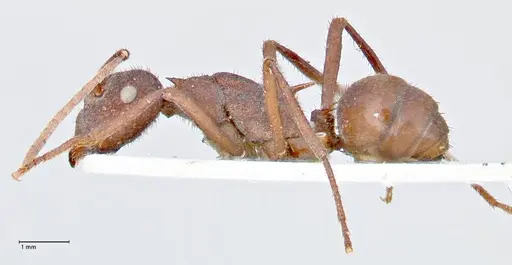
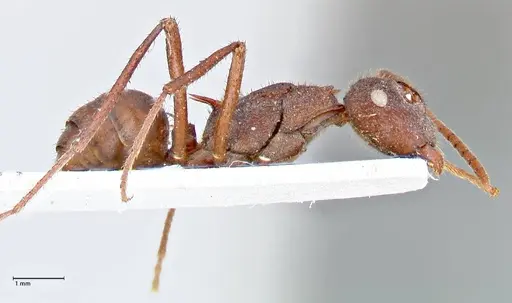
Polyrhachis hirta is a medium-sized ant native to New Guinea, belonging to the Formicinae subfamily. Workers measure 7.76-8.92mm and queens reach around 9.22mm [1]. This species gets its scientific name from the Latin word 'hirta' meaning hairy, referring to the short, reddish-brown bristle-like hairs that cover its body, most densely on the head and gaster [1]. The ant has distinctive spines on the pronotum, propodeum, and petiole, though these spines are relatively short and weakly elevated compared to some related species [1]. The body is medium reddish-brown with darker margins, and the gaster has fine transverse striations giving it an opaque appearance [1].
This species belongs to the Polyrhachis viehmeyeri species-group and is found only in Papua New Guinea [1]. Like other Polyrhachis ants, they are ground-nesting or will nest in rotting wood, and are generally not aggressive toward keepers. Their spiny appearance makes them visually striking, and their moderate size makes them easier to house than many tiny tropical ants.
Quick Summary
- Difficulty: Medium
- Origin & Habitat: Polyrhachis hirta is endemic to Papua New Guinea, specifically found in the Northern Province (Managalese Plateau, Pongani River, Boikiki Plantation) and Morobe Province (Bulolo) [1]. As a New Guinean species, they inhabit tropical forest environments where they nest in soil or rotting wood. The species was originally described from Wareo in Madang Province [1].
- Colony Type: Colony structure is not well documented for this species. Based on typical Polyrhachis patterns, they are likely monogyne (single queen colonies), though some related species can be polygynous. More research is needed to confirm their exact colony structure.
- Size & Growth:
- Queen: 9.22mm [1]
- Worker: 7.76-8.92mm [1]
- Colony: Unknown for this specific species, related Polyrhachis species typically reach several hundred workers
- Growth: Moderate, based on typical Polyrhachis development patterns
- Development: Estimated 6-8 weeks at tropical temperatures (25-28°C) based on genus-level data for related species (Direct development data not available for P. hirta, estimate based on typical Formicinae development at optimal temperature)
- Antkeeping:
- Temperature: Keep at 24-28°C, these are tropical ants from Papua New Guinea and need warm, stable conditions. A gentle gradient allowing them to self-regulate is ideal.
- Humidity: Moderate to high humidity (60-80%). Provide a moist nest substrate but avoid waterlogging. These forest-floor species appreciate some dampness but not saturated conditions.
- Diapause: No true diapause required, being a tropical species, they do not need hibernation. However, a slight reduction in temperature during cooler months may slow activity, which is natural.
- Nesting: Provide a naturalistic setup with soil or a Y-tong/plaster nest with chambers scaled to their 8mm worker size. They will nest in soil or rotting wood. A test tube setup works for founding colonies.
- Behavior: Polyrhachis hirta is generally calm and not aggressive. Workers are moderately active foragers that search for food both on the ground and may climb. They are not known for stinging, Formicinae ants typically have formic acid spray rather than a stinger. Escape risk is moderate due to their 8mm size, standard barrier methods should work well. They are diurnal and active during the day.
- Common Issues: tropical species requires consistent warmth, cold drafts can stress and kill colonies, limited distribution data means colony size potential is uncertain, don't over-expand too quickly, humidity balance is important, too wet causes mold, too dry causes desiccation, wild-caught colonies may have parasites or diseases that affect captive survival, limited specific care information means keepers should monitor colony response and adjust conditions accordingly
Housing and Nest Setup
For Polyrhach hirta, provide a nest that mimics their natural forest-floor habitat. A Y-tong (acrylic) nest or plaster nest with chambers sized for 8mm workers works well. The chambers should be appropriately scaled, not too tight, but not excessively large either. A naturalistic setup with a soil layer allows them to dig and create their own tunnels, which they often prefer. For founding colonies, a standard test tube setup with a water reservoir works until the colony reaches 20-30 workers, then they can be moved to a larger formicarium. Ensure the nest has a water source, either a test tube water reservoir or a moist sponge. Because they come from tropical PNG, they do best with moderate to high humidity maintained in the nest area. [1]
Feeding and Diet
Polyrhachis ants are omnivorous, similar to other Formicinae species. They accept both protein sources and sugar. Offer protein foods like small insects (fruit flies, small crickets, mealworms), and provide a constant sugar source such as sugar water, honey, or diluted honey. In nature, they likely forage for honeydew from aphids and scale insects, plus small arthropods. Feed protein 2-3 times per week, removing any uneaten prey after 24 hours. Keep sugar water available at all times. Fresh water should always be accessible.
Temperature and Humidity Requirements
As a tropical species from Papua New Guinea, Polyrhachis hirta requires warm conditions. Maintain temperatures between 24-28°C consistently. A slight temperature gradient (warm end around 28°C, cooler around 24°C) allows the colony to self-regulate. Use a heating cable or mat on one side of the nest if room temperature is below this range. For humidity, aim for 60-80% relative humidity in the nest. Keep the substrate moist but not waterlogged, the substrate should feel damp but not have standing water. Mist the outworld occasionally but avoid excessive moisture that promotes mold. Good ventilation is important to prevent stagnant air while maintaining humidity. [1]
Behavior and Colony Care
Polyrhachis hirta workers are moderately active and will explore their outworld in search of food. They are generally peaceful and not prone to biting or stinging aggressively. Formicinae ants have formic acid they can spray as defense, but this species is not particularly aggressive. Workers communicate using chemical trails and will recruit nestmates to good food sources. The colony will establish foraging patterns once they settle into their new home. Monitor for escape attempts, while not strong climbers like some arboreal species, standard barrier methods (fluon on rim edges) should prevent issues. Watch colony health: healthy workers are active, brood is present, and the queen (if visible) is laying eggs.
Growth and Development
The development timeline for P. hirta specifically is not documented in scientific literature. Based on typical Formicinae development at optimal tropical temperatures (25-28°C), eggs likely develop to workers in approximately 6-8 weeks. This includes the egg stage, larval development, and pupation. The first workers (nanitics) will be smaller than mature workers but should be functional. Growth rate is moderate, the colony will expand gradually over months. Queen longevity is not documented for this species, but related Polyrhachis queens can live several years in captivity with proper care. Maintain consistent conditions during the growth period to ensure proper development. [1]
Frequently Asked Questions
How long does it take for Polyrhachis hirta to produce first workers?
Based on typical Formicinae development at tropical temperatures (25-28°C), expect first workers in approximately 6-8 weeks after the queen lays eggs. This is an estimate as specific development data for P. hirta is not documented.
What do Polyrhachis hirta ants eat?
They are omnivorous. Offer protein sources like small insects (fruit flies, small crickets, mealworms) 2-3 times per week, and keep a constant sugar source available (sugar water, honey, or diluted honey). Fresh water should always be accessible.
What temperature do Polyrhachis hirta ants need?
Keep them at 24-28°C consistently. These are tropical ants from Papua New Guinea and need warm conditions. A slight gradient allowing them to move between warmer and cooler areas is ideal.
Are Polyrhachis hirta ants good for beginners?
They are rated as Medium difficulty. They are more forgiving than some tropical species but do require consistent warmth and humidity. Beginners should monitor conditions closely and have experience with basic antkeeping before attempting this species.
How big do Polyrhachis hirta colonies get?
Colony size is not well documented for this specific species. Based on related Polyrhachis species, colonies likely reach several hundred workers over time with proper care.
Do Polyrhachis hirta ants need hibernation?
No, they are a tropical species from Papua New Guinea and do not require hibernation or diapause. Maintain consistent warm temperatures year-round.
Can I keep multiple Polyrhachis hirta queens together?
Colony structure is not well documented for this species. Based on typical Polyrhachis patterns, they likely form single-queen colonies. Combining unrelated queens is not recommended without documented evidence of polygyny in this species.
Why is my Polyrhachis hirta colony declining?
Common causes include: temperature too cold (below 24°C), humidity too low or too high, poor nutrition, disease/parasites from wild-caught colonies, or stress from disturbance. Review all care parameters and ensure conditions match their tropical requirements.
References

This caresheet is licensed under CC BY-SA 4.0 .
Literature
Loading...Loading products...