

Polyrhachis viehmeyeri
- Scientific Name
- Polyrhachis viehmeyeri
- Subgenus
- Myrmhopla
- Tribe
- Camponotini
- Subfamily
- Formicinae
- Author
- Emery, 1921
- Distribution
- Found in 1 countries
Polyrhachis viehmeyeri Overview
Polyrhachis viehmeyeri is an ant species of the genus Polyrhachis. It is primarily documented in 1 countries , including Papua New Guinea. Detailed taxonomic data and occurrence records can be further explored via authoritative databases such as AntWeb or the Global Biodiversity Information Facility (GBIF).
Polyrhachis viehmeyeri
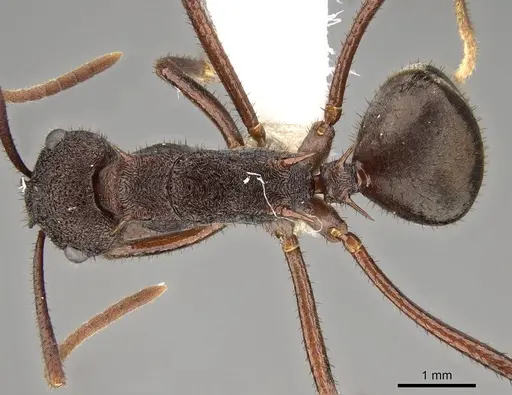
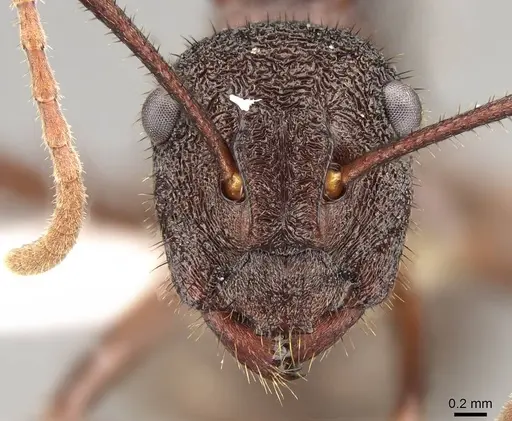
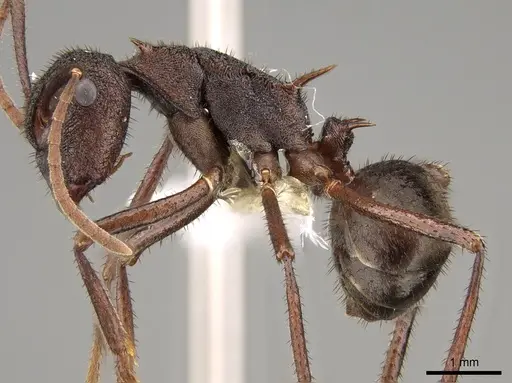
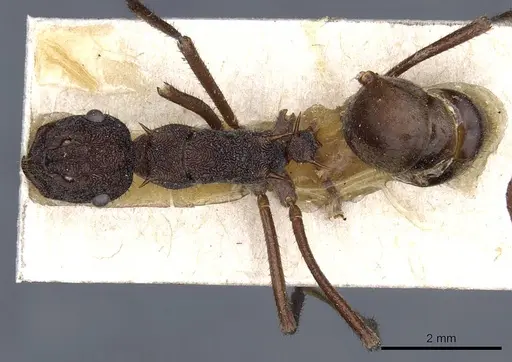
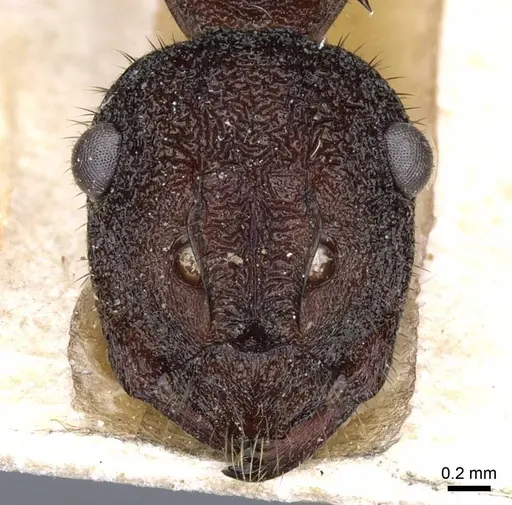
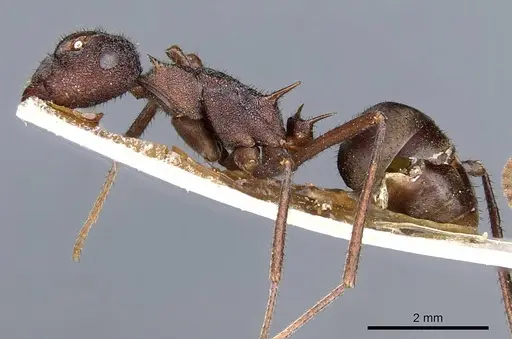
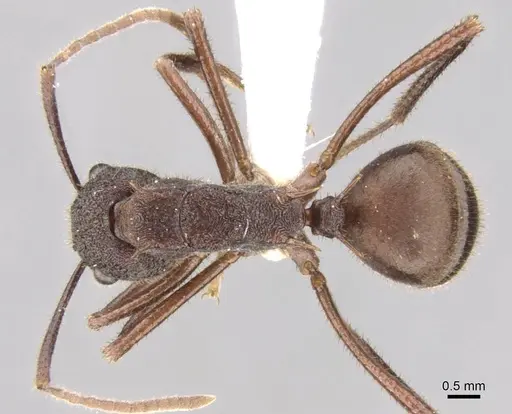
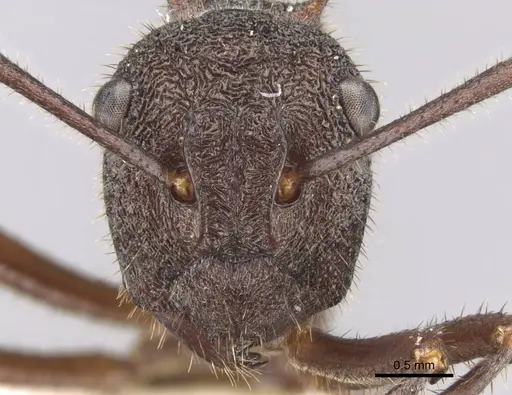
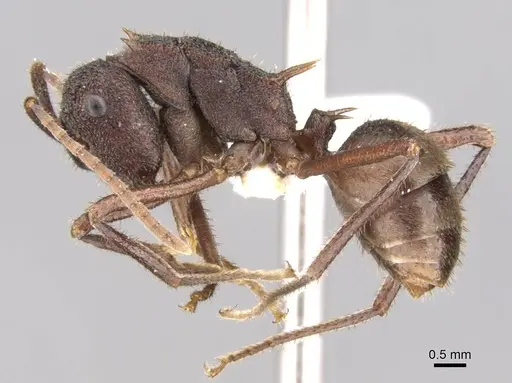
Polyrhachis viehmeyeri is a medium-sized ant species native to New Guinea and Papua New Guinea. Workers measure 7.5-8.5mm and feature distinctive long, slender spines on the pronotum, propodeum, and petiole, giving them an elegant, spiky appearance. They are mostly reddish-brown with abundant bristle-like hairs across the body and sparse silvery pubescence, particularly on the gaster. Queens are similar but slightly larger at 8.5-8.9mm, with reduced pronotal spines and shorter propodeal spines. This species belongs to the Hirtomyrma subgenus and is known from several locations in northeastern New Guinea including Lae and Kokoda at elevations around 1100 feet [1].
As a tropical Polyrhachis species from New Guinea, these ants are arboreal or semi-arboreal in nature, likely nesting in vegetation, under bark, or in hollow twigs, similar to other members of this genus. They are active foragers with a moderate growth rate. The long spines and bristly appearance make them visually distinctive among captive ant species.
Quick Summary
- Difficulty: Medium
- Origin & Habitat: New Guinea and Papua New Guinea, tropical rainforest environments at low to mid elevations (around 1100 ft/335m) [1]. The region features warm temperatures year-round with high humidity.
- Colony Type: Colony structure is unconfirmed. Based on typical Polyrhachis patterns, likely single-queen colonies but further research needed.
- Size & Growth:
- Queen: 8.5-8.9mm [1]
- Worker: 7.5-8.5mm (TL 7.46-8.52mm) [1]
- Colony: Unknown, no colony size data available. Based on related Polyrhachis species, likely several hundred workers at maturity.
- Growth: Moderate, estimated based on genus patterns
- Development: Estimated 6-10 weeks at optimal temperature based on related Formicinae species (Development time is estimated as no direct study exists for this species. Tropical origin suggests faster development than temperate species.)
- Antkeeping:
- Temperature: Keep at 24-28°C. As a tropical species from New Guinea, they need warm conditions. A heating cable on one side of the nest creates a suitable gradient. Room temperature may suffice if your home stays in this range.
- Humidity: High humidity preferred, aim for 70-85%. This species comes from humid tropical rainforest environments. Keep the nest substrate consistently moist but not waterlogged. Provide a water source in the outworld.
- Diapause: Likely no true diapause required. As a tropical species, they do not experience cold winters. However, a slight reduction in temperature during winter months (to around 22-24°C) may be appropriate if the colony shows reduced activity.
- Nesting: Semi-arboreal nesting preferences. In captivity, they do well in Y-tong (AAC) nests or plaster nests with some vertical space. Provide materials like twigs, bark, or artificial vegetation for climbing. Avoid fully underground setups, they prefer some elevated surfaces.
- Behavior: Generally peaceful and not aggressive toward keepers. As Formicinae, they do not have a functional stinger but may bite if threatened. They are active foragers and good climbers. Escape prevention should be good, while they are medium-sized, they are agile climbers. Use standard barrier methods (Fluon) on the outworld rim. They are diurnal and actively forage throughout the day.
- Common Issues: high humidity maintenance is critical, dry conditions can cause colony decline, tropical species may struggle if temperatures drop below 22°C, semi-arboreal nature means they need climbing structures, avoid flat, horizontal-only setups, wild-caught colonies may have parasites or diseases that affect captive survival, slow initial colony growth can lead to keeper impatience and overfeeding problems
Housing and Nest Setup
Polyrhachis viehmeyeri is a semi-arboreal species, meaning they naturally nest in elevated locations like trees, under bark, or in hollow twigs. In captivity, provide a setup that reflects this. Y-tong (AAC) nests work well, as do plaster or acrylic nests. The key is to include climbing structures, add twigs, artificial plants, or cork bark positioned vertically. They will use these for foraging and exploring.
The outworld should be escape-proof using Fluon or similar barriers on the rim. While not extreme escape artists, they are good climbers and will explore any gap. A naturalistic outworld with soil substrate and live plants can enhance their wellbeing, but is not required. Ensure the nest has some vertical orientation rather than being completely flat. [1]
Feeding and Diet
Like most Polyrhachis species, these ants are omnivorous. They likely feed on nectar, honeydew from sap-sucking insects, and small insects in the wild. In captivity, offer a varied diet: sugar water or honey as a constant energy source, and protein-rich foods like fruit flies, small crickets, mealworms, or other small insects. Feed protein 2-3 times per week, and keep sugar water available at all times.
Polyrhachis ants are generally good eaters and will readily accept most offered foods. Remove uneaten prey after 24-48 hours to prevent mold. Fresh fruit occasionally offered is also typically accepted. The tropical origin suggests they may have higher energy needs, ensure they have consistent access to carbohydrates.
Temperature and Heating
As a species from tropical New Guinea, Polyrhachis viehmeyeri requires warm conditions. Keep the nest area at 24-28°C. This can be achieved through room temperature if your home is in this range, or by using a heating cable placed on one side of the nest to create a gentle thermal gradient. Place heating on top of the nest, not underneath, to avoid drying out the substrate.
Avoid temperatures below 22°C for extended periods, this species has no adaptation to cold. Unlike temperate species, they do not require hibernation or winter dormancy. A slight seasonal reduction to around 22-24°C during winter months may be appropriate if the colony naturally slows, but is not strictly necessary. [1]
Humidity and Water
High humidity is essential for this tropical species. Aim for 70-85% relative humidity in the nest area. Keep the nest substrate consistently moist, it should feel damp to the touch but not have standing water. Check regularly and rehydrate as needed rather than on a fixed schedule.
In addition to substrate moisture, provide a water source in the outworld. A test tube with a cotton ball or a small water dish works well. The combination of moist nest conditions and available drinking water will keep the colony healthy. Monitor for mold growth, which can indicate excessive humidity or poor ventilation.
Colony Development
Queens measure 8.5-8.9mm and are slightly larger than workers. The founding behavior is unconfirmed but likely claustral like most Formicinae, the queen seals herself in a chamber and raises the first workers on stored body fat. Expect 6-10 weeks from egg to first worker based on related species.
Initial colony growth is typically slow. The first generation (nanitics) will be smaller than normal workers. After the colony establishes, growth rate increases but remains moderate by ant standards. Patience is key, do not overfeed or disturb the colony during the founding phase. Once you have 20-30 workers, the colony becomes more resilient. [1]
Frequently Asked Questions
How long does it take for Polyrhachis viehmeyeri to have first workers?
Expect 6-10 weeks from egg to first worker at optimal temperature (24-28°C). This is an estimate based on related Formicinae species, as no direct development study exists for this species. The first workers (nanitics) will be smaller than mature workers.
What temperature do Polyrhachis viehmeyeri ants need?
Keep them at 24-28°C. This tropical species from New Guinea requires warm conditions year-round. Avoid temperatures below 22°C. A heating cable on one side of the nest can create a suitable gradient.
Do Polyrhachis viehmeyeri ants need hibernation?
No, hibernation is not required. As a tropical species from New Guinea, they do not experience cold winters. They remain active year-round at room temperature. A slight temperature reduction in winter is optional but not necessary.
What do Polyrhachis viehmeyeri ants eat?
They are omnivorous. Offer sugar water or honey constantly for energy, and protein sources like fruit flies, small crickets, or mealworms 2-3 times per week. They will also occasionally accept fresh fruit.
Are Polyrhachis viehmeyeri good for beginners?
They are rated as medium difficulty. The main challenges are maintaining high humidity and warm temperatures year-round. If you can provide these stable tropical conditions, they are manageable for intermediate antkeepers.
How big do Polyrhachis viehmeyeri colonies get?
Colony size is not well documented, but based on related Polyrhachis species, colonies likely reach several hundred workers at maturity. Growth is moderate, expect several months to the first workers and a year or more to a substantial colony.
Can I keep multiple Polyrhachis viehmeyeri queens together?
The colony structure is unconfirmed for this species. It is not recommended to combine unrelated foundress queens, as fighting is likely. If you obtain a colony, assume single-queen structure unless you observe otherwise.
Why is my Polyrhachis viehmeyeri colony declining?
Common causes include: temperatures below 22°C, low humidity (below 60%), dry nest conditions, or overfeeding leading to mold. Check all three environmental factors first. Wild-caught colonies may also carry parasites that affect captive survival.
References

This caresheet is licensed under CC BY-SA 4.0 .
Literature
Loading...Loading products...