

Polyrhachis cornuta
- Scientific Name
- Polyrhachis cornuta
- Subgenus
- Myrma
- Tribe
- Camponotini
- Subfamily
- Formicinae
- Author
- Stitz, 1910
- Distribution
- Found in 1 countries
Polyrhachis cornuta Overview
Polyrhachis cornuta is an ant species of the genus Polyrhachis. It is primarily documented in 1 countries , including Tanzania, United Republic of. Detailed taxonomic data and occurrence records can be further explored via authoritative databases such as AntWeb or the Global Biodiversity Information Facility (GBIF).
Polyrhachis cornuta
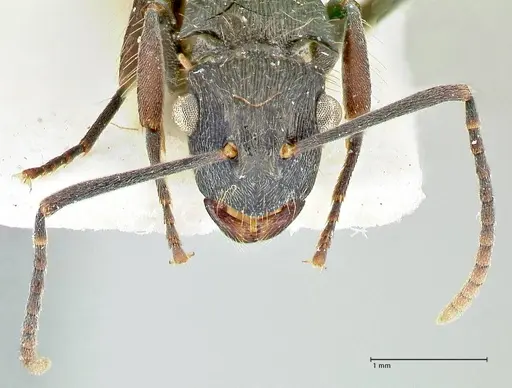
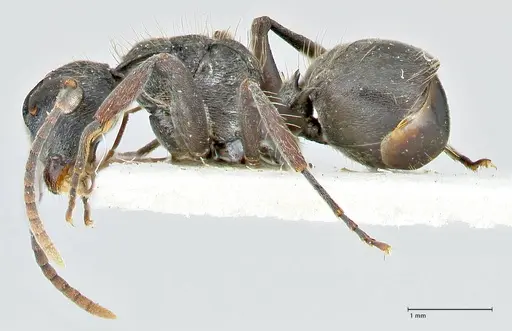
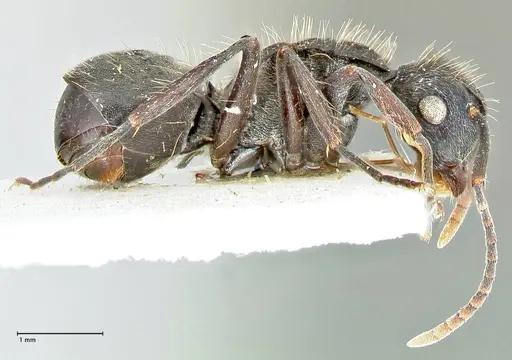
Polyrhachis cornuta is a medium-sized African ant belonging to the Formicinae subfamily. Workers measure around 5.6mm with a distinctive appearance featuring a black body, brownish legs and antennae, and remarkably spiny petiole (the segment connecting the thorax and abdomen). The most striking feature is the pair of enormous curved spines on either side of the petiole that wrap around the base of the abdomen like horns, this is what gives the species its name 'cornuta' meaning 'horned' [1]. These ants are endemic to the Democratic Republic of Congo, specifically recorded from the Kinshasa area [2].
This species belongs to the militaris species group and is closely related to Polyrhachis phidias. The genus Polyrhachis is known for its spiny ants, but P. cornuta stands out for its unusually developed lateral petiolar spines. Unfortunately, almost nothing is known about their biology in the wild, this is one of the least studied ant species in the hobby. What we know comes from limited museum specimens and taxonomic descriptions [3].
Quick Summary
- Difficulty: Unknown, likely Medium to Hard
- Origin & Habitat: Democratic Republic of Congo, Africa. Endemic to the Kinshasa region. They likely inhabit tropical forest environments typical of the area, though specific habitat details are unconfirmed [2].
- Colony Type: Colony structure is unconfirmed. Based on genus patterns, likely monogyne (single queen) but this has not been documented.
- Size & Growth:
- Queen: Unknown, no queen description exists in scientific literature
- Worker: 5.6mm total length (workers described at 4.6-5.6mm range) [1][3]
- Colony: Unknown, no colony size data exists
- Growth: Unknown, likely moderate based on genus patterns
- Development: Unknown, no development data exists for this species. Based on related Polyrhachis species, estimate 6-10 weeks at tropical temperatures. (No direct observations of founding or development exist. Estimates based on genus-level patterns for tropical Formicinae.)
- Antkeeping:
- Temperature: Keep at 24-28°C. This species is from tropical central Africa, so warmth is essential. Use a heating cable on one side of the nest to create a gradient if room temperature is below this range.
- Humidity: Maintain moderate to high humidity (60-80%). Mist the outworld occasionally and keep the nest substrate lightly moist. Ensure some drier areas are available so ants can self-regulate.
- Diapause: Likely no true diapause required. As a tropical species from equatorial Africa, they probably remain active year-round with minor slowdowns during cooler periods.
- Nesting: Nesting preferences are unconfirmed. Most Polyrhachis species are arboreal or semi-arboreal, often nesting in vegetation, hollow stems, or under bark. In captivity, a Y-tong (AAC) nest or plaster nest with some vertical space works well. Provide climbing structures and twigs in the outworld.
- Behavior: Behavior is unstudied in captivity. Based on genus patterns, they are likely moderately active foragers that search for honeydew and small prey. Escape risk is moderate, workers are around 5-6mm so standard barriers usually work well, but they are agile climbers. Temperament is likely not aggressive, most Polyrhachis ants are docile and prefer to flee rather than fight. They may have a mild formic acid spray or bite if threatened, though this is not well documented.
- Common Issues: lack of captive husbandry information makes successful keeping challenging, no confirmed diet preferences, must experiment with sugar sources and protein, unknown if they accept sugar water or require honeydew/plant-based foods, no information on founding behavior, queen care is speculative, potential escape artists given their active foraging nature
Housing and Nest Setup
Since nothing is known about the specific nesting habits of P. cornuta, we must make educated guesses based on the genus. Polyrhachis ants are primarily arboreal or semi-arboreal, often nesting in vegetation, under bark, or in hollow stems. For captivity, a Y-tong (acrylic) nest or plaster nest works well. Provide the nest with a small water reservoir for humidity but avoid flooding. The outworld should include climbing structures like twigs, fake plants, or cork bark since these ants likely prefer some vertical space. A test tube setup can work for founding colonies, but be prepared to move them to a more elaborate setup as the colony grows. Use standard escape prevention, while not tiny, they are agile climbers that can scale smooth surfaces.
Feeding and Diet
Diet preferences are completely unconfirmed for this species. Based on genus patterns, Polyrhachis ants typically feed on honeydew from aphids and scale insects, plus small insects for protein. In captivity, you should offer a varied diet and observe what they accept. Start with sugar water (1:3 ratio) or honey (diluted) as a constant sugar source. For protein, offer small insects like fruit flies, small mealworms, or cricket pieces. Some Polyrhachis species are known to accept plant-based foods, so you might experiment with small pieces of fruit. Feed protein 2-3 times per week and keep sugar sources available constantly. Remove uneaten prey after 24-48 hours to prevent mold.
Temperature and Humidity
As a tropical species from the Democratic Republic of Congo near the equator, P. cornuta requires warm, stable conditions. Target 24-28°C (75-82°F) in the nest area. A heating cable placed on one side of the nest creates a temperature gradient allowing the ants to self-regulate. Place the heating element on top of the nest to avoid evaporating moisture too quickly. For humidity, aim for 60-80%, keep the nest substrate lightly moist but not waterlogged. Mist the outworld occasionally and provide a water tube for drinking. Since nothing is known about their exact requirements, observe colony behavior: if workers cluster near the heat source, increase temperature slightly, if they avoid it, reduce heat.
Colony Founding and Development
No scientific observations exist of P. cornuta colony founding. Based on typical Formicinae patterns, the queen likely seals herself in a chamber (claustral founding) and lives off stored fat reserves until her first workers emerge. However, this is an educated guess, not a confirmed fact. The egg-to-worker timeline is completely unknown. For related Polyrhachis species, development typically takes 6-10 weeks at tropical temperatures. First workers (nanitics) will likely be smaller than mature workers. Until more specific data exists, treat founding colonies with extra care, keep them in a quiet, dark location with stable temperature and humidity, and avoid disturbing them unnecessarily.
Behavior and Temperament
Specific behavioral observations for P. cornuta do not exist in scientific literature. However, the genus Polyrhachis is generally known for docile, non-aggressive temperaments. These ants typically prefer flight over fight when threatened. They are active foragers that search for honeydew and small prey. Their distinctive spiny petiole may serve as a defense mechanism, making them harder for predators to swallow. Workers are moderately sized (5-6mm) and should be contained by standard ant farm barriers, though their climbing ability means escape prevention should be taken seriously. They likely maintain moderate activity levels throughout the day.
Frequently Asked Questions
How long does it take for Polyrhachis cornuta to produce first workers?
The egg-to-worker timeline is completely unknown for this species, no scientific observations exist. Based on related Polyrhachis species, estimate 6-10 weeks at optimal tropical temperatures (24-28°C).
What do Polyrhachis cornuta ants eat?
Diet is unconfirmed. Based on genus patterns, they likely feed on honeydew and small insects. Offer sugar water or diluted honey as a constant sugar source, plus small insects (fruit flies, small mealworms) for protein 2-3 times weekly.
Are Polyrhachis cornuta ants good for beginners?
This species is not recommended for beginners. Almost no captive husbandry information exists, everything must be inferred from genus patterns. This makes successful keeping challenging and risky for new antkeepers.
Do Polyrhachis cornuta ants need hibernation?
Probably not. As a tropical species from equatorial Africa, they likely remain active year-round. No diapause requirement has been documented, and their natural environment does not experience cold winters.
What temperature do Polyrhachis cornuta ants need?
Keep nest areas at 24-28°C (75-82°F). This tropical species requires warm conditions. Use a heating cable on one side of the nest to create a gradient if room temperature is lower.
How big do Polyrhachis cornuta colonies get?
Colony size is completely unknown, no colony data exists in scientific literature. Based on related species in the genus, colonies may reach several hundred workers over time.
Can I keep multiple Polyrhachis cornuta queens together?
Colony structure is unconfirmed. No information exists about whether this species is monogyne (single queen) or polygyne (multiple queens). Do not attempt combining unrelated queens until more information is available.
Why is so little known about Polyrhachis cornuta?
This species is endemic to a limited region (Kinshasa, DRC) and has rarely been collected or studied. The last major documentation was in 1910,and no ecological or behavioral studies have been published since. It remains one of the least studied ant species in the hobby.
References

This caresheet is licensed under CC BY-SA 4.0 .
FOCOL2575
View on AntWeb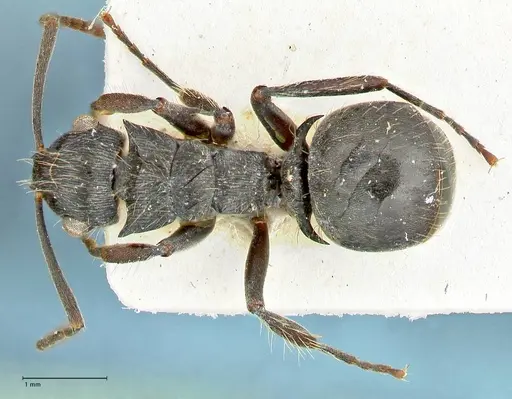
Literature
Loading...Loading products...