

Polyergus ruber
- Scientific Name
- Polyergus ruber
- Tribe
- Formicini
- Subfamily
- Formicinae
- Author
- Trager, 2013
- Common Name
- Ruby Amazon Ant
- Distribution
- Found in 1 countries
Polyergus ruber Overview
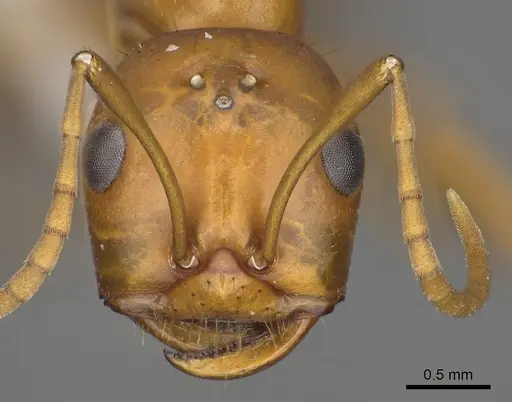
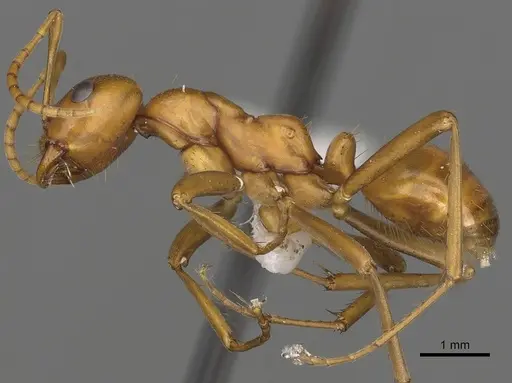
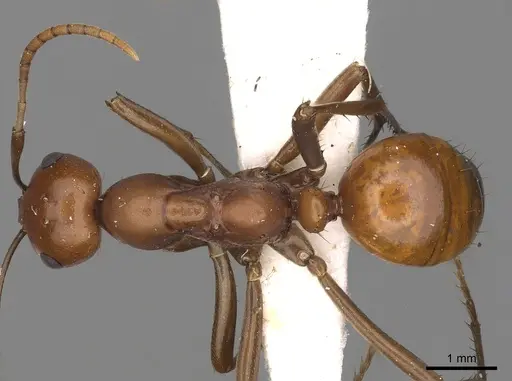
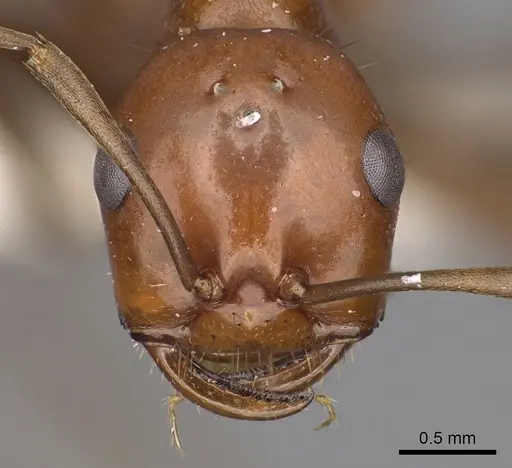
Polyergus ruber (commonly known as the Ruby Amazon Ant) is an ant species of the genus Polyergus. It is primarily documented in 1 countries , including United States of America. Detailed taxonomic data and occurrence records can be further explored via authoritative databases such as AntWeb or the Global Biodiversity Information Facility (GBIF).
Polyergus ruber - "Ruby Amazon Ant"
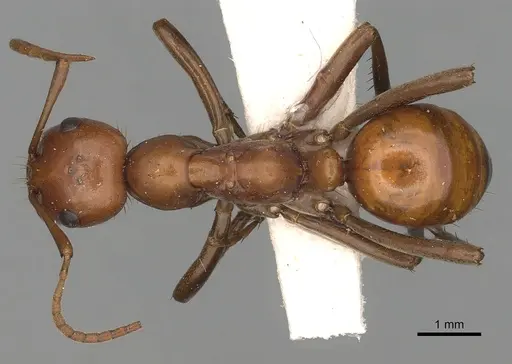
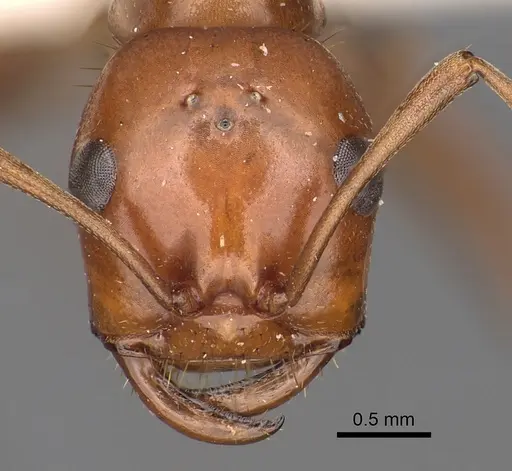
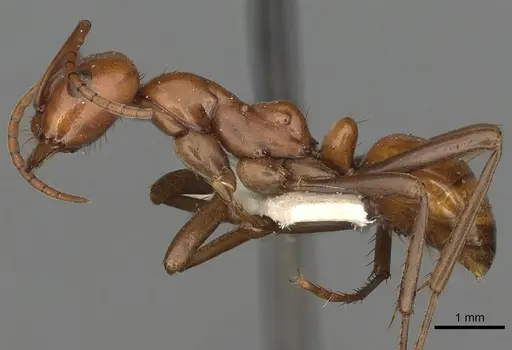
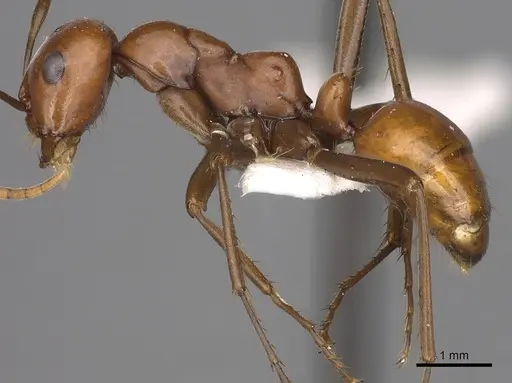
Polyergus ruber is one of the largest and most striking ants in the southeastern United States. Workers are a clear, bright red color with slightly darker legs and reach 6-7mm in total length, making them noticeably larger than many common house ants [1]. Their shiny appearance and relatively sparse body hairs distinguish them from their close relative P. longicornis [1]. This species is a dedicated slave-maker, it cannot survive without a host colony of Formica ants, specifically Formica biophilica [2][1]. The queens are unable to found colonies independently and must invade a host nest, kill the host queen, and use the remaining host workers to raise their first brood [3].
What makes P. ruber truly fascinating is their dramatic raiding behavior. Large raiding parties of 500-1000 workers march out in the evening to raid nearby Formica nests, stealing pupae to raise as slave workers [1]. These raids occur from early June through mid-August, with pre-raiding activity starting around 5pm [1]. This species represents an extreme example of social parasitism where the slave-makers have become completely dependent on their hosts for survival.
Quick Summary
- Difficulty: Expert
- Origin & Habitat: Southeastern United States, ranging from Maryland to Georgia, west to Louisiana, and north to eastern Missouri. They inhabit upland grassy areas and open woodlands with acidic soils [2][1][3].
- Colony Type: Dulotic (slave-making) species requiring permanent host colony. Queens cannot found colonies independently and must invade Formica biophilica nests. Colonies contain both P. ruber workers and enslaved Formica workers [2][1].
- Colony: Monogyne
- Queen: Temporary parasitic
- Special: Slave-making
- Size & Growth:
- Queen: Approximately 7-8mm (estimated from worker size and genus patterns)
- Worker: 6.16-7.36mm total length [1]
- Colony: Mixed colonies with hundreds of P. ruber workers plus equal or greater numbers of enslaved Formica workers [1]
- Growth: Slow to moderate, dependent on host colony success
- Development: Unknown, directly tied to host colony brood development (Development is entirely dependent on host Formica workers raising the brood. No specific timeline has been documented.)
- Antkeeping:
- Temperature: Keep at room temperature around 20-24°C. This species is not particularly temperature-demanding and should do well in typical indoor conditions.
- Humidity: Moderate humidity similar to their woodland habitat. Keep nest substrate slightly moist but not wet.
- Diapause: Yes, likely requires a winter rest period similar to other Formicinae in their range. Provide 4-6 weeks at 10-15°C during winter months.
- Nesting: Requires a setup that allows interaction with a host Formica colony. A dual-colony setup with a tube connecting the slave-maker nest to a Formica host nest is essential. Use test tubes or acrylic nests with a connecting bridge to the host colony [3].
- Behavior: These ants are aggressive raiders but relatively docile toward humans. Workers are not known to sting and pose no danger to keepers. They are active primarily in evening hours during raid season. Escape risk is moderate, they are large enough that standard formicarium barriers work well, but their active raiding behavior means they may explore beyond their intended area. The key behavioral concern is that they MUST have a host colony to survive, without enslaved Formica workers, the colony will die [2][1].
- Common Issues: Without a host Formica colony, the colony will die, this is the single most critical issue for keeping this species, Finding and maintaining a healthy Formica biophilica host colony is extremely difficult and expensive, Raiding behavior can stress or potentially decimate a host colony if not managed properly, Colonies may fail if the host queen dies before the slave-makers establish their own brood, This species is NOT suitable for beginners due to the complex host requirements
Understanding Slave-Making Ants
Polyergus ruber is a dulotic ant species, meaning it conducts slave raids to steal brood from other ant species. Unlike some parasites that simply live off a host colony, P. ruber actively raids neighboring Formica colonies to capture pupae. These captured pupae emerge as adult Formica workers that integrate into the Polyergus colony and perform all the normal worker tasks, foraging, nursing brood, maintaining the nest, effectively becoming slaves [1]. The slave-makers themselves have evolved to be specialized raiders and have lost many typical worker behaviors. They cannot forage for food, care for their own brood, or perform normal nest maintenance. Without their slaves, a Polyergus colony will quickly die of starvation or neglect. This makes them one of the most challenging ant species to keep, as you must maintain TWO colonies, the slave-makers AND their host Formica colony [2][1].
Housing Requirements
Keeping P. ruber requires a dual-colony setup. You need one nest for the Polyergus ruber colony and a separate, connected nest for their Formica biophilica host. The two colonies should be linked by tubing that allows the slave-makers to conduct raids but also allows the host colony to function. A typical setup uses two test tube setups or acrylic formicaria connected by flexible tubing. The host colony needs to be larger and more established, at least 200-300 workers to survive repeated raids. The slave-maker colony should be smaller initially, around 50-100 workers plus their enslaved workers. The connection between nests should be controllable so you can close it off during times when the host colony needs to recover from raiding [3]. Escape prevention is important but not as critical as with tiny ants, these are large ants that cannot squeeze through standard barrier setups.
Feeding and Nutrition
Both the slave-makers and their host colony need to be fed. The enslaved Formica workers will forage and feed the Polyergus workers, so your primary concern is feeding the host colony. Feed the Formica host colony a standard ant diet: protein sources like mealworms, crickets, or other insects 2-3 times per week, plus sugar water or honey constantly available. The enslaved Formica workers will consume this food and share it with the slave-makers through trophallaxis (mouth-to-mouth food sharing). Do not expect the Polyergus workers to directly accept food from you, they are specialized raiders and have reduced foraging behavior. Keep the host colony well-fed to ensure the entire mixed colony thrives.
The Raid: Behavior in Captivity
In the wild, P. ruber conducts raids from early June through mid-August, with activity starting around 5pm (1700 hours) when workers begin milling around the nest entrance before marching out [1]. In captivity, you may observe similar evening raiding behavior. The slave-maker workers will march in a column toward the host colony, overwhelm the defenders, and capture pupae and larvae. These captured brood are carried back to the slave-maker nest where they emerge as additional enslaved workers. In a captive setup, you should expect this behavior during summer months. However, repeated raids can weaken or destroy a host colony. Many keepers recommend closing the connecting tube after raids to allow the host colony to recover, or using multiple host colonies in rotation to prevent any single host from being over-raid.
Acquiring a Colony
Getting started with P. ruber is significantly more difficult than typical ants. You cannot simply catch a mated queen and start a colony, queens cannot found colonies independently and require immediate access to a host colony. The most common approach is to locate an established mixed colony in the wild, which already contains both Polyergus and their enslaved Formica workers. This is challenging and may require collecting in their southeastern US range during raid season (June-August). Alternatively, you would need to obtain both a newly mated P. ruber queen AND a Formica biophilica colony simultaneously and introduce them. This species is rarely available in the antkeeping hobby and is considered an expert-level species precisely because of the difficulty in establishing and maintaining the required host relationship [2][1][3].
Seasonal Care and Overwintering
P. ruber follows seasonal patterns similar to other southeastern US Formicinae. Raiding activity occurs from early June through mid-August, after which the colony becomes less active [1]. During winter months (roughly November through February), the colony will likely enter a period of reduced activity. Provide a winter rest period at temperatures around 10-15°C for 4-6 weeks. Both the slave-maker portion and the host Formica colony need this dormancy period. Keep them in a cool location like a basement or garage during winter, but ensure they don't freeze completely. Reduce feeding during this period to once every 2-3 weeks. In spring, activity will resume and the raiding cycle begins again.
Frequently Asked Questions
Can I keep Polyergus ruber in a test tube setup?
Standard test tube setups are NOT suitable for P. ruber because they require a host Formica colony to survive. You need a dual-colony setup with the slave-makers connected to a Formica host colony. A simple test tube will result in colony death within weeks.
How do I start a Polyergus ruber colony?
You cannot start a colony from a queen alone. Queens are unable to found colonies independently and must immediately invade a host Formica colony. Your only option is to locate an established mixed colony in the wild containing both P. ruber and their enslaved Formica workers, or obtain both a newly mated queen and a Formica biophilica colony simultaneously.
What do Polyergus ruber eat?
The enslaved Formica workers do all the foraging and feeding. You feed the host Formica colony standard ant foods: protein (insects) 2-3 times per week and sugar water or honey constantly. The slave-makers receive food through trophallaxis from their enslaved workers.
Will Polyergus ruber raid and kill my Formica colony?
Yes, this is their natural behavior. They will conduct raids to steal brood from the host colony. In captivity, you must manage this carefully, either use a controllable connection to close it off after raids, or maintain multiple host colonies in rotation so no single colony is over-raid.
Are Polyergus ruber ants dangerous?
No, these ants are not dangerous to humans. They lack a functional stinger and are too specialized in their raiding behavior to show aggression toward keepers. They pose no sting threat.
How long do raids last?
In the wild, raids have been observed from early June through mid-August. Pre-raiding activity starts around 5pm, with raids lasting several hours. In captivity, expect similar evening activity during summer months.
Can I keep multiple queens together?
This species is monogyne, colonies have a single queen. However, the more relevant question is whether you can keep multiple colonies together. Given the complexity of maintaining host relationships, keeping multiple slave-maker colonies is not recommended for any keeper.
Do Polyergus ruber need hibernation?
Yes, they likely require a winter rest period. Provide 4-6 weeks at 10-15°C during winter months (roughly November-February). Both the slave-makers and host colony need this dormancy period.
Why are my Polyergus ruber dying?
The most likely cause is death of the host Formica colony. Without their enslaved workers, P. ruber cannot survive, they cannot forage, care for brood, or maintain their nest. Other causes include stress from over-raiding, disease, or improper temperature/humidity. This species is extremely difficult to maintain long-term.
Is Polyergus ruber good for beginners?
Absolutely not. This is an expert-level species that requires maintaining two colonies simultaneously, the slave-makers AND their Formica host. The complexity of the host relationship, the difficulty of establishing colonies, and the specialized care requirements make this species suitable only for very experienced antkeepers with specific knowledge of dulotic species.
References

This caresheet is licensed under CC BY-SA 4.0 .
Literature
Loading...Loading products...