

Pogonomyrmex texanus
- Scientific Name
- Pogonomyrmex texanus
- Tribe
- Pogonomyrmecini
- Subfamily
- Myrmicinae
- Author
- Francke & Merickel, 1982
- Distribution
- Found in 1 countries
Pogonomyrmex texanus Overview
Pogonomyrmex texanus is an ant species of the genus Pogonomyrmex. It is primarily documented in 1 countries , including United States of America. Detailed taxonomic data and occurrence records can be further explored via authoritative databases such as AntWeb or the Global Biodiversity Information Facility (GBIF).
Pogonomyrmex texanus
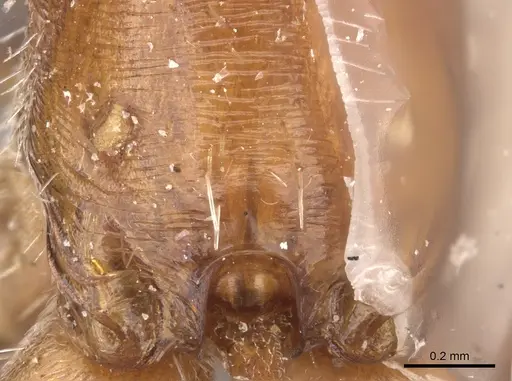
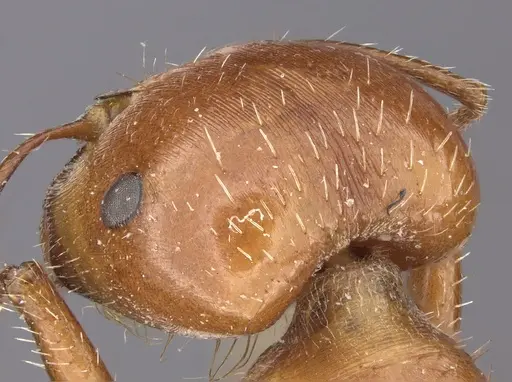
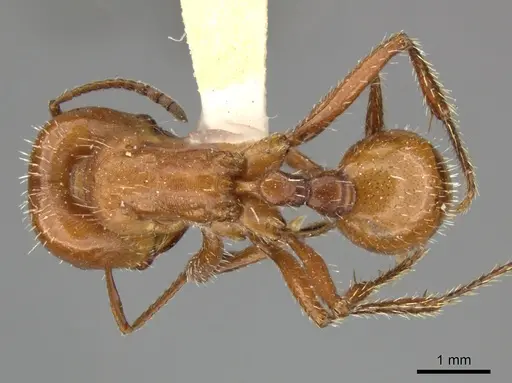
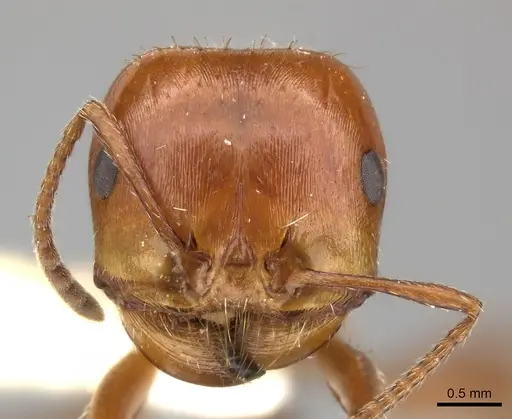
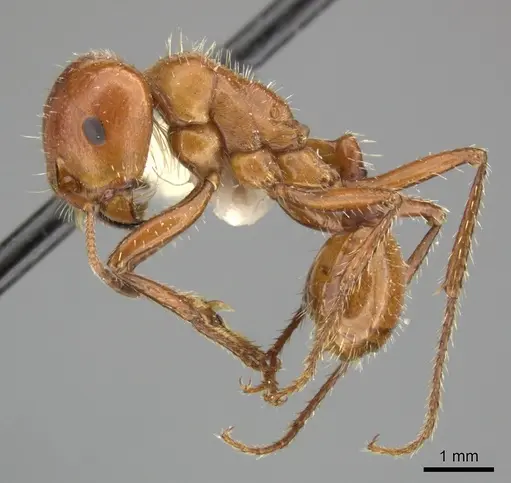
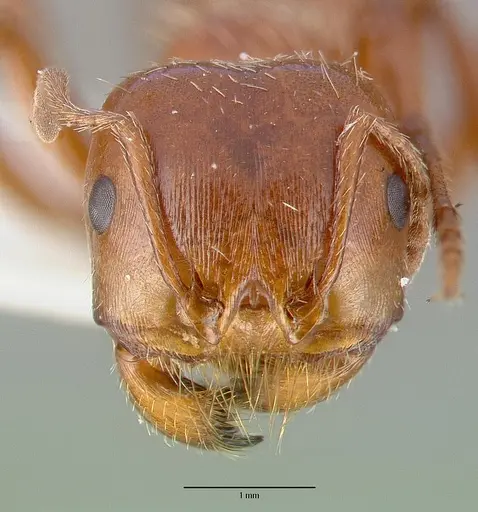
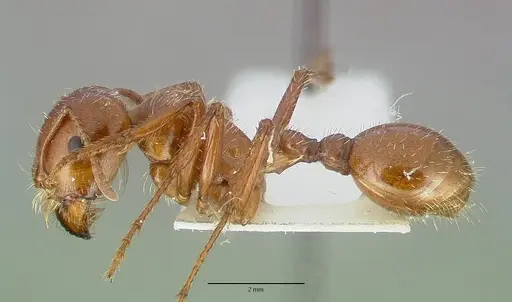
Pogonomyrmex texanus is a large harvester ant species native to the Chihuahuan Desert region of the southwestern United States and northern Mexico. Workers are over 9mm in length, making them substantial ants, and they can be identified by their lack of propodeal spines (the spiky projections found on many related species) and the fine, nearly parallel rugae on their head. The colony builds nests in soil, creating a small mound around the entrance typically 10-15cm in diameter. Unlike many aggressive harvester ants, this species shows no aggressive response when its nest is disturbed, workers simply move away at a slow, steady pace rather than swarming to defend [1].
What makes P. texanus stand out is its combination of impressive size with a surprisingly docile temperament. The venom is medically significant, one researcher described the sting as very similar in potency to the notoriously painful Pogonomyrmex barbatus and P. rugosus, with a lethality to mice of 0.26 mg/kg [2]. Colonies remain small, typically under 100 workers, and they forage solitarily for seeds rather than using the coordinated recruitment raids seen in some related species [3][4].
Quick Summary
- Difficulty: Medium
- Origin & Habitat: Chihuahuan Desert, rocky areas in Texas and northern Mexico (United States and Mexico). Nests in soil at elevations 580-1645m [1].
- Colony Type: Monogyne, single queen colonies. Colonies remain small, typically under 100 workers [1].
- Colony: Monogyne
- Founding: Claustral
- Size & Growth:
- Queen: Not fully described in available sources, estimated 12-15mm based on worker size and genus patterns
- Worker: Over 9mm total length [1]
- Colony: Under 100 workers [1]
- Growth: Moderate, small colony size suggests moderate development speed
- Development: Estimated 6-10 weeks based on genus-level data for Pogonomyrmex species (Development time is inferred from related harvester ant species, specific data for P. texanus is not available)
- Antkeeping:
- Temperature: Keep warm, around 24-30°C. This is a desert species adapted to the Chihuahuan Desert, so provide a thermal gradient with a warm side around 28-30°C and a cooler area around 24°C for workers to self-regulate.
- Humidity: Low to moderate, desert species prefers drier conditions. Keep nest substrate relatively dry with only minimal moisture. Avoid damp or humid conditions that could cause fungal issues.
- Diapause: Yes, likely requires a winter rest period. Based on temperate/desert species patterns, provide 2-3 months of reduced temperatures (around 10-15°C) during winter months.
- Nesting: Soil-nesting species. A naturalistic setup with compacted sandy/clay substrate works well, or a Y-tong/plaster nest with dry to slightly moist conditions. Provide a deep enough area for the colony to create chambers. Given their desert origin, keep nesting area relatively dry.
- Behavior: Docile temperament, unlike many Pogonomyrmex species, they show no aggressive defense of the nest. Workers move slowly and steadily when disturbed rather than attacking. They are solitary foragers, collecting seeds rather than using recruitment to coordinate food discovery [3][4]. They hold their gaster parallel to the ground while foraging, unlike some related species that point it downward. Escape risk is moderate, these are large ants but not particularly fast or agile. Still, use standard barrier methods. The sting is medically significant and quite painful, handle with care.
- Common Issues: small colony size is normal, don't panic if your colony stays under 100 workers, desert species prone to fungal issues if kept too humid, keep nesting area dry, venom is potent, use caution when working with the colony and avoid stings, slow-moving workers may appear sluggish but this is normal species behavior, solitary foraging means they won't recruit heavily to food, don't mistake this for lack of interest
Housing and Nest Setup
Pogonomyrmex texanus is a soil-nesting desert species that does well in naturalistic setups with a sandy-clay substrate they can dig through. You can use a formicarium with compact soil or a Y-tong/plaster nest with dry conditions. The key is providing a deep enough area for chamber creation, these ants excavate their own tunnels. A test tube setup works for founding queens, but you'll need to move them to a proper nesting container once workers emerge. The nest entrance in the wild has a small mound (10-15cm diameter), so some loose substrate around the entrance is appreciated. Keep the nesting area relatively dry, this is a desert species that doesn't need high humidity. [1]
Feeding and Diet
As a seed harvester ant, P. texanus primarily collects and stores seeds as their main food source. In captivity, offer a mix of grass seeds, millet, sunflower seeds (cracked or small enough to handle), and other small seeds. They also need protein, offer small insects like fruit flies, small crickets, or mealworms periodically. Unlike species that rely heavily on honeydew or nectar, these ants are true harvesters. They forage solitarily rather than in groups, so place food in the outworld and give them time to discover it. Fresh water should always be available. [3][4]
Temperature and Seasonal Care
Being a Chihuahuan Desert species, P. texanus thrives in warm conditions. Keep the nest area around 24-30°C, with a thermal gradient allowing workers to choose their preferred temperature. A heating cable on one side of the nest can create this gradient, place it on top of the nest to warm the chambers gently. During winter, these ants likely enter a period of reduced activity. Provide 2-3 months of cooler temperatures around 10-15°C to simulate natural seasonal cycles. This winter rest helps maintain colony health and may trigger reproductive behavior in the following season. [1]
Behavior and Handling
One of the most notable things about P. texanus is its docile nature. When disturbed, workers move away slowly rather than swarming to attack, this is unusual among Pogonomyrmex species, many of which have aggressive stingers. That said, the venom is medically significant and quite painful, so never handle these ants with bare hands. Their sting compares to P. barbatus and P. rugosus in potency [2]. Workers move at a slow, steady pace and hold their gaster parallel to the substrate while foraging. They forage solitarily with limited recruitment, meaning each worker finds food independently rather than leading others to discoveries. Colonies stay small (under 100 workers), so don't expect the massive swarms seen in some related species.
Growth and Development
Colony growth in P. texanus is moderate but colonies remain relatively small compared to many ant species. Maximum colony size is typically under 100 workers, which is normal for this species, not a sign of poor care. The founding queen seals herself in a claustral chamber and raises the first workers (nanitics) alone on stored body reserves. Development from egg to worker likely takes 6-10 weeks based on related Pogonomyrmex species, though specific timing for P. texanus hasn't been documented. Once established, the colony grows steadily but slowly. The small ultimate colony size makes this species well-suited for keepers who prefer manageable colonies that won't take over a room. [1]
Frequently Asked Questions
How long does it take for Pogonomyrmex texanus to produce first workers?
Based on related species in the genus, expect first workers (nanitics) around 6-10 weeks after the queen lays eggs. This timeline is estimated from genus-level data, as specific development timing for P. texanus hasn't been documented.
Are Pogonomyrmex texanus good for beginners?
They are moderate difficulty. The small colony size and docile nature make them manageable, but their desert habitat requirements (warm, dry conditions) and potent sting require some experience. They're not the best first species, but not overly challenging either.
What do I feed Pogonomyrmex texanus?
They are seed harvesters, offer a mix of small seeds like millet, grass seeds, and cracked sunflower seeds. They also need protein from small insects like fruit flies, small crickets, or mealworms. Place food in the outworld and give them time to discover it since they forage solitarily.
How big do Pogonomyrmex texanus colonies get?
Colonies remain small, typically under 100 workers [1]. This is normal for the species, not a sign of problems. The small colony size makes them well-suited for keepers who want a manageable colony.
Do Pogonomyrmex texanus need hibernation?
Yes, they likely need a winter rest period. Provide 2-3 months of cooler temperatures around 10-15°C during winter months to simulate their natural seasonal cycle in the Chihuahuan Desert.
Can I keep multiple Pogonomyrmex texanus queens together?
No, this is a monogyne (single queen) species. Multiple unrelated queens will fight. Only keep one queen per colony.
Why is my Pogonomyrmex texanus colony so small?
Small colony size is normal for this species, they naturally max out around 100 workers [1]. Don't expect the large colonies you might see with other species. This is simply their typical colony size.
What temperature do Pogonomyrmex texanus need?
Keep them warm, around 24-30°C. This is a desert species adapted to the Chihuahuan Desert. Provide a thermal gradient with a warm side around 28-30°C and cooler area around 24°C.
Are Pogonomyrmex texanus aggressive?
Surprisingly, no, they are one of the more docile Pogonomyrmex species. When disturbed, workers simply move away slowly rather than attacking. However, they will sting if threatened or handled roughly, and that sting is very painful.
References

This caresheet is licensed under CC BY-SA 4.0 .

Literature
Loading...Loading products...