

Pogonomyrmex snellingi
- Scientific Name
- Pogonomyrmex snellingi
- Tribe
- Pogonomyrmecini
- Subfamily
- Myrmicinae
- Author
- Taber, 1998
- Distribution
- Found in 1 countries
Pogonomyrmex snellingi Overview
Pogonomyrmex snellingi is an ant species of the genus Pogonomyrmex. It is primarily documented in 1 countries , including Mexico. Detailed taxonomic data and occurrence records can be further explored via authoritative databases such as AntWeb or the Global Biodiversity Information Facility (GBIF).
Pogonomyrmex snellingi
Pogonomyrmex snellingi is a small seed-harvester ant endemic to the Baja California peninsula in Mexico. Workers measure around 1.8mm in body length and have a distinctive dark reddish-brown coloration. This species belongs to the Pogonomyrmex californicus species group and can be identified by its unique oblique mandible margin (unlike other Pogonomyrmex which have transverse margins), well-developed psammophore (specialized hairs for carrying sand particles), and circumocular whorls around the eyes [1].
What makes P. snellingi special is its extremely limited range, it's only known from sand dune habitats in Baja California and Baja California Sur, making it a true peninsula endemic. Like other seed-harvester ants in this genus, it forages solitarily for seeds rather than using mass recruitment, though it does establish trunk trails to food sources. The Vizcaino Desert populations build characteristic tumulus nests with multiple entrances [2][3].
Quick Summary
- Difficulty: Medium
- Origin & Habitat: Baja California peninsula, Mexico, specifically low elevation sand dunes (0-8m altitude) in the Vizcaino Desert and near Guerrero Negro. This is a desert/semi-desert environment with arid conditions and sandy soil [3][4].
- Colony Type: Colony structure is unconfirmed for this species. Most Pogonomyrmex are single-queen (monogyne) colonies, but specific data for P. snellingi is lacking.
- Size & Growth:
- Queen: Undescribed, queens have not been documented in scientific literature [1]
- Worker: 1.68-1.75mm head width,1.82-1.89mm Weber's length [1]
- Colony: Unknown, no colony size data published
- Growth: Unknown, estimated moderate based on genus patterns
- Development: 6-10 weeks (estimated based on typical Pogonomyrmex development) (Development timeline has not been directly studied for this species. Estimates based on genus-level data for similar seed-harvester ants.)
- Antkeeping:
- Temperature: Keep warm at 26-30°C. As a desert species from the Vizcaino Desert and coastal Baja California, they prefer temperatures on the warmer side. A heating cable on one side of the nest creates a suitable gradient.
- Humidity: Low to moderate, desert species. Keep the nest substrate relatively dry with only occasional light misting. The substrate should feel dry to the touch most of the time. Provide a small water tube for drinking.
- Diapause: Likely not required or minimal. As a Baja California desert species, they may not experience harsh winters. However, a brief cooling period (2-3 months at 15-18°C) may be beneficial if mimicking natural seasonal cycles.
- Nesting: In nature they nest in sandy soil, building tumulus nests with multiple entrances. In captivity, a sandy substrate in a naturalistic setup works well. Y-tong nests with sand-filled chambers or acrylic nests with sand substrate are suitable. Ensure the substrate drains well and doesn't retain excess moisture.
- Behavior: These ants are seed harvesters, they collect seeds and store them in the nest. Foraging is primarily solitary with limited recruitment, though they establish persistent trunk trails to food sources [3][5]. They are defensive and will readily sting if threatened. Pogonomyrmex ants are known for their painful stings. Escape risk is moderate, they are small but not tiny, standard barrier methods work well.
- Common Issues: desert species, too much humidity will kill them, keep nesting area dry, stinging risk, they have painful stings and are defensive when nest is disturbed, seed diet, they need a constant supply of seeds/grains, not just protein, limited distribution, this species is rarely available in the antkeeping hobby, founding difficulty, queens have not been described, making captive breeding challenging
Nest Preferences and Housing
Pogonomyrmex snellingi naturally nests in sandy desert soils, building characteristic tumulus nests, mounds with multiple entrances. The type collection came from sand dunes at just 0-8m elevation near Guerrero Negro, and the second population was found in the Vizcaino Desert with 2-3 entrance holes [1].
For captive care, recreate these conditions with a sandy substrate that allows for good drainage. A naturalistic setup with a sand-filled container works well, this lets the ants excavate and create their own tunnel systems. Alternatively, Y-tong nests with sand-filled chambers or acrylic formicariums with sand substrate are suitable options. The key is keeping the nesting area dry, these are desert ants that rot easily in damp conditions.
The well-developed psammophore (brush of hairs on the underside of the head) is an adaptation for carrying sand particles while excavating, this is a common feature in desert Pogonomyrmex species and indicates their fossorial (digging) nature.
Feeding and Diet
As a seed-harvester ant (Pogonomyrmex), this species primarily collects and stores seeds. In the wild, they forage for seeds and bring them back to the nest for storage and consumption. The genus name literally means 'bearded ant' in reference to the psammophore they use to carry seeds and sand.
In captivity, offer a constant supply of seeds, grass seeds, millet, cracked corn, and commercial ant seed mixes work well. They also accept protein sources like small insects (fruit flies, pinhead crickets, mealworms), but seeds should form the bulk of their diet. Unlike purely predatory ants, they need a seed-based diet to thrive long-term.
Foraging strategy is primarily solitary with limited recruitment, though they establish trunk trails to persistent food sources [3][5]. This means they won't form large foraging swarms like some ants, instead, individual workers travel along established paths.
Temperature and Seasonal Care
This species comes from the hot, arid deserts of Baja California, the Vizcaino Desert and surrounding coastal dune areas. They are adapted to warm, dry conditions and should be kept at temperatures in the 26-30°C range for optimal activity and development.
A heating cable placed on one side of the nest creates a temperature gradient, allowing the ants to self-regulate. Place the heating on top of the nest (not underneath) to avoid evaporating moisture too quickly. Room temperature (around 22-24°C) may be acceptable but expect reduced activity.
Regarding diapause (winter rest): as a Baja California desert species from a relatively mild climate, they likely don't require a true hibernation. However, a brief cooling period at 15-18°C for 2-3 months during winter months may help simulate natural seasonal cycles if you wish to breed them. Monitor colony activity, if they remain active, skipping diapause is fine.
Behavior and Defense
Pogonomyrmex ants are well-known for their defensive behavior and painful stings. This species is no exception, workers will readily sting if they perceive a threat to the colony. The sting is potent and can cause significant pain, similar to other Pogonomyrmex species.
Foraging behavior is primarily solitary with limited recruitment, workers go out individually to collect seeds rather than forming large raiding parties [3]. However, they do establish trunk trails, meaning once a worker finds a good food source, other workers will continue using that path.
When working with this species, use caution and avoid disturbing the nest unnecessarily. Transferring colonies or cleaning the outworld should be done carefully. Escape prevention is important but not as critical as with tiny ants, standard barrier methods work well for their size.
Unique Identification Features
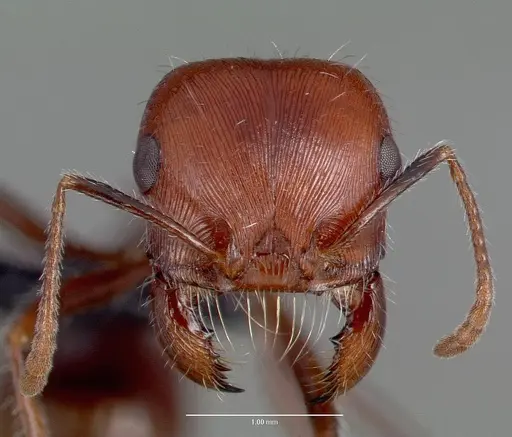
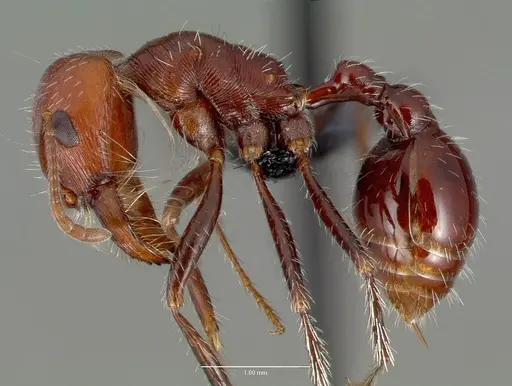
Pogonomyrmex snellingi has several distinctive features that set it apart from other Pogonomyrmex species. The most notable is the oblique (slanted) dentary margin of the mandible, unlike all other Pogonomyrmex which have a transverse (straight across) margin, this species has a slanted margin similar to the genus Hylomyrma [1].
Other distinguishing features include: a distinct gap between the ultimate and penultimate mandibular teeth, a strongly offset ultimate tooth, short basal mandibular margin, and the presence of circumocular whorls (rings of ridges around the eyes). The propodeal armature (back end of the thorax) varies, some specimens have very short spines while others have no spines or tubercles at all [1].
Workers are dark reddish-brown with coarse, clear setae (bristles) covering the head, body, and abdomen. The psammophore is well-developed, appearing as a dense brush of hairs beneath the head.
Frequently Asked Questions
Is Pogonomyrmex snellingi good for beginners?
This species is rated as Medium difficulty. While not the hardest ant to keep, it requires attention to humidity control (they need dry conditions) and has a painful sting. The main challenge is that this species is rarely available in the antkeeping hobby since it's endemic to a limited region of Baja California.
What do Pogonomyrmex snellingi ants eat?
They are seed-harvesters, seeds should make up the bulk of their diet. Offer grass seeds, millet, cracked corn, or commercial ant seed mixes. They also accept small insects like fruit flies, pinhead crickets, and mealworms for protein. Keep seeds available at all times.
How long does it take for eggs to become workers?
The exact development timeline is unconfirmed for this species. Based on typical Pogonomyrmex development patterns, expect approximately 6-10 weeks from egg to first worker at optimal temperatures (around 26-30°C).
Can I keep multiple Pogonomyrmex snellingi queens together?
The colony structure for this specific species is unconfirmed. Most Pogonomyrmex are single-queen (monogyne) colonies. Until more data is available, keeping multiple unrelated queens together is not recommended.
What temperature do they need?
Keep them warm at 26-30°C. As desert ants from Baja California, they prefer temperatures on the warmer side. A heating cable on part of the nest creates a gradient for self-regulation.
Do they need hibernation?
Likely not required or minimal. As a Baja California desert species from a mild climate, they may not need a true hibernation. A brief cooling period (15-18°C for 2-3 months) may be beneficial but is not strictly necessary.
What type of nest should I use?
They nest naturally in sandy soil and build tumulus nests with multiple entrances. In captivity, use a naturalistic setup with sandy substrate, a Y-tong nest with sand chambers, or an acrylic formicarium with sand fill. The key is dry, well-draining substrate.
How big do colonies get?
Colony size data has not been published for this species. Based on similar seed-harvester ants, colonies likely reach several hundred workers over several years. They are not among the largest Pogonomyrmex species.
Why are my ants dying?
The most common cause is likely too much humidity, these are desert ants that need dry nesting conditions. Overly damp substrate causes fungal infections and colony collapse. Also ensure they have constant access to seeds. If caught wild, they may have parasites.
References

This caresheet is licensed under CC BY-SA 4.0 .
CASENT0006269
View on AntWeb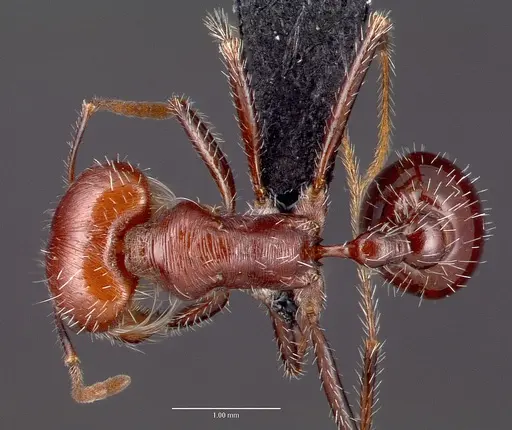
Literature
Loading...Loading products...