
Pogonomyrmex californicus shows a May to July activity window. Peak activity occurs in June, with queen sightings distributed across 3 months.
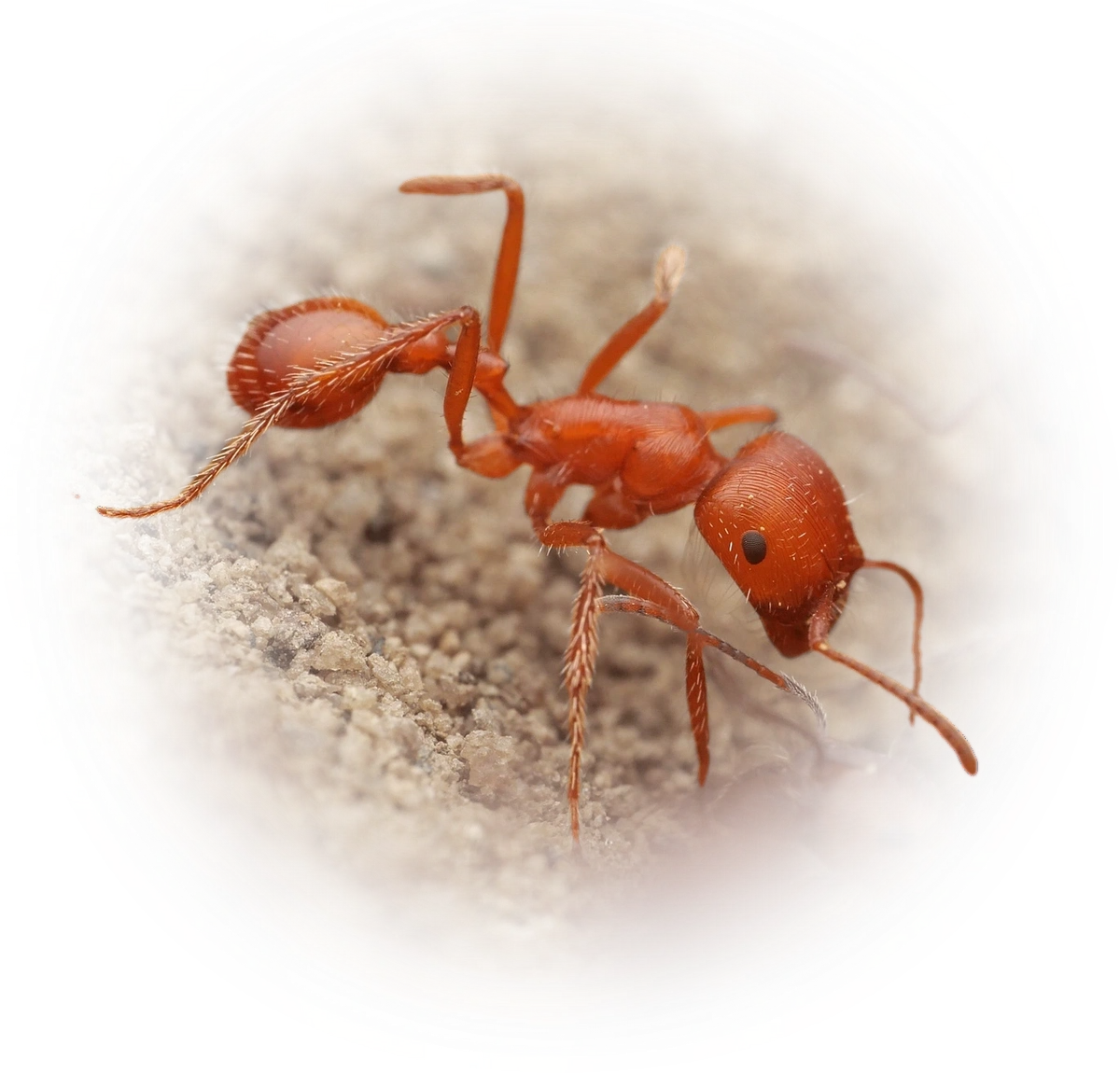
Pogonomyrmex californicus
- Scientific Name
- Pogonomyrmex californicus
- Tribe
- Pogonomyrmecini
- Subfamily
- Myrmicinae
- Author
- Buckley, 1867
- Common Name
- California Harvester Ant
- Distribution
- Found in 2 countries
- Nuptial Flight
- from May to July, peaking in June
AI Identifiable
try →
Pogonomyrmex californicus Overview
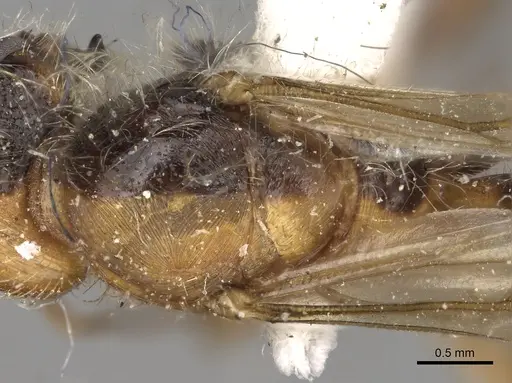
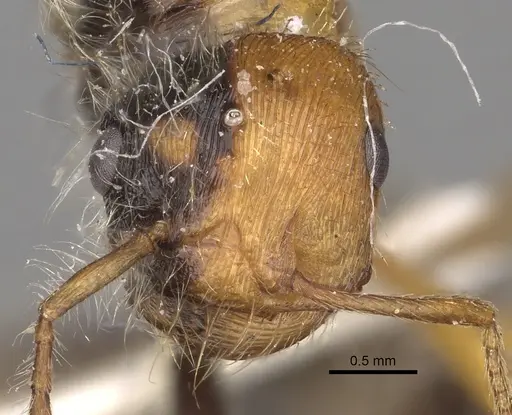
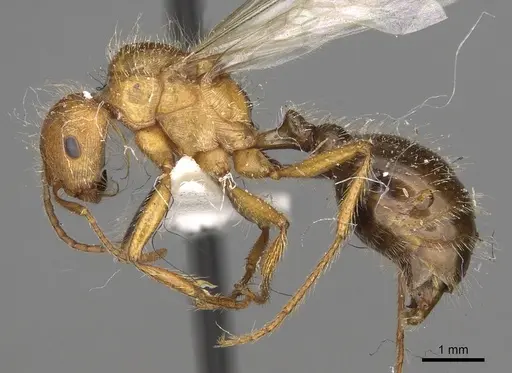
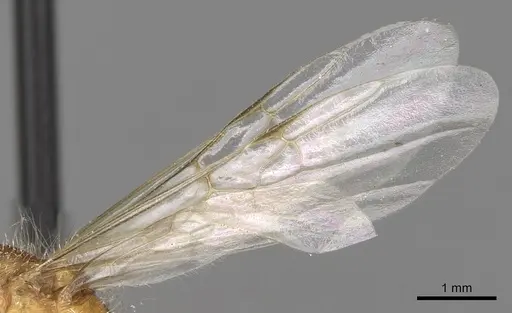
Pogonomyrmex californicus (commonly known as the California Harvester Ant) is an ant species of the genus Pogonomyrmex. It is primarily documented in 2 countries , including Mexico, United States of America. Detailed taxonomic data and occurrence records can be further explored via authoritative databases such as AntWeb or the Global Biodiversity Information Facility (GBIF).
The nuptial flight of Pogonomyrmex californicus is a significant biological event, typically occurring from May to July, peaking in June. During this time, winged queens and males leave the nest to mate and establish new colonies.
Pogonomyrmex californicus - "California Harvester Ant"
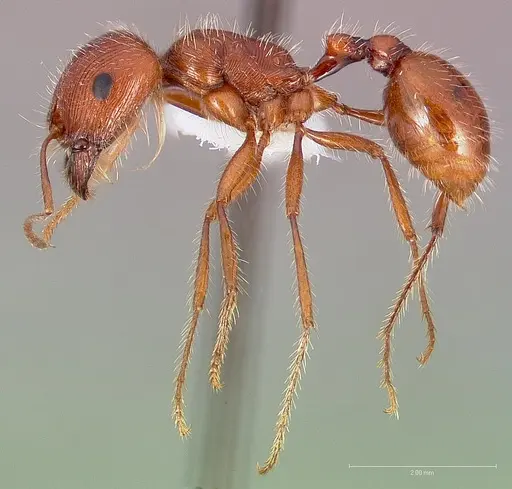
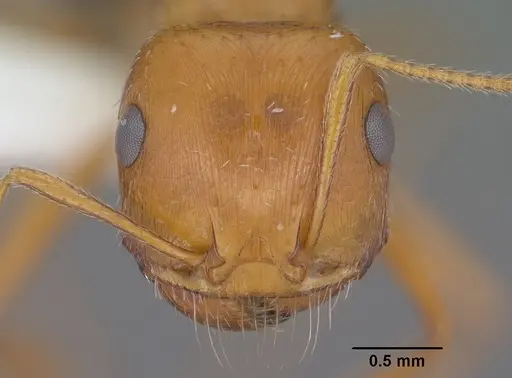
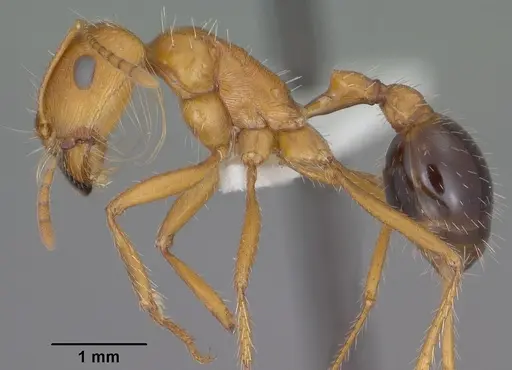
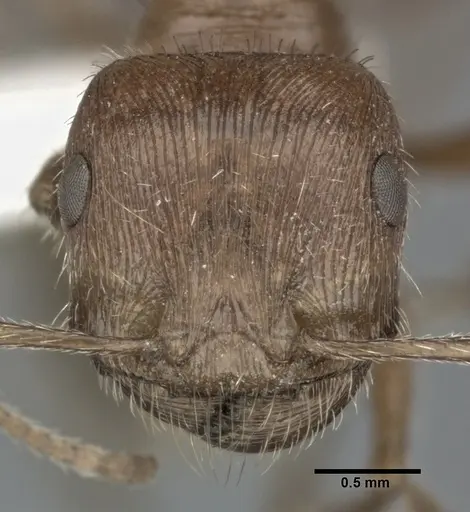
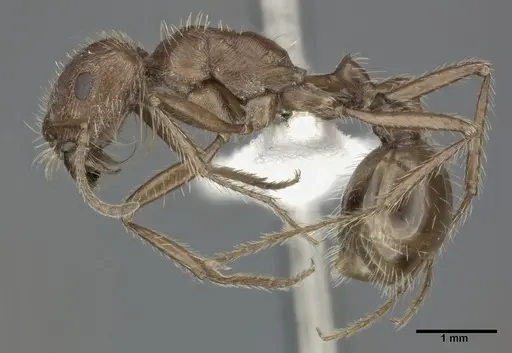
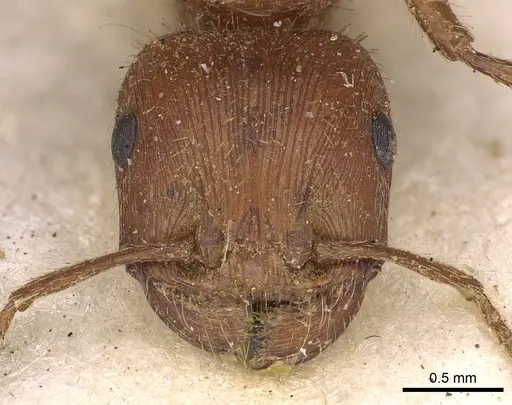
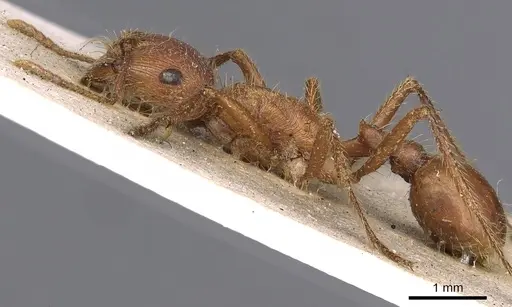
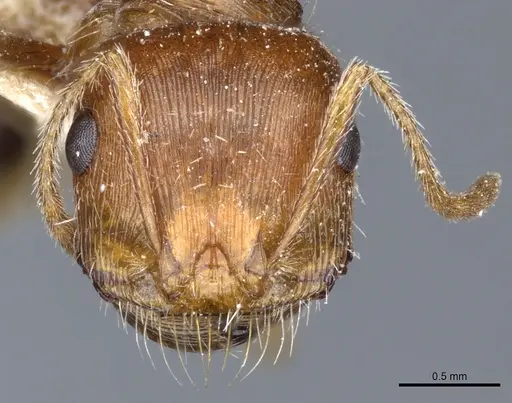
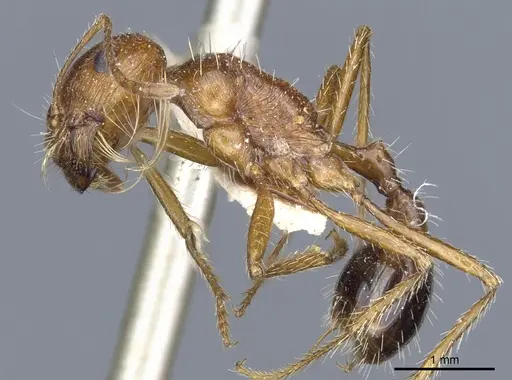
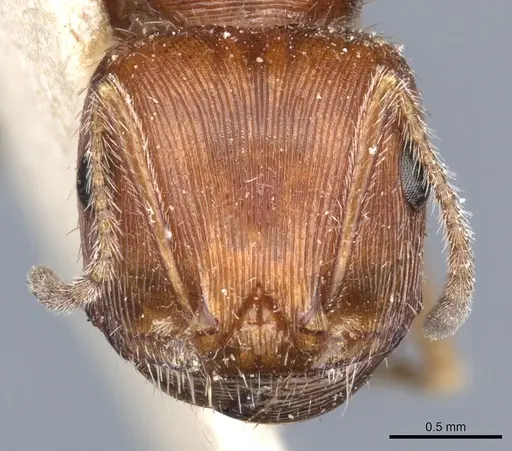
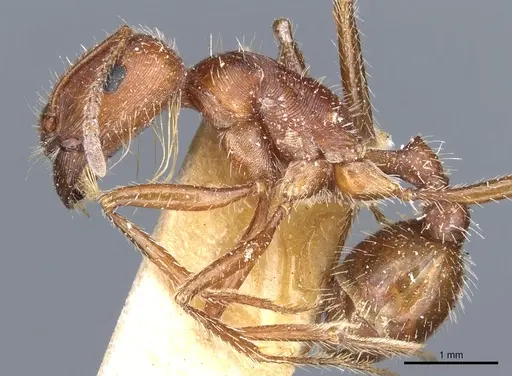
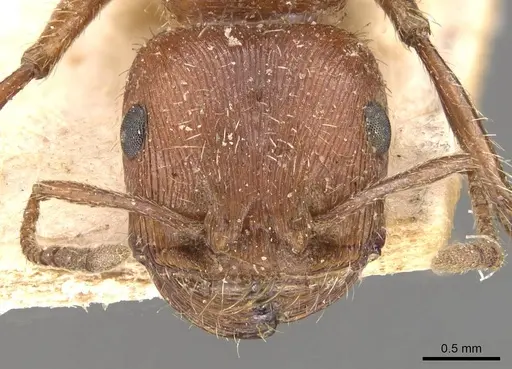
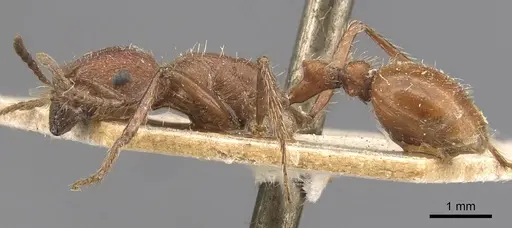
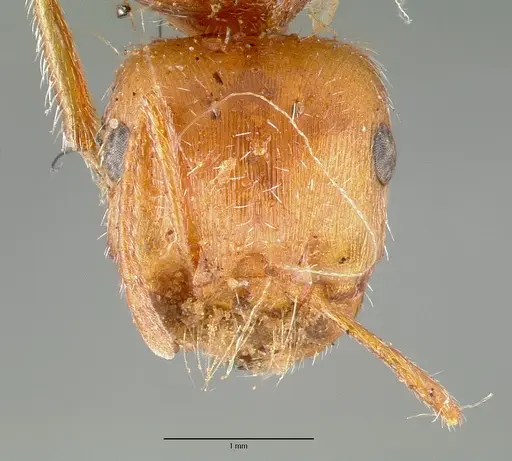
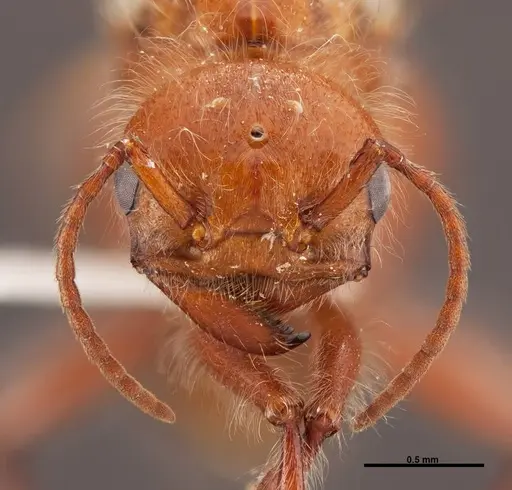
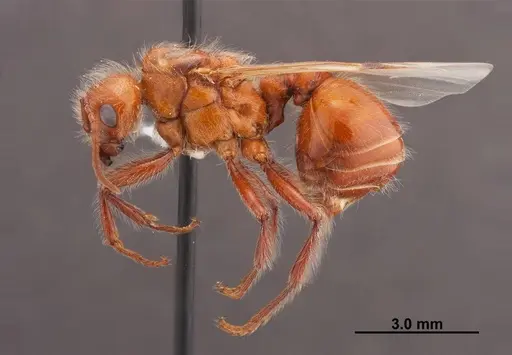
Pogonomyrmex californicus is a medium-sized harvester ant native to the arid southwestern United States and northern Mexico. Workers measure around 6.8mm in length and display a distinctive reddish-ferrugineous coloration, sometimes with darker markings on the gaster. They construct characteristic circular or semicircular crater nests in sandy soils, with a single entrance surrounded by loose sand. This species is renowned for its exceptionally painful sting, among the most potent arthropod venoms known, containing complex alkaloids, kinins, peptides, and neurotoxins that cause intense, lingering pain described as 'ripping muscles or turning a screw in the flesh.' [1][2][3]
What makes this species particularly fascinating is its social flexibility, different populations use different colony founding strategies. Some colonies are founded by a single queen (haplometrosis), while others are founded cooperatively by multiple unrelated queens (pleometrosis). California populations tend toward pleometrosis with multiple cooperating queens, while Arizona populations typically have single-queen colonies. This variation extends to their foraging behavior, where they are primarily seed harvesters but also collect insects and nectar, and can forage at extreme surface temperatures exceeding 50°C. [4][5][6]
Quick Summary
- Difficulty: Medium
- Origin & Habitat: Native to arid and semi-arid habitats of western North America, including southern California, Arizona, Nevada, New Mexico, western Texas, and northern Mexico (Baja California, Sonora, Chihuahua). Inhabits desert environments ranging from weedy bajadas to grasslands and creosotebush scrub. Nests in exposed sandy soils at elevations from below sea level to about 5,800 feet. [1][7][8]
- Colony Type: Usually monogynous (single queen per colony), but some California populations (particularly in San Diego County) exhibit primary polygyny where multiple queens cooperate during colony founding and continue coexisting in mature colonies. This is a population-level trait, your colony's origin determines its structure. [5][9][10]
- Colony: Optionally polygyne
- Founding: Semi-claustral, Pleometrosis
- Size & Growth:
- Queen: 16.30 ± 0.45 mg wet mass,6.06 ± 0.21 mg dry mass [11]. Head length 1.53-1.80mm.
- Worker: 1.43-1.92mm head length,1.39-1.99mm head width. Mean body length 6.8mm [12].
- Colony: Up to approximately 2,000 workers in mature colonies [1]. Colonies in studies ranged 95-659 workers at 10 months [13].
- Growth: Moderate
- Development: Approximately 40 days from egg to first worker emergence at optimal conditions [6]. Larval development 15 days, pupal development 8 days [11]. (Semi-claustral founding means queens must forage during colony establishment, extending the founding period compared to claustral species. Multi-queen colonies reach 10 workers faster: 4-queen colonies by day 70,2-queen by day 102,single-queen by day 184 [10].)
- Antkeeping:
- Temperature: Keep nest area at 25-30°C. This species is a hot desert specialist, foragers actively search for food when surface temperatures reach 32-53°C, with peak foraging around 45°C [7][14]. Laboratory colonies maintained at ~25°C with natural light cycles [15]. Provide a temperature gradient allowing workers to self-regulate.
- Humidity: Low to moderate. As a desert species, they tolerate dry conditions well but need access to moisture. Keep nest substrate moderately moist but not waterlogged. Provide a water tube at all times. Avoid excessive humidity which can cause mold in their sandy nests.
- Diapause: Yes. In their native range, colonies become dormant from early November through February or March in colder regions [16]. Reduce temperature to 10-15°C for 2-3 months during winter to simulate natural dormancy.
- Nesting: Prefers sandy or loose soil substrates for nest construction. In captivity, a naturalistic setup with a sand-filled area between glass plates works well, mimicking their natural nest architecture with chambers and tunnels. They dig branched tunnel systems, provide deep substrate (at least 10-15cm) for proper nest construction. Test tube setups are not ideal due to their digging behavior. Y-tong nests with sand substrate also work.
- Behavior: Generally aggressive and defensive. Workers are highly territorial and will attack intruders. They are individual foragers rather than group foragers, though they may recruit nestmates to high-quality food patches. Workers run with their gaster elevated, apparently to avoid contact with hot surfaces. They are diurnal, foraging during the warmest parts of the day. This species is known for its powerful alarm system, when threatened, workers rapidly propagate alarm signals through the colony via contact-mediated interactions. Escape risk is moderate, they are not particularly small but can climb smooth surfaces. Use fluon on enclosure edges. [17][18][4]
- Common Issues: Their sting is extremely painful and potentially dangerous, handle with extreme caution, use protective gear, and avoid bare skin contact. The sting apparatus can detach and remain embedded in flesh, continuing to inject venom., Semi-claustral founding makes colony establishment riskier, foundress queens must forage, increasing mortality risk. Provide seeds immediately after founding and monitor queen survival., Desert species with high temperature tolerance, they may not thrive in cool, humid environments. Keep them warm and ensure proper drainage to prevent substrate saturation., Large, aggressive colonies can be difficult to manage. They require spacious outworlds and may stress or kill other ant species if housed in shared setups., Wild-caught colonies may have parasites or diseases. Quarantine and monitor new colonies carefully.
Queen Ant Activity Analysis 118 observations
Queen Activity by Hour 118 observations
Pogonomyrmex californicus queen activity peaks around 10:00 during the late morning to early afternoon. Activity is spread across a 14-hour window (07:00–20:00). A secondary activity peak occurs around 13:00. Times may be influenced by human observation patterns.
Housing and Nest Setup
Pogonomyrmex californicus requires housing that accommodates their natural digging behavior. A naturalistic formicarium with a deep sand-filled section (at least 10-15cm deep) between two glass plates allows them to construct their characteristic branched tunnel systems. Unlike many ants, they do not do well in simple test tube setups long-term, they need space to dig. The outworld should be spacious with a secure lid, as these ants are active foragers. Use a substrate mixture of fine sand and some clay for structure. Provide a temperature gradient by placing a heating cable on one side of the nest area (on top of the nest material, not underneath to avoid excessive drying). Room temperature around 25°C is suitable, with the warm side reaching 28-30°C. Ensure the nest area maintains moderate humidity while the outworld can be drier. Escape prevention is important, apply fluon to the upper rim of the enclosure. [22][23]
Feeding and Diet
As seed harvesters, their diet should center on various seeds, they collect and store seeds in specialized chambers within their nests. Offer a mix of grass seeds, bird seed, millet, and similar small seeds. They show preferences for larger, more profitable seeds. Beyond seeds, they also accept protein sources like small insects (fruit flies, small crickets, mealworms) and will occasionally take nectar or sugar water. In the wild, they forage for seeds of Phacelia spp., Atriplex spp., Encelia farinosa, Sarcobatus vermiculatus, and other desert plants. They also prey on insects including termites, adult and larval lepidopterans, and syrphid flies. Feed seeds continuously available in the outworld, with protein prey offered 2-3 times per week. Remove uneaten seeds periodically to prevent mold. [1][7][24]
Temperature and Seasonal Care
This is a hot desert specialist adapted to extreme temperatures. Foragers actively search for food when surface temperatures reach 32-53°C, with peak activity around 45°C [7]. In captivity, maintain nest temperatures between 25-30°C. A heating cable or mat on one side of the nest creates the gradient they prefer. During summer months, they may become nocturnal to avoid daytime heat. In winter, simulate dormancy by reducing temperatures to 10-15°C for 2-3 months, this matches their natural cycle where they are dormant from early November through March in cooler parts of their range [16]. During hibernation, reduce food offerings and minimize disturbance. Resume normal feeding and warming gradually in spring. [16][7]
Colony Founding and Social Structure
Pogonomyrmex californicus exhibits fascinating variation in colony founding strategies across its range. In Arizona populations, colonies are typically founded by a single queen (haplometrosis) who must forage for food during the entire founding period. In California populations, particularly around San Diego County, multiple unrelated queens commonly cooperate to found colonies (pleometrosis), with associations of 2-4 queens typical. These multi-queen associations continue into colony adulthood, this is primary polygyny. Regardless of founding strategy, all queens are semi-claustral: they lack sufficient physiological reserves to remain sealed in the nest and must obligately forage to support development of their first brood [20][10]. The founding period lasts approximately 30 days from egg-laying to worker emergence. Multi-queen colonies grow faster initially, four-queen colonies reach 10 workers by day 70,while single-queen colonies take until day 184 [10]. If you acquire a wild-caught colony, expect either single or multiple queens depending on collection location. [4][5][6]
Defense and Sting Management
This species possesses one of the most potent arthropod venoms known to science, 8 to 10 times more toxic than honeybee venom [2]. The sting is described as extraordinarily painful, approximating 'ripping muscles or tendons' or 'turning a screw in the flesh, ' accompanied by a chilling sensation. The sting apparatus is barbed and typically detaches, remaining in the victim's flesh and continuing to pump venom. The venom contains kinins, peptides, neurotoxins, and complex alkaloids previously known only from certain higher plant taxa. For antkeepers, this means extreme caution is essential. Always wear protective gear when working with the colony. Never handle them with bare hands. If stung, remove the sting apparatus immediately by scraping sideways (don't squeeze). The pain can last 15 minutes to over an hour. Those with insect venom allergies should avoid this species entirely. The ants will readily sting when the nest is disturbed or when they perceive threats, their alarm response propagates rapidly through the colony via contact and pheromone signals. [2][3]
Behavior and Colony Dynamics
Workers are monomorphic (all the same size) and exhibit age-based division of labor typical of ant societies, younger workers tend brood within the nest while older workers forage outside. However, division of labor intensity increases with colony size, and workers also show age-independent task specialization based on ovarian activity [15][25]. They are individual foragers rather than group foragers, though they will recruit nestmates to high-quality food patches. Workers are highly territorial and maintain distinct foraging ranges. They actively avoid contact with competitors through specialized foraging behaviors, in the wild, they sometimes climb into vegetation to collect seeds, avoiding ground-foraging congeners [26]. Colonies relocate periodically, possibly to avoid competition from neighboring colonies [27]. Their alarm communication is sophisticated, threatened workers release alarm pheromones (primarily 4-methyl-3-heptanone) that trigger rapid alarm propagation, with unalarmed ants transitioning to alarmed state within about 1.5 seconds of contact [18]. [26]
Growth and Development
Colony growth follows predictable patterns. Eggs develop through larval stages taking approximately 15 days, then pupate for about 8 days before emerging as workers, totaling roughly 40 days from egg to first worker at optimal temperature [11]. Initial worker cohorts are small (nanitics) but the colony expands rapidly once established. Larger colonies demonstrate efficiency gains, they have lower mass-specific metabolic rates and higher growth efficiency than smaller colonies [13]. The scaling of metabolism with colony size follows negative allometry (exponent around 0.75), meaning per-ant metabolic costs decrease as colonies grow. This is partly because larger colonies have a higher proportion of inactive workers at any given time. Division of labor becomes more specialized as colony size increases, with workers showing more distinct task specialization in larger colonies [28]. A mature colony can reach approximately 2,000 workers. Queen mass decreases as a proportion of total colony mass as colonies grow, from 11.5% in smallest colonies to just 0.6% in the largest [13]. [13][28][11]
Frequently Asked Questions
How long does it take for Pogonomyrmex californicus to produce first workers?
Approximately 40 days from egg to worker emergence at optimal temperatures. Semi-claustral founding means the queen must forage during this period, so providing seeds immediately after founding is critical for success. Multi-queen colonies reach 10 workers faster, around 70 days for four-queen colonies versus 184 days for single-queen colonies. [6][11]
Can I keep multiple Pogonomyrmex californicus queens together?
It depends on the population origin. Some California populations (particularly San Diego County) naturally have multiple cooperating queens (pleometrosis), while Arizona populations are typically single-queen. If your colony comes from a polygynous population, multiple queens may coexist peacefully. However, combining unrelated queens from monogynous populations is not recommended, they may fight. [5][6]
What do California harvester ants eat?
They are primarily seed harvesters, offer a variety of small seeds like grass seeds, bird seed, or millet. They also accept protein sources like small insects (fruit flies, small crickets, mealworms) and occasionally sugar water or nectar. Seeds should be continuously available, protein prey can be offered 2-3 times weekly. [1][7]
Do Pogonomyrmex californicus need hibernation?
Yes, they benefit from a winter dormancy period. In their native range, colonies are dormant from early November through February or March. Reduce temperatures to 10-15°C for 2-3 months during winter. Reduce feeding during this period and avoid disturbing the colony. [16]
What temperature range is best for Pogonomyrmex californicus?
Keep nest areas at 25-30°C. This is a hot desert specialist, foragers are active at surface temperatures from 32°C up to 53°C in the wild, with peak foraging around 45°C. Provide a temperature gradient so workers can self-regulate. A heating cable on part of the nest works well. [7][14]
Are Pogonomyrmex californicus good for beginners?
No, this species is not recommended for beginners. Their extremely painful sting poses safety risks, and their semi-claustral founding and specific temperature/humidity requirements make them more challenging than many beginner species. They also require spacious housing to accommodate their digging behavior. Experienced antkeepers comfortable with defensive species should only attempt this species. [2]
How big do Pogonomyrmex californicus colonies get?
Mature colonies can reach approximately 2,000 workers. Growth is moderate, colonies in studies reached 95-659 workers at 10 months. Larger colonies grow more efficiently due to metabolic scaling benefits. Multi-queen colonies grow faster initially than single-queen colonies. [1][13]
What type of nest is best for Pogonomyrmex californicus?
A naturalistic setup with deep sand substrate (10-15cm) between glass plates works best, allowing them to dig their characteristic branched tunnel systems. Test tube setups are not ideal for this digging species. Y-tong nests with sand filling can also work. Provide both nest area and spacious outworld for foraging.
Why do my Pogonomyrmex californicus workers die young?
Worker lifespan in the laboratory can exceed 300 days, with foraging onset typically around 120-160 days for age-typical workers [15]. If workers are dying young, check for: excessive humidity causing mold, contaminated food, stress from too-small housing, or disease. Wild-caught colonies may carry parasites. Ensure proper temperature gradient and clean water access. Some worker death is normal, but sudden die-offs indicate a problem.
How often should I feed Pogonomyrmex californicus?
Keep seeds continuously available in the outworld, they store seeds in nest chambers. Offer protein prey (small insects) 2-3 times per week. Remove uneaten seeds periodically to prevent mold. Sugar water or honey can be offered occasionally but is not required. Adjust feeding based on colony size and consumption rates.
References

This caresheet is licensed under CC BY-SA 4.0 .
CASENT0005091
View on AntWeb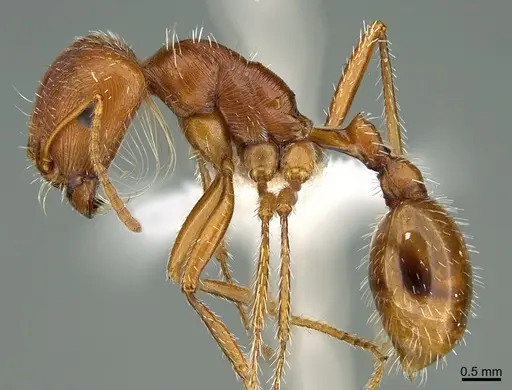
CASENT0005710
View on AntWeb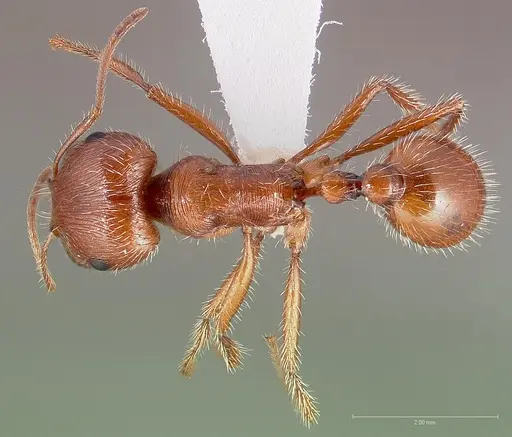
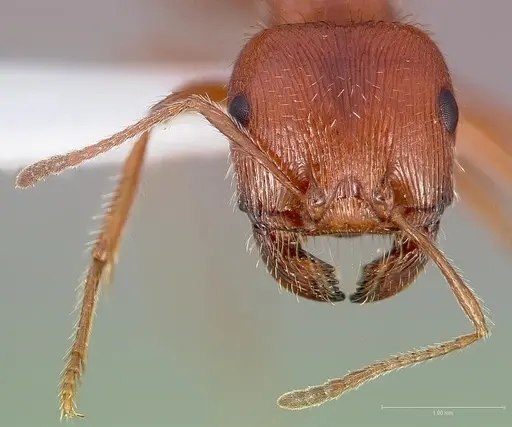
CASENT0102895
View on AntWeb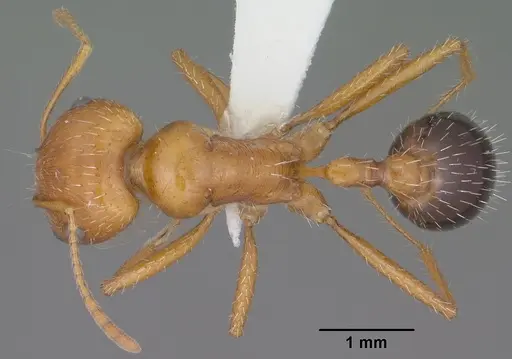
CASENT0246125
View on AntWeb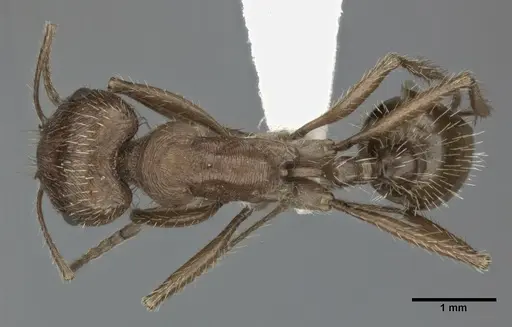
CASENT0281115
View on AntWeb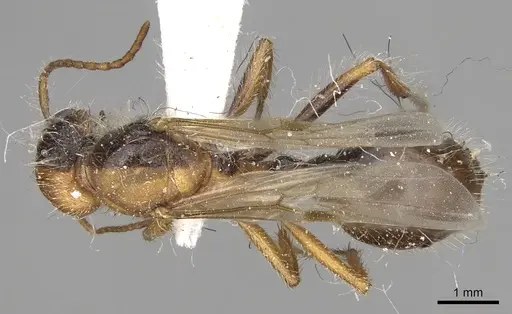
CASENT0900376
View on AntWeb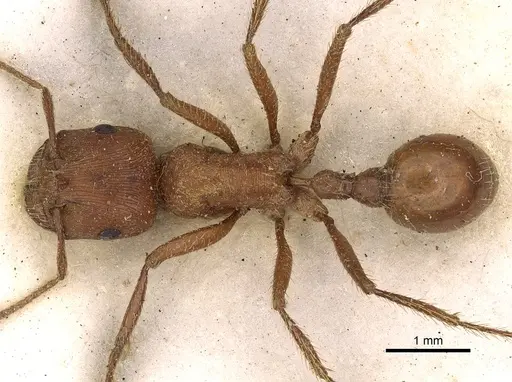
CASENT0904115
View on AntWeb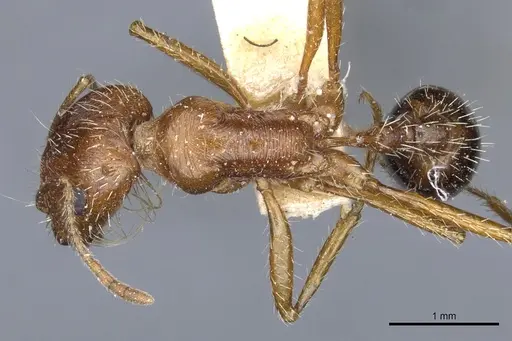
CASENT0904116
View on AntWeb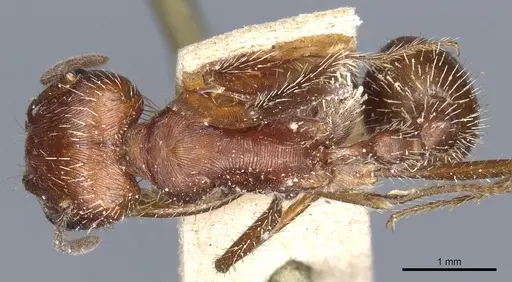
CASENT0907665
View on AntWeb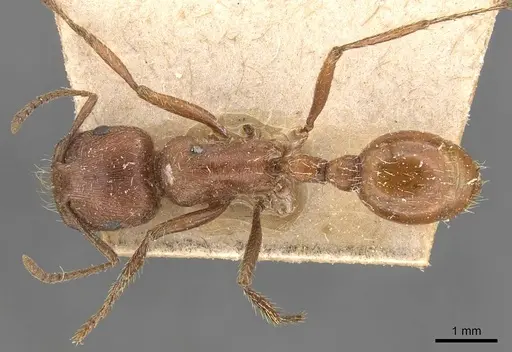
CASENT0914097
View on AntWeb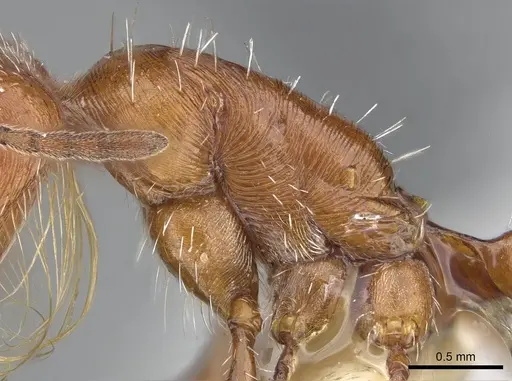
CASENT0914098
View on AntWeb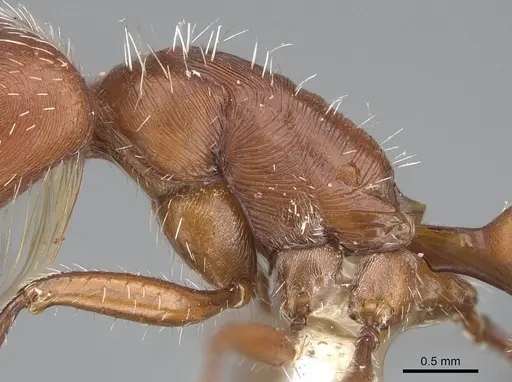
CASTYPE00625
View on AntWeb

CASTYPE00626
View on AntWeb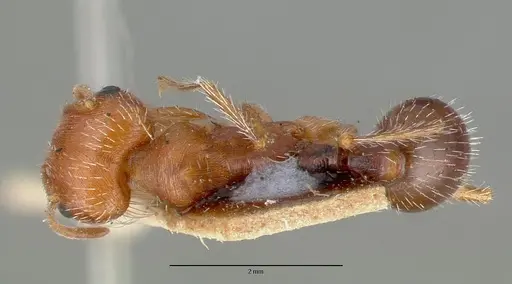


FMNHINS0000083129
View on AntWeb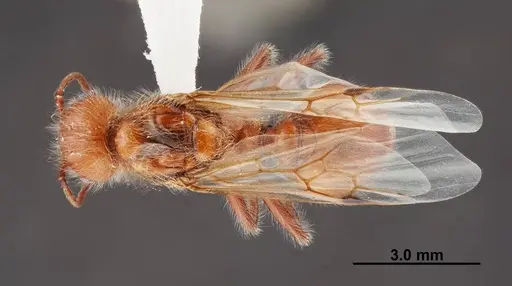
Literature
Loading...Loading products...