

Pogonomyrmex colei
- Scientific Name
- Pogonomyrmex colei
- Tribe
- Pogonomyrmecini
- Subfamily
- Myrmicinae
- Author
- Snelling, 1982
- Distribution
- Found in 1 countries
Pogonomyrmex colei Overview
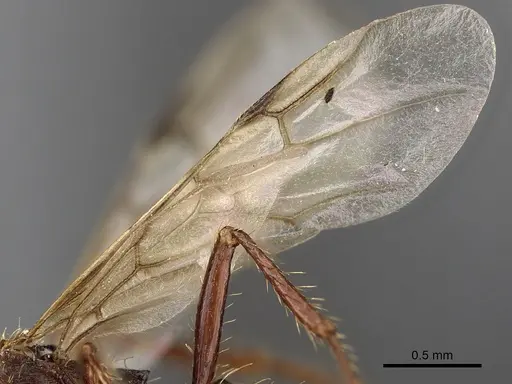
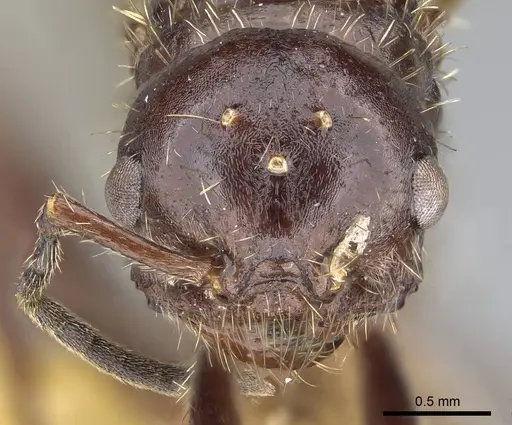
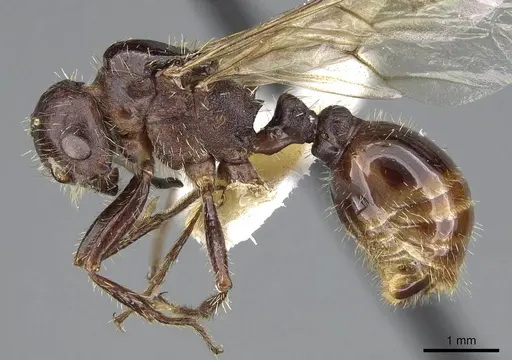
Pogonomyrmex colei is an ant species of the genus Pogonomyrmex. It is primarily documented in 1 countries , including United States of America. Detailed taxonomic data and occurrence records can be further explored via authoritative databases such as AntWeb or the Global Biodiversity Information Facility (GBIF).
Pogonomyrmex colei
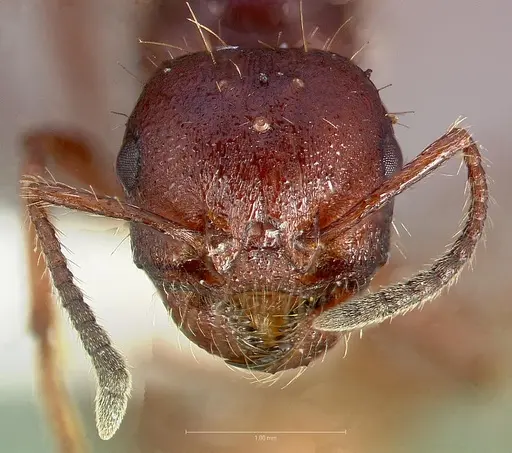
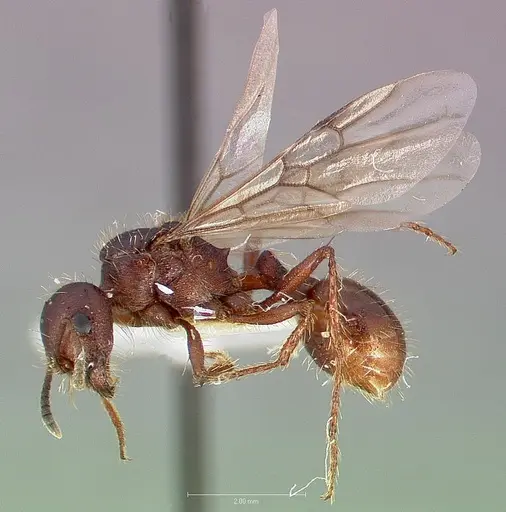
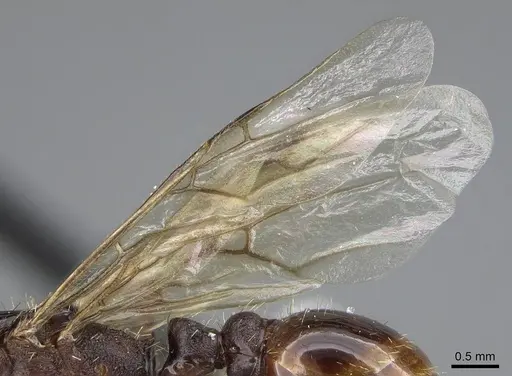
Pogonomyrmex colei is one of the rarest and most biologically unusual ants in North America. This tiny species measures around 5-6mm as a queen and is completely dependent on its host species, Pogonomyrmex rugosus, for survival. Unlike typical ants, P. colei has entirely lost the ability to produce workers, the parasitic queens live inside host nests and rely entirely on host workers for food, brood care, and colony maintenance. The parasites only produce new sexuals (males and new queens) that leave the host colony to found new parasitic relationships. This species is found only in the hot, dry Mojave and Sonoran deserts of southern Nevada, central Arizona, and southeastern California. It is listed as Vulnerable on the IUCN Red List due to its extreme rarity, only about 1% of potential host colonies are infected [1][2][3].
Quick Summary
- Difficulty: Expert
- Origin & Habitat: Desert regions of southern Nevada, central Arizona, and southeastern California. Inhabits hot, dry Mojave and Sonoran deserts [2]. Lives exclusively as a social parasite within nests of Pogonomyrmex rugosus.
- Colony Type: Workerless inquiline, permanent social parasite that cannot produce workers. Relies entirely on host colony's worker caste for survival. Produces only sexual offspring (males and new queens) that disperse to find new host colonies [1][2].
- Colony: Monogyne, Polygyne
- Queen: Socially parasitic
- Size & Growth:
- Queen: Approximately 5-6mm (estimated based on genus)
- Worker: None, this species has completely lost the worker caste [2]
- Colony: Unknown for the parasite itself, host colonies can contain thousands of workers
- Growth: Unknown, parasite relies on host colony growth
- Development: Not applicable, this species never produces workers [2] (Only produces sexual offspring (males and new queens). Timeline for sexual production within host colony is unconfirmed.)
- Antkeeping:
- Temperature: Desert species, prefers warm conditions similar to P. rugosus host. Likely 25-35°C based on typical desert harvester ant requirements. Keep host colony warm.
- Humidity: Dry desert conditions, low humidity appropriate for desert species. Avoid excess moisture.
- Diapause: Likely similar to host species, may require cool period during winter. Unconfirmed for this species specifically.
- Nesting: Cannot be kept independently. Would require establishing a host P. rugosus colony first, then introducing parasite queens, extremely advanced and not recommended.
- Behavior: Extremely docile and passive, no workers to defend the colony. Parasitic queens are accepted into host nests, likely through chemical mimicry. Females locate host colonies by following foraging trails and responding to recruitment pheromones [1]. Males do not fly, mating occurs within the host nest between nestmates [1]. This species poses no escape risk as it cannot survive independently.
- Common Issues: Cannot survive without host colony, requires P. rugosus host, Extremely rare in the wild, collecting is unethical and likely illegal, Host colony must be established first, extremely complex to maintain both species, No workers means no foraging behavior to observe, Legal concerns, may be protected as Vulnerable species
Understanding Pogonomyrmex colei: A Workerless Social Parasite
Pogonomyrmex colei represents one of the most extreme examples of social parasitism in the ant world. Unlike typical ants that have queens, workers, and males, this species has completely lost the worker caste. The queens cannot dig nests, forage for food, or care for brood, they rely entirely on the workers of their host species, Pogonomyrmex rugosus, to perform these essential tasks. This is called obligate social parasitism, meaning the parasite cannot survive without its host. The species is so rare that only about 1% of potential host colonies are infected, and in some surveys, researchers found zero infected colonies out of nearly 1,500 host nests examined [4][2]. The evolutionary origin of this species is fascinating, genetic evidence shows it arose from the P. barbatus lineage through a process called sympatric speciation, where the parasite and its host diverged from a common ancestor while living in the same geographic area [5].
How the Parasite Invades Host Colonies
The process by which P. colei queens invade host colonies is remarkable. Unlike some parasites that use violence to take over a colony, P. colei queens rely on chemical deception. They locate potential host colonies by following the foraging trails of P. rugosus workers, likely by detecting and responding to the recruitment pheromones the host workers leave behind [1]. Once the parasitic queen finds a host colony, she must somehow gain entry without being attacked. Research suggests she uses chemical mimicry, her cuticular hydrocarbons (the chemical 'signature' that ants use to recognize nestmates) either matches or is close enough to the host's signature that workers accept her as part of the colony. This is a common strategy among social parasites. Once inside, the parasitic queen lives permanently in the host nest, laying eggs that are cared for by host workers. However, she only produces sexual offspring (males and new queens), not workers, her offspring are essentially parasitic reproductives that will eventually leave to start the cycle over again [1][2].
Reproduction and Dispersal
The reproductive biology of P. colei is unusual compared to typical ants. Males of this species do not have wings and cannot fly, instead, mating occurs within the host nest between parasitic queens and male offspring (which are also produced by the parasite queen). This is called within-colony mating, and it appears to be facilitated by high levels of inbreeding, which is actually advantageous for a workerless social parasite because it helps maintain the genetic adaptations needed for parasitism [5]. After mating, the new parasitic queens disperse from the host colony. Research indicates this happens 2-3 days following summer and fall rains [1], the rains likely trigger the emergence of sexuals and provide favorable conditions for dispersal. The queens must then find and invade new P. rugosus colonies to continue the parasitic cycle. This is an extremely challenging task, which explains why the parasite remains so rare, finding a new host colony is like finding a needle in a haystack, and many parasitic queens likely die without successfully invading a new host [1][2].
Why This Species Is Not Suitable for Typical Antkeeping
Pogonomyrmex colei is absolutely not recommended for antkeeping under any circumstances, and here's why. First, it cannot survive independently, the queens have lost the ability to found colonies alone, forage for food, or care for brood. They require an established host colony of Pogonomyrmex rugosus to survive. Second, even if you could obtain both species, maintaining a parasitic relationship in captivity is extraordinarily difficult and requires expert-level knowledge of both species' biology. Third, and most importantly, this species is listed as Vulnerable on the IUCN Red List and is one of the rarest ants in North America [3]. Collecting wild colonies would be ecologically damaging and likely illegal. The scientific literature specifically notes that this species may be facing extinction across its range due to its extreme rarity [2]. Instead of seeking to keep this species, antkeepers interested in unusual biology should consider studying the well-documented behavior of its host species, Pogonomyrmex rugosus, which is a fascinating harvester ant in its own right with interesting seed-harvesting behavior and colony structure.
Scientific Value and Conservation Status
Pogonomyrmex colei is scientifically valuable because it represents a 'natural experiment' in how complex social systems can evolve. Researchers sequenced the genome of this species to understand how it lost the worker caste, surprisingly, they found no loss of genes compared to ants with full worker castes. This suggests that regulatory differences (how genes are turned on and off) rather than gene loss are responsible for the dramatic phenotype of workerlessness. This makes it a model organism for understanding the evolution of sociality and caste determination. The species is classified as Vulnerable by the IUCN, meaning it faces a high risk of extinction in the wild [3]. The primary threats are likely habitat loss and the inherent fragility of a parasitic lifestyle, when host colonies decline or are destroyed, the parasites that depend on them also decline. This is why conservation of the host species P. rugosus is indirectly crucial for P. colei's survival.
Frequently Asked Questions
Can I keep Pogonomyrmex colei as a pet?
No. Pogonomyrmex colei is a workerless social parasite that cannot survive without its host species Pogonomyrmex rugosus. It is not possible to keep this species in captivity, and attempting to do so would require maintaining both species, an extremely complex task. Additionally, this species is Vulnerable and extremely rare in the wild, making collection inappropriate and likely illegal.
Why does Pogonomyrmex colei have no workers?
This species evolved as a permanent social parasite. Over evolutionary time, it lost the worker caste because parasitic queens no longer needed workers, they simply invaded host colonies and relied on host workers instead. Genetic research shows this loss is controlled by regulatory changes (which genes are active), not by losing genes themselves. The workers became unnecessary, so the caste was lost.
What does Pogonomyrmex colei eat?
It does not eat independently. The parasitic queen is fed by host workers through trophallaxis (mouth-to-mouth food sharing). The host workers forage for seeds and other food for the entire colony, and the parasite benefits from this without contributing. The parasite queen produces only sexual offspring (males and new queens), which are also fed by host workers [1][2].
How does P. colei find host colonies?
Parasitic queens locate host colonies by following the foraging trails of P. rugosus workers. They likely detect and respond to the recruitment pheromones that host workers use to guide each other to food sources. This is an efficient strategy because following foraging trails directly leads the parasite to active host colonies [1].
Is Pogonomyrmex colei dangerous?
No. This species has no workers and poses no threat. Even the queens are docile and rely on chemical deception to gain entry to host colonies rather than aggression. There is no stinger that would pose a danger to humans.
How rare is Pogonomyrmex colei?
Extremely rare. Studies show only about 1% of potential host colonies are infected. In one major survey of 776 colonies, only 10 contained parasites. At two other sites, researchers found zero infected colonies out of nearly 1,500 potential host nests [4][2]. This is why it is listed as Vulnerable on the IUCN Red List.
What is the host species for P. colei?
Pogonomyrmex rugosus is the only known host. This is a common seed-harvester ant in the southwestern United States. P. colei only infects 'environmental-caste-determining' populations of P. rugosus, meaning colonies where the caste of offspring is determined by environmental factors rather than genetic factors. This specificity explains why the parasite is so rare [2].
Do male P. colei fly?
No. Unlike typical ants where males and new queens take nuptial flights to mate, P. colei males do not have wings and cannot fly. Mating occurs within the host nest between the parasitic queen and her male offspring. This is one of the unusual aspects of this species' biology [1].
What can antkeepers learn from P. colei?
While you cannot keep this species, it demonstrates fascinating evolutionary biology. It shows how social parasites evolve by losing castes they no longer need and relying on host workers. The genome study revealed that regulatory changes (not gene loss) cause workerlessness, a breakthrough in understanding how complex social systems evolve. Antkeepers interested in this biology should instead study P. rugosus, the host species, which is a fascinating harvester ant with complex foraging and seed-storage behaviors.
References

This caresheet is licensed under CC BY-SA 4.0 .
CASENT0005716
View on AntWeb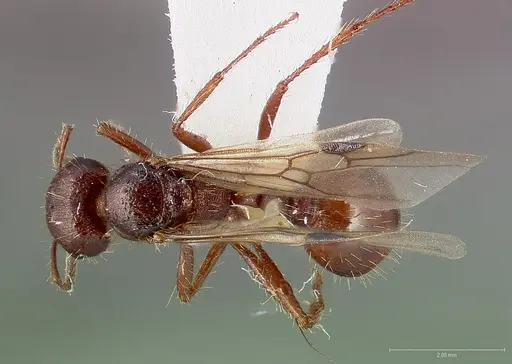
CASENT0178907
View on AntWeb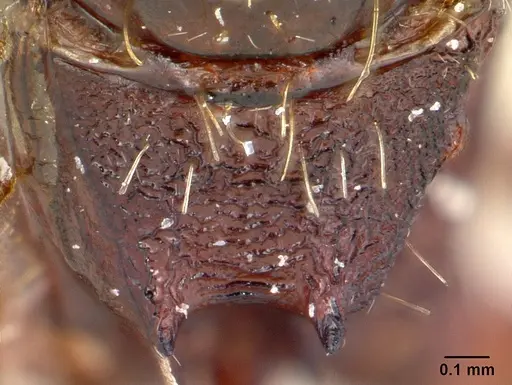
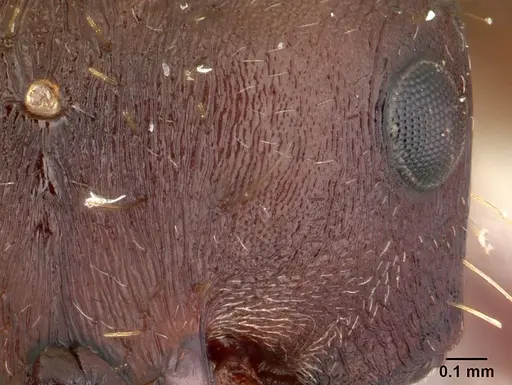
CASENT0900380
View on AntWeb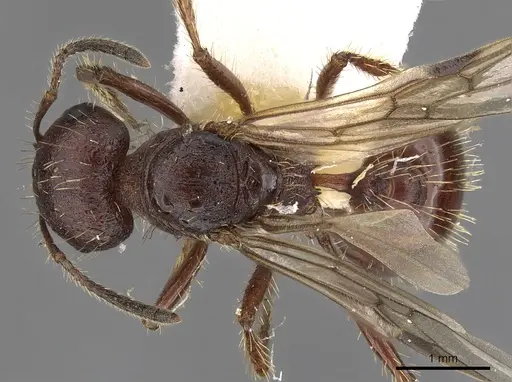
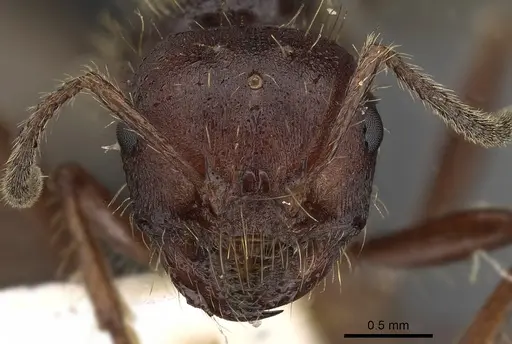
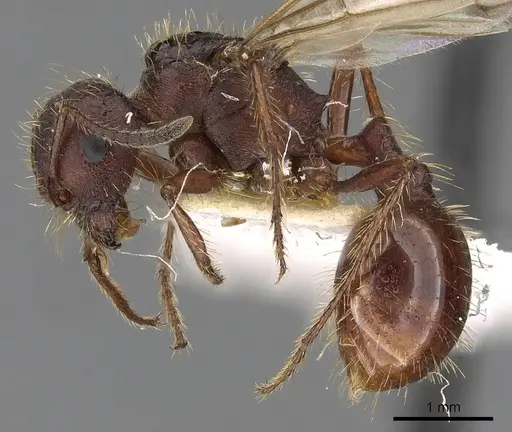
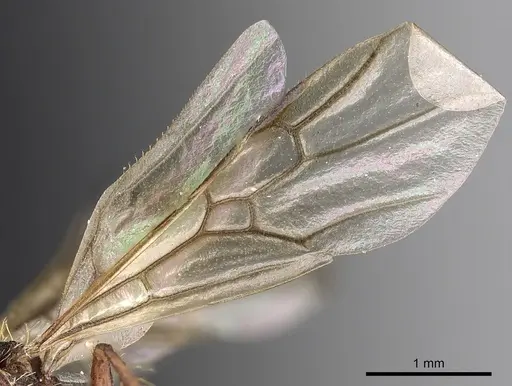
CASENT0900381
View on AntWeb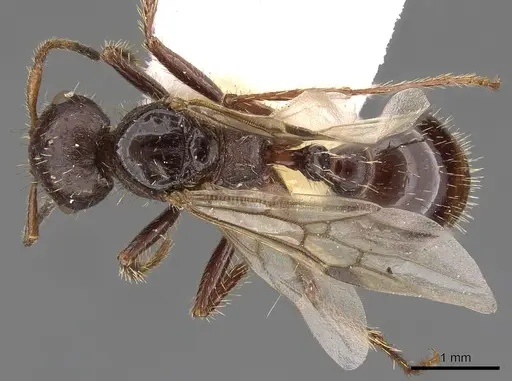
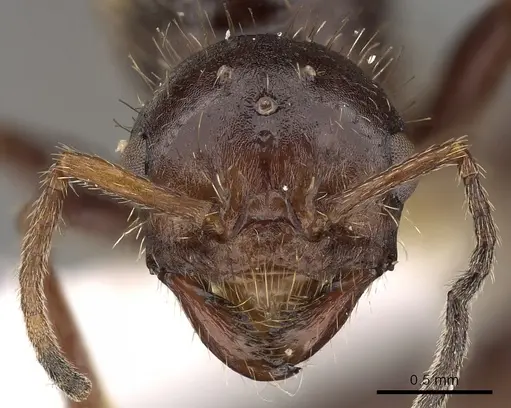
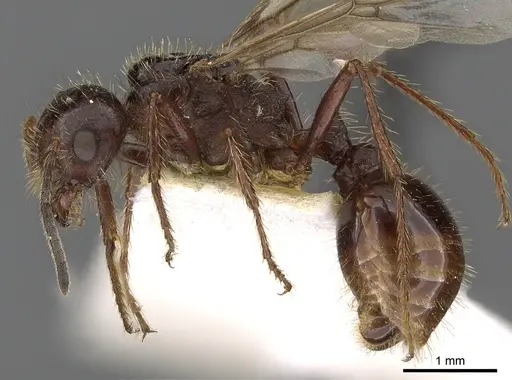
CASENT0914099
View on AntWeb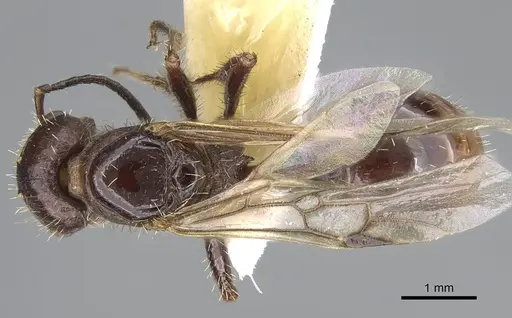
Literature
Loading...Loading products...