

Poecilomyrma senirewae
- Scientific Name
- Poecilomyrma senirewae
- Tribe
- Crematogastrini
- Subfamily
- Myrmicinae
- Author
- Mann, 1921
- Distribution
- Found in 1 countries
Poecilomyrma senirewae Overview
Poecilomyrma senirewae is an ant species of the genus Poecilomyrma. It is primarily documented in 1 countries , including Fiji. Detailed taxonomic data and occurrence records can be further explored via authoritative databases such as AntWeb or the Global Biodiversity Information Facility (GBIF).
Poecilomyrma senirewae
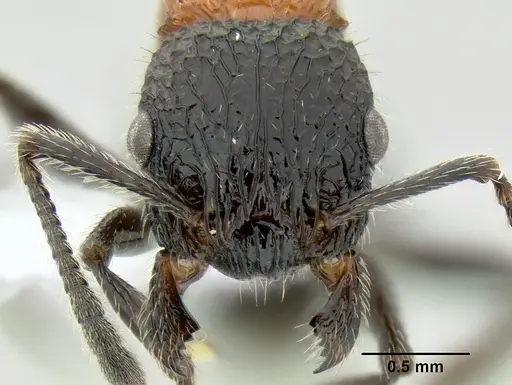
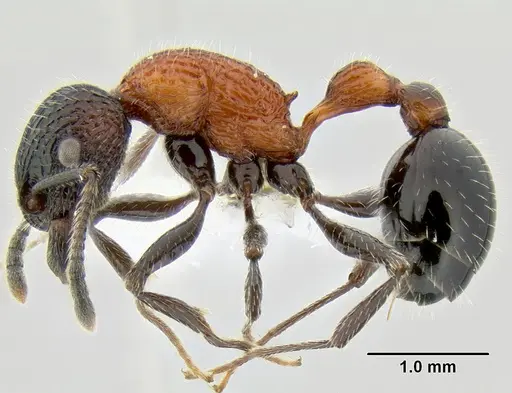
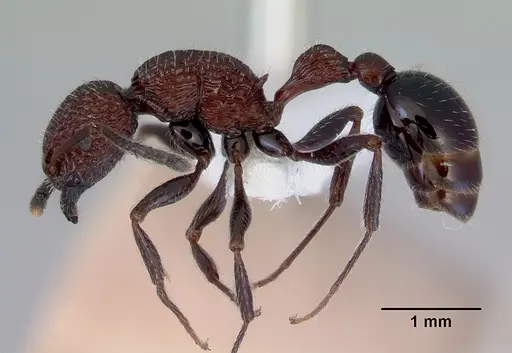
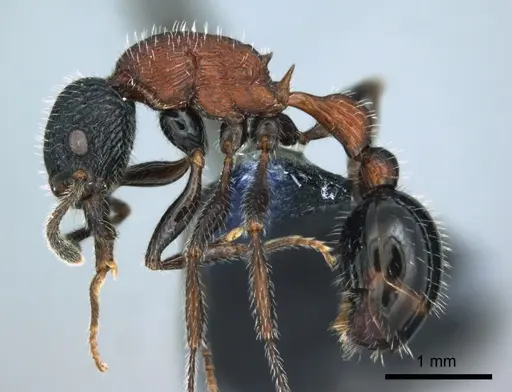
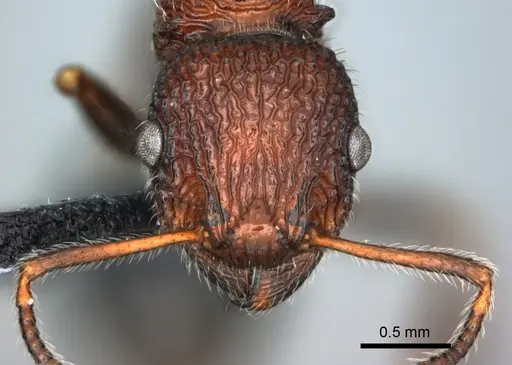
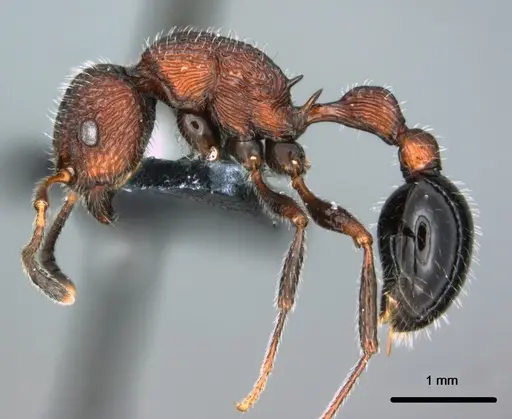
Poecilomyrma senirewae is a striking arboreal ant species endemic to the islands of Fiji, specifically Viti Levu. Workers reach about 5mm in length and feature a rich reddish-brown body with notably darker antennae and legs, while their gaster is black, creating a distinctive two-toned appearance. The mesosoma has strongly reticulated (net-like) sculpture, and the pronotal humeri project as sharp pointed teeth, giving them a somewhat spiny appearance. These ants are arboreal by nature, nesting in hollow twigs and branches in the forest canopy, making them a rare find even in their native range. The species was described by Mann in 1921 and represents Fiji's only endemic ant genus, making it a unique addition for collectors interested in Pacific island fauna.
Quick Summary
- Difficulty: Expert
- Origin & Habitat: Fiji Islands (Viti Levu), arboreal species nesting in hollow twigs of trees, particularly in highland forest areas like Nadarivatu, Mt. Tomanivi, and Koroyanitu [1][2]
- Colony Type: Likely monogyne (single queen) based on typical Myrmicinae patterns. Ergatoid (wingless) queen possibly documented from specimens collected by E.O. Wilson [1]. Colony structure is not directly studied.
- Size & Growth:
- Queen: Unconfirmed, no properly identified queen specimens described [1]
- Worker: 5mm [3]
- Colony: Unknown, only small colonies documented in original description [3]
- Growth: Unknown
- Development: Unknown, no development data exists for this species. Estimates based on similar tropical Myrmicinae suggest 4-8 weeks at warm temperatures. (Development timeline is unconfirmed. Related tropical Myrmicinae typically develop faster than temperate species.)
- Antkeeping:
- Temperature: Keep warm, around 24-28°C. Being a tropical Fiji species, they need consistently warm conditions without temperature drops.
- Humidity: Moderate to high, being arboreal nesters in a humid tropical environment, they need moisture but not saturation. Aim for 60-80% humidity with good ventilation.
- Diapause: No, as a tropical species from Fiji, they do not require hibernation or winter dormancy.
- Nesting: Arboreal specialists, they naturally nest in hollow twigs and small cavities in wood. In captivity, they do well in small acrylic nests or Y-tong setups with narrow chambers scaled to their 5mm size. Provide twigs or narrow tubes as founding chambers. Avoid large open spaces.
- Behavior: These ants are arboreal and likely more active in the canopy layer. Workers are moderately sized at 5mm and possess a visible stinger, suggesting they can defend themselves if threatened. Their natural history suggests they may be more secretive and harder to observe than ground-nesting species. Escape risk is moderate, standard barrier methods should work, but their small size means attention to gaps. They are likely more docile than aggressive but will use their stinger if provoked.
- Common Issues: very limited natural history data makes captive care largely speculative, no established breeding populations in the antkeeping hobby, wild queens are the only source, arboreal nesting means standard ground-based setups may not suit them, tropical humidity requirements can be challenging to maintain consistently, small colony sizes in the wild suggest they may be slow to establish in captivity
Natural History and Distribution
Poecilomyrma senirewae is one of the most geographically restricted ant species in the world, found only on the island of Viti Levu in Fiji. This makes it a true endemic, you won't find these ants anywhere else on Earth. The species was first described in 1921 by W.M. Mann from specimens collected in a hollow twig of a recently felled kauri tree, establishing Fiji's only endemic ant genus. They have been recorded from several highland locations including Nadarivatu, Mt. Tomanivi, and Koroyanitu, all on Viti Levu. The original description notes they are 'evidently arboreal and may, like the species of Podomyrma that I found in the Solomons, be widely distributed though locally very hard to find', this remains true today, as they are rarely encountered even by researchers. A possible ergatoid (wingless) queen specimen was collected by E.O. Wilson from Nadala, suggesting the species may have replacement reproductive individuals like many Myrmicinae [1][2][3].
Identification and Appearance
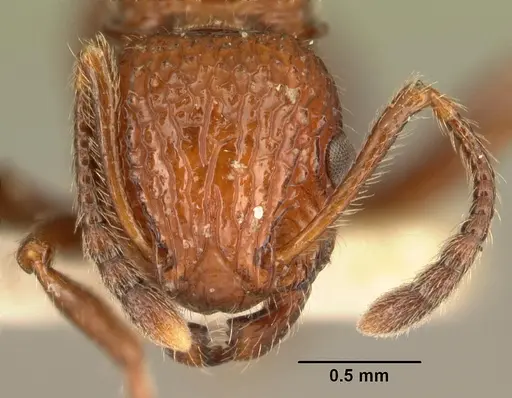
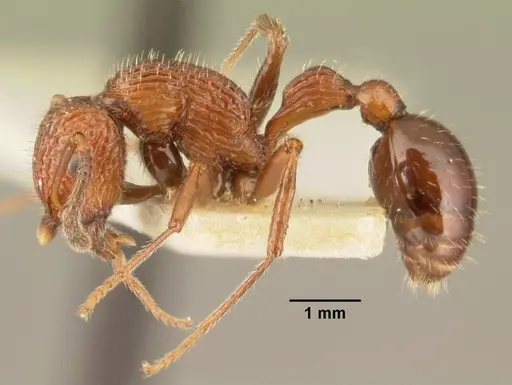
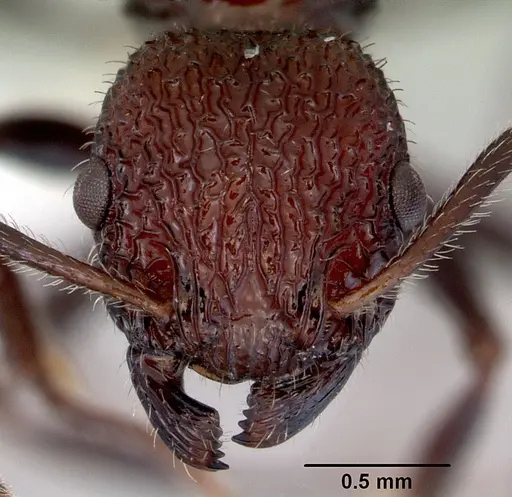
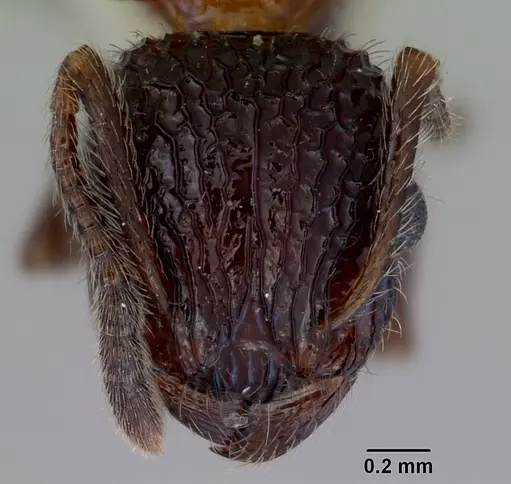
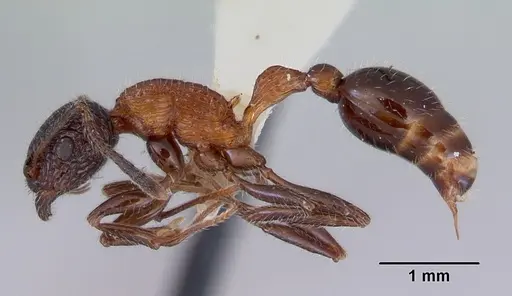
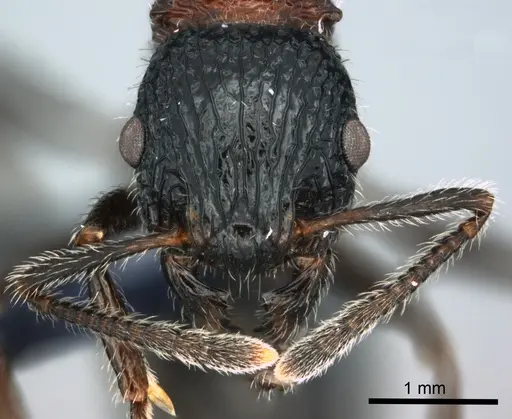
Workers of Poecilomyrma senirewae reach approximately 5mm in length, making them moderately sized among Myrmicinae ants. They have a distinctive color pattern: a rich reddish-brown head and mesosoma (middle body section), while the mandibles, antennae, and legs are notably darker. The gaster (abdomen) is black, creating a striking two-toned appearance that makes them relatively easy to identify. The mesosomal sculpture is strongly reticulated, meaning it has a net-like, wrinkled texture, and the pronotal humeri (shoulder regions) project as acute teeth or spines. They possess a strong stinger, which is somewhat unusual among Myrmicinae of this size. The pilosity (body hairs) is described as long and more flexuous, and the carinae and rugae are more strongly margined than related species. This combination of features helps distinguish them from sympatric species like Poecilomyrma myrmecodiae and Poecilomyrma sp. FJ05 [1][3].
Housing and Nesting
Being arboreal ants, Poecilomyrma senirewae requires housing that reflects their natural nesting preferences. In the wild, they nest in hollow twigs and small cavities in branches, typically in forest canopy areas. For captive care, small acrylic nests or Y-tong formicaria with narrow chambers work well, the chambers should be appropriately scaled to their 5mm worker size. Avoid large, open spaces that would be unnatural for them. Some keepers success with providing small twig sections or narrow tubes as founding chambers, simulating their natural hollow twig nests. Good ventilation is important to prevent mold in arboreal setups, but avoid excessive airflow that would dry them out. As a tropical species from Fiji, they need consistently warm temperatures and moderate humidity, think along the lines of a tropical vivarium setup rather than a dry terrarium.
Feeding and Diet
The natural diet of Poecilomyrma senirewae is not directly documented, but being a Myrmicinae species, they likely have an omnivorous diet similar to related Crematogastrini ants. In the wild, they probably forage for small arthropods, honeydew from aphids or scale insects, and may tend sap-sucking insects on trees. For captive care, offer a varied diet: protein sources like small fruit flies, pinhead crickets, or other tiny insects should be accepted. Sugar water or honey can be offered as an energy source, though some arboreal species are less interested in sugar than ground-nesting ants. Feed protein 2-3 times per week and keep sugar water available. As a secretive arboreal species, they may be less aggressive foragers than some ants, don't be concerned if they take several days to discover new food items.
Temperature and Seasonal Care
As a tropical species endemic to Fiji, Poecilomyrma senirewae requires warm, stable temperatures year-round. Aim for 24-28°C in the nest area, this is warmer than many temperate species require and reflects their origin from a tropical island environment. Unlike temperate ants, they do not require hibernation or diapause. In fact, temperature drops below 20°C for extended periods would likely be harmful. Use a gentle heat source if your room temperature runs cool, such as a heating cable on one side of the nest creating a temperature gradient. Being from a humid tropical island, they also appreciate moderate humidity around 60-80%. Avoid placing them near air conditioning vents or in rooms with temperature fluctuations. Consistent warmth is key to keeping this species healthy.
Challenges and Considerations
Poecilomyrma senirewae represents a significant challenge even for experienced antkeepers due to several factors. First, there is essentially no captive breeding history in the antkeeping hobby, these ants are extremely rare in cultivation, and wild-caught queens are the only source. Second, the natural history is poorly studied, meaning much of captive care must be inferred from related species rather than documented best practices. Third, their arboreal nature requires different housing approaches than most commonly kept ants. Finally, being endemic to a small geographic area, they may have specific requirements that are difficult to replicate. For these reasons, Poecilomyrma senirewae is best considered an expert-level species for antkeepers with experience in raising delicate tropical species. If you do obtain a colony, document your observations carefully, any captive husbandry data would be valuable for this poorly known species.
Frequently Asked Questions
How long does it take for Poecilomyrma senirewae to go from egg to worker?
The development timeline is completely unconfirmed for this species, no scientific research has documented their brood development. Based on inference from similar tropical Myrmicinae, expect approximately 4-8 weeks at warm temperatures (around 26°C), but this is purely an estimate. Any documented observations from captive colonies would be valuable contributions to our knowledge.
Can I keep Poecilomyrma senirewae in a test tube setup?
While test tubes work for many founding ant colonies, Poecilomyrma senirewae is arboreal and naturally nests in hollow twigs. A small acrylic nest or Y-tong with appropriately sized chambers would be more suitable. However, for a founding queen caught in the wild, a small test tube with a water reservoir can work initially, provided you transfer them to a more appropriate arboreal-style nest once the colony establishes.
Do Poecilomyrma senirewae ants sting?
Yes, they possess a strong stinger. The original species description specifically mentions a 'strong sting.' While the sting potency is not documented, they are capable of defending themselves if threatened. For handling, exercise normal precautions, these are small ants and the sting is unlikely to penetrate human skin significantly, but some individuals may have sensitivity.
Are Poecilomyrma senirewae good for beginners?
No, this species is not recommended for beginners. It is rated as expert difficulty due to several factors: extremely rare availability (only wild-caught queens), virtually no established captive care information, arboreal nesting requirements that differ from common species, and specific tropical temperature and humidity needs. Beginners should start with more documented species like Lasius, Camponotus, or Myrmica.
How big do Poecilomyrma senirewae colonies get?
Colony size is not well documented. The original description mentions only a 'small colony' found in a hollow twig. Based on related Poecilomyrma species and similar arboreal Myrmicinae, colonies likely remain relatively modest, possibly under 500 workers at maturity. They appear to be naturally less populous than ground-nesting species.
Do Poecilomyrma senirewae need hibernation?
No, they do not require hibernation. Being a tropical species from Fiji, they are adapted to year-round warm conditions. Maintaining temperatures of 24-28°C consistently year-round is important for their health. Temperature drops below 20°C for extended periods would likely be harmful to the colony.
Where can I get Poecilomyrma senirewae?
This species is extremely rare in the antkeeping hobby. They are endemic to only Viti Levu in Fiji and have never been established in captive breeding populations. The only source would be wild-caught queens collected during nuptial flights in Fiji, but this requires being in Fiji during their mating season and having appropriate collection permits. This is not a species you will find in commercial ant farms.
What do Poecilomyrma senirewae eat?
Their exact diet is not documented, but as a Myrmicinae species, they are likely omnivorous. Offer small protein sources like fruit flies, tiny crickets, or other small insects. Sugar water or honey can be provided as an energy source. They may be less interested in sugar than some ants given their arboreal foraging habits. Feed protein 2-3 times per week with sugar water available continuously.
Can I keep multiple Poecilomyrma senirewae queens together?
Colony structure is not well studied for this species. Based on typical Myrmicinae patterns, they are likely monogyne (single queen), but this is not confirmed. There is no data on whether multiple foundress queens would tolerate each other. Given the lack of information, it is not recommended to attempt combining unrelated queens.
Why is Poecilomyrma senirewae so rare?
This species is endemic to only one island, Viti Levu in Fiji, making it naturally restricted in distribution. Additionally, being arboreal, they nest in the forest canopy in hollow twigs, making them extremely difficult to find even by researchers. The original description notes they are 'locally very hard to find.' Combined with their small natural populations, this makes them one of the rarest ant species to keep.
References

This caresheet is licensed under CC BY-SA 4.0 .
CASENT0101901
View on AntWeb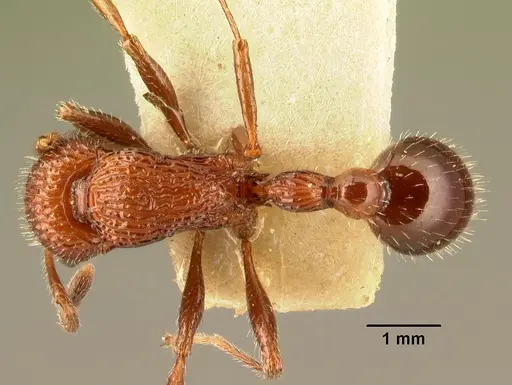
CASENT0106144
View on AntWeb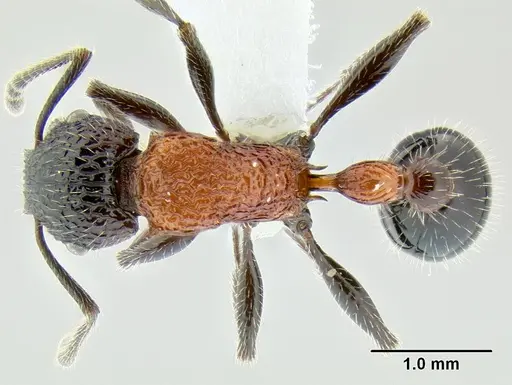
CASENT0172278
View on AntWeb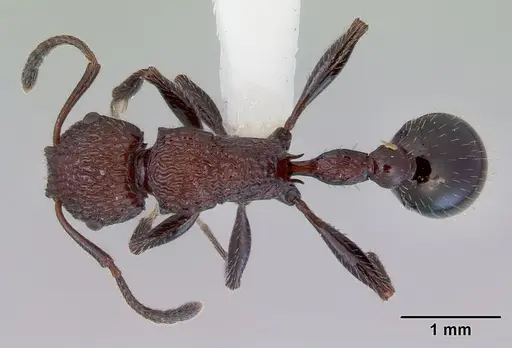
CASENT0172279
View on AntWeb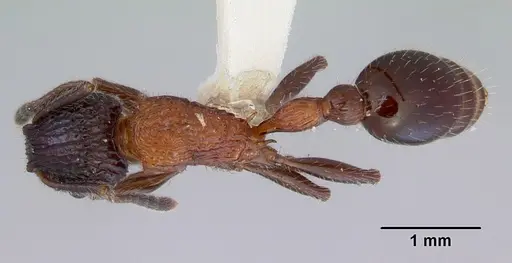
CASENT0181551
View on AntWeb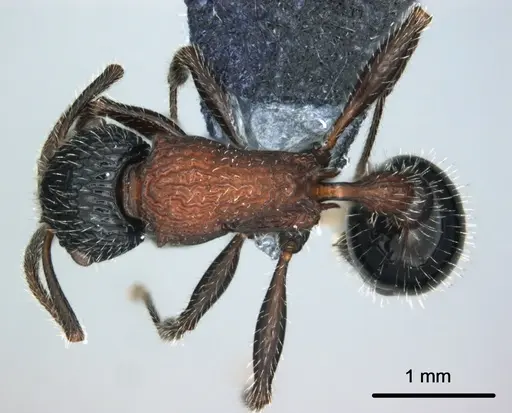
CASENT0181574
View on AntWeb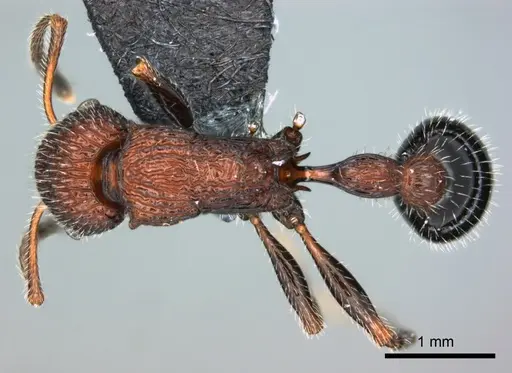
Literature
Loading...Loading products...