

Poecilomyrma myrmecodiae
- Scientific Name
- Poecilomyrma myrmecodiae
- Tribe
- Crematogastrini
- Subfamily
- Myrmicinae
- Author
- Mann, 1921
- Distribution
- Found in 1 countries
Poecilomyrma myrmecodiae Overview
Poecilomyrma myrmecodiae is an ant species of the genus Poecilomyrma. It is primarily documented in 1 countries , including Fiji. Detailed taxonomic data and occurrence records can be further explored via authoritative databases such as AntWeb or the Global Biodiversity Information Facility (GBIF).
Poecilomyrma myrmecodiae
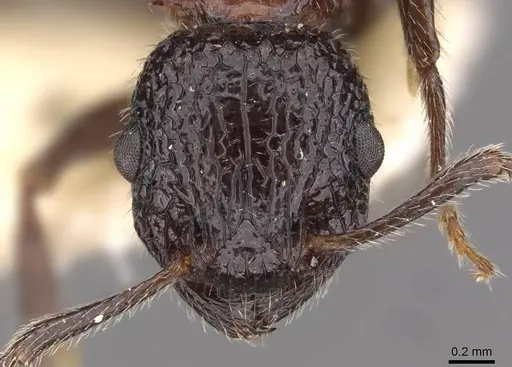
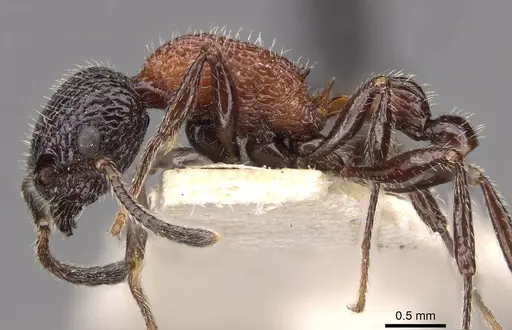
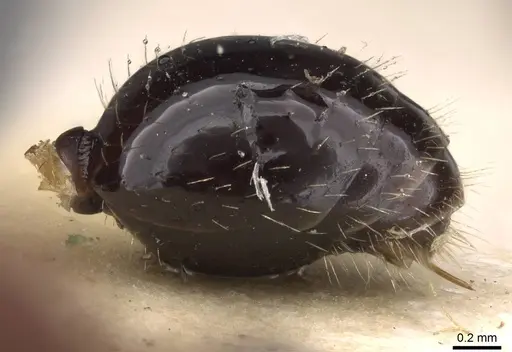
Poecilomyrma myrmecodiae is a large myrmicine ant endemic to the Fiji islands, specifically Viti Levu. Workers measure around 5mm and display striking coloration: a black head (infuscated posteriorly), red mesosoma and petiole, an infuscated postpetiole, black gaster, and dark appendages [1]. This species is phylogenetically related to Paratopula and belongs to an Indo-Pacific clade [2]. What makes P. myrmecodiae particularly unique is its association with ant plants, the type series was collected from a Myrmecodia bulb, and ergatoid (wingless) queens have been found nesting in Hydnophytum ant plants [1]. The species is sympatric with P. senirewae but can be distinguished by its darker head coloration.
Quick Summary
- Difficulty: Expert
- Origin & Habitat: Endemic to Fiji, specifically Viti Levu island in the central and southeastern mountain ranges [1][3]. In the wild, these ants nest exclusively inside ant plant bulbs (Myrmecodia and Hydnophytum) [1].
- Colony Type: Single-queen colonies with documented ergatoid (wingless) replacement queens [1]. The colony structure appears to be monogyne with ergatoid reproductives for queen replacement.
- Colony: Monogyne
- Size & Growth:
- Queen: Approximately 5mm (estimated from worker size, ergatoid queen documented) [1]
- Worker: Approximately 5mm [1]
- Colony: Unknown, only small colonies documented in ant plant bulbs [1]
- Growth: Unknown
- Development: Unknown, no captive breeding data exists (No development data available for this species. Related Paratopula species may provide rough estimates, but nothing confirmed.)
- Antkeeping:
- Temperature: Unknown, likely tropical preferences given Fiji habitat. Start around 24-28°C and observe colony activity.
- Humidity: High humidity required, ant plant interiors are humid microenvironments. Keep nest substrate consistently moist but not waterlogged.
- Diapause: Unlikely, Fiji has no cold season. These ants probably remain active year-round.
- Nesting: Must nest in ant plant cavities or similar enclosed spaces. In captivity, small acrylic or Y-tong nests with tight chambers may work. The ants naturally live inside bulbous plant structures.
- Behavior: No behavioral data documented for captive colonies. Based on their ant plant nesting habit, they likely remain cryptic and do not forage openly. Ergatoid queens suggest they can replace their queen if she dies without nuptial flights. Escape risk is moderate given their 5mm size, but standard barriers should suffice.
- Common Issues: no captive breeding data exists, this species has never been kept in captivity by hobbyists, ergatoid queen system may make colony establishment difficult if no winged queens are produced, extreme humidity requirements may lead to mold issues in captivity, ant plant nesting requirement is unusual and may be difficult to replicate, endemic to Fiji, legal acquisition and export may be restricted
Natural History and Distribution
Poecilomyrma myrmecodiae is one of the rarest ants in the antkeeping hobby, found only on the island of Viti Levu in Fiji [1][3]. This species was originally described as a subspecies of P. senirewae by Mann in 1921,but was elevated to full species status by Sarnat and Economo in 2012 [1]. The species is restricted to the central and southeastern mountain ranges of Viti Levu, making it a truly endemic Fiji ant [1].
Perhaps the most fascinating aspect of this species is its obligate association with ant plants (Myrmecodia and Hydnophytum, both in the Rubiaceae family). The type series of 21 workers was collected from a Myrmecodia bulb, and ergatoid queens have been found nesting inside Hydnophytum ant plants [1]. This symbiotic relationship means the ants live inside specialized hollow structures on the plant, providing protection while the plant receives nutrients from ant debris.
Identification and Distinguishing Features
Poecilomyrma myrmecodiae is a relatively large ant, with workers measuring approximately 5mm [1]. The coloration is distinctive: the head is black with infuscation posteriorly, the mesosoma and petiole are red, the postpetiole is infuscated, the gaster is black, and the appendages are dark [1]. This color pattern helps distinguish it from the similar P. senirewae (which has a lighter head) and from Poecilomyrma sp. FJ05 (which is smaller with shorter limbs) [1].
The species also produces ergatoid queens, wingless females that can serve as replacement reproductives if the primary queen dies. One ergatoid queen was collected from a small nest inside a Hydnophytum ant plant, characterized by long flexuous pilosity (hair) and more margined carinae and rugae (sculpture features) [1].
Housing and Nesting in Captivity
Housing Poecilomyrma myrmecodiae presents a significant challenge due to their unique natural history. In the wild, they nest exclusively inside ant plant bulbs, specialized hollow structures on Myrmecodia and Hydnophytum plants [1]. Replicating this in captivity would require either maintaining a live ant plant or providing similar enclosed spaces.
If attempting to keep this species, small acrylic nests or Y-tong nests with tight chambers may work as alternatives. The key requirement appears to be an enclosed, humid nest cavity rather than open foraging space. Given their association with ant plants, high humidity is essential, think consistently moist substrate without flooding. Ventilation must be balanced carefully to prevent mold while maintaining humidity.
This species is not recommended for beginners due to the complete lack of captive breeding data and the specialized nature of their natural nesting habits.
Feeding and Diet
The natural diet of Poecilomyrma myrmecodiae has not been documented in scientific literature. As a myrmicine ant, they likely have a typical omnivorous diet similar to related genera like Paratopula, accepting both sugar sources and protein. However, their cryptic lifestyle inside ant plant cavities may indicate specialized foraging behaviors.
In captivity, a conservative approach would be to offer standard ant foods: sugar water or honey as a carbohydrate source, and small protein sources like fruit flies, pinhead crickets, or mealworms. Given the complete lack of documented feeding behavior for this species, keepers should experiment carefully and observe what the ants actually accept.
Temperature and Seasonal Care
As a Fiji endemic, Poecilomyrma myrmecodiae originates from a tropical climate with no cold season. Fiji maintains temperatures around 24-28°C year-round, so these ants likely prefer warm, stable conditions. No diapause or winter dormancy would be expected.
Since no captive data exists for this species, temperature recommendations are estimates based on their geographic origin. Start around 24-28°C and observe colony behavior, if workers become sluggish, increase slightly, if they avoid heated areas, reduce temperature. A thermal gradient allowing the ants to choose their preferred temperature is advisable.
Frequently Asked Questions
Is Poecilomyrma myrmecodiae available in the antkeeping hobby?
No. This species has never been documented in the antkeeping hobby. It is extremely rare, endemic to Fiji, and has no established captive breeding protocols. Even if specimens were collected from the wild, the specialized ant plant nesting requirement makes captive maintenance extremely challenging.
How do I house Poecilomyrma myrmecodiae?
This is an expert-level challenge. In the wild, they nest exclusively inside ant plant bulbs (Myrmecodia or Hydnophytum). Replicating this requires either maintaining a live ant plant or providing small, enclosed nest chambers with very high humidity. Standard formicariums may not be suitable.
What do Poecilomyrma myrmecodiae eat?
Their diet has not been documented. As a myrmicine ant, they likely accept sugar sources and protein like other related ants. Offer sugar water/honey and small insects. Due to lack of data, experimentation and careful observation are required.
Do Poecilomyrma myrmecodiae queens have wings?
This species has ergatoid (wingless) queens documented [1]. Winged queens may or may not be produced, the ergatoid form serves as replacement reproductives within established colonies. This is unusual compared to most ant species.
How big do Poecilomyrma myrmecodiae colonies get?
Unknown. Only small colonies have been documented in ant plant bulbs. The maximum colony size for this species has not been studied in the wild or documented in captivity.
Do Poecilomyrma myrmecodiae need hibernation?
No. As a Fiji endemic species, they come from a tropical climate with no winter. They likely remain active year-round and do not require diapause.
Is Poecilomyrma myrmecodiae aggressive or do they sting?
No behavioral data exists for this species. As a 5mm myrmicine ant, they likely have a stinger but its potency is unknown. Given their cryptic ant-plant nesting lifestyle, they are probably not aggressive or likely to encounter humans.
Can beginners keep Poecilomyrma myrmecodiae?
Absolutely not recommended. This species is rated Expert difficulty due to: no captive breeding data exists, specialized ant plant nesting requirements, unknown temperature/humidity needs, and extreme rarity. Even experienced antkeepers would struggle with this species.
References

This caresheet is licensed under CC BY-SA 4.0 .
CASENT0908990
View on AntWeb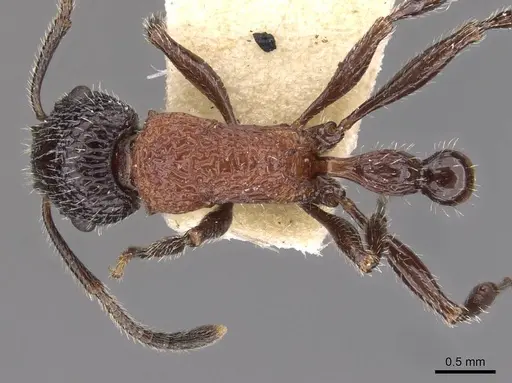
Literature
Loading...Loading products...