

Plectroctena thaui
- Scientific Name
- Plectroctena thaui
- Tribe
- Ponerini
- Subfamily
- Ponerinae
- Author
- Fisher, 2006
- Distribution
- Found in 1 countries
Plectroctena thaui Overview
Plectroctena thaui is an ant species of the genus Plectroctena. It is primarily documented in 1 countries , including Cameroon. Detailed taxonomic data and occurrence records can be further explored via authoritative databases such as AntWeb or the Global Biodiversity Information Facility (GBIF).
Plectroctena thaui
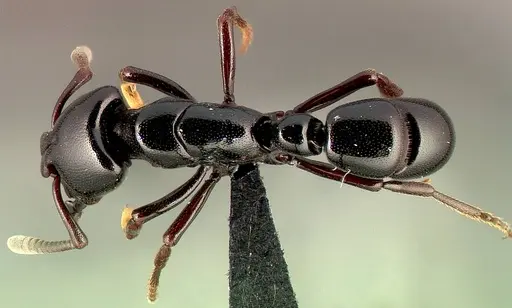
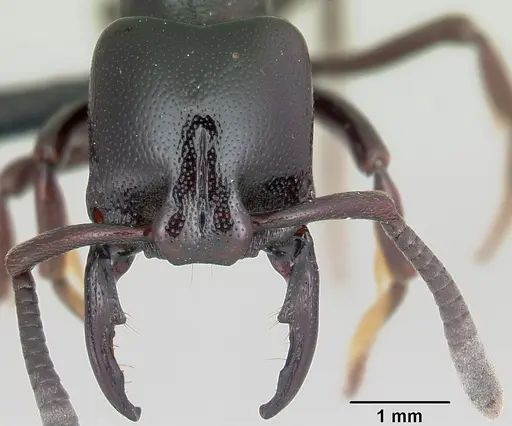
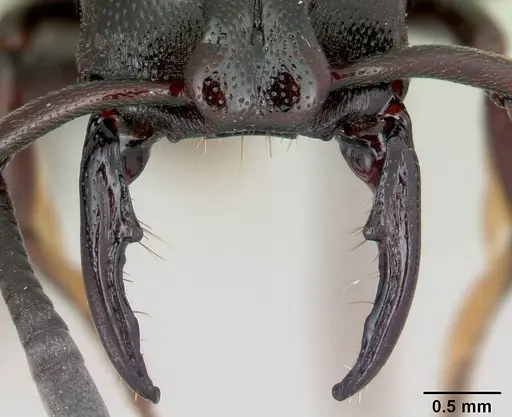
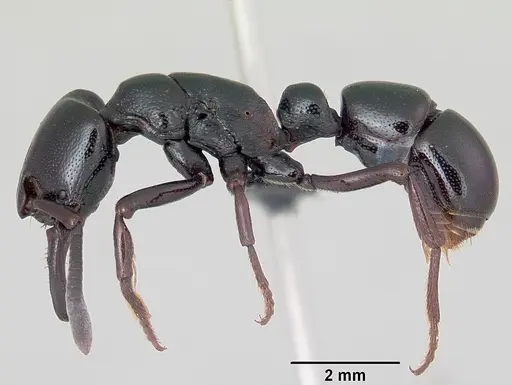
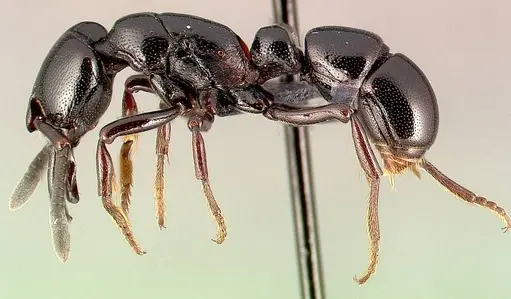
Plectroctena thaui is a large, predatory ant species from the montane rainforests of Mount Cameroon in Cameroon, Africa. Workers measure an impressive 9.9-11.0 mm in total length, making them one of the larger ant species in the Plectroctena genus [1][2]. They are entirely black in color, which distinguishes them from their close relative Plectroctena ugandensis (which is dark red) [2]. The species belongs to the P. mandibularis species group, characterized by their distinctive mandibles with a basal tooth and narrow propodeal lamellae [1].
This species is known only from a handful of worker specimens collected in the year 2000,making it one of the most poorly documented ant species in existence. No queens, males, or colony-level observations have ever been published. All known specimens came from sifted leaf litter in montane rainforest at approximately 1440m elevation on Mount Cameroon [1][2]. The genus Plectroctena contains predatory ants that typically hunt small invertebrates, and this species likely shares similar behaviors despite the complete lack of direct biological observations.
Quick Summary
- Difficulty: Expert
- Origin & Habitat: Mount Cameroon, Cameroon (Sud-Ouest region), Etinde Forest Reserve at 1440m elevation. Found in montane rainforest leaf litter [1][2].
- Colony Type: Unknown, only worker specimens have ever been collected. No queen, male, or colony structure data exists. Likely single-queen based on genus patterns, but unconfirmed.
- Size & Growth:
- Queen: Unknown, queens have never been documented
- Worker: 9.9-11.0 mm total length, head width 2.30-2.41 mm [1][2]
- Colony: Unknown, no colony observations exist
- Growth: Unknown, no development data exists
- Development: Unknown, no direct measurements. Based on related Ponerinae species, estimate 6-10 weeks at optimal temperature. (No brood development data exists for this species. Estimates based on genus-level patterns for large predatory ants.)
- Antkeeping:
- Temperature: Inferred: 22-26°C based on montane rainforest origin. Provide a temperature gradient allowing selection.
- Humidity: High humidity required, montane rainforest species. Keep substrate consistently moist but not waterlogged.
- Diapause: Unknown, no seasonal data exists. Related forest ants from similar elevations may have reduced activity during cooler/drier periods.
- Nesting: Inferred: Likely nests in rotting wood, under stones, or in soil in natural habitat. In captivity, a naturalistic setup with moist substrate or a Y-tong/plaster nest works well.
- Behavior: No direct behavioral observations exist for this species. Based on genus membership, they are likely predatory hunters that pursue small invertebrates. Their large size and powerful mandibles suggest they can tackle prey significantly larger than many other ant species. Escape risk is moderate due to their size, standard barriers are likely sufficient. Temperament is unknown but related Plectroctena species are not typically aggressive toward humans.
- Common Issues: complete lack of biological data makes captive care largely speculative, no confirmed diet acceptance, must experiment with various protein sources, colony founding behavior is completely unknown, no information on nuptial flight timing or mating behavior, only five worker specimens have ever been collected in the wild
Species Discovery and Rarity
Plectroctena thaui was only described in 2006 by Brian L. Fisher, and it remains one of the rarest ant species in the world. The entire scientific knowledge of this species comes from just five worker specimens collected in April 2000 from a single location in Mount Cameron's Etinde Forest Reserve [1][2]. These workers were collected using sifting methods from leaf litter in montane rainforest at 1440m elevation. No queens, males, or any other castes have ever been found or described. This extreme rarity makes Plectroctena thaui a species that is virtually unknown in captivity, if it exists in captive colonies at all. Any antkeeper attempting to keep this species would be working with almost no direct precedent.
Identification and Morphology
Workers of Plectroctena thaui are large and distinctive. Total body length ranges from 9.9 to 11.0 mm, with head widths of 2.30-2.41 mm [1]. The species is entirely black in color, which immediately separates it from the similar Plectroctena ugandensis (its closest relative) that is dark red [2]. They belong to the P. mandibularis species group, defined by having a propodeal lamella restricted to the side of the propodeal declivity and distinctive mandible structure with a basal tooth [1]. The head is relatively broad with a cephalic index (CI) of 95-97,meaning the head is nearly as wide as it is long. The eyes are small, with a maximum diameter of only 0.13 mm [1]. The petiole node is slightly higher than it is long when viewed from the side.
Natural Habitat and Distribution
This species is known only from a single collection event in the montane rainforests of Mount Cameroon in southwestern Cameroon. The type locality is the Etinde Forest Reserve, approximately 3.8 km northwest of Mapanja village at 1440m elevation [1][2]. Mount Cameroon is an active volcano and the highest peak in West Africa, with its slopes supporting diverse forest types including montane rainforest at higher elevations. The habitat where these ants were collected is characterized by cool, moist conditions with dense vegetation. The elevation of 1440m suggests a relatively mild climate compared to lowland tropical areas, typically temperatures in the low 20s Celsius with high humidity year-round.
Housing and Nesting (Inferred)
Since no natural nesting observations exist for this species, care recommendations must be inferred from the genus and habitat. Given their origin in montane rainforest leaf litter at 1440m elevation, they likely prefer cool to warm temperatures with consistently high humidity. A naturalistic setup with moist substrate (a mix of soil and organic material) would be appropriate, or alternatively a Y-tong or plaster nest that can maintain humidity. The large worker size (nearly 1cm) means they can be housed in standard-sized chambers without issue. Provide a water tube for humidity and ensure the nest substrate stays damp but not waterlogged. An outworld for foraging allows for feeding and waste management.
Feeding and Diet (Inferred)
Plectroctena belongs to the subfamily Ponerinae, which contains primarily predatory ants. The genus name itself references their powerful mandibles, adapted for hunting. Based on genus patterns, Plectroctena thaui almost certainly hunts small invertebrates such as springtails, mites, small beetles, and other leaf-litter arthropods. In captivity, you should offer a variety of small live prey including fruit flies, pinhead crickets, small mealworms, and other appropriately-sized insects. The large mandibles suggest they can tackle prey that would be too large for many other ant species of similar size. Sugar sources like honey or sugar water may be accepted for energy, but protein prey should form the primary diet. Start with live prey and observe acceptance.
Temperature and Humidity Requirements (Inferred)
The montane rainforest origin suggests specific environmental needs. Based on the 1440m elevation and typical montane forest conditions, aim for temperatures in the range of 22-26°C with a gradient allowing the ants to select their preferred spot. Humidity should be high, think damp forest floor conditions. Keep the nest substrate consistently moist but not waterlogged, with some slightly drier areas available for the ants to retreat to if needed. Avoid both excessive drying and stagnant, overly wet conditions. A small water tube connected to the nest helps maintain humidity through evaporation. Monitor colony behavior, if workers cluster near heat sources, increase temperature slightly, if they avoid heated areas, reduce temperature.
Challenges and Ethical Considerations
Plectroctena thaui represents an extreme case in antkeeping: a species that is virtually unknown in captivity and may not exist in any captive colony worldwide. The complete lack of biological data means that even basic questions about diet, founding behavior, and colony structure remain unanswered. If you encounter what appears to be this species, verify identification carefully, misidentification is likely given how few specimens exist. The extreme rarity also raises ethical questions about collection and trade. This species should be considered a specialist subject for advanced antkeepers with specific research interests, not a species for casual keepers. Consider whether keeping a potentially vanishingly rare species is appropriate given the complete absence of established captive protocols.
Frequently Asked Questions
How big do Plectroctena thaui workers get?
Workers are large, measuring 9.9-11.0 mm in total body length with head widths of 2.30-2.41 mm [1].
Where is Plectroctena thaui found in the wild?
Only known from Mount Cameroon in Cameroon, Africa, specifically the Etinde Forest Reserve at 1440m elevation in montane rainforest [1][2].
What do Plectroctena thaui ants eat?
Unconfirmed, no direct observations exist. Based on genus membership in Ponerinae, they are likely predatory hunters of small invertebrates. In captivity, offer live prey like fruit flies, small crickets, and springtails [3].
Are Plectroctena thaui ants available in the antkeeping hobby?
Extremely unlikely. Only five worker specimens have ever been collected, and the species has never been documented in captivity. This is one of the rarest ant species in the world.
How do I keep Plectroctena thaui ants?
No established care protocol exists. Inferred care suggests a naturalistic setup with moist substrate, temperatures around 22-26°C, high humidity, and a diet of small live prey. This species should only be attempted by expert antkeepers with research objectives.
What temperature should I keep Plectroctena thaui at?
Inferred from montane rainforest origin: 22-26°C with a gradient. No direct temperature data exists for this species.
How long do Plectroctena thaui colonies live?
Unknown, no colony data exists. No queen or colony specimens have ever been documented.
Can I keep multiple queens of Plectroctena thaui together?
Unknown, colony structure is completely unstudied. No queen specimens have ever been collected or described.
Is Plectroctena thaui a good species for beginners?
No. This is an expert-level species due to complete lack of biological data, extreme rarity, and the need for specialized care based on inference rather than established protocols.
References

This caresheet is licensed under CC BY-SA 4.0 .
CASENT0003074
View on AntWeb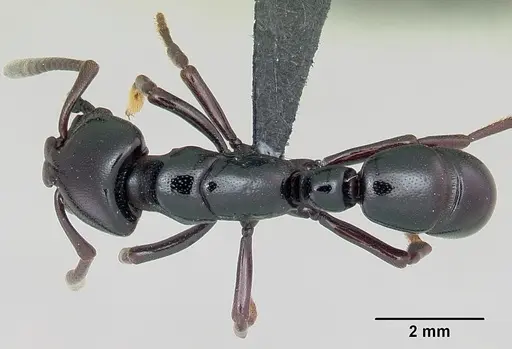
Literature
Loading...Loading products...