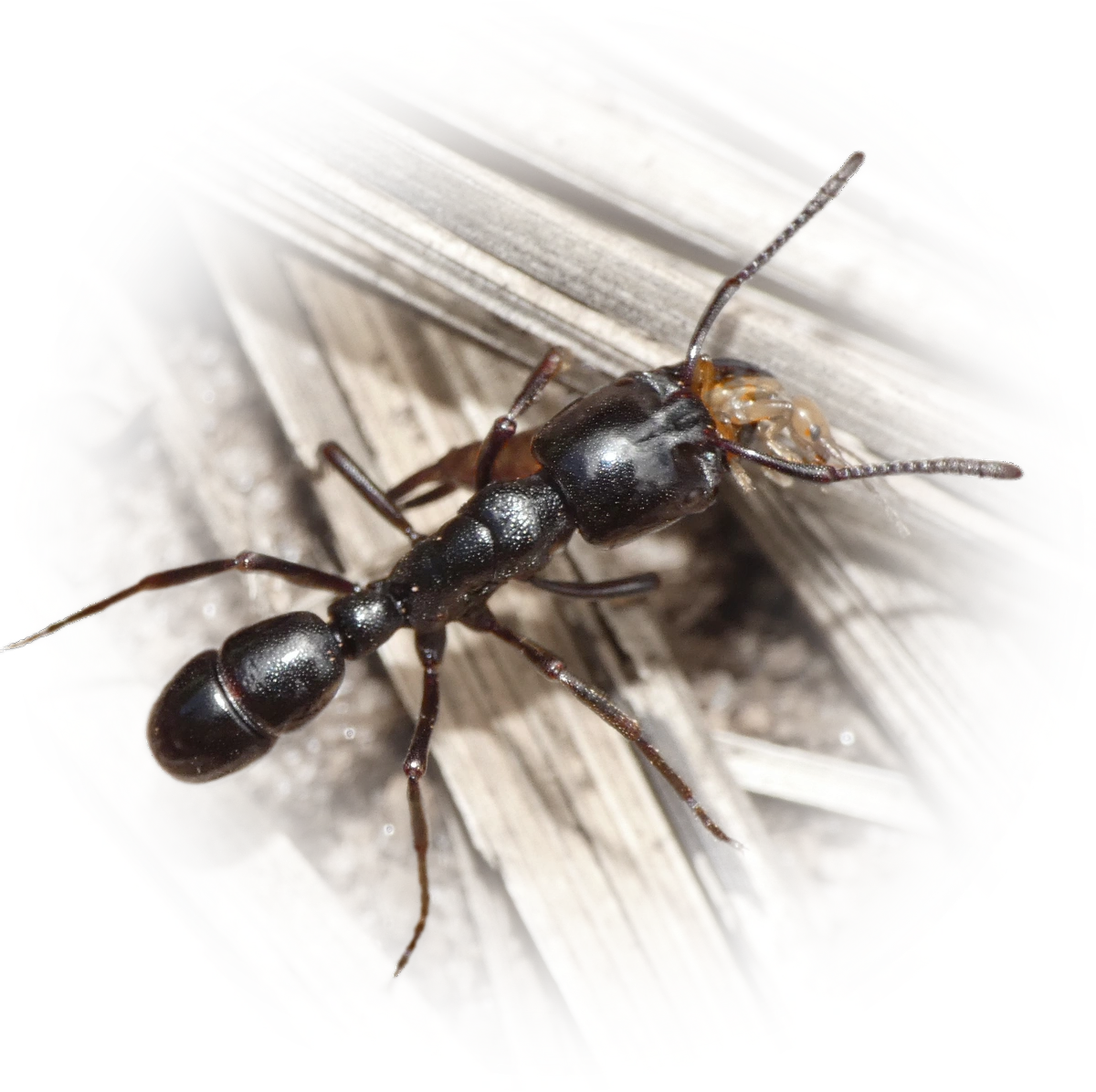
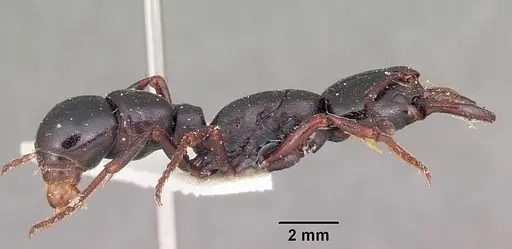
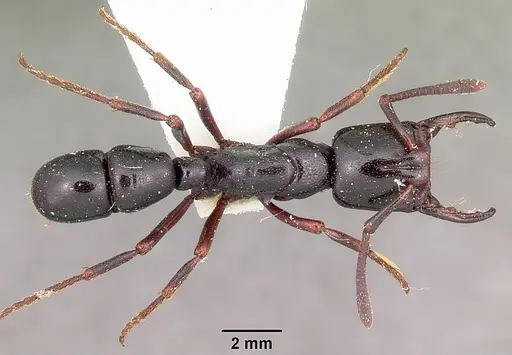
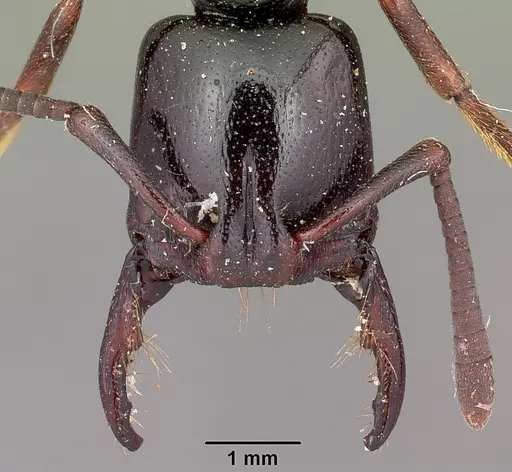
Plectroctena mandibularis - "Ringbum Millipede Muncher"
Plectroctena mandibularis, also known as the Ringbum Millipede Muncher, is a large and intriguing ant species within the Ponerinae subfamily. These ants are notable for their specialized diet, primarily preying on millipedes. Workers of this species are quite large, and the queen, unusually, is ergatoid, meaning she is wingless and worker-like in appearance, though typically larger than the workers. They possess powerful jaws capable of crushing the exoskeletons of their prey. These ants are known for their solitary foraging behavior, though they may hunt in small groups. Their nests are typically deep underground, often marked by a large pile of excavated soil at the entrance.
- Difficulty: Medium
- Origin & Habitat: Afrotropical Region (Sub-Saharan Africa), ranging from the Eastern Cape, South Africa, through East Africa to Ethiopia, Angola, Botswana, Cameroun, Democratic Republic of Congo, Eswatini, Kenya, Malawi, Mozambique, Namibia, Rwanda, Uganda, United Republic of Tanzania. in Forests, Grasslands, Urban areas, Under rocks/wood, cryptobiotic (nest in soil or rotting wood), and forage in these same microhabitats as well as among leaf litter..
- Colony Type: Monogyne (single ergatoid queen), but facultatively polygynous., semi-claustral (queen forages). founding.
- Size & Growth:
- Queen: 16-28mm
- Worker: 16-24mm
- Colony: Small (seldom exceeds fifty individuals, though some reports indicate up to 300 workers).. Slow growth.
- Antkeeping:
- Temperature: Room temperature, but specific optimal temperatures for brood development are not widely documented. Maintaining a stable environment is crucial..
- Humidity: Moderate to high humidity is likely preferred, given their subterranean nesting habits and foraging in leaf litter..
- Diapause: Not required. Not specified at Not specified.
- Nesting: Deep underground nests with chambers typically located two feet or more below the surface. In captivity, a deep soil setup or a formicarium mimicking these conditions would be ideal, potentially with multiple chambers at varying depths. They have also been found nesting in abandoned termitaries..
- Behavior: Medium (towards food or other ants, low towards handler unless provoked). aggressiveness.
- Common Issues: Difficulty sourcing specialized millipede diet, Maintaining appropriate humidity levels in deep nests, Queen stress during founding due to semi-claustral nature, Escape artists due to foraging habits.
One of the most captivating aspects of Plectroctena mandibularis is their unique ergatoid queen. Unlike typical winged queens, these queens are wingless and share a strong resemblance to their worker counterparts, though they tend to be notably larger. This adaptation allows for a semi-claustral founding, meaning the queen will venture out to hunt for food, primarily millipedes, to sustain herself and her initial brood during the colony's fragile early stages. This makes their initial setup and feeding crucial for successful colony establishment in captivity.
Their primary diet consists of millipedes, making them specialist predators. While they can also prey on other arthropods like termites and beetles, millipedes are a key component of their natural diet. This specialized feeding habit means that ant keepers must ensure a consistent and reliable supply of appropriately sized millipedes to maintain a healthy and thriving colony. Offering a varied diet, when possible, with other insects can supplement their needs.
Plectroctena mandibularis workers exhibit fascinating foraging behaviors. They typically forage individually, actively searching for prey across the terrain. When a larger prey item, such as a substantial millipede, is discovered, workers may recruit a small number of nestmates-typically two to five-to assist with the capture and retrieval. This cooperative behavior, along with their powerful mandibles and stinging ability to paralyze prey, highlights their efficiency as predators.
These ants are known for their deep subterranean nests. In the wild, their chambers can extend two feet or more beneath the surface, with distinctive piles of excavated earth marking the entrance. For ant keepers, this implies the need for a deep nesting setup that allows them to tunnel and establish their complex underground architecture. Providing a suitable substrate depth is paramount for their comfort and natural colony development, mimicking their natural ant habitats.
An interesting defense and hunting mechanism observed in Plectroctena ants, including P. mandibularis, is their ability to snap their mandibles. This forceful snapping can be used to stun or kill prey, or as a defensive measure against threats, including other ants. While generally not aggressive towards handlers unless provoked, their powerful mandibles suggest that careful handling is always advised to prevent accidental nips, a key aspect of responsible ant care.
Frequently Asked Questions
What makes the *Plectroctena mandibularis* queen unique?
The queen of Plectroctena mandibularis is an ergatoid queen, meaning she’s wingless and resembles a large worker. This is quite different from the typical winged queens you see in many other ant species. She’s essentially a super-sized worker who takes on the role of reproduction, a fascinating trait for any ant hobbyist to observe.
How big do *Plectroctena mandibularis* get?
These are truly impressive ants! Workers can range from a substantial 16mm to a whopping 24mm in length. Their ergatoid queens are even larger, sometimes reaching up to 28mm. They are among the larger ant species you might encounter in the antkeeping world.
What do Ringbum Millipede Muncher ants primarily eat?
Plectroctena mandibularis are highly specialized predators, with their main diet consisting of millipedes. While they can also take down other arthropods like termites and beetles, ensuring a steady supply of millipedes is crucial for their well-being in your formicarium. This specific dietary need is a key consideration for their ant care.
How do *Plectroctena mandibularis* workers hunt and forage?
These workers are quite self-reliant when foraging. They typically hunt alone, using their powerful jaws and sting to subdue prey. However, for larger prey items, like a big millipede, they might call upon a few nestmates (usually 2-5) to help them with the capture and retrieval, showcasing a basic form of recruitment behavior.
What kind of nest setup do *Plectroctena mandibularis* need?
Given their natural preference for deep subterranean nests, with chambers often two feet or more below the surface, you’ll need to provide a substantial amount of substrate for them to dig. A deep soil-based formicarium or a setup that allows for extensive tunneling would be ideal to mimic their natural ant habitats and allow the colony to thrive.
Are *Plectroctena mandibularis* aggressive?
While Plectroctena mandibularis are formidable predators towards their prey and other ant species, they are generally not overly aggressive towards human handlers. However, like most ants, they will defend themselves if they feel threatened. Their strong mandibles mean handling with care is always recommended.
How do new *Plectroctena mandibularis* colonies start?
New colonies are founded semi-claustrally by the ergatoid queen. This means she will forage outside the founding chamber to hunt for food to feed her initial brood. This semi-claustral founding type is somewhat unusual for ants with ergatoid queens, making their colony establishment phase quite intriguing for antkeepers.
What is the typical colony size for *Plectroctena mandibularis*?
These ants form relatively small colonies compared to some other species. In the wild, their colonies rarely exceed fifty individuals, though some reports suggest they can reach up to 300 workers. This smaller colony size can be a benefit for antkeepers with limited space.
Do *Plectroctena mandibularis* sting?
Yes, Plectroctena mandibularis can sting. Like many Ponerine ants, they use their sting to paralyze their prey. While their sting is not typically considered life-threatening to humans, it can cause discomfort. Always exercise caution when interacting with these ants.
Is diapause required for *Plectroctena mandibularis*?
Currently, there is no strong indication that Plectroctena mandibularis requires a diapause period in captivity, given their tropical to subtropical origins. However, maintaining stable temperatures without extreme fluctuations is generally beneficial for their health and colony development.
How fast do *Plectroctena mandibularis* colonies grow?
Compared to some of the more prolific ant species, Plectroctena mandibularis colonies typically have a slow growth rate. This is partly due to their specialized diet and smaller colony sizes. Patience is a virtue when keeping these unique ants.
Can *Plectroctena mandibularis* snap their mandibles?
Absolutely! Plectroctena ants, including P. mandibularis, possess a unique ability to snap their mandibles forcefully. This isn't just for show; they use it to stun or kill prey and as a defensive maneuver against threats. It’s a fascinating behavior to observe within the world of antkeeping.
What climate are *Plectroctena mandibularis* native to?
Plectroctena mandibularis are native to the Afrotropical region, covering a wide range across Sub-Saharan Africa. This includes diverse environments from the Eastern Cape of South Africa all the way to Ethiopia. They thrive in warm conditions, often found in forests, grasslands, and even urban areas, nesting under rocks or within decaying wood.