

Platythyrea sagei
- Scientific Name
- Platythyrea sagei
- Tribe
- Platythyreini
- Subfamily
- Ponerinae
- Author
- Forel, 1900
- Distribution
- Found in 1 countries
Platythyrea sagei Overview
Platythyrea sagei is an ant species of the genus Platythyrea. It is primarily documented in 1 countries , including India. Detailed taxonomic data and occurrence records can be further explored via authoritative databases such as AntWeb or the Global Biodiversity Information Facility (GBIF).
Platythyrea sagei
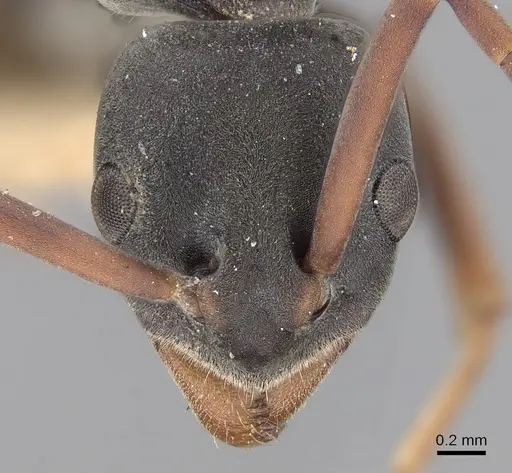
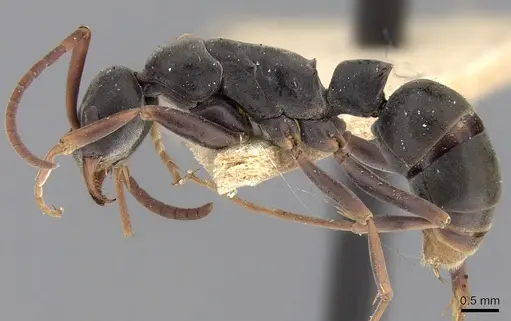
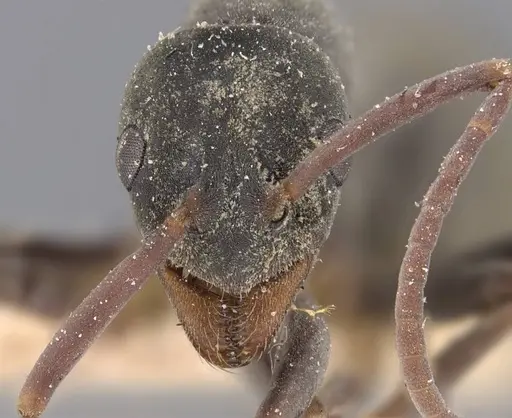
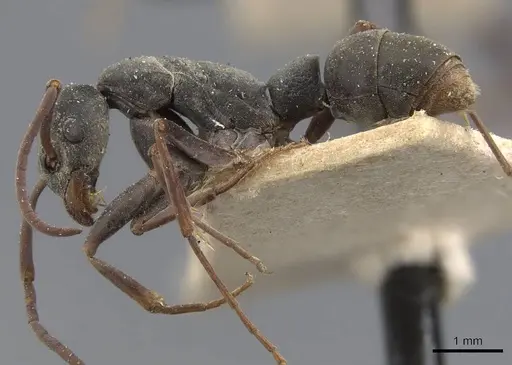
Platythyrea sagei is a medium-sized ponerine ant native to India and possibly Singapore, found in the humid subtropical regions of the Himalayas and Western Ghats. Workers measure 6.5-7.7mm with a distinctive dark brown to blackish-brown coloration, coarse body sculpturing, and a uniquely shaped petiole node that is longer than wide with a notched posterior margin [1][2]. This species is remarkable for being the first in its genus discovered to have ergatoid males, wingless males that actually contribute to colony labor by leaving the nest alongside workers, carrying debris, and moving with the colony [2][3]. The species lacks completely winged queens, making its reproductive system quite unusual among ants [3].
Quick Summary
- Difficulty: Medium
- Origin & Habitat: India (Himachal Pradesh, Karnataka, Maharashtra, Punjab, West Bengal) and possibly Singapore. Found in humid subtropical climate zones at elevations around 940m, nesting in dry soil in acacia plantations, moist and dry deciduous forests, and semi-evergreen forests. Average rainfall of at least 100cm per year [2][3].
- Colony Type: Colony structure is unusual, this species lacks winged queens and features ergatoid (wingless) males that work alongside workers. The reproductive system appears to rely on ergatoid reproductives. Maximum colony size is unconfirmed but estimated at 100-500 workers based on typical Ponerinae patterns.
- Colony: Monogyne
- Size & Growth:
- Queen: This species lacks winged queens, reproduction occurs through ergatoid reproductives. Exact size unconfirmed.
- Worker: 6.5-7.7mm total length, HL 1.66-1.71mm, HW 1.32-1.37mm, WL 2.49-2.60mm [2][1]
- Colony: Unconfirmed, estimated 100-500 workers based on typical Ponerinae colony sizes
- Growth: Moderate, inferred from typical Ponerinae development
- Development: Estimated 8-12 weeks at optimal temperature, based on typical Ponerinae development patterns (Development timeline has not been directly studied for this species. Ponerines generally develop slower than many common ant genera.)
- Antkeeping:
- Temperature: Keep nest area around 22-26°C. This species comes from subtropical humid regions with moderate temperatures, aim for a gentle gradient allowing workers to self-regulate [2].
- Humidity: Maintain moderate to high humidity, their natural habitat receives at least 100cm annual rainfall. Keep substrate consistently moist but not waterlogged, with some drier areas available [2][3].
- Diapause: Likely requires a mild winter rest period (diapause) given their subtropical distribution and presence in Himalayan regions. Reduce temperature to 15-18°C for 2-3 months during winter [2].
- Nesting: Ground-nesting species that prefers dry soil in natural conditions. In captivity, a naturalistic setup with moist soil or a Y-tong/plaster nest works well. They also accept decaying wood substrates, Singapore specimens were found in half-decayed tree trunks [2][4].
- Behavior: These ants are moderately active and show interesting social behavior. Workers are not particularly aggressive but will use their sting defensively. The most notable behavior is the ergatoid males leaving the nest to work alongside workers, carrying debris, this is extremely rare in ants where males typically do not contribute to colony labor [2]. Workers are predatory and have been observed carrying live ant brood (Dorylus orientalis) [2]. Escape prevention should be moderate, they are medium-sized ants but not particularly known as escape artists.
- Common Issues: slow growth compared to common ant species may frustrate beginners, winter diapause requirements are not well understood, colony loss may occur if improper cooling is provided, predatory feeding requirements mean colonies can fail if appropriate live prey is not offered, ergatoid reproductive system is unusual, queen replacement behavior is unstudied and may complicate colony continuity
Housing and Nest Setup
Platythyrea sagei is a ground-nesting ant that in the wild builds nests in dry soil. They've also been found in decaying wood in Singapore, suggesting they can adapt to different substrates [2][4]. For captivity, a naturalistic setup with a soil chamber works well, or you can use a Y-tong/plaster nest with moist substrate. The key is providing a nest area with consistently moist (but not waterlogged) soil or nesting material, connected to a foraging area. Because they come from humid subtropical regions, maintain moderate humidity in the nest. A small water tube or moisture reservoir helps maintain appropriate conditions. These are medium-sized ants, so standard formicarium chambers work fine, no need for the tiny passages needed for smaller species.
Feeding and Diet
Like other Ponerines, Platythyrea sagei is predatory. Workers have been observed carrying live minors of Dorylus orientalis (an army ant species) in the wild, confirming they hunt and consume other ants [2]. In captivity, you should feed them protein-rich foods like small live insects (fruit flies, pinhead crickets, small mealworms) and other small arthropods. Offer prey items roughly every 2-3 days, adjusting based on colony size and consumption. Sugar sources may be accepted but are not a primary food, focus on providing adequate protein. Remove uneaten prey after 24-48 hours to prevent mold issues.
Temperature and Seasonal Care
Keep your colony at room temperature, ideally 22-26°C in the nest area. This species comes from the Himalayan foothills and Western Ghats of India, regions with humid subtropical climates and moderate temperatures [2]. A heating cable on one side of the nest can create a beneficial temperature gradient, allowing workers to self-regulate. During winter, expect to provide a mild diapause period, reduce temperatures to around 15-18°C for 2-3 months, mimicking the cooler winter conditions in their native range. This winter rest is important for colony health and may trigger reproductive behavior in spring. Do not cool them suddenly, reduce temperature gradually over 2-3 weeks.
The Unique Ergatoid Males
This species is famous for having the first discovered ergatoid male in the genus Platythyrea, and possibly the first documented case of male labor contribution in ants [2][3]. Unlike typical ant males that stay in the nest and do nothing, these ergatoid males actually leave the nest alongside workers. They've been observed carrying debris (possibly vegetative material) and moving with foragers. Males are slightly smaller than workers (7.31mm vs 7.68mm average), more slender, move less aggressively, and lack a sting [2]. This is an extraordinary case of male participation in colony welfare, something almost never seen in ants. If your colony produces males, observe them carefully, you may witness this rare behavior yourself.
Reproduction and Colony Growth
Unlike most ants, Platythyrea sagei lacks completely winged queens. Reproduction appears to occur through ergatoid reproductives, wingless individuals that can reproduce without dispersing to mate in flight [3]. This makes their mating behavior unusual and unstudied. Colony growth is likely moderate, Ponerines typically grow more slowly than common genera like Camponotus or Lasius. Expect 8-12 weeks from egg to first worker at optimal temperatures. Colonies likely reach several hundred workers at maturity, though exact maximum size is unknown. Be patient with these ants, they won't grow as fast as more common species, but their fascinating social structure makes up for the wait.
Defense and Handling
Workers possess a functional sting and will use it defensively when threatened. While not aggressive toward humans, they can deliver a painful sting if handled roughly or if their nest is disturbed. The ergatoid males notably lack a sting entirely [5]. For antkeeping, use standard precautions, avoid handling directly with bare hands, and use gentle techniques when moving colonies or cleaning nests. Escape prevention is important but these are medium-sized ants without exceptional escape abilities, standard barriers work fine. Their predatory nature means they'll readily attack and subdue small prey items.
Frequently Asked Questions
How long does it take for Platythyrea sagei to produce first workers?
The exact timeline is unconfirmed, but based on typical Ponerinae development, expect 8-12 weeks from egg to first worker at optimal temperatures (around 24°C). Ponerines develop more slowly than many common ant genera, so patience is required.
What makes Platythyrea sagei special compared to other ants?
This species has the first discovered ergatoid male in the genus Platythyrea, and one of the few documented cases of male ants contributing to colony labor. The males leave the nest alongside workers and carry debris, which is extremely rare in ants where males typically do nothing.
Can I keep multiple queens together in one colony?
The colony structure is not fully confirmed, but this species lacks winged queens and appears to reproduce through ergatoid reproductives. Combining unrelated foundresses has not been documented and is not recommended.
What do Platythyrea sagei eat?
They are predatory Ponerines. Feed small live insects like fruit flies, pinhead crickets, and small mealworms. They've been observed hunting and consuming other ant brood in the wild. Offer protein every 2-3 days and remove uneaten prey promptly.
Do Platythyrea sagei need hibernation?
Likely yes, they come from Himalayan regions with distinct seasons. Provide a mild winter rest at 15-18°C for 2-3 months during winter. Reduce temperature gradually over 2-3 weeks.
Is Platythyrea sagei good for beginners?
This species is rated as Medium difficulty. While not impossible for beginners, their slower growth, specific temperature needs, and predatory diet require more experience than species like Lasius or Tetramorium. They're best suited for antkeepers with some prior experience.
How big do Platythyrea sagei colonies get?
Maximum colony size is unconfirmed but estimated at 100-500 workers based on typical Ponerinae patterns. Growth is moderate and colonies will take time to reach maturity.
Why are the males different in this species?
Platythyrea sagei has ergatoid males, wingless males that actually work. This is extremely rare in ants. The males are smaller than workers, lack a sting, and have been observed leaving the nest to carry debris alongside workers. This was the first ergatoid male ever discovered in the genus Platythyrea.
References

This caresheet is licensed under CC BY-SA 4.0 .
CASENT0281864
View on AntWeb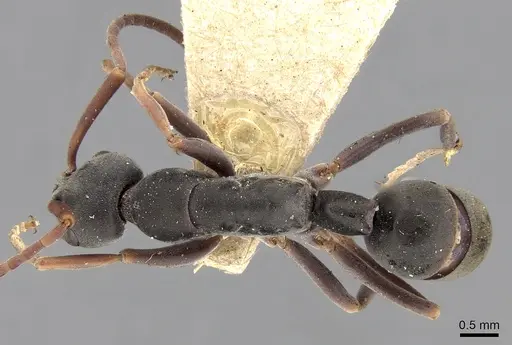
CASENT0907117
View on AntWeb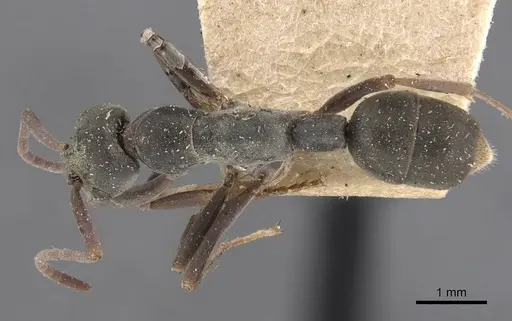
Literature
Loading...Loading products...