

Plagiolepis xene
- Scientific Name
- Plagiolepis xene
- Tribe
- Plagiolepidini
- Subfamily
- Formicinae
- Author
- Stärcke, 1936
- Distribution
- Found in 8 countries
Plagiolepis xene Overview
Plagiolepis xene is an ant species of the genus Plagiolepis. It is primarily documented in 8 countries , including Switzerland, Spain, France. Detailed taxonomic data and occurrence records can be further explored via authoritative databases such as AntWeb or the Global Biodiversity Information Facility (GBIF).
Plagiolepis xene
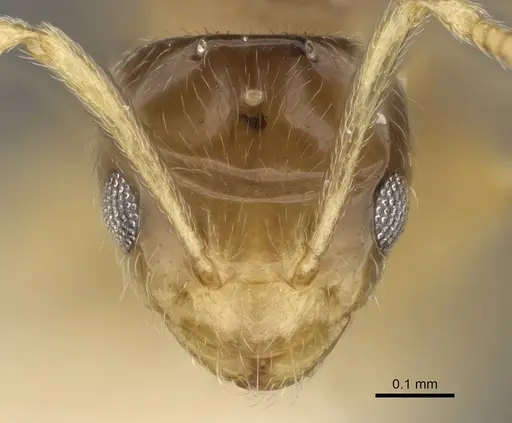
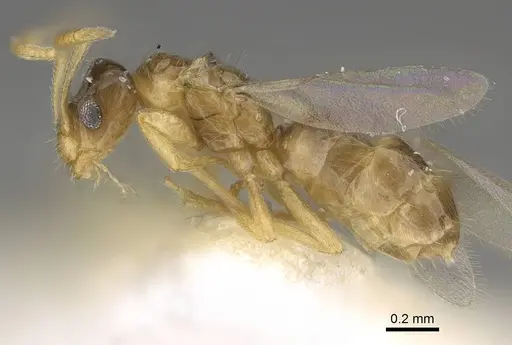
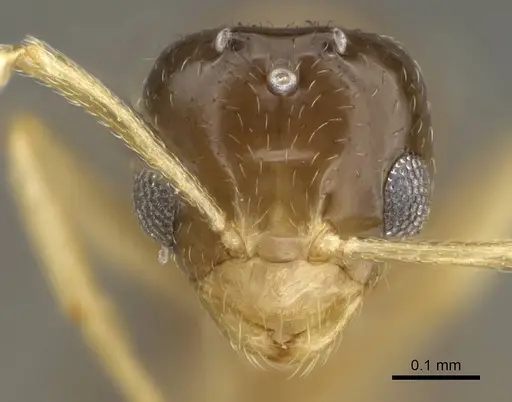
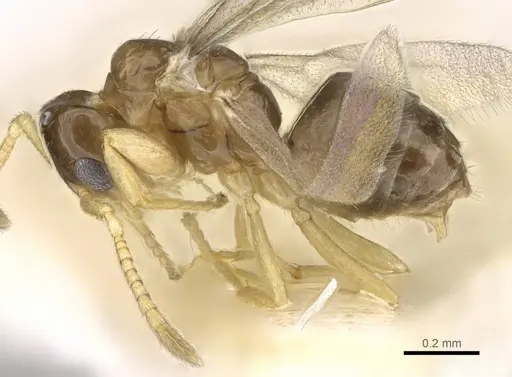
Plagiolepis xene is one of the smallest ants, with queens about 1.2 mm long [1]. This yellow-brown ant is a workerless social parasite that depends entirely on its host, Plagiolepis pygmaea, for survival [2]. Queens are globular and compact [3], and males are wingless and similar in size [4]. The species is found across southern and central Europe to Turkey, living in coniferous and deciduous forests at elevations of 311-770 m in Greece [5][6].
Quick Summary
- Difficulty: Expert
- Origin & Habitat: Mediterranean and central European regions. Found in coniferous and deciduous forests at elevations of 311-770 m in Greece [5]. Lives as an inquiline in nests of Plagiolepis pygmaea and occasionally Plagiolepis taurica [7].
- Colony Type: Workerless inquiline parasite. Colonies are polygynous with up to 100 parasite queens per host nest [8]. No workers exist, the species produces only male and female sexual offspring [2].
- Size & Growth:
- Queen:{.size-link} About 1.2 mm [1]
- Worker:{.size-link} Workerless, no workers exist [4]
- Colony: Up to 100 parasite queens per host colony [8]
- Growth: Slow, through host colony budding [9]
- Development: Not applicable, workerless species produces no workers (Only sexuals (males and females) are produced and raised by host workers.)
- Antkeeping:
- Temperature: Unknown, follow host colony conditions, typically Mediterranean around 20-25°C [5]
- Humidity: Unknown, follow host preferences for moderate humidity [5]
- Diapause: Yes, based on host species requiring winter rest in temperate regions [5]
- Nesting: Must be kept within a host Plagiolepis pygmaea nest [7].
- Behavior: Completely dependent on host workers for food and care. Queens eat host eggs, reducing host colony productivity [2]. Mating occurs inside the nest among related individuals with no mating flight [9]. Males are wingless, and dispersal happens through budding when host colonies reproduce [9].
- Common Issues: extremely difficult to establish, requires successful integration into an established P. pygmaea colony., host workers may reject or kill parasite queens if integration fails., queens eating host eggs can weaken or kill the host colony over time., less than 1% of wild host colonies are parasitized, indicating high rejection rates [9]., cannot survive without a host, will die without P. pygmaea workers.
Understanding Plagiolepis xene
Plagiolepis xene is not a typical ant, it is an obligate social parasite that has completely lost its worker caste [2]. This means there are no workers to forage, care for brood, or defend the colony. The queens cannot survive without host workers from Plagiolepis pygmaea [7]. The parasite queens are tiny, measuring about 1.2 mm, making them among the smallest ants [1]. They are yellowish to light brown with a globular, compact body shape [3]. Males are equally small and wingless, resembling dealate females closely [4]. This species produces exclusively male and female sexual offspring, no workers are ever produced [2].
Host Species Requirements
Plagiolepis xene requires Plagiolepis pygmaea as its host species to survive [7]. Occasionally it has been found with Plagiolepis taurica as the host [10]. The parasite queens live within the host nest and are entirely dependent on host workers for food and brood care [2]. This means you cannot keep P. xene as a standalone colony, you must first establish a healthy P. pygmaea colony and then introduce the parasite queens [9]. The host workers raise the parasite brood as if it were their own, showing remarkable tolerance [11]. However, the parasite queens eat host eggs, which significantly reduces the productivity of host colonies [2].
Why This Species Is Not Recommended for Most Antkeepers
Plagiolepis xene is not suitable for typical ant keeping for several reasons. First, it cannot survive without a host colony, the parasite queens have no workers to care for them and cannot forage for food [4]. Second, establishing a mixed colony is extremely difficult, laboratory attempts to introduce mated parasite queens into unparasitized P. pygmaea colonies have consistently failed [9]. Third, even if you successfully introduce parasites, they may be killed by host workers. Fourth, the parasite queens eat host eggs, which can weaken and eventually kill your host colony [2]. Finally, this species is extremely rare in the wild (less than 1% of host colonies are parasitized) and collecting them would be ethically questionable [9].
Reproduction and Dispersal
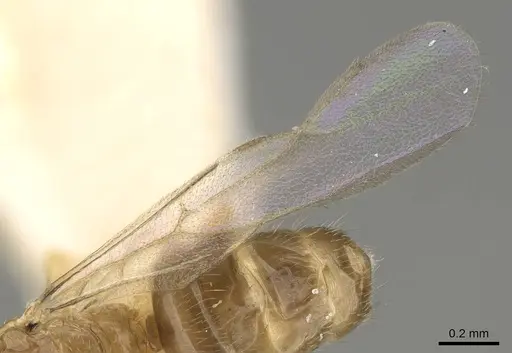
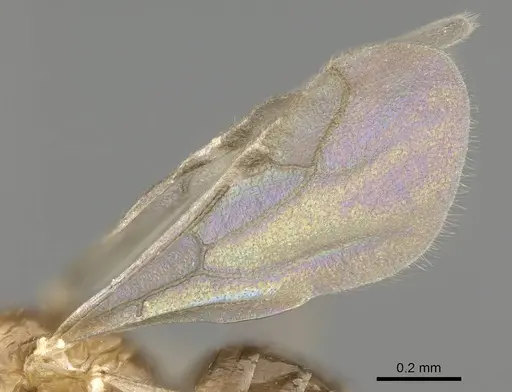
The reproductive biology of P. xene is unusual. Mating occurs inside the nest among related individuals, there is no mating flight [9]. Males are completely wingless and cannot fly to find mates [9]. Females may have fully developed wings, reduced wings, or be completely wingless, wing development is highly variable [4]. Dispersal occurs through budding: when the host colony reproduces and produces new nests, some parasite queens leave with the host workers and queens to colonize the new nest [9]. Colonies are highly polygynous, with up to 100 or more parasite queens in a single parasitized host colony [8]. The sex ratio is female-biased [11]. Populations are highly inbred due to restricted dispersal and mating among related individuals [9].
Legal and Ethical Considerations
Before considering any attempt to keep Plagiolepis xene, research local regulations. This species is protected or considered rare in some European countries [12]. Because it is so rare in the wild (less than 1% of host colonies are parasitized), collecting wild colonies would be ecologically harmful [9]. The species is genetically vulnerable due to its rarity and fragmented distribution [12]. Rather than attempting to keep this species, antkeepers interested in social parasitism should study scientific literature or observe wild interactions.
Frequently Asked Questions
Can I keep Plagiolepis xene as a pet ant?
No. Plagiolepis xene is an obligate social parasite that cannot survive without a host Plagiolepis pygmaea colony [2]. It has no workers and cannot care for itself. Even if you establish a host colony, introducing the parasite is extremely difficult and most attempts fail [9]. This species is not suitable for typical ant keeping.
How do I start a Plagiolepis xene colony?
You cannot start an independent P. xene colony. You would need to first establish a healthy Plagiolepis pygmaea colony, then attempt to introduce parasite queens [9]. Laboratory attempts at this integration have consistently failed, so success in captivity is extremely unlikely. Additionally, collecting wild parasites would be ecologically harmful given their rarity [9].
What do Plagiolepis xene eat?
P. xene queens cannot forage for food. They are fed by host workers and also eat host eggs directly, which reduces host colony productivity [2]. The host workers provide food through trophallaxis and care for the parasite brood.
Do Plagiolepis xene workers exist?
No. Plagiolepis xene has completely lost the worker caste through evolution [2]. The species produces only male and female sexual offspring, no workers are ever produced. This is an obligate workerless inquiline that depends entirely on host workers for survival.
How big do Plagiolepis xene colonies get?
Colonies can contain up to 100 or more parasite queens within a single parasitized host nest [8]. However, no workers are produced, only males and females. The host colony size determines the overall combined population.
Where does Plagiolepis xene live?
Plagiolepis xene is found across southern and central Europe to Turkey, including countries like France, Spain, Italy, Greece, and Hungary [6]. It lives exclusively in nests of its host species Plagiolepis pygmaea, and occasionally P. vindobonensis [7].
Is Plagiolepis xene dangerous?
No. P. xene is completely harmless, it has no workers, no sting, and cannot defend itself. It is entirely dependent on its host colony for survival. The most 'dangerous' aspect is that parasite queens eat host eggs, which can weaken the host colony over time [2].
Do Plagiolepis xene need hibernation?
P. xene would follow the dormancy patterns of its host Plagiolepis pygmaea, which likely requires a winter rest period in temperate regions [5]. However, since this species cannot be kept independently, hibernation requirements are not applicable to captive care.
How do Plagiolepis xene spread to new areas?
P. xene disperses through budding, when the host colony reproduces and establishes a new nest, parasite queens accompany the host workers and queens [9]. Males are wingless so they cannot fly to new areas. This dependence on host dispersal severely limits the parasite's ability to colonize new areas.
Why is Plagiolepis xene so rare?
P. xene is rare because it is highly specialized and faces significant challenges: host colonies must accept the parasites (most reject them), the parasite queens eat host eggs which can kill the host colony, and dispersal is extremely limited since males cannot fly [9][12]. Less than 1% of wild host colonies are parasitized, and populations are highly inbred and genetically vulnerable.
Report an Issue
The current care sheet is based fully on literature. See inconsistencies, or something that's incorrect? Please , it will be resolved after review from an admin. Contributing to the blogs tab also helps providing information, to make us be able to further improve the caresheets. Thank you for your support!
References

This caresheet is licensed under CC BY-SA 4.0 .
KG01248B-2
View on AntWeb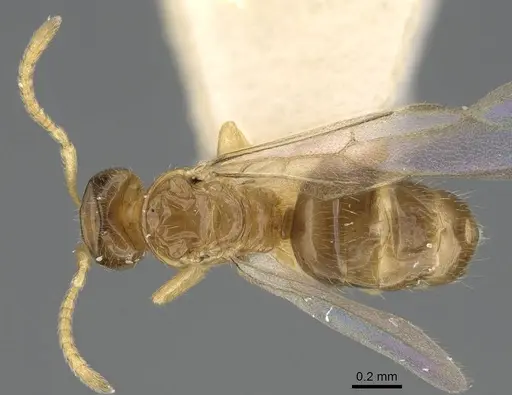
KG01248B-3
View on AntWeb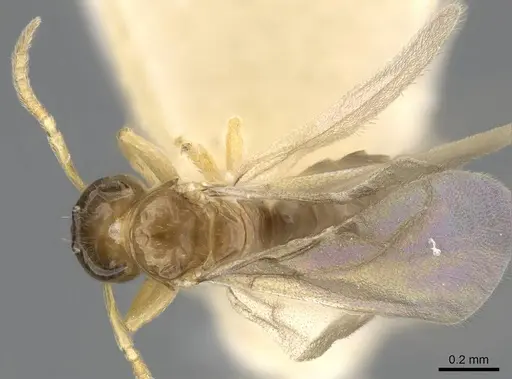
Literature
Loading...Loading products...