Polyrhachis epinotalis - "None commonly used, sometimes referred to as a type of Spiny Ant or Golden Ant."
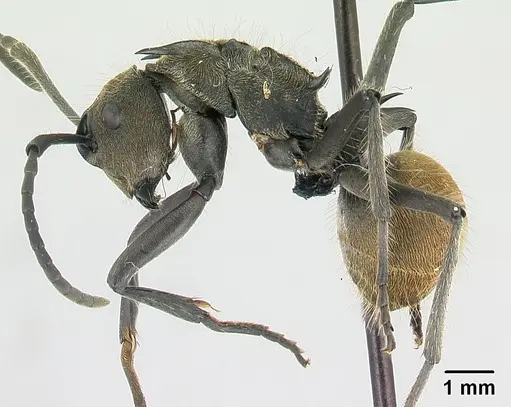
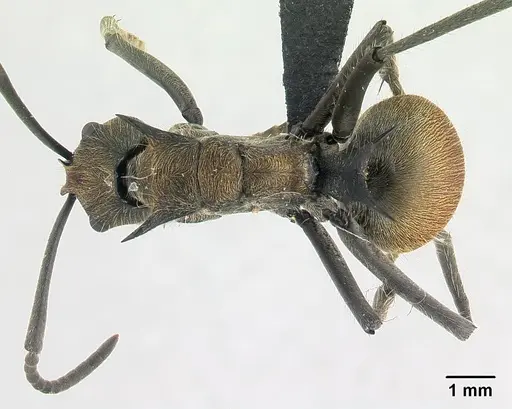
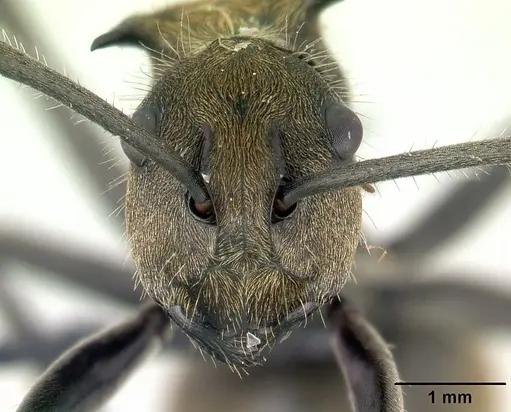
Polyrhachis epinotalis is a captivating, large ant species belonging to the 'militaris' group. These ants are notable for their slender bodies and distinctly oval-shaped heads, which appear wider at the front and gently narrow towards the rear. Their most striking feature is the abundant, long, golden hairs (pubescence) that cover their mostly black bodies, often giving them a metallic or shimmering appearance. They possess prominent, strongly convex eyes. The mesosoma, or middle body section, is often bordered with a flange-like margin, and they sport long, sharp pronotal spines. A key identifying characteristic is their long, upturned, spine-like propodeal teeth, which in profile, are nearly as tall as the propodeal declivity itself. Their petiole, the waist segment, is armed with four sharp spines, with the top pair being notably longer than the side pair.
- Difficulty: Medium
- Origin & Habitat: Afrotropical Region, including Central African Republic, Democratic Republic of Congo (type locality), Equatorial Guinea, Gabon, Kenya, Rwanda, Uganda, and Zambia. in Within the broader Polyrhachis genus, species inhabit diverse environments ranging from tropical rainforests to drier regions and even mangroves. Specific habitat details for P. epinotalis beyond its geographic distribution are not extensively documented, but it is known to co-occur with P. militaris, suggesting adaptability across certain African landscapes..
- Colony Type: Polygyne (multiple queens), claustral (queen seals herself in) founding.
- Size & Growth:
- Queen: 12-15mm
- Worker: 8-12mm
- Colony: Medium (thousands) to Large (tens of thousands). Fast growth.
- Antkeeping:
- Temperature: Maintain a temperature range between 25°C and 30°C for optimal colony development. An ideal temperature is around 27-29°C. Consistent warmth aids in faster brood development and overall colony health..
- Humidity: A humidity level of 50-75% is generally recommended within the nest area. For the outworld, a similar range of 50-80% humidity can be provided. Ensure good ventilation to prevent mold growth, especially in higher humidity setups..
- Diapause: Not required. Not specified at Not specified.
- Nesting: While specific nesting preferences for P. epinotalis are not documented, many Polyrhachis species are arboreal, nesting within wood or constructing intricate nests from debris and larval silk. Given this, suitable setups could include naturalistic formicaria with wood elements, bamboo, or even weaving setups for larger colonies. Acrylic or ytong nests with good hydration systems are also viable, ensuring enough space for growth and activity..
- Behavior: Medium (defensive, sprays formic acid) aggressiveness.
- Common Issues: Humidity fluctuations, Lack of proper ventilation leading to mold, Stress due to vibrations or excessive light, Inadequate space as colony grows, Difficulty with proper diet balance.
One of the most intriguing aspects of Polyrhachis epinotalis is the limited information available on its specific biology and behavior in the wild. While general characteristics of the genus Polyrhachis are known, detailed observations about P. epinotalis's nesting habits, foraging strategies, or social structures are largely unrecorded. This presents a unique opportunity for dedicated antkeepers to contribute to our understanding of this species through careful observation and documentation within a captive setup. Treat their care with the understanding that some parameters are based on the broader genus.
Polyrhachis ants, including likely P. epinotalis, do not possess a traditional sting. Instead, they rely on spraying formic acid as a primary defense mechanism. When provoked or threatened, they will often combine this acid spray with biting to deter predators or rivals. This unique defense means handlers should exercise caution, as direct contact with the formic acid can cause irritation. Always ensure proper ventilation in your ant setup to disperse any accumulated fumes, and avoid close proximity when disturbing the colony.
The distinctive golden pubescence covering the black integument of Polyrhachis epinotalis workers is a true visual highlight for any antkeeping enthusiast. This dense layer of hairs gives the ants a striking metallic sheen, making them a beautiful addition to any collection. The color intensity can vary slightly among individuals, adding to their natural charm. Providing a clean and well-maintained environment will help preserve their vibrant appearance.
When setting up a formicarium for Polyrhachis epinotalis, consider their potential arboreal tendencies, which are common within the genus. While not explicitly confirmed for this species, incorporating climbing structures like cork bark, twigs, or small branches in the outworld can encourage natural foraging behaviors and provide additional enrichment. If they prove to be weavers, offering fine substrate like hemp fiber or coco fiber can facilitate their nest construction, allowing them to create intricate, silken structures.
Despite being a 'large species' within its group, colonies of Polyrhachis epinotalis are expected to grow at a fast rate under optimal conditions. This rapid development means that keepers should plan for adequate space and resources as the colony expands. Frequent feeding and consistent environmental parameters will support robust growth. Monitoring their activity and brood production will give you insights into their overall health and development speed.
Frequently Asked Questions
What makes Polyrhachis epinotalis stand out visually?
Polyrhachis epinotalis boasts a stunning appearance, primarily due to its abundant, long, golden pubescence that largely conceals its black body. This gives the ants a unique, shimmering metallic look. They also have distinct oval heads and long, upturned spines on their propodeum and petiole, which contribute to their intricate morphology.
Are Polyrhachis epinotalis difficult to keep for a beginner antkeeper?
Keeping Polyrhachis epinotalis is rated as 'Medium' difficulty. While they don't have extremely complex requirements, the limited specific biological information for this exact species means keepers should be comfortable adapting care based on general Polyrhachis genus knowledge and closely observing their colony.
Do Polyrhachis epinotalis sting?
No, Polyrhachis epinotalis do not sting. Like other ants in the Formicinae subfamily, they defend themselves by spraying formic acid from their acidopore. They may also bite in conjunction with spraying the acid.
What is the best type of nest for Polyrhachis epinotalis?
Given that many Polyrhachis species are arboreal and some are known for weaving nests, a naturalistic setup with climbing elements like cork bark, twigs, or even dedicated weaving setups could be ideal for larger colonies. Standard acrylic or ytong nests with good hydration are also suitable, especially for smaller colonies, as long as they provide ample space and ventilation.
What should I feed my Polyrhachis epinotalis colony?
As omnivores typical of the genus, Polyrhachis epinotalis should be fed a varied diet. This includes insect protein such as fruit flies, small crickets, or chopped mealworms, and sugary liquids like honey water, sugar water, or specialized ant nectars. Ensure a consistent supply of both for optimal colony health and growth.
Do Polyrhachis epinotalis queens need a diapause or hibernation period?
Mandatory diapause is generally not required for Polyrhachis epinotalis, similar to other tropical Polyrhachis species. However, if you observe a noticeable slowdown in egg-laying during cooler periods, a slight temperature drop might be considered to allow the queen to rest, though it's not a strict hibernation.
How large can a Polyrhachis epinotalis colony get?
While specific numbers for P. epinotalis are not documented, other Polyrhachis species can reach significant colony sizes, ranging from thousands to tens of thousands of workers. Given P. epinotalis is a 'large species' with a 'Fast' growth rate, anticipate your colony potentially growing into the thousands or even tens of thousands over time.
What are the ideal temperature and humidity levels for Polyrhachis epinotalis?
Maintain nest temperatures between 25°C and 30°C, with an optimal range of 27-29°C. Humidity within the nest should ideally be kept between 50% and 75%. For the outworld, a similar humidity of 50-80% is suitable. Proper ventilation is key to balancing humidity and preventing mold.
Is Polyrhachis epinotalis a weaving ant species?
While the genus Polyrhachis includes many renowned weaving ant species that utilize larval silk to construct nests from debris, it has not been specifically reported that Polyrhachis epinotalis exhibits this behavior. The biology of P. epinotalis is not well-documented.
What is the typical size of a Polyrhachis epinotalis queen and worker?
Polyrhachis epinotalis workers are generally large, ranging from 8mm to 12mm in length. The queen, being larger than the workers, typically measures between 12mm and 15mm. These sizes contribute to their impressive appearance in a captive setup.