

Pheidole tachigaliae
- Scientific Name
- Pheidole tachigaliae
- Tribe
- Attini
- Subfamily
- Myrmicinae
- Author
- Wheeler, 1921
- Distribution
- Found in 2 countries
Pheidole tachigaliae Overview
Pheidole tachigaliae is an ant species of the genus Pheidole. It is primarily documented in 2 countries , including French Guiana, Guyana. Detailed taxonomic data and occurrence records can be further explored via authoritative databases such as AntWeb or the Global Biodiversity Information Facility (GBIF).
Pheidole tachigaliae
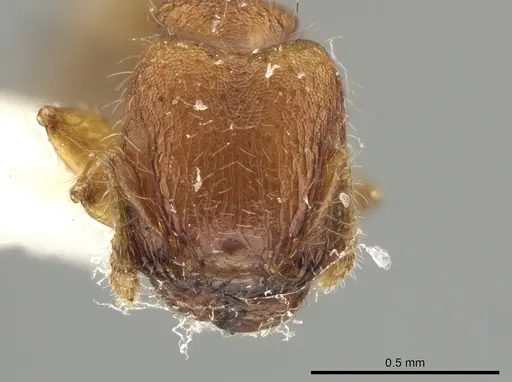
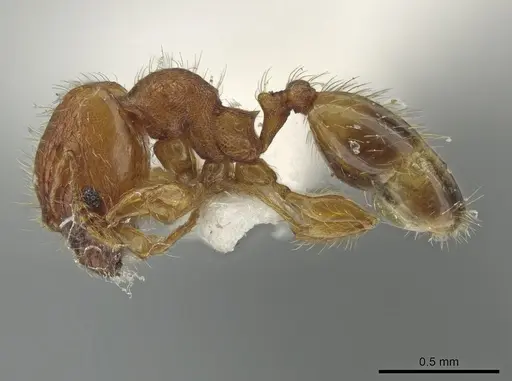
Pheidole tachigaliae is a tiny Neotropical ant species native to Guyana and French Guiana. Majors measure just 0.64mm in head width with workers at 0.34mm, among the smallest Pheidole species. The species gets its name from its unique nesting habit: it lives inside the hollow leaf stalks (petioles) of Tachigalia trees, a genus of ant-plants. This makes it one of the few ants that lives directly inside living plant structures rather than in soil or rotting wood. The ants are yellow-orange in color, with majors having a distinctive brown spot on the back of their head. A key identification trait is their 11-segmented antennae, which is unusual for the genus [1][2].
Quick Summary
- Difficulty: Medium
- Origin & Habitat: Found in the Neotropical region of South America, specifically Guyana and French Guiana. These ants live inside the hollow petioles (leaf stalks) of Tachigalia trees, which are ant-plants that provide shelter in exchange for protection [2].
- Colony Type: Colony structure is unconfirmed. Based on typical Pheidole patterns, likely single-queen colonies (monogyne), though this has not been directly documented.
- Size & Growth:
- Queen: Unconfirmed, no queen measurements in available literature
- Worker: Major: 0.64mm HW, Minor: 0.34mm HW [1]
- Colony: Unknown, no colony size data available
- Growth: Unknown, no development data for this species
- Development: Unknown, no direct measurements. Based on typical Pheidole patterns and their tiny size, expect 4-8 weeks at warm temperatures. Related small tropical Pheidole species typically develop faster than temperate species. (Development timeline is unconfirmed for this species. Estimates based on genus-level patterns.)
- Antkeeping:
- Temperature: Keep at 24-28°C. As a tropical species from Guyana/French Guiana, they need warm conditions. A heating cable on one side of the nest creates a suitable gradient.
- Humidity: Moderate to high humidity. In nature they live inside plant stems which likely maintain consistent moisture. Keep nest substrate lightly moist but not waterlogged.
- Diapause: Unknown, tropical species may not require formal hibernation, but may slow down during cooler periods.
- Nesting: This species is specialized for living in narrow plant stems. In captivity, a Y-tong (AAC) nest with narrow chambers or a small acrylic nest works well. The key is providing tight, appropriately-sized passages matching their tiny body size. Avoid large open spaces.
- Behavior: These are tiny, peaceful ants. Pheidole species are not aggressive and rarely sting. Their main defense is escaping into small crevices. Major workers have slightly larger heads for seed-processing but are not combat-focused. Because of their very small size, escape prevention is critical, they can squeeze through the tiniest gaps. Use fine mesh barriers and tight-fitting lids.
- Common Issues: tiny size means escapes are likely without fine mesh barriers, no colony size data available, growth expectations are uncertain, nesting in plant stems is unusual, may not accept typical soil nests, humidity requirements are not well documented, monitor for drying, no documented founding behavior, claustral vs semi-claustrl unknown
Housing and Nest Preferences
Pheidole tachigaliae presents a unique challenge because in the wild they live inside hollow plant stems, specifically the petioles (leaf stalks) of Tachigalia trees. This is unusual ant behavior, as most Pheidole nest in soil or rotting wood. In captivity, you'll need to replicate these tight, enclosed spaces. A Y-tong (AAC) nest with narrow chambers works well, or a small acrylic formicarium with appropriately-sized tunnels. The passages should be tight enough that the tiny workers can walk comfortably but not so large they feel exposed. Test tube setups may work for founding colonies if the tubes are small and the cotton is snug. Avoid naturalistic setups with large open spaces, these ants are adapted to confined plant stems, not open terrain. [1][2]
Feeding and Diet
As a member of the tribe Attini (the leafcutter ant tribe), Pheidole species are typically seed-eaters and generalists. However, P. tachigaliae is unusual in its plant-stem nesting habit. Feed them a standard Pheidole diet: small seeds (millet, sesame, broken sunflower seeds) for the majors to process, plus protein sources like small insects (fruit flies, pinhead crickets, mealworms). Sugar water or honey can be offered occasionally. Given their tiny size, prey items should be appropriately small. Feed seeds constantly available and protein 2-3 times per week. Remove uneaten food promptly to prevent mold.
Temperature and Heating
Being a tropical species from Guyana and French Guiana, these ants need warm conditions. Maintain nest temperatures between 24-28°C. Below 24°C, their metabolism slows significantly. Use a heating cable or heating mat on one side of the nest to create a gentle temperature gradient, allowing the ants to self-regulate. Place the heating on top of the nest, not underneath, to avoid drying out the substrate. Room temperature may be acceptable if your home stays in the mid-to-high 20s°C, but monitor colony activity, if workers seem sluggish, add gentle heating.
Escape Prevention
This is critical for this species. At just 0.34mm for minor workers, they are extremely small and can escape through gaps that seem impossibly tight. Use only fine mesh (at least 0.5mm or finer) on any ventilation holes. Ensure all lid seams are tight. Apply fluon or similar barrier gel to the edges of any opening. Check for gaps every few days, especially with test tube setups where the cotton can compress over time. A single overlooked gap will result in an escaped colony within hours.
Understanding Their Unique Biology
Pheidole tachigaliae stands out among ants because of its relationship with Tachigalia trees, a classic ant-plant. The tree provides hollow stems for nesting, while the ants presumably provide protection against herbivores. This is different from typical myrmecophytes (ant-plants) because the ants actually live inside the living plant tissue, not in pre-formed domatia. The species also has an unusual 11-segmented antennae, compared to the typical 12 segments in most Pheidole. The majors have longitudinal carinae (ridges) on their head, which helps distinguish them from related species. This specialized lifestyle suggests the ants prefer enclosed, humid microenvironments, important context for captive care. [1]
Frequently Asked Questions
How long does it take for Pheidole tachigaliae to produce first workers?
The egg-to-worker timeline is unconfirmed for this species. Based on typical small tropical Pheidole patterns, expect approximately 4-8 weeks at optimal warm temperatures (24-28°C). Their tiny size may result in faster development compared to larger Pheidole species.
Can I keep Pheidole tachigaliae in a test tube?
Yes, test tubes can work for founding colonies. Use a small-diameter tube (like standard 9mm or 12mm test tubes) with a snug cotton stop. The key is ensuring the chamber is appropriately sized for their tiny body, large water reservoirs are not needed. Monitor humidity closely as test tubes can dry out or flood.
What do Pheidole tachigaliae ants eat?
Feed them small seeds (millet, sesame, cracked sunflower) plus small protein sources like fruit flies, pinhead crickets, or tiny mealworms. Sugar water or honey can be offered occasionally. Their small size means prey items should be appropriately tiny.
Are Pheidole tachigaliae good for beginners?
This species is rated as Medium difficulty. While Pheidole in general are beginner-friendly, this particular species has unusual nesting requirements (plant-stem specialists) and escape risk due to their tiny size. Some experience with antkeeping is helpful.
How big do Pheidole tachigaliae colonies get?
Colony size is unknown, no published colony size data exists for this species. Based on typical Pheidole patterns and their very small worker size, colonies likely reach several hundred workers at most, not the thousands seen in some larger Pheidole species.
Do Pheidole tachigaliae need hibernation?
Being a tropical species from Guyana/French Guiana, formal hibernation is likely not required. They may slow down slightly during cooler periods, but maintaining warm temperatures (24-28°C) year-round is probably best.
When should I move Pheidole tachigaliae to a formicarium?
Move from test tube to a proper nest once the colony reaches 20-30 workers and the test tube shows signs of stress (condensation issues, mold, or degradation). The transition should be gradual, place the formicarium near the test tube and let them move on their own.
Why are my Pheidole tachigaliae escaping?
Their tiny size (0.34mm workers) means they can escape through almost any gap. Check all mesh, lid seams, and barrier applications. Even a hairline crack is enough. Use fine mesh (0.5mm or finer) and apply fluon to all edges. Inspect daily.
Can I keep multiple queens together?
This has not been documented for this species. Pheidole are typically single-queen (monogyne), though some species can found colonies together initially. Without specific data, keeping one queen per colony is the safest approach.
References

This caresheet is licensed under CC BY-SA 4.0 .
CASENT0639443
View on AntWeb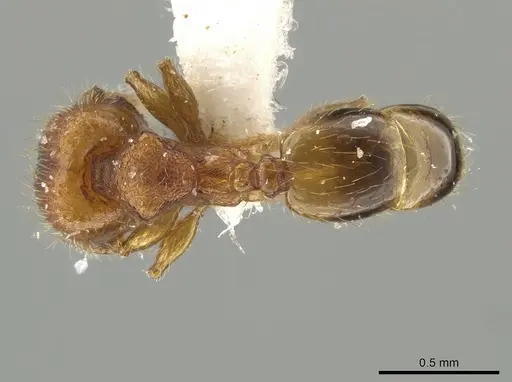
Literature
Loading...Loading products...