

Pheidole rufipilis
- Scientific Name
- Pheidole rufipilis
- Tribe
- Attini
- Subfamily
- Myrmicinae
- Author
- Forel, 1908
- Distribution
- Found in 1 countries
Pheidole rufipilis Overview
Pheidole rufipilis is an ant species of the genus Pheidole. It is primarily documented in 1 countries , including Brazil. Detailed taxonomic data and occurrence records can be further explored via authoritative databases such as AntWeb or the Global Biodiversity Information Facility (GBIF).
Pheidole rufipilis
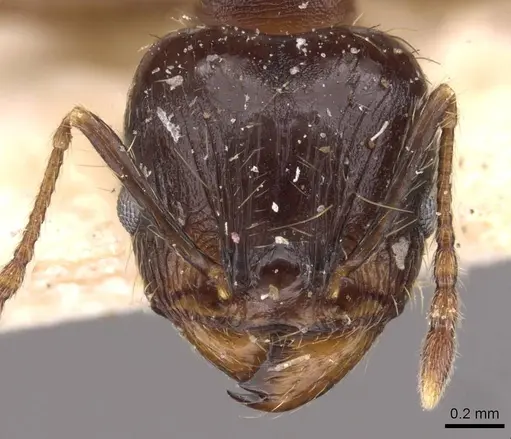
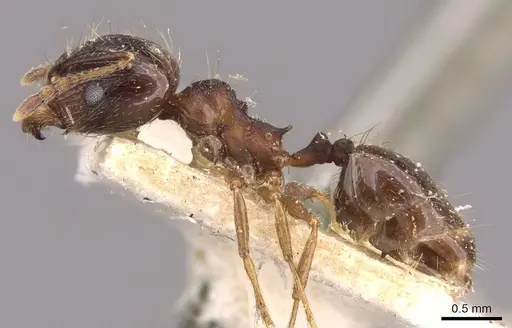
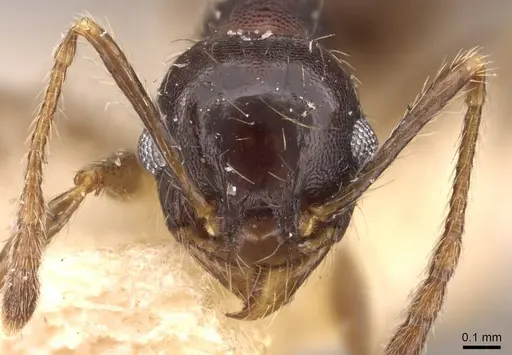
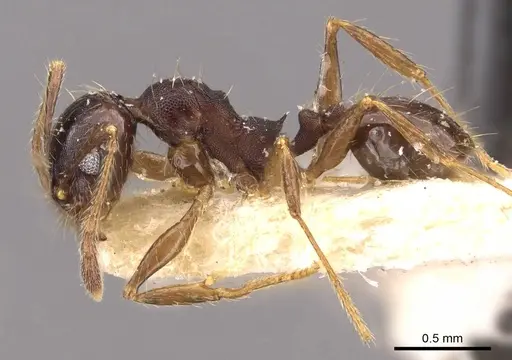
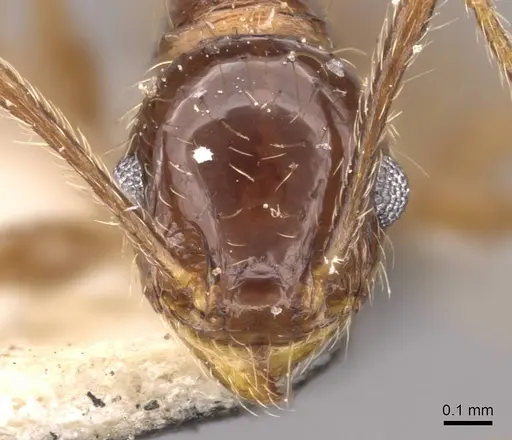
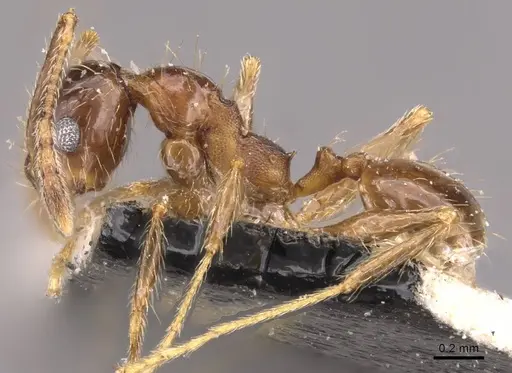
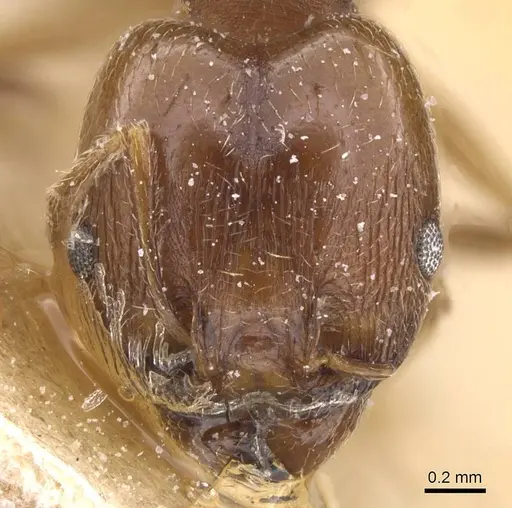
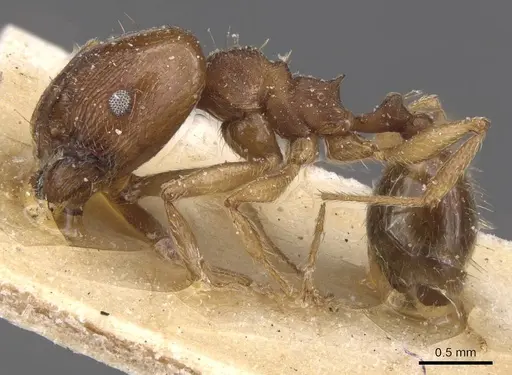
Pheidole rufipilis is a small ant species native to southeastern Brazil and surrounding regions. Majors measure around 1.12mm in head width, while minors are much smaller at roughly 0.64mm [1]. The species gets its name 'rufipilis' meaning 'red hair' from the pale yellow hairs covering its body [1]. Majors have a distinctive patch of ridged texture near the middle of their antennal socket, while the entire upper body surface appears dimpled and matte. Minors are uniformly brown with slightly lighter yellowish-brown legs and antennae [1]. This species is part of the Pheidolini tribe within Myrmicinae and is found across Brazil's Atlantic coast regions including São Paulo, Minas Gerais, and Rio de Janeiro, with records extending to Uruguay and Paraguay [1]. Nothing is known about the biology of this species in the wild [2].
Quick Summary
- Difficulty: Unknown, species has never been kept in captivity
- Origin & Habitat: Southeastern Brazil (São Paulo, Minas Gerais, Rio de Janeiro), also Uruguay and Paraguay. Found in Cerrado habitat and seasonally dry tropical forests [3][2].
- Colony Type: Unconfirmed, typical for genus suggests single-queen colonies, but no specific data for this species
- Colony: Monogyne
- Founding: Claustral
- Size & Growth:
- Queen: Unknown for this species, related Pheidole typically 4-7mm
- Worker: Minor: 0.64mm HW, Major: 1.12mm HW [1]
- Colony: Unknown, typical Pheidole colonies reach hundreds to low thousands
- Growth: Unknown
- Development: Unknown, estimated 4-8 weeks based on typical tropical Pheidole (No direct data exists for this species. Estimates based on genus-level patterns for tropical Pheidole species.)
- Antkeeping:
- Temperature: Keep around 22-26°C, this matches their tropical Brazilian origin. Room temperature is likely suitable for most keepers.
- Humidity: Moderate to high, aim for 60-80% humidity. Provide a moist nest area but allow some drier zones for the ants to self-regulate.
- Diapause: Unlikely, as a tropical species from southeastern Brazil, they probably do not require true hibernation. They may show reduced activity during cooler months.
- Nesting: In nature they likely nest in soil or rotting wood. In captivity, standard test tubes, Y-tong nests, or plaster nests work well for Pheidole. Keep the nest moderately moist.
- Behavior: Pheidole species are generally non-aggressive and focused on seed harvesting and small prey collection. They are not known for stinging, majors may bite defensively but are too small to penetrate human skin. Their small size means escape prevention is important, use fine mesh and tight-fitting barriers. They are active foragers that will send workers out to collect food.
- Common Issues: this species has never been kept in captivity, no established care protocols exist, the complete lack of biological data means any care advice is speculative, wild-caught colonies may carry parasites or diseases with no documented treatment, their small minor workers may escape through standard barrier systems, colony founding success rate is completely unknown
Species Identification and Morphology
Pheidole rufipilis is a dimorphic species with distinct major and minor workers. Major workers have a head width of about 1.12mm and feature a distinctive patch of ridged texture (rugoreticulum) located near the middle of the outer margin of their antennal fossa. The upper half of their propodeum (the section behind the waist) is dimpled but not ridged. Their postpetiole (the segment behind the waist) is trapezoidal when viewed from above with angled sides, and their shoulder (humeral area) appears rounded in dorsal-oblique view [1]. Minor workers are much smaller at around 0.64mm head width and have a uniformly dimpled promesonotum. Their body is concolorous brown while the appendages are a slightly contrasting yellowish brown, and they are covered in pale yellow hairs [1]. The species name 'rufipilis' comes from Latin roots meaning 'red hair', referring to these pale yellow body hairs.
Distribution and Habitat
This species is native to southeastern South America. The type locality was originally recorded as Ipiranga, São Paulo, Brazil, though recent research has corrected this to Campo Itatiaya, Rio de Janeiro [4]. The species has been recorded across São Paulo, Minas Gerais, and Rio de Janeiro states in Brazil, with distribution extending to Uruguay and Paraguay. In Colombia, it is found in Cundinamarca [5][1]. They have been collected in Cerrado (tropical savanna) habitat in Paraná and in seasonally dry tropical forests in northeastern Brazil [3]. This distribution pattern suggests they are adapted to warm climates with distinct wet and dry seasons.
What We Don't Know
AntWiki explicitly states that nothing is known about the biology of Pheidole rufipilis [2]. This is one of the least studied ant species in the hobby. We have no data on: colony founding behavior, nuptial flight timing, development timeline from egg to worker, queen lifespan, worker lifespan, exact temperature and humidity preferences, diet preferences, overwintering requirements, or any common health issues. Every piece of care advice for this species must be considered speculative and based on general Pheidole genus knowledge rather than specific research on rufipilis. This species may never have been kept in captivity, meaning there is no established baseline for successful husbandry.
General Pheidole Care (Applied Speculatively)
While we have no species-specific data, Pheidole rufipilis likely shares care requirements with other Pheidole species. Most Pheidole are claustral founders, the queen seals herself in a chamber and lives off stored fat reserves until her first workers (nanitics) emerge. This typically takes 4-8 weeks in tropical species. Colonies grow to several hundred workers, with majors appearing once the colony reaches a certain size threshold. Pheidole are generalist feeders that typically eat seeds, small insects, and honeydew/sugar sources. In captivity, they usually accept protein sources like mealworms and fruit flies, plus sugar water or honey. They prefer nests that maintain moderate humidity, too wet causes mold, too dry causes desiccation. Most species do well at room temperature (20-26°C) with some variation by origin.
Recommended Starting Approach
If you obtain this species, treat it as an experimental species with no established care protocol. Start with standard Pheidole husbandry: a test tube setup for founding, transition to a small formicarium as the colony grows. Keep temperatures in the low-to-mid 20s Celsius (°C), maintain moderate nest humidity, and offer a varied diet of protein prey and sugar sources. Document your observations carefully, any information you gather would be valuable since this species has never been studied in captivity. Watch for signs of stress, poor founding success, or rejection of food items, and adjust accordingly. Consider joining antkeeping communities to share findings and learn from others attempting to keep this species.
Frequently Asked Questions
Is Pheidole rufipilis a good species for beginners?
Unknown, this species has never been kept in captivity, so we cannot recommend it for beginners. The complete lack of biological data means keeping this species is essentially experimental. Beginners should stick to well-established species like Lasius niger, Camponotus species, or common Pheidole like P. pallidula.
How long does it take for Pheidole rufipilis to produce first workers?
Unknown, no data exists for this species. Based on typical tropical Pheidole development, expect around 4-8 weeks from egg to first worker at optimal temperature (around 24-26°C). This is purely an estimate based on genus-level patterns.
What do Pheidole rufipilis eat?
No species-specific data exists. Based on general Pheidole biology, they likely eat small insects, seeds, and honeydew. In captivity, offer small protein sources like fruit flies, pinhead crickets, or mealworms, plus sugar water or honey. Start with small prey items and observe acceptance.
What temperature should I keep Pheidole rufipilis at?
No specific data exists. Based on their Brazilian tropical origin, aim for 22-26°C. Room temperature is likely suitable for most keepers. Avoid temperatures below 18°C or above 30°C until more is known about their tolerances.
Can I keep multiple queens together?
No data exists for this species. Most Pheidole are monogyne (single queen) and queens will fight. Do not attempt to keep multiple unrelated founding queens together, this is unlikely to succeed based on typical genus behavior.
Do Pheidole rufipilis need hibernation?
Unlikely, as a species from southeastern Brazil (tropical/subtropical), they probably do not require true hibernation. They may show reduced activity during cooler months but should not need a dedicated diapause period.
How big do Pheidole rufipilis colonies get?
Unknown, no colony size data exists for this species. Based on typical Pheidole, expect colonies to reach several hundred to possibly low thousands of workers over time. Major workers typically appear once the colony reaches a moderate size.
What type of nest should I use?
No species-specific data exists. Based on general Pheidole preferences, use standard setups like test tubes for founding colonies, then transition to Y-tong nests, plaster nests, or naturalistic setups as the colony grows. Keep the nest moderately moist.
Where can I find Pheidole rufipilis to keep?
This species has very limited distribution in southeastern Brazil and has never been documented in the antkeeping hobby. It is extremely unlikely to be available from commercial suppliers. If you are in Brazil and wish to attempt collection, focus on Cerrado and seasonally dry forest habitats in São Paulo, Minas Gerais, or Rio de Janeiro states.
References

This caresheet is licensed under CC BY-SA 4.0 .
CASENT0908118
View on AntWeb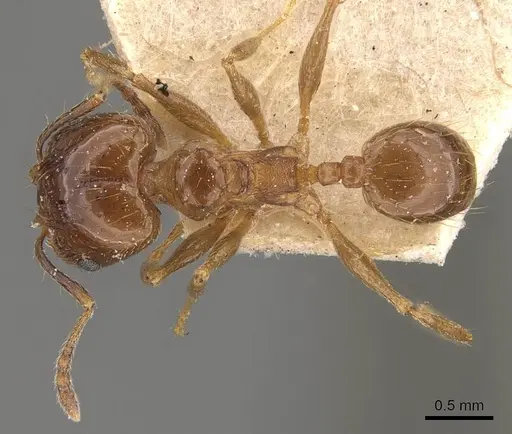
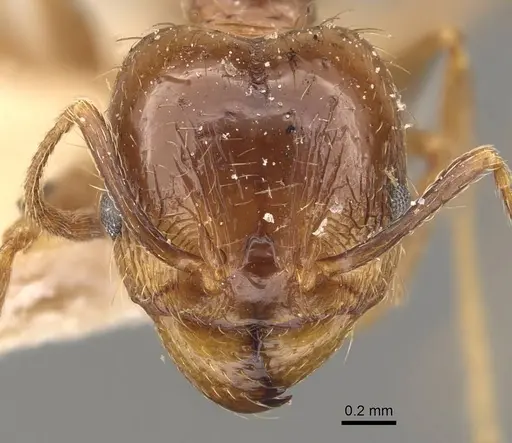
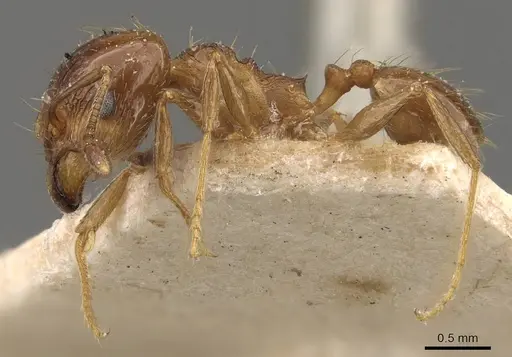
CASENT0908200
View on AntWeb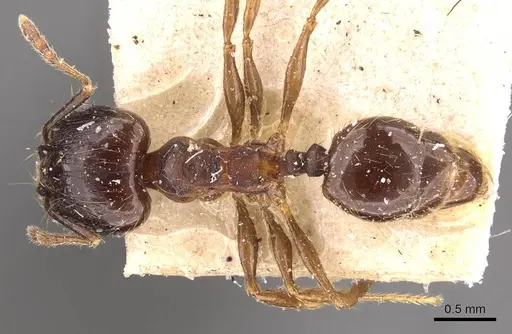
CASENT0908201
View on AntWeb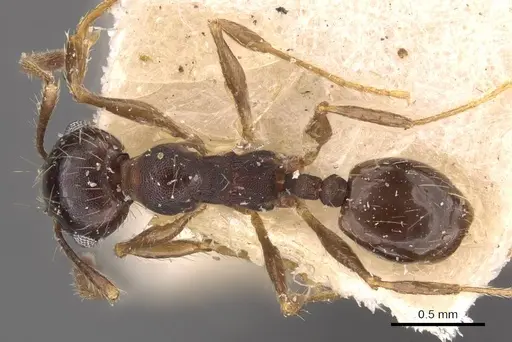
CASENT0908203
View on AntWeb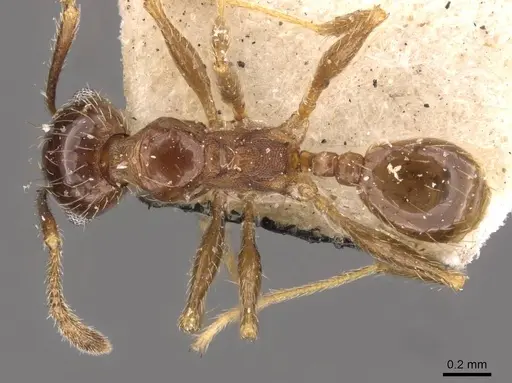
CASENT0913401
View on AntWeb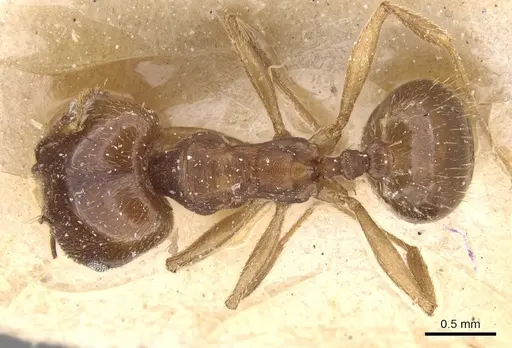
Literature
Loading...Loading products...