

Pheidole rubiceps
- Scientific Name
- Pheidole rubiceps
- Tribe
- Attini
- Subfamily
- Myrmicinae
- Author
- Wilson, 2003
- Distribution
- Found in 3 countries
Pheidole rubiceps Overview
Pheidole rubiceps is an ant species of the genus Pheidole. It is primarily documented in 3 countries , including Colombia, Costa Rica, French Guiana. Detailed taxonomic data and occurrence records can be further explored via authoritative databases such as AntWeb or the Global Biodiversity Information Facility (GBIF).
Pheidole rubiceps
Pheidole rubiceps is a small tropical ant species native to the rainforests of Venezuela and French Guiana in South America. As a member of the fallax group, they feature the characteristic Pheidole morphology: major workers (soldiers) have notably enlarged heads, while minor workers are much smaller. The species gets its name 'rubiceps' (red-headed) from the major workers' distinctive reddish-yellow head contrasting with their medium brown body. Major workers measure around 1.22mm head width, while minor workers are much tinier at around 0.60mm head width [1].
This species is known only from the type locality in Venezuela and a few records from French Guiana. It inhabits leaf-litter in tropical rainforest transition zones at elevations around 1100m. Unfortunately, almost nothing has been documented about their biology in the scientific literature, we don't know their colony structure, founding behavior, or specific care requirements. What we can infer comes from general Pheidole genus knowledge and their documented habitat [2].
Quick Summary
- Difficulty: Unknown, Insufficient Data
- Origin & Habitat: Tropical rainforest in Venezuela (Rancho Grande,1100m elevation) and French Guiana. Found in leaf-litter transition forest zones [2][1].
- Colony Type: Unknown, not studied. Most Pheidole species are monogyne (single queen), but this has not been confirmed for P. rubiceps.
- Size & Growth:
- Queen: Undescribed in available literature, estimated 5-7mm based on genus patterns
- Worker: Major: HW 1.22mm, HL 1.36mm. Minor: HW 0.60mm, HL 0.82mm [1]
- Colony: Unknown, likely several hundred to a few thousand workers typical of Pheidole species
- Growth: Unknown, likely moderate to fast based on tropical Pheidole patterns
- Development: Unknown, estimated 4-8 weeks based on typical tropical ant development (No specific data exists. Tropical Pheidole species typically develop faster than temperate species.)
- Antkeeping:
- Temperature: Unknown, infer warm tropical conditions around 24-28°C based on native habitat
- Humidity: High humidity preferred, rainforest leaf-litter species typically need 70-85% humidity
- Diapause: Unlikely, tropical species from French Guiana and Venezuela do not typically enter true diapause
- Nesting: Likely prefers naturalistic setups with moist substrate. In captivity, they would likely thrive in Y-tong or plaster nests with chambers scaled to their small size.
- Behavior: Not documented. Pheidole species are generally non-aggressive but will defend their nest. Major workers use their enlarged heads to crack seeds and defend the colony. They are likely seed-harvesters typical of the genus. Escape prevention is important due to their small minor worker size, fine mesh barriers are recommended.
- Common Issues: almost no biological data exists, all care recommendations are educated guesses from genus patterns, small minor workers can escape through standard barrier gaps, tropical species may be sensitive to temperature drops, no confirmed information on diet acceptance in captivity, unknown if they accept sugar or require only protein
Discovery and Taxonomy
Pheidole rubiceps was described by E.O. Wilson in 2003 from specimens collected in Venezuela at Rancho Grande,1100 meters elevation. The species name 'rubiceps' means 'red-headed' in Latin, referring to the distinctive reddish-yellow head of the major workers that contrasts with their brown body. This ant belongs to the fallax species group, which includes several similar Neotropical species like Pheidole cardinalis, Pheidole caribbaea, and Pheidole obscurior. The species remains poorly known, with only a handful of records from French Guiana and Venezuela [1].
Natural Habitat
This species has been collected from leaf-litter in Transition forest in French Guiana, which refers to the zone between different forest types. The type locality in Venezuela sits at 1100m elevation, suggesting they can tolerate slightly cooler conditions than true lowland rainforest species. As a leaf-litter dwelling ant, they likely nest in moist decaying wood, under bark, or in soil pockets on the forest floor. The tropical rainforest environment of both locations is characterized by high humidity, warm temperatures year-round, and dense vegetation [2][1].
Size and Morphology
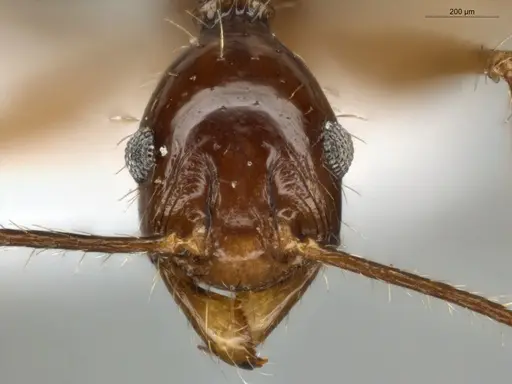
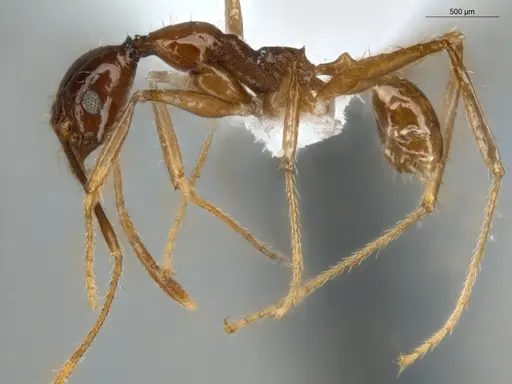
Pheidole rubiceps shows the classic Pheidole dimorphism, major workers (soldiers) have dramatically enlarged heads while minor workers are much smaller. Major workers measure approximately 1.22mm head width,1.36mm head length, with scapes around 1.12mm. Minor workers are about half the size at 0.60mm head width and 0.82mm head length, but interestingly have longer scapes at 1.20mm. The major workers are bicolored with a reddish-yellow head and mandibles contrasting against a medium brown body. Legs are light brown with yellow tarsi [1].
Care Recommendations (Inferred)
Since nothing is documented about this species' biology, all care recommendations are educated guesses based on typical Pheidole behavior and their documented habitat. Provide a warm, humid environment, aim for temperatures in the mid-20s Celsius (24-27°C) and humidity around 75-85%. Use a naturalistic or Y-tong setup with appropriately sized chambers. Feed a typical Pheidole diet: protein sources like small insects and seeds. Major workers can crack larger seeds than smaller ants. Given their tiny minor workers (0.60mm head width), excellent escape prevention with fine mesh is essential. Start with standard Pheidole care and adjust based on colony behavior [1].
Research Gaps
Pheidole rubiceps represents a species where almost nothing is known about its biology. We have no information on colony structure (single or multiple queens), founding behavior, development timeline, diet preferences, or any behaviors. The AntWiki entry explicitly states 'Nothing is known about the biology of rubiceps.' This makes it an experimental species for antkeepers, you will be learning alongside the scientific community. Document your observations carefully, as any captive colony information would be genuinely valuable for understanding this species [1].
Frequently Asked Questions
How do I care for Pheidole rubiceps ants?
Since nothing is documented about this species, care is based on genus-level inference. Provide warm temperatures (24-27°C), high humidity (75-85%), and a naturalistic or Y-tong nest with appropriately sized chambers. Feed standard Pheidole diet, small insects and seeds. This is an experimental species where you'll likely be discovering care requirements alongside the scientific community.
What do Pheidole rubiceps eat?
Not specifically documented, but Pheidole species are typically seed-harvesters and predators. Offer small insects like fruit flies, pinhead crickets, and mealworms. You can also provide seeds appropriate to their size. Sugar water or honey may be accepted but is not a primary food source for most Pheidole.
How long does it take for Pheidole rubiceps to develop from egg to worker?
Unknown for this specific species. Tropical Pheidole species typically develop faster than temperate ones, with estimates ranging from 4-8 weeks at optimal temperatures. Without specific data, expect a wait of several months before seeing your first workers.
Are Pheidole rubiceps good for beginners?
Not recommended for beginners due to the complete lack of documented care information. This is an species for experienced antkeepers who enjoy experimenting and documenting their findings. You'll be establishing baseline care protocols essentially from scratch.
How big do Pheidole rubiceps colonies get?
Unknown for this specific species, but Pheidole colonies commonly reach several hundred to a few thousand workers. The presence of major workers (soldiers) indicates a mature colony.
What type of nest should I use for Pheidole rubiceps?
A naturalistic setup with moist substrate or a Y-tong/plaster nest with small chambers would likely work well. They are leaf-litter dwellers, so they prefer tight, humid spaces. Ensure chambers are appropriately sized for their tiny minor workers.
Do Pheidole rubiceps need hibernation?
Unlikely. This is a tropical species from Venezuela and French Guiana where temperatures remain warm year-round. They probably do not require a diapause period. Keep them at warm, stable temperatures instead.
Can I keep multiple Pheidole rubiceps queens together?
Unknown. Most Pheidole species are monogyne (single queen), but this has not been documented for P. rubiceps. Without data, it is not recommended to attempt multi-queen setups.
Why is Pheidole rubiceps so hard to find information on?
This species was only described in 2003 and remains one of the least-studied Pheidole species. It is known from very few specimens, and no research has specifically examined its biology. The AntWiki entry explicitly states 'Nothing is known about the biology of rubiceps.'
References

This caresheet is licensed under CC BY-SA 4.0 .
ECOFOG-MI15-0171-14
View on AntWeb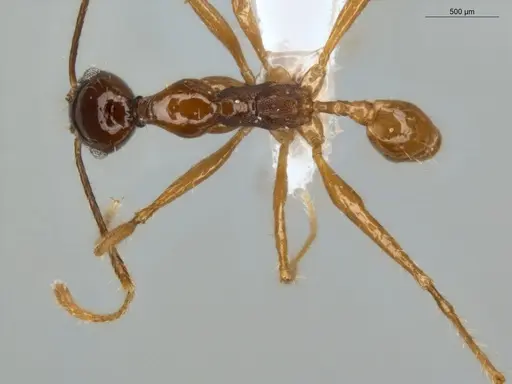
Literature
Loading...Loading products...