

Pheidole pelor
- Scientific Name
- Pheidole pelor
- Tribe
- Attini
- Subfamily
- Myrmicinae
- Author
- Wilson, 2003
- Distribution
- Found in 2 countries
Pheidole pelor Overview
Pheidole pelor is an ant species of the genus Pheidole. It is primarily documented in 2 countries , including Liberia, United States of America. Detailed taxonomic data and occurrence records can be further explored via authoritative databases such as AntWeb or the Global Biodiversity Information Facility (GBIF).
Pheidole pelor
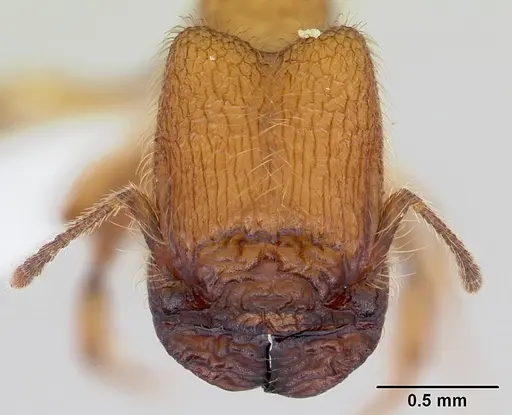
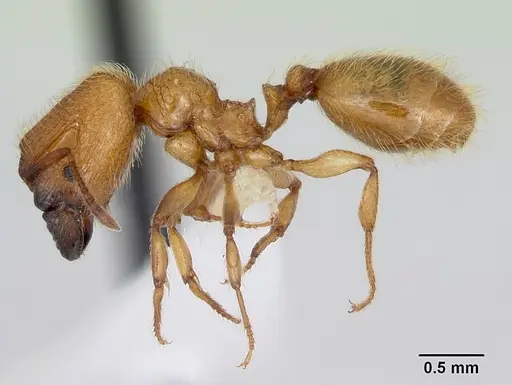
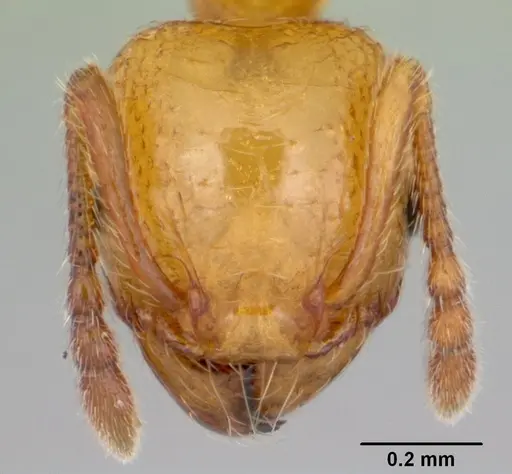
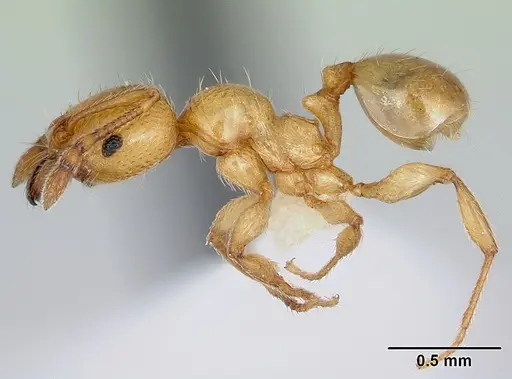
Pheidole pelor is a small North American ant belonging to the genus Pheidole, known for its dramatic major workers with a bizarre phragmotic head shape. The majors have a flattened, truncated front that incorporates the clypeus and mandibles, giving them an almost monster-like appearance, hence the species name 'pelor', meaning 'monster' or 'prodigy' in Greek [1]. The head features distinctive rugoreticulate sculpturing on the posterior dorsum with parallel longitudinal carinae extending to the frontal lobes. Workers are yellow-colored: majors are dark yellow while minors are medium yellow. This species belongs to the lamia group, which includes several unusual Pheidole species with specialized head structures. It is known only from central Texas, specifically around Austin (Brackenridge Field Laboratory), Pedernales State Park, and Junction, where it occurs alongside the similar Pheidole lamia [1].
Quick Summary
- Difficulty: Unknown
- Origin & Habitat: Central Texas, United States. Found in the Austin area (Brackenridge Field Laboratory), Pedernales State Park in Blanco County, and Junction in Kimble County. The natural habitat is typical Texas scrubland/grassland with soil nesting under stones or in open ground [1].
- Colony Type: Colony structure is unconfirmed. As a Pheidole species, likely single-queen (monogyne) colonies with major and minor worker castes, but this has not been directly documented.
- Size & Growth:
- Queen: Undescribed, no queen measurements available in original description [1]. Based on typical Pheidole genus patterns, likely 6-9mm.
- Worker: Major workers: HW 1.00mm, HL 1.30mm. Minor workers: HW 0.60mm, HL 0.64mm [1].
- Colony: Unknown. Pheidole colonies typically reach several hundred to a few thousand workers, but P. pelor specific data is unavailable.
- Growth: Unknown, no development data exists for this species
- Development: Unknown, no direct measurements exist. Based on typical Pheidole patterns in warm climates, estimated 6-10 weeks at optimal temperature. (Development timeline is unconfirmed. Related Pheidole species in similar climates typically develop from egg to worker in 6-8 weeks during warm months.)
- Antkeeping:
- Temperature: Based on central Texas range, likely tolerates warm temperatures. Start around 22-28°C and observe colony activity. Texas experiences hot summers (often 30°C+) and mild winters, so they likely tolerate a range of 20-30°C. Provide a gentle thermal gradient if possible.
- Humidity: Based on central Texas habitat (semi-arid to moderately humid), likely prefers moderate to dry conditions. Keep nest substrate moderately moist but not wet. Allow some drying between waterings. Avoid overly damp conditions that could cause mold.
- Diapause: Unknown for this specific species. Central Texas has mild winters, so they may have reduced activity periods rather than true hibernation. If kept indoors at stable temperatures, year-round activity is likely. Consider a cool period (15-18°C) during winter months if colony shows reduced activity.
- Nesting: In nature, they likely nest in soil under stones or in open ground, typical of Texas Pheidole. In captivity, a standard Pheidole setup works well: test tubes for founding, then transition to a formicarium with soil or plaster chambers. Provide a foraging area with access to seeds and protein sources. The major's unusual head shape suggests they may use narrow passages or chambers, but this is speculative.
- Behavior: Behavior is unstudied. As a Pheidole species, they likely exhibit typical Pheidole behaviors: major workers specialize in seed processing and defense, while minors handle brood care and foraging. The phragmotic head of majors may serve a defensive function, they can block nest entrances with their flattened head. Foraging style is likely granivorous (seed-eating) with some protein scavenging, typical of the genus. Escape risk is moderate, minors are small (0.6mm) but majors are larger (1mm). Use standard escape prevention (Fluon on container edges). Temperament is likely similar to other Pheidole, defensive majors can deliver a mild sting, but they are not particularly aggressive toward humans.
- Common Issues: no biological data exists, this is essentially an unstudied species with no documented care information, colonies may grow slowly due to lack of documented optimal conditions, wild-caught colonies may have parasites or diseases since no captive breeding data exists, the unusual head morphology of majors may affect how they interact with nest structures, monitor for any unusual behaviors, difficulty finding this species for sale since it's rarely collected or kept
Appearance and Identification
Pheidole pelor is distinctive due to its bizarre head morphology. The major workers have a phragmotic head, meaning the front of the head is flattened and truncated, incorporating the clypeus and mandibles into a single flattened surface. This gives the major a truly unusual, almost monster-like appearance. The head features rugoreticulate (wrinkled net-like) sculpturing on the posterior dorsum, with parallel longitudinal carinae extending to the frontal lobes. The clypeus has irregular rugose sculpturing. Color is uniformly yellow, majors are dark yellow, minors are medium yellow. This species belongs to the lamia group, which contains several Pheidole species with unusual head structures. It can be distinguished from related species like P. lamia, P. colobopsis, and P. truncula by its distinctive head sculpturing pattern [1].
Distribution and Habitat
Pheidole pelor is known only from central Texas, making it a limited-range endemic. The species has been collected at three main locations: the Brackenridge Field Laboratory in Austin (the type locality), Pedernales State Park in Blanco County, and Junction in Kimble County. At the Brackenridge Field Laboratory, it occurs sympatrically with the similar species Pheidole lamia. The habitat is typical central Texas scrubland, areas with mixed grass, shrubs, and scattered trees, with soils suitable for nesting. The region experiences hot, dry summers and mild winters. Ants in this area must tolerate temperature extremes and periods of dryness. This limited distribution makes P. pelor a relatively rare species in the ant fauna of Texas [1].
What We Don't Know
It must be stated clearly: nothing is known about the biology of Pheidole pelor. The original description only covers the worker morphology, there are no published studies on colony structure, founding behavior, diet, development, or any aspect of their natural history. This is one of the least-studied Pheidole species in North America. What we can do is make educated guesses based on what is known about the genus Pheidole and the habitat where they live. Pheidole species are typically seed-harvesting ants with major/minor worker dimorphism, claustral founding, and single-queen colonies. But these are assumptions based on genus-level patterns, not documented behavior for P. pelor specifically. Keeping this species requires a willingness to experiment and document your own observations, as there is no established care protocol to follow. [1]
Keeping Pheidole pelor in Captivity
Since no documented care information exists for this species, keepers must adapt from general Pheidole husbandry. For founding colonies, use a standard test tube setup with a water reservoir. Once the colony reaches 20-30 workers, transition to a formicarium, either a naturalistic setup with soil chambers or an acrylic/plaster nest. The nest should have chambers scaled to their size, with minors at 0.6mm and majors at 1mm. Provide a foraging area where you can offer seeds (millet, chia, flax) and protein sources (mealworms, small crickets). Like other Pheidole, they likely appreciate a heat source on one side of the nest to create a thermal gradient. Monitor colony behavior, if workers are clustered near heat, increase slightly, if they avoid it, reduce. Keep the nest at room temperature (22-26°C) as a starting point. Escape prevention should be standard, while not particularly small, they can still climb smooth surfaces, so apply Fluon to container edges.
Feeding and Diet
Pheidole species are typically granivorous, collecting and processing seeds as their primary food source. They also supplement their diet with protein from insects and other small arthropods. For captive colonies, offer a mix of small seeds (millet, chia seeds, flax seeds, sesame) as a staple, along with protein sources like small mealworms, fruit flies, or tiny crickets. Sugar water or honey can be offered occasionally, though granivorous Pheidole may not strongly prefer sweet liquids. Remove uneaten seeds and prey after 24-48 hours to prevent mold. Feed every 2-3 days, adjusting based on colony size and consumption rate. A well-fed colony with major workers actively processing seeds is a good sign of established care conditions.
Potential Defensive Role of the Major's Head
The most striking feature of Pheidole pelor is the major worker's phragmotic head, a flattened, truncated front that looks almost like it was squashed flat. In some Pheidole species, majors with phragmotic heads can use their unusual head shape to block nest entrances, protecting the colony from intruders. This behavior, called 'head-plugging', is well-documented in some Pheidole species. While not confirmed for P. pelor, it's a reasonable hypothesis given their morphology. If you observe your majors positioning themselves at nest entrances with their flattened heads facing outward, this may be defensive head-plugging behavior. This also means you should ensure nest entrance sizes are appropriate, if majors are meant to block entries, overly large openings may frustrate this behavior.
Frequently Asked Questions
How do I care for Pheidole pelor ants?
Since nothing is documented about this species' biology, care is based on general Pheidole husbandry. Keep them at 22-28°C with moderate humidity. Offer seeds as a staple with occasional protein. Use test tubes for founding, then transition to a formicarium. This is an experimental species to keep, be prepared to document your own observations.
What do Pheidole pelor ants eat?
Based on typical Pheidole diet, they likely eat seeds (granivorous) plus insects and small arthropods for protein. Offer small seeds like millet or chia, along with small insects like mealworms or fruit flies. They may accept sugar water occasionally.
How big do Pheidole pelor colonies get?
Colony size is unconfirmed for this species. Typical Pheidole colonies reach several hundred to a few thousand workers. Expect slow growth given the lack of documented optimal conditions.
Where is Pheidole pelor found?
This species is known only from central Texas, specifically around Austin, Pedernales State Park, and Junction, Texas. It is a relatively rare endemic species.
What makes Pheidole pelor unusual?
The major workers have a bizarre phragmotic head, flattened and truncated at the front, with the clypeus and mandibles incorporated into this unusual shape. The species name 'pelor' means 'monster' in Greek, referring to this strange appearance.
Are Pheidole pelor good for beginners?
No. This is not recommended for beginners because absolutely no biological data exists for this species, there is no established care protocol. It requires an experienced keeper willing to experiment and document their own observations.
How long does it take for Pheidole pelor to develop from egg to worker?
The development timeline is completely unconfirmed for this species. Based on typical Pheidole patterns in warm climates, estimate 6-10 weeks at optimal temperature, but this is a rough guess.
Do Pheidole pelor need hibernation?
Diapause requirements are unknown. Central Texas has mild winters, so they may have reduced activity rather than true hibernation. If kept indoors at stable temperatures, year-round activity is likely. You can experiment with a cool period (15-18°C) in winter.
Can I keep multiple Pheidole pelor queens together?
Colony structure is unconfirmed. Most Pheidole are single-queen (monogyne) species. Do not combine unrelated queens unless you observe them accepting each other, this has not been studied for this species.
Where can I get Pheidole pelor?
This species is rarely collected or kept. It has a limited range in central Texas and is not commonly available in the antkeeping hobby. You would likely need to locate colonies in the wild (with appropriate permissions) if you want to keep this species.
References

This caresheet is licensed under CC BY-SA 4.0 .
CASENT0103409
View on AntWeb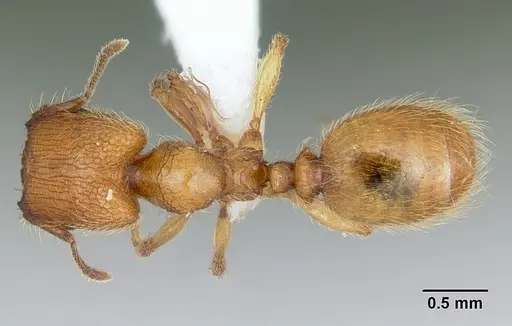
CASENT0103410
View on AntWeb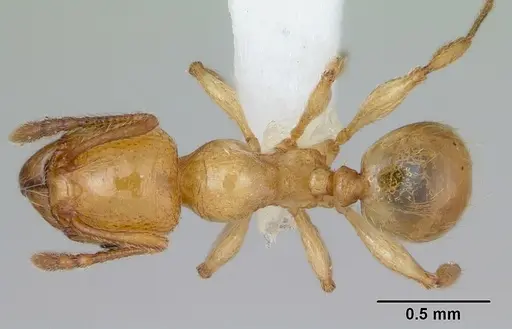
Literature
Loading...Loading products...