

Pheidole lucioccipitalis
- Scientific Name
- Pheidole lucioccipitalis
- Tribe
- Attini
- Subfamily
- Myrmicinae
- Author
- Eguchi, 2001
- Distribution
- Found in 3 countries
Pheidole lucioccipitalis Overview
Pheidole lucioccipitalis is an ant species of the genus Pheidole. It is primarily documented in 3 countries , including Brunei Darussalam, Indonesia, Malaysia. Detailed taxonomic data and occurrence records can be further explored via authoritative databases such as AntWeb or the Global Biodiversity Information Facility (GBIF).
Pheidole lucioccipitalis
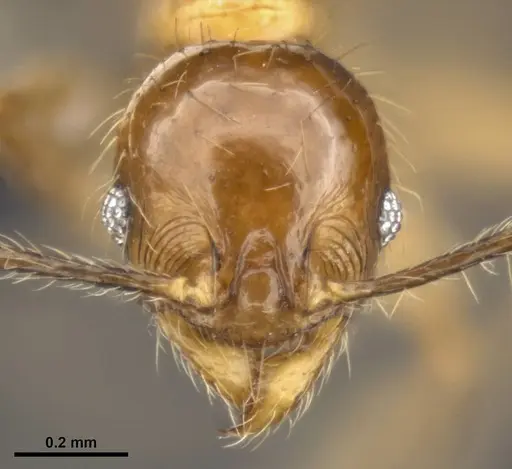
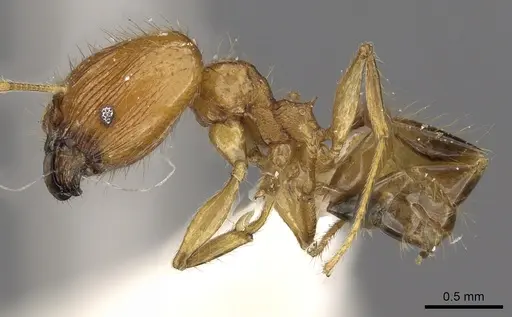
Pheidole lucioccipitalis is a small leaf-litter ant species native to Southeast Asia, found across southern Malay Peninsula, Borneo, and Sumatra. Major workers measure 2.4-2.5mm while the minor workers are considerably smaller at 1.6-1.8mm [1]. The species is characterized by a smooth and shining vertex and occipital lobe in majors, and a complete but weak occipital carina in minors. This ant is a member of the Pheidole fervens clade and inhabits lowland dipterocarp rainforests, where it forages on the forest floor and in the canopy [2][3]. Like other Pheidole species, they have distinct major and minor worker castes, with majors having larger heads for seed processing and colony defense.
Quick Summary
- Difficulty: Medium
- Origin & Habitat: Native to Borneo, Sumatra, and southern Malay Peninsula in the Indomalaya region. This species lives in lowland dipterocarp rainforests, where it has been collected from both the canopy and tree trunks [2]. It is found across multiple study sites in Borneo including Poring, Danum, and Tawau [4].
- Colony Type: Colony structure is unconfirmed. Pheidole species are typically monogyne (single queen), but specific data for P. lucioccipitalis is not available.
- Size & Growth:
- Queen: Unknown for this species, Pheidole queens are typically 5-8mm
- Worker: Major: 2.4-2.5mm, Minor: 1.6-1.8mm [1]
- Colony: Unknown, typical Pheidole colonies reach several hundred to a few thousand workers
- Growth: Unknown, estimated moderate based on tropical Pheidole patterns
- Development: Unknown, estimated 6-8 weeks based on typical tropical Pheidole development (Development timeline is unconfirmed for this specific species. Estimates based on related tropical Pheidole species suggest 6-8 weeks from egg to first worker at optimal temperatures.)
- Antkeeping:
- Temperature: Keep warm at 24-28°C. As a tropical species from Borneo, they require consistently warm conditions similar to their natural lowland rainforest habitat [2]. Use a heating cable on one side of the nest to create a gentle gradient if room temperature falls below this range.
- Humidity: Keep humidity high at 70-85%. This species inhabits tropical rainforest environments in Borneo, so the nest substrate should remain consistently moist but not waterlogged. Mist occasionally and provide a water tube.
- Diapause: No, as a tropical species from Borneo, they do not require hibernation. Maintain warm conditions year-round.
- Nesting: Use a moist nest setup such as a Y-tong (AAC), plaster nest, or naturalistic setup with soil. This species naturally nests in leaf litter and rotting wood in rainforest floors. Keep the nest material consistently damp.
- Behavior: This species shows cooperative seed transport, with workers demonstrating significant size-matching between worker head width and seed size [4]. Pheidole species are generally not aggressive but majors will defend the colony. They are active foragers that search for seeds and small insects. Escape prevention is important due to their small size, use fine mesh and tight-fitting barriers. They are primarily ground-dwelling but can climb effectively.
- Common Issues: small size means escapes are likely without fine mesh barriers, tropical humidity requirements can lead to mold if ventilation is poor, wild-caught colonies may have parasites that kill them in captivity, slow growth means beginners may overfeed or disturb the colony too often, high humidity needs can cause flooding if water tubes are overfilled
Natural History and Distribution
Pheidole lucioccipitalis is endemic to Southeast Asia, specifically found in the Indomalaya region including Borneo, Sumatra, and the southern Malay Peninsula. The species was described by Eguchi in 2001 from specimens collected in Sabah, Borneo. It inhabits lowland dipterocarp forests, a dominant forest type in Borneo characterized by trees from the Dipterocarpaceae family. Research has documented this species at multiple Borneo sites including Poring, Danum, and Tawau, indicating it is widespread across the island [4]. Unlike many ground-nesting ants, P. lucioccipitalis has been collected both in the canopy and on tree trunks, suggesting it may nest in elevated locations within the forest structure [2]. The species is a member of the Pheidole fervens clade, a group of related species within this large genus.
Morphology and Identification
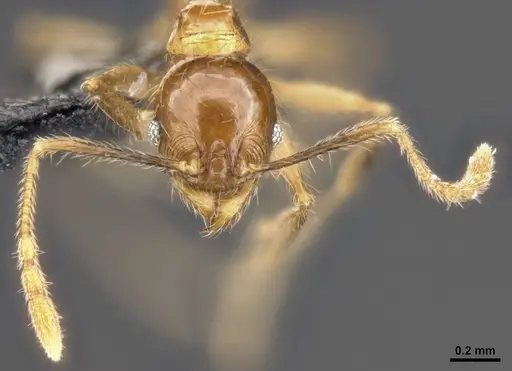
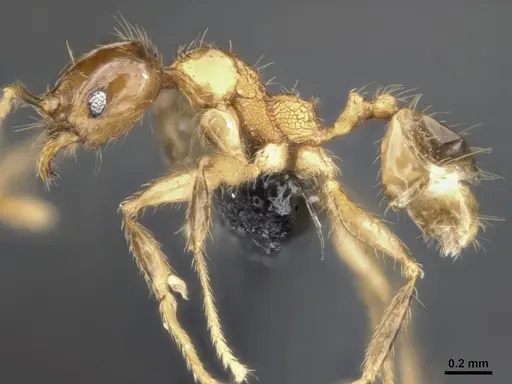
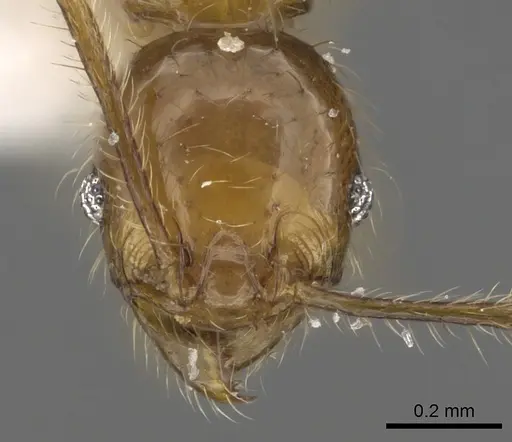
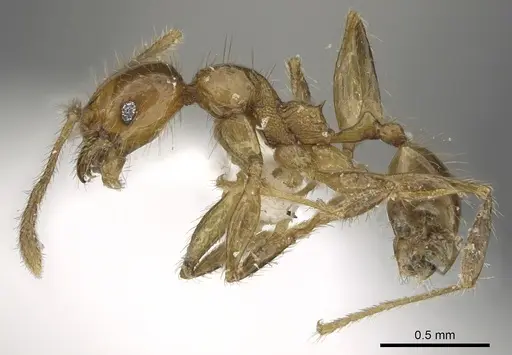
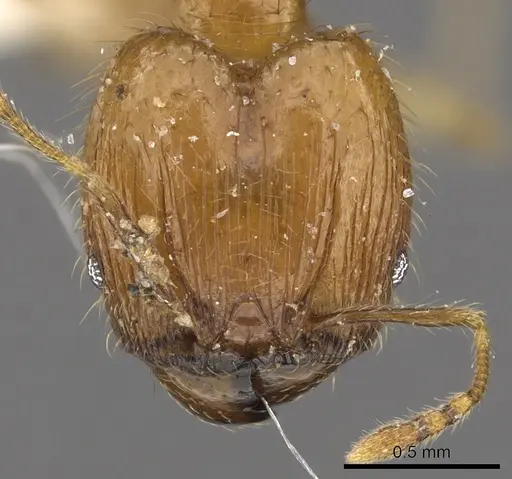
This species exhibits the classic Pheidole dimorphism with distinct major and minor worker castes. Major workers measure 2.4-2.5mm and are characterized by a smooth and shining vertex and occipital lobe, which helps distinguish them from related species. Their head is broadest at about one-third to two-thirds the distance from the front, and they possess a 3-segmented antennal club. The hypostoma of majors has only an indistinct median process, sometimes almost absent. Minor workers are considerably smaller at 1.6-1.8mm, with an oval head and a complete but weak occipital carina. Both castes have a petiole that is 1.7-1.9 times longer than the postpetiole. The body coloration is yellowish-brown to brown, with the gaster typically being darker than the rest of the body. [1]
Foraging Behavior
Pheidole lucioccipitalis demonstrates interesting foraging adaptations, particularly cooperative seed transport. Research has shown significant size-matching between worker head width and seed size, meaning larger workers are more likely to transport larger seeds [4]. This is one of twelve ant species documented to exhibit this behavior, which allows the colony to efficiently process a variety of seed sizes. The species is likely a generalist forager, collecting seeds, small insects, and other organic matter. In captivity, they should be offered a varied diet including small seeds, protein sources like fruit flies or small insects, and occasional sugar water.
Housing and Nest Setup
For captive care, provide a moist nest setup that mimics their natural rainforest floor habitat. Y-tong (AAC) nests, plaster nests, or naturalistic setups with moist soil work well. The nest material should remain consistently damp but not waterlogged, aim for moisture levels where the substrate feels damp to the touch without standing water. Because this species is small (minors are only 1.6-1.8mm), escape prevention is critical. Use tight-fitting lids, fine mesh on any ventilation holes, and apply fluon or other barriers to the rim of the outworld. Provide an outworld (foraging area) connected to the nest where you can offer food. The foraging area should be simple and easy to clean.
Feeding Guidelines
In the wild, this species forages for seeds and small invertebrates. In captivity, offer a varied diet: protein sources like fruit flies, small crickets, or mealworms twice weekly, seeds (they will crack these open, especially the majors), and occasional sugar water or honey as an energy source. Remove uneaten food after 24-48 hours to prevent mold. Fresh water should always be available. Start with small amounts and observe what the colony accepts, some Pheidole species are pickier than others about protein sources.
Temperature and Humidity Requirements
As a tropical species from Borneo, Pheidole lucioccipitalis requires warm and humid conditions. Keep temperatures in the range of 24-28°C year-round. A heating cable placed on one side of the nest can create a temperature gradient, allowing the ants to self-regulate. Humidity should be maintained at 70-85%, which can be achieved by keeping the nest substrate moist and providing a water tube. Avoid placing the nest near air conditioning or in rooms with temperature fluctuations. Unlike temperate species, this ant does not require a diapause or winter rest period. [2]
Frequently Asked Questions
How long does it take for Pheidole lucioccipitalis to produce first workers?
The exact development timeline is unconfirmed for this species. Based on typical tropical Pheidole patterns, expect first workers (nanitics) approximately 6-8 weeks after the queen lays eggs, assuming optimal temperatures around 26°C.
What do Pheidole lucioccipitalis ants eat?
They are generalist foragers that accept seeds, small insects, and sugar sources. Offer protein (fruit flies, small crickets, mealworms) twice weekly, seeds, and occasional honey or sugar water. Remove uneaten food after 24-48 hours.
Can I keep multiple queens together?
Not recommended. Combining unrelated queens of this species has not been documented and would likely result in fighting. Pheidole species are typically single-queen colonies.
What temperature do they need?
Keep them warm at 24-28°C. As a tropical Borneo species, they require consistently warm conditions year-round. A heating cable on one side of the nest can help maintain proper temperatures.
Do they need hibernation?
No. As a tropical species from Borneo, they do not require diapause or hibernation. Maintain warm, humid conditions throughout the year.
How big do colonies get?
The maximum colony size is unconfirmed for this specific species. However, typical Pheidole colonies reach several hundred to a few thousand workers. Growth is likely moderate.
Are they good for beginners?
This species is rated as Medium difficulty. They require specific tropical conditions (warmth and high humidity) and their small size demands excellent escape prevention. Some experience with antkeeping is helpful, but they are not among the most difficult species.
What type of nest should I use?
Use a moist nest setup like a Y-tong (AAC), plaster nest, or naturalistic setup with damp soil. This species naturally inhabits leaf litter and rotting wood in rainforest floors. Keep the nest material consistently moist.
Why are my ants escaping?
Their small size (minors are only 1.6-1.8mm) means they can squeeze through tiny gaps. Use fine mesh (at least 0.5mm), tight-fitting lids, and apply fluon or similar barriers to prevent escapes.
When should I move them to a formicarium?
Wait until the colony has at least 20-30 workers before moving them. Pheidole colonies can remain in test tube setups longer than many species. Move them when the test tube becomes crowded or the water tube runs dry.
References

This caresheet is licensed under CC BY-SA 4.0 .
CASENT0106275
View on AntWeb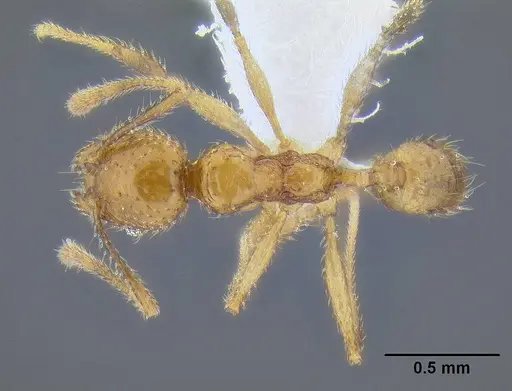
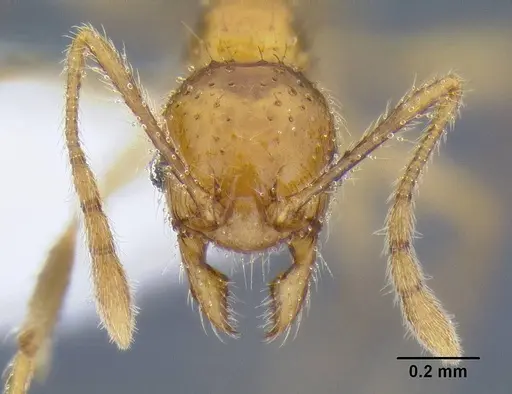
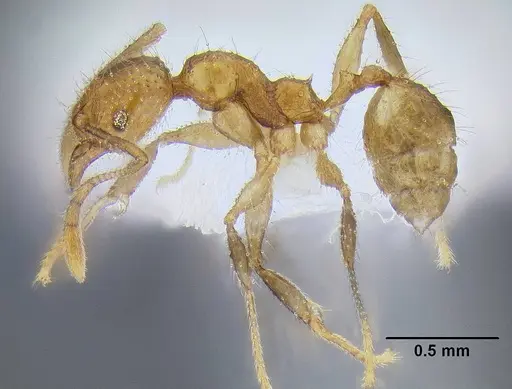
CASENT0284033
View on AntWeb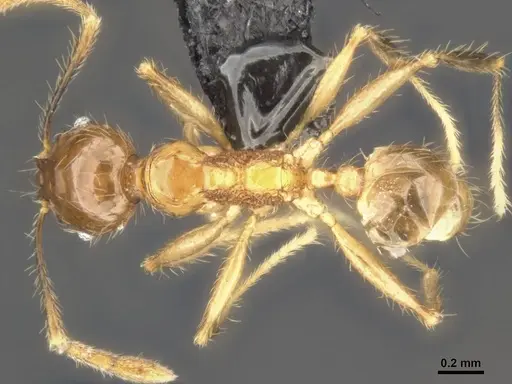
CASENT0901644
View on AntWeb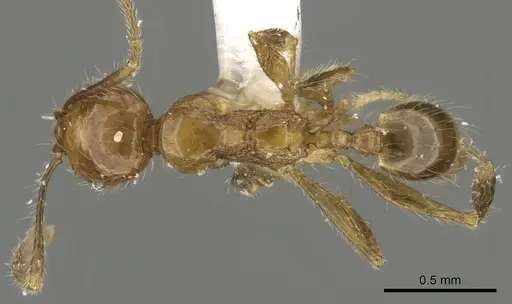
CASENT0901645
View on AntWeb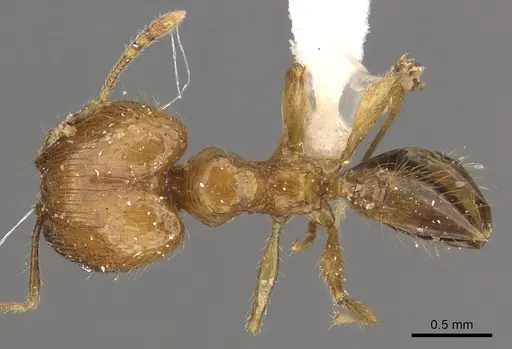
Literature
Loading...Loading products...