

Pheidole leoncortesi
- Scientific Name
- Pheidole leoncortesi
- Tribe
- Attini
- Subfamily
- Myrmicinae
- Author
- Longino, 2009
- Distribution
- Found in 1 countries
Pheidole leoncortesi Overview
Pheidole leoncortesi is an ant species of the genus Pheidole. It is primarily documented in 1 countries , including Mexico. Detailed taxonomic data and occurrence records can be further explored via authoritative databases such as AntWeb or the Global Biodiversity Information Facility (GBIF).
Pheidole leoncortesi
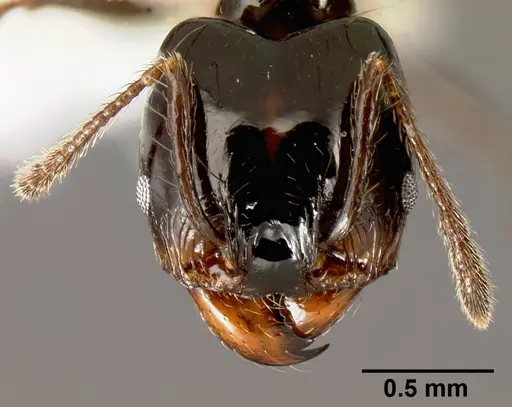
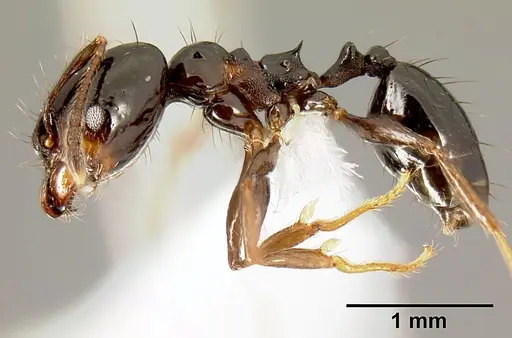
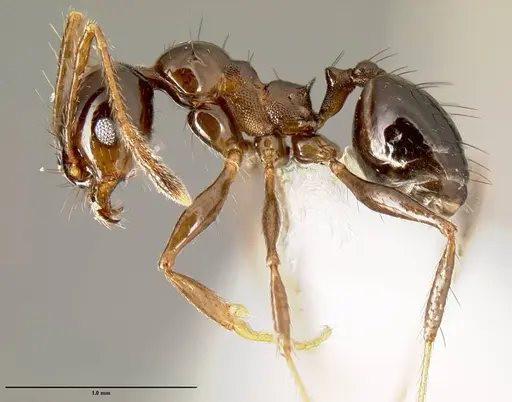
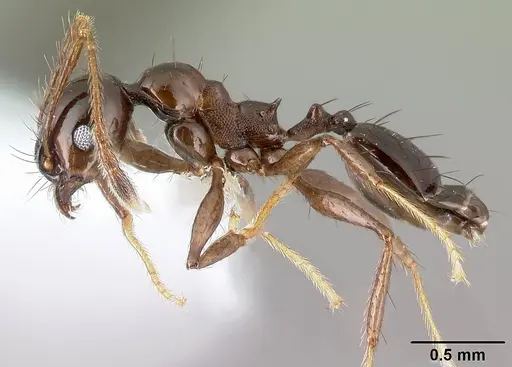
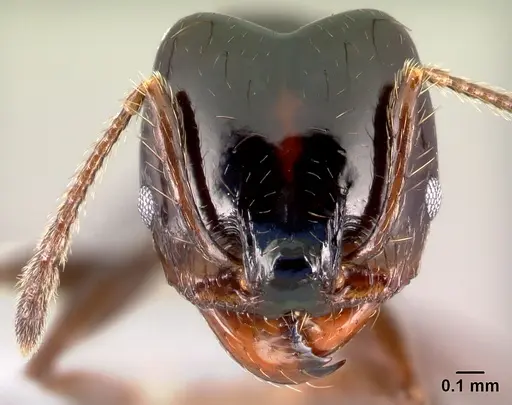
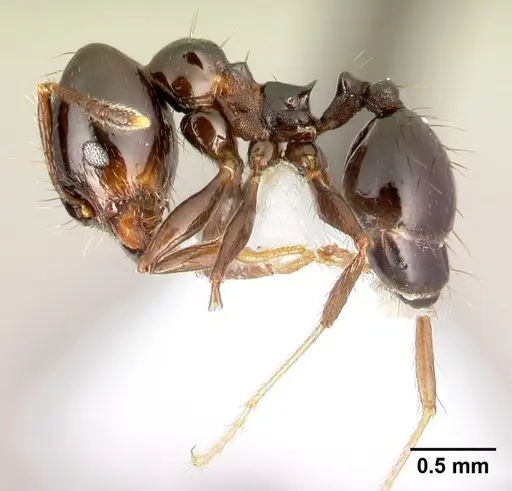
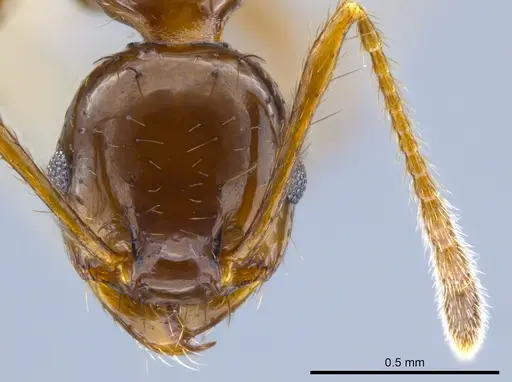
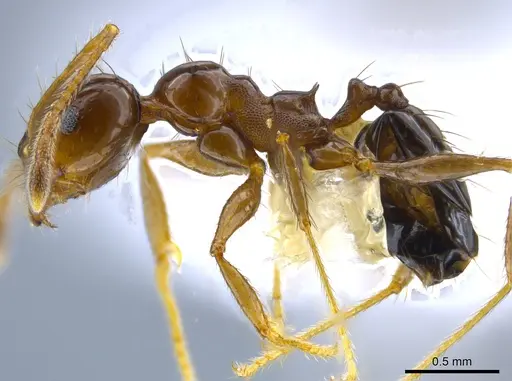
Pheidole leoncortesi is a small ant species native to the wet forests of Chiapas, Mexico. Minor workers measure just 0.67-0.78mm while major workers (soldiers) are larger at 1.09-1.21mm [1]. The species has a dark reddish-brown coloration and was only described in 2009 by Longino. It belongs to the Pheidole genus, known for having two worker castes, small minors and larger majors with specialized heads. This species is locally abundant in its range and recruits heavily to food sources, with both worker castes commonly seen together at baits [2]. The nest location remains unknown in the wild [2].
Quick Summary
- Difficulty: Unknown, limited data available
- Origin & Habitat: Wet forest in Chiapas, Mexico at 180m elevation [2][1]
- Colony Type: Unknown, colony structure has not been documented
- Size & Growth:
- Queen: Undescribed, no queen measurements available
- Worker: Minor: 0.67-0.78mm, Major: 1.09-1.21mm [1]
- Colony: Unknown, no colony size data available
- Growth: Unknown, no development data available
- Development: Unknown, no direct measurements. Based on typical Pheidole patterns in tropical wet forests, estimate 4-8 weeks at warm temperatures. (This is a newly described species with no published development data. Estimates based on genus-level patterns.)
- Antkeeping:
- Temperature: Based on wet forest habitat in tropical Mexico, keep warm around 24-28°C. Room temperature (22-25°C) is likely suitable.
- Humidity: Wet forest species, keep substrate consistently moist but not waterlogged. Provide a humidity gradient with a damp side and slightly drier area.
- Diapause: Unknown, no seasonal data available. Based on tropical origin, may not require formal hibernation but may have reduced activity in cooler months.
- Nesting: Unknown in the wild. Based on related Pheidole species, they likely nest in soil or rotting wood. A naturalistic setup with moist substrate or a Y-tong/plaster nest works well for Pheidole.
- Behavior: This species recruits heavily to food sources and both major and minor workers commonly forage together [2]. They are likely granivorous like other Pheidole, also accepting protein and sugar. Their small size (under 1.2mm for majors) means escape prevention is important, use fine mesh barriers. Temperament is unknown but Pheidole generally are not aggressive toward keepers.
- Common Issues: Limited biological data makes care recommendations uncertain, this is a newly described species, Small size requires excellent escape prevention with fine mesh, No data on founding behavior, queen type (claustral vs semi-claustral) is unknown, Wild-caught colonies may have unknown parasites or diseases, Colony growth rate is unconfirmed, may be slow or fast depending on conditions
Species Background and Identification
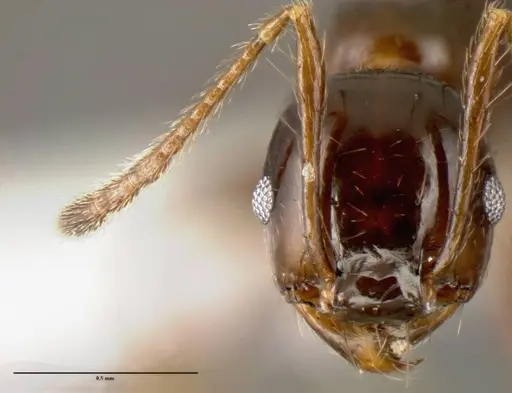
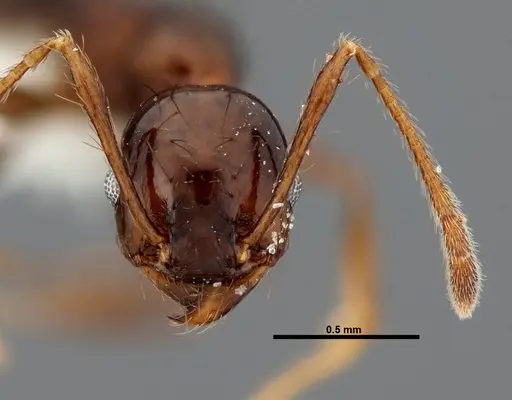
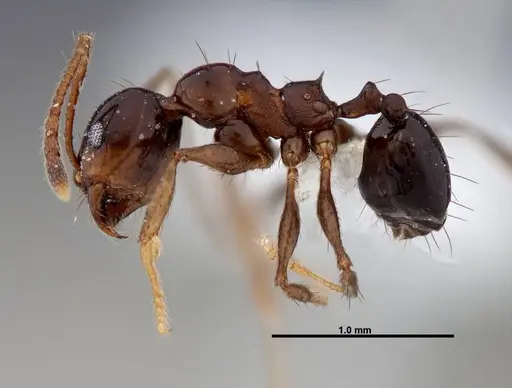
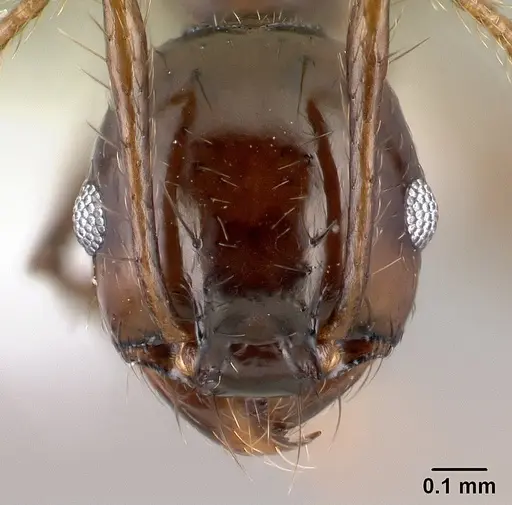
Pheidole leoncortesi was described in 2009 by ant taxonomist John Longino from specimens collected in Chiapas, Mexico. The species name honors Dr. Jorge León Cortés, a field biologist who supported ant research in the region. It occurs in wet forest habitat at approximately 180m elevation and is locally abundant where found [2]. The species resembles Pheidole tschinkeli, with which it is sympatric (found in the same areas). The key distinguishing features are the short, sharp propodeal spines and the uniformly foveolate (pitted) sculpture on the katepisternum and side of the propodeum [2]. Both minor and major workers have dark reddish-brown coloration and smooth, shiny body surfaces.
Housing and Nesting
Since the natural nest location is unknown, we must make educated guesses based on related Pheidole species and the wet forest habitat. Pheidole species typically nest in soil, under stones, or in rotting wood. For captivity, a naturalistic setup with moist substrate works well, or you can use a Y-tong (acrylic) nest with narrow chambers scaled to their tiny size. The nest should have chambers that are appropriately sized, minor workers are only 0.67-0.78mm, so tight passages help them feel secure. Keep the nest area humid with moist substrate or water reservoir, but provide a gradient so ants can choose their preferred moisture level. Given their small size, ensure escape prevention is excellent, use fine mesh on any openings. [2]
Feeding and Diet
Pheidole ants are typically granivorous, meaning they eat seeds, but they also readily accept protein sources and sugar. This species recruits heavily to baits on the forest floor [2], suggesting they are opportunistic foragers. Offer a varied diet including: small seeds (grass seeds, millet), protein sources (small insects like fruit flies, mealworms, crickets), and sugar water or honey. Since both major and minor workers forage together [2], food should be accessible to both castes. Remove uneaten protein within 24-48 hours to prevent mold. Feed protein 2-3 times per week and keep sugar water available constantly.
Temperature and Humidity
This species comes from wet forest habitat in tropical Chiapas, Mexico. They are adapted to warm, humid conditions year-round. Keep temperatures in the range of 24-28°C, which is typical for tropical room temperature. If your room is cooler, a heating cable on one side of the nest can provide warmth, place it on top of the nest, not underneath, to avoid excessive drying. Humidity should be high, think damp forest floor. Keep the substrate consistently moist but not waterlogged. Some condensation on nest walls is normal and indicates good humidity. Ensure adequate ventilation to prevent mold while maintaining humidity. [2]
Colony Development and Growth
No published data exists on colony development for this species. Pheidole colonies typically grow moderately fast once established, but founding colonies can be slow. The first workers (nanitics) are usually smaller than normal workers. Based on typical Pheidole patterns in tropical wet forests, expect 4-8 weeks from egg to first worker at optimal warm temperatures. However, this is a rough estimate, actual timing may vary. Major workers develop from larvae that receive extra food and grow larger than minor larvae, this caste differentiation happens during development rather than being predetermined. Be patient with founding colonies and avoid disturbing them during the founding stage.
Behavior and Foraging
Pheidole leoncortesi shows strong recruitment behavior, when food is found, many workers coordinate to retrieve it. Both major and minor workers commonly forage together at baits [2], which is typical of Pheidole species where majors help process larger food items. They are likely most active during daytime hours in the wild. In captivity, they will explore and forage throughout the day. Their small size means they can squeeze through tiny gaps, ensure your setup is escape-proof. While specific aggression levels are unknown, Pheidole generally are not particularly aggressive toward humans and rarely sting. The stinger is present but very small.
Frequently Asked Questions
How long does it take for Pheidole leoncortesi to get their first workers?
This has not been directly documented. Based on typical Pheidole patterns in tropical wet forests, estimate 4-8 weeks from egg to first worker at optimal warm temperatures (around 26°C). This is a rough estimate, actual timing is unknown for this newly described species.
What do Pheidole leoncortesi ants eat?
Based on typical Pheidole behavior, they likely eat seeds, small insects, and sugar sources. This species recruits heavily to baits in the wild [2]. Offer a varied diet including small seeds, protein (fruit flies, small mealworms), and sugar water or honey.
What temperature do they need?
Based on their wet forest habitat in tropical Mexico, keep them warm around 24-28°C. Room temperature (22-25°C) is likely suitable. Avoid temperatures below 20°C or above 30°C.
Do they need hibernation or diapause?
Unknown, no seasonal data is available. As a tropical species from wet forests, they likely do not require formal hibernation. However, they may have reduced activity during cooler periods. Monitor your colony and reduce feeding if activity decreases.
Are Pheidole leoncortesi good for beginners?
Difficulty level is uncertain due to limited biological data. This is a newly described species (2009) with many unknowns about its care. For beginners, more established species with known care requirements may be better choices. If you do keep this species, be prepared for some trial and error.
How big do colonies get?
Colony size has not been documented. Pheidole colonies can range from a few hundred to several thousand workers. Expect moderate growth over time once the colony establishes.
Can I keep multiple queens together?
Colony structure (monogyne vs polygyne) has not been documented for this species. Without data, combining unrelated queens is not recommended. Pheidole species can vary in their colony structure.
What size are the workers?
Minor workers are tiny at 0.67-0.78mm. Major workers (soldiers) are larger at 1.09-1.21mm [1]. This small size means escape prevention must be excellent, use fine mesh barriers.
Where is this species found?
Pheidole leoncortesi is found only in Chiapas, Mexico, in wet forest habitat at around 180m elevation. The type locality is 21km southwest of Salto de Agua [1].
When was this species described?
Pheidole leoncortesi was described in 2009 by John T. Longino. It is a recently described species, which explains why so little biological data is available [2].
What nest type should I use?
Since natural nesting is unknown, use established ant-keeping setups. A Y-tong (acrylic) nest with appropriately sized chambers works well, or a naturalistic setup with moist substrate. Keep chambers tight and passages narrow since these ants are very small.
References

This caresheet is licensed under CC BY-SA 4.0 .
CASENT0609109
View on AntWeb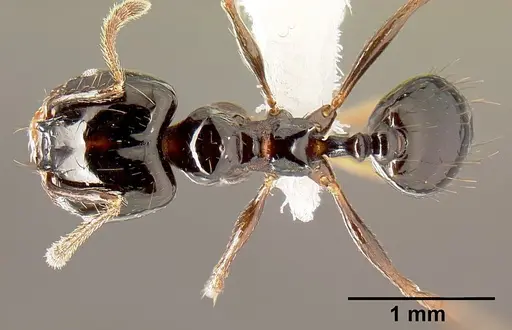
CASENT0609110
View on AntWeb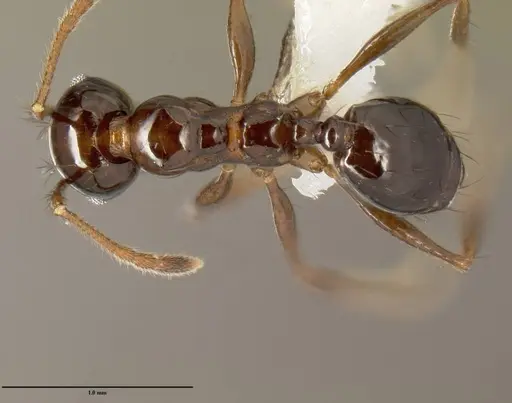
CASENT0609112
View on AntWeb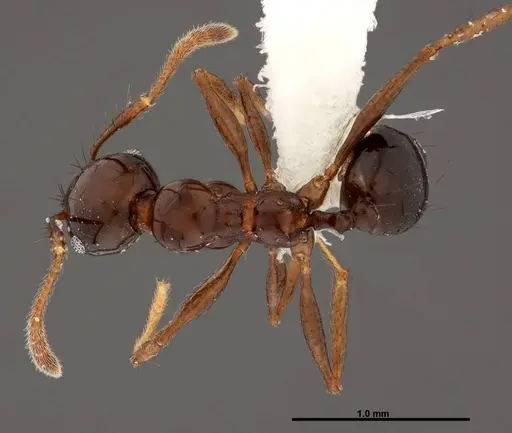
CASENT0609115
View on AntWeb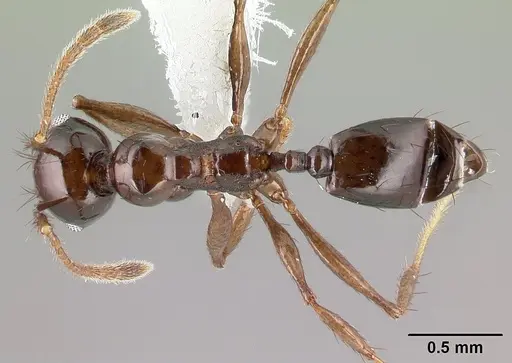
CASENT0609134
View on AntWeb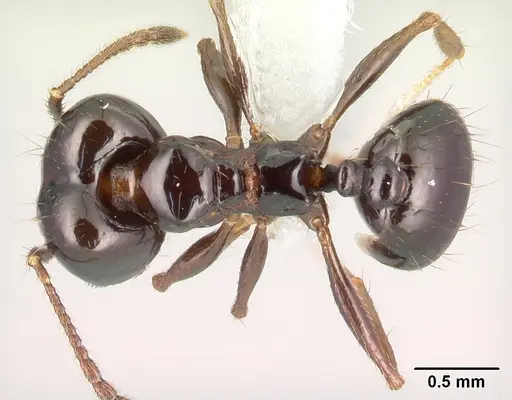
CASENT0609140
View on AntWeb
CASENT0609523
View on AntWeb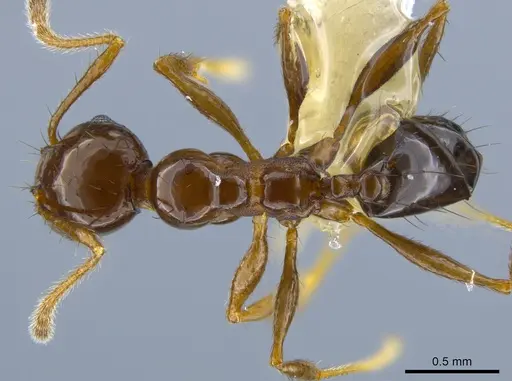
Literature
Loading...Loading products...