

Pheidole tschinkeli
- Scientific Name
- Pheidole tschinkeli
- Tribe
- Attini
- Subfamily
- Myrmicinae
- Author
- Wilson, 2003
- Distribution
- Found in 4 countries
Pheidole tschinkeli Overview
Pheidole tschinkeli is an ant species of the genus Pheidole. It is primarily documented in 4 countries , including Guatemala, Honduras, Mexico. Detailed taxonomic data and occurrence records can be further explored via authoritative databases such as AntWeb or the Global Biodiversity Information Facility (GBIF).
Pheidole tschinkeli
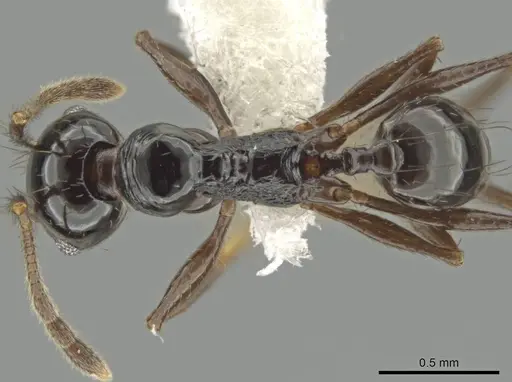
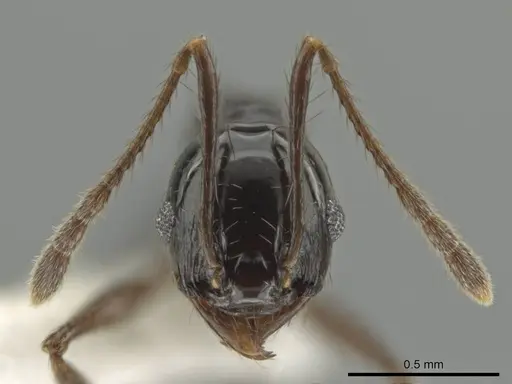
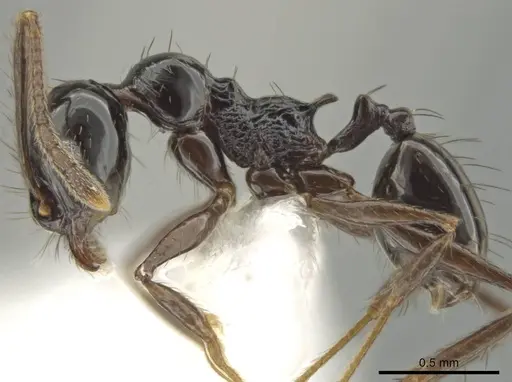
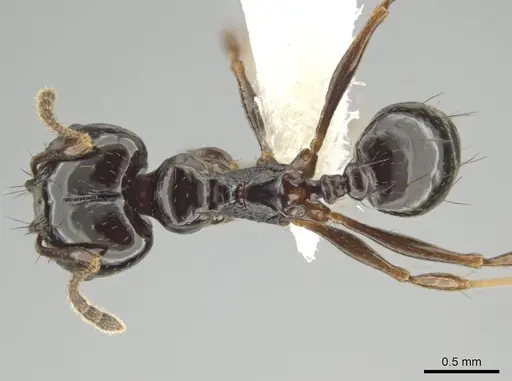
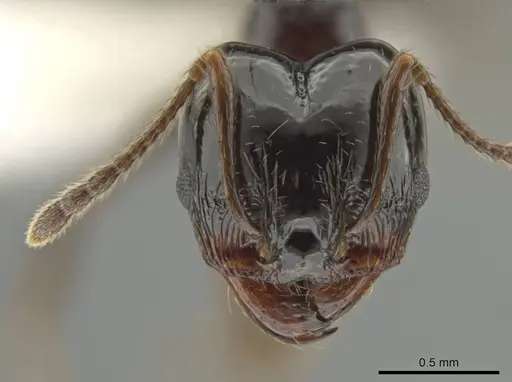
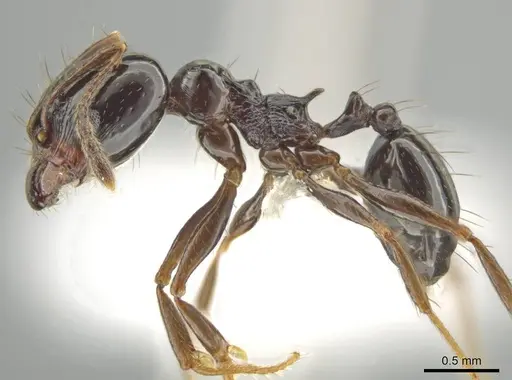
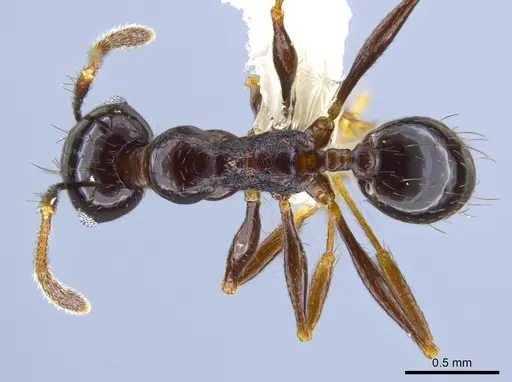
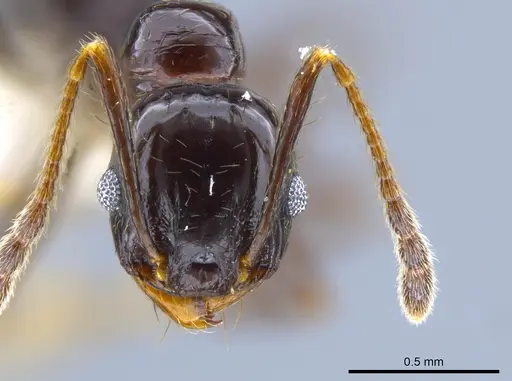
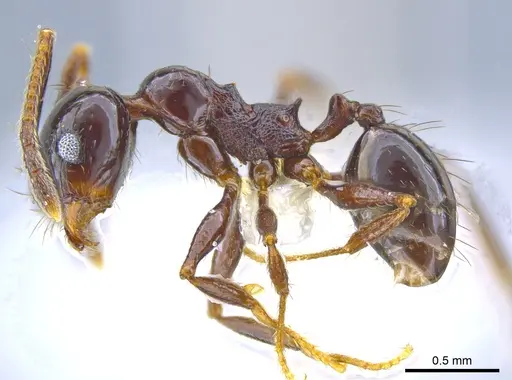
Pheidole tschinkeli is a dimorphic ant species native to Guatemala and surrounding regions in Central America. Like all Pheidole species, they have two distinct worker castes: major workers (soldiers) with notably large heads for seed-cracking, and smaller minor workers that handle most daily tasks. Majors are significantly larger than minors, giving the colony a striking appearance when both castes are present. The species has been documented in both urban green spaces and developed areas across Guatemala and southern Mexico, showing remarkable adaptability to human-modified landscapes [1][2].
This species exemplifies the successful granivorous lifestyle common to Pheidole, major workers use their powerful mandibles to process seeds that minor workers cannot crack. Colonies can grow quite large, and the presence of majors patrolling alongside minors is a characteristic sight. Their ability to thrive in varied habitats from pristine forest edges to urban green spaces makes them an interesting species for keepers interested in observing complex colony social structure.
Quick Summary
- Difficulty: Easy
- Origin & Habitat: Guatemala and southern Mexico (Guatemalan highlands and surrounding regions). Type locality is Guatemala [1]. Found in both green spaces (forests, parks) and gray spaces (urban areas) in Mexican cities like Xalapa and Coatepec [2].
- Colony Type: Likely monogyne (single queen) based on typical Pheidole patterns. Multiple queens may be tolerated in established colonies but primary colony structure is single-queen.
- Colony: Monogyne
- Founding: Claustral
- Size & Growth:
- Queen: Estimated 8-10mm based on genus patterns for medium-sized Pheidole
- Worker: Minor workers: 2-3mm, Major workers: 4-6mm with notably large heads [1]
- Colony: Likely 1,000-5,000 workers at maturity based on genus typical patterns
- Growth: Moderate to fast, Pheidole colonies can grow substantial once established
- Development: Estimated 6-8 weeks at optimal tropical temperatures (24-28°C) based on genus patterns (Development is faster at warmer temperatures, typical for subtropical/tropical Pheidole species)
- Antkeeping:
- Temperature: Keep at 24-28°C (warm room temperature). They tolerate temperatures into the low 30s°C but should have a cooler area to retreat to. Avoid temperatures below 20°C for extended periods.
- Humidity: Moderate humidity (50-70%). Provide a water tube and keep the nest substrate slightly moist. They adapt well to typical household humidity but appreciate occasional misting of the outworld.
- Diapause: No true diapause required. As a tropical/subtropical species from Guatemala, they remain active year-round if kept warm. Reduce feeding slightly during winter months if colony activity decreases.
- Nesting: Y-tong (AAC) nests work well for their size. They also do well in naturalistic setups with soil substrates. Provide a nest chamber sized appropriately, not too large, as Pheidole prefer somewhat snug quarters.
- Behavior: Generally peaceful and not aggressive toward keepers. Major workers can deliver a noticeable bite with their powerful mandibles if threatened, but they are not prone to attacking. They are active foragers that readily search for seeds and protein. Escape prevention is important, while not the smallest ants, they can squeeze through small gaps. They are primarily granivorous but also accept protein sources like insects. majors are primarily defensive but will assist with seed processing.
- Common Issues: colonies can outgrow their initial setup quickly, plan for expansion, major workers may be mistaken for queens by beginners due to their large heads, overfeeding can lead to mold issues in the nest, remove uneaten food promptly, wild-caught colonies may contain parasites, quarantine and observe new colonies, they may abandon a nest that is too wet or poorly ventilated
Housing and Nest Setup
Pheidole tschinkeli adapts well to various captive setups. Y-tong (AAC) nests are excellent choices because they provide appropriate chamber sizes and allow you to easily monitor colony progress. Naturalistic setups with a soil-filled formicarium also work well, these ants naturally nest in soil and under stones in the wild. For the outworld, a simple plastic container with smooth walls works fine, though ensure there are no gaps for escape. A test tube setup works for founding colonies, but be prepared to move them to a larger setup once the colony reaches 50+ workers. Provide a constant water source, a test tube with a cotton plug works well for humidity and drinking. [1]
Feeding and Diet
As granivorous ants, Pheidole tschinkeli primarily eats seeds. Offer a variety of small seeds like sesame, millet, or bird seed mix, majors will crack these open while minors cannot. They also readily accept protein sources including small insects (fruit flies, pinhead crickets, mealworms), and will tend honeydew or sugar water. A balanced diet is key: offer seeds constantly and protein 2-3 times per week. Remove uneaten seeds and insects promptly to prevent mold. Some keepers report their Pheidole preferring protein over seeds, so observe your colony's preferences and adjust accordingly.
Temperature and Seasonal Care
Being from Guatemala, this species prefers warm conditions. Keep the nest area at 24-28°C for optimal brood development. Room temperature (around 22-24°C) is generally acceptable, but they will be more active and grow faster when warmer. A small heating cable on one side of the nest can create a beneficial temperature gradient. They do not require hibernation or diapause, maintain warm temperatures year-round. If your home gets cold in winter, consider using a small heat mat. Activity may decrease slightly during cooler months, which is normal, simply reduce feeding accordingly. [1][2]
Colony Structure and Behavior
The dimorphic worker caste system is the most fascinating aspect of Pheidole tschinkeli. Minor workers handle most tasks: foraging, caring for brood, and maintaining the nest. Major workers (sometimes called soldiers) have enlarged heads with powerful mandibles designed for cracking hard seeds and defending the colony. You will often see majors patrolling the nest perimeter or guarding food finds. This division of labor is efficient and fascinating to observe. Colonies typically have one queen that can live for many years, producing workers continuously. The colony will grow from just a handful of workers to hundreds, then thousands over time. [1]
Growth and Development
A newly mated queen will seal herself in a chamber and lay her first batch of eggs. She feeds the larvae from her stored fat reserves and collapsed wing muscles. The first workers (called nanitics) are typically smaller than normal minors but can already begin caring for subsequent brood. Once the first workers emerge, the queen stops caring for brood entirely and focuses on egg-laying. Colony growth is moderate, expect 6-12 months to reach 100 workers, then growth accelerates. A mature colony can contain thousands of workers with a significant proportion being majors. The exact timing varies based on temperature and feeding.
Frequently Asked Questions
How long does it take for Pheidole tschinkeli to produce first workers?
Expect first workers (nanitics) to emerge 6-8 weeks after the queen lays eggs, assuming temperatures around 24-28°C. This timeline varies based on temperature, warmer conditions speed development, while cooler temperatures slow it down.
Can I keep multiple Pheidole tschinkeli queens together?
Not recommended. While some Pheidole species can be polygynous, combining unrelated foundress queens typically results in fighting. Start with a single queen colony for best success.
What do Pheidole tschinkeli ants eat?
They are primarily granivorous, offer small seeds like sesame, millet, or bird seed mix. They also need protein 2-3 times weekly from small insects like fruit flies or pinhead crickets. They will accept sugar water or honey as well.
Are Pheidole tschinkeli good for beginners?
Yes, they are considered easy to keep. They are resilient, adapt well to various setups, and are not aggressive. Their dimorphic colony structure is also fascinating to observe as the colony grows.
When should I move my colony to a larger setup?
Move to a formicarium when the test tube setup becomes crowded (typically 50-100 workers) or the water tube runs dry frequently. Pheidole can be sensitive to relocation during major growth phases, so wait until the colony is established with at least 20-30 workers before moving.
Do Pheidole tschinkeli need hibernation?
No. As a tropical/subtropical species from Guatemala, they do not require hibernation. Keep them warm year-round (24-28°C) for optimal growth and activity.
How big do Pheidole tschinkeli colonies get?
Mature colonies typically reach 1,000-5,000 workers. The exact maximum depends on conditions, but Pheidole colonies can become quite substantial over several years.
Why are my major workers fighting each other?
Major workers are not typically aggressive toward nestmates. If you see what appears to be fighting, it may be normal dominance displays or food competition. True aggression between majors is unusual, ensure the colony has enough food and space.
References

This caresheet is licensed under CC BY-SA 4.0 .
Literature
Loading...Loading products...