

Pheidole lamellinoda
- Scientific Name
- Pheidole lamellinoda
- Tribe
- Attini
- Subfamily
- Myrmicinae
- Author
- Forel, 1902
- Distribution
- Found in 1 countries
Pheidole lamellinoda Overview
Pheidole lamellinoda is an ant species of the genus Pheidole. It is primarily documented in 1 countries , including India. Detailed taxonomic data and occurrence records can be further explored via authoritative databases such as AntWeb or the Global Biodiversity Information Facility (GBIF).
Pheidole lamellinoda
Pheidole lamellinoda is a small myrmicine ant native to India and the Socotra Archipelago. Workers measure 4.5-5mm and display a distinctive color pattern: the head is reddish-yellow, the mesosoma and petiole are yellow, and the gaster is brownish-yellow [1][2]. Major workers have a unique ventral forward-directed translucent lobe on the petiole that distinguishes them from related species [3]. Minor workers lack this feature and can be difficult to distinguish from other Pheidole species like P. indica [3]. This species remains poorly studied with no published ecological or biological data [2].
Quick Summary
- Difficulty: Medium
- Origin & Habitat: Native to the Indian mainland (Delhi, Maharashtra, Meghalaya) and Socotra Archipelago in Yemen. Found at elevations around 940m in Socotra. Records suggest the species is rather local in India [3][4]. No ecological information is available.
- Colony Type: Colony structure is unconfirmed. Pheidole species typically form single-queen colonies (monogyne), though some can be multi-queen. Major and minor worker castes are present.
- Size & Growth:
- Queen: Unknown, not described in available literature
- Worker: 4.5-5mm [1]
- Colony: Unknown, no colony size data available
- Growth: Unknown, no development data available
- Development: Unknown, no species-specific data. Based on typical Pheidole patterns, expect 6-10 weeks at warm temperatures. (No development studies exist for this species. Related Pheidole species typically develop from egg to worker in 6-10 weeks depending on temperature.)
- Antkeeping:
- Temperature: Keep at 24-28°C based on typical Pheidole preferences for tropical/subtropical species. A gentle gradient allows workers to self-regulate.
- Humidity: Moderate humidity around 50-70%. These ants prefer dry to moderately humid conditions consistent with their Indian and Socotran range.
- Diapause: Unknown, likely minimal or no true diapause given the tropical/subtropical range. Some reduction in activity during cooler months may occur.
- Nesting: Nesting preferences are unconfirmed. Most Pheidole species nest in soil, under stones, or in rotting wood. A test tube setup works well for founding colonies, larger colonies can be moved to a Y-tong or naturalistic setup.
- Behavior: Temperament is unconfirmed, but Pheidole species are generally non-aggressive and docile. Workers are small and unlikely to sting. Escape risk is moderate due to their small size, standard barriers like fluon on test tube rims work well. Foraging style is typical of Pheidole, they scavenge and may collect seeds.
- Common Issues: lack of species-specific care data means starting with generic Pheidole guidance and adjusting based on colony response, colony founding can be slow, patience is required as no specific timeline is known, escape prevention should be maintained despite their small size, no confirmed diet preferences, start with standard Pheidole foods and observe what they accept, winter care is uncertain, monitor for reduced activity and adjust feeding accordingly
Appearance and Identification
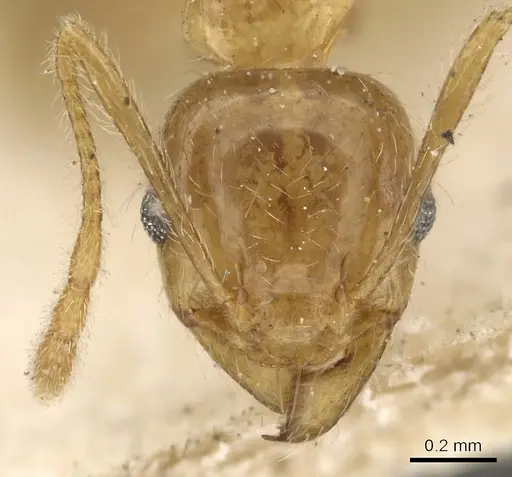
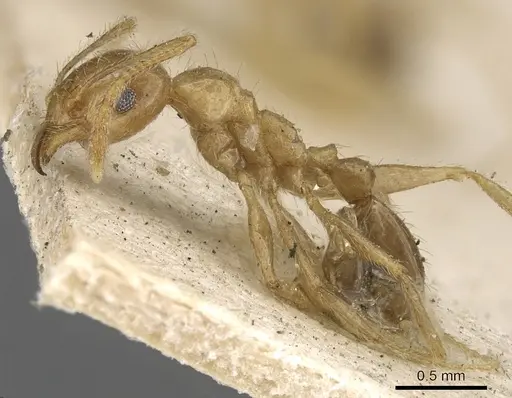
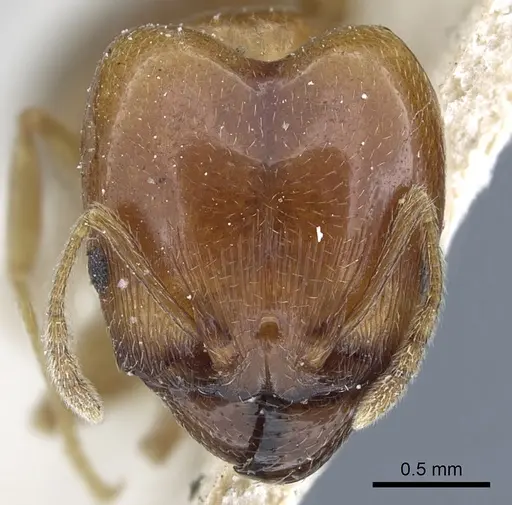
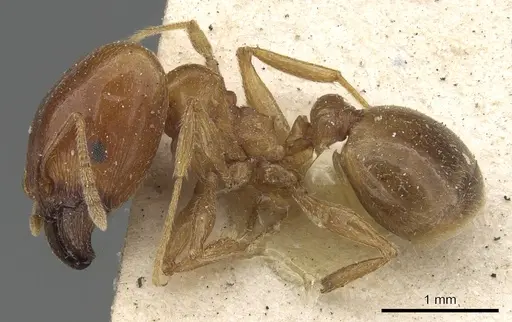
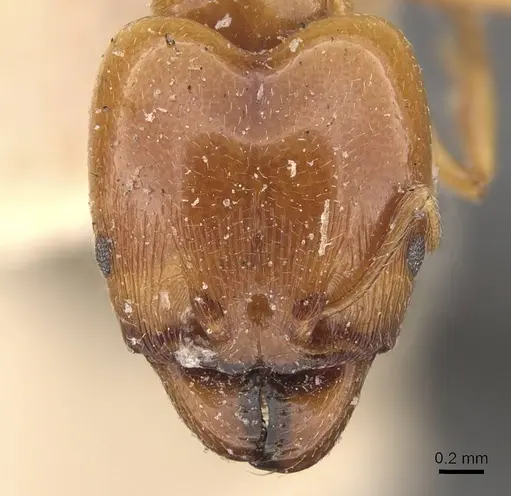
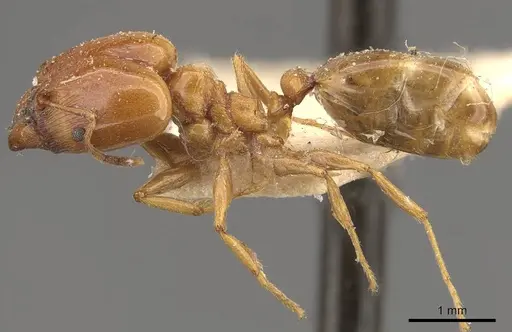
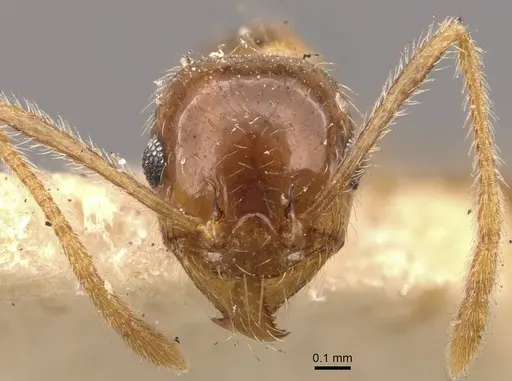
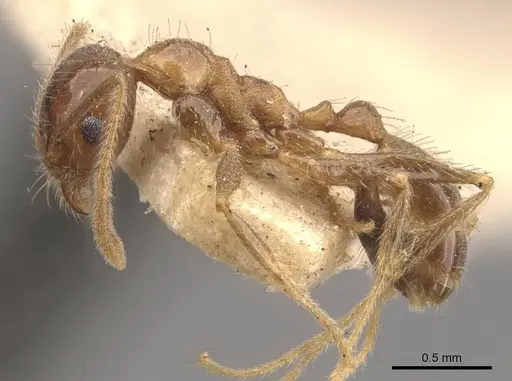
Pheidole lamellinoda is a small ant species with a pronounced size difference between major and minor workers. Workers measure 4.5-5mm total length [1]. The coloration is distinctive: head reddish-yellow, mesosoma and petiole yellow, and gaster brownish-yellow [2]. The most diagnostic feature is the ventral forward-directed translucent lobe on the petiole of major workers, this is unique among related species [3]. Minor workers lack this lobe and can be challenging to distinguish from other Pheidole species, particularly P. indica which has a distinctly lower postpetiolar node [3]. The head of major workers has a striated anterior portion with the posterior half smooth and shining, and the posterior margin is strongly concave [2].
Distribution and Habitat
This species has a disjunct distribution across the Indian Ocean region. It is native to the Indian mainland where records indicate it is rather local, found in Delhi, Maharashtra, and Meghalaya states [4][1]. Interestingly, the species also occurs on Socotra Archipelago in Yemen, over 2000km from the Indian mainland. Specimens have been collected at elevations around 940m in Socotra (Adho Dimello base camp at 12°34′N 54°02′E) [3]. The species has not been found in Arabia and has not been reported as an introduced species anywhere else [3]. The presence on Socotra is biogeographically interesting as it represents an unusual distribution pattern.
Nest Preferences and Housing
Nesting preferences are not documented for this species, but typical Pheidole ants nest in soil, under stones, or in rotting wood in natural habitats. For captive care, start with a standard test tube setup for founding colonies, this provides the humidity control and dark environment queens need. Once the colony reaches 20-30 workers, you can consider moving to a Y-tong (acrylic) nest or a naturalistic setup with soil and decorative elements. The small worker size (under 5mm) means chambers and passages should be appropriately scaled. Ensure escape prevention is in place, while not strong climbers, their small size allows them to squeeze through tiny gaps.
Feeding and Diet
Diet preferences are unconfirmed for this species. Pheidole as a genus is typically omnivorous with a preference for seeds and protein sources. Start with standard ant foods: protein (small insects like fruit flies, pinhead crickets, or mealworms) and carbohydrates (sugar water, honey, or diluted honey). Given their small size, prey items should be appropriately small. Observe your colony's preferences and adjust accordingly. Feed protein 2-3 times per week and keep sugar water available constantly. Remove uneaten prey after 24-48 hours to prevent mold.
Temperature and Seasonal Care
No specific temperature data exists for this species. Based on its tropical to subtropical range in India and Socotra, aim for temperatures in the 24-28°C range. A slight temperature gradient in the nest allows workers to self-regulate. Room temperature in most homes (20-24°C) may be acceptable, but warmer conditions likely support better growth. Regarding diapause: the species comes from regions with minimal cold periods, so a true hibernation is probably not required. You may observe reduced activity during cooler months, simply reduce feeding frequency during this time rather than attempting to induce dormancy.
Colony Development and Growth
No specific development timeline data exists for Pheidole lamellinoda. Based on typical Pheidole genus patterns, expect eggs to develop into workers in approximately 6-10 weeks at optimal warm temperatures (around 26-28°C). The first workers (nanitics) will be smaller than mature workers. Colony growth is initially slow as the queen focuses her energy on producing a small initial brood. Once established, growth typically accelerates as more workers are available to forage and care for brood. Be patient during founding, this species has no documented timeline, so observe your colony's progress and adjust care accordingly.
Frequently Asked Questions
How long does it take for Pheidole lamellinoda to produce first workers?
The exact timeline is unknown as no development studies exist for this species. Based on typical Pheidole genus patterns, expect 6-10 weeks from egg to first worker at warm temperatures (26-28°C). Patience is essential during founding as this species has no documented specific timeline.
What do Pheidole lamellinoda ants eat?
Diet is unconfirmed for this species. Start with standard ant foods: small protein sources (fruit flies, pinhead crickets, small mealworms) 2-3 times per week, and constant access to sugar water or honey. Adjust based on what your colony accepts.
What temperature should I keep Pheidole lamellinoda at?
Aim for 24-28°C based on their tropical/subtropical range in India and Socotra. A gentle gradient allows workers to choose their preferred temperature. Room temperature may be acceptable but warmer conditions likely support better growth.
Can I keep multiple queens together?
Colony structure is unconfirmed for this species. Pheidole species are typically single-queen (monogyne), but some can be multi-queen. Without specific data, it is not recommended to combine unrelated foundress queens as fighting may occur.
How big do Pheidole lamellinoda colonies get?
Maximum colony size is unknown, no colony size data exists for this species. Most Pheidole colonies reach several hundred to a few thousand workers. Growth will likely be slow initially and accelerate once the colony establishes.
What nest type is best for Pheidole lamellinoda?
Start with a test tube setup for the founding colony. Once the colony reaches 20-30 workers, you can transition to a Y-tong (acrylic) nest or naturalistic setup. Ensure chambers are appropriately scaled for their small worker size.
Does Pheidole lamellinoda need hibernation?
Diapause requirements are unknown. Given their tropical/subtropical range in India and Socotra, a true hibernation is likely not necessary. You may observe reduced activity during cooler months, simply reduce feeding frequency rather than attempting cold-induced dormancy.
Are Pheidole lamellinoda ants good for beginners?
This species is not well-documented in antkeeping, making it challenging even for experienced keepers due to the lack of species-specific care data. If you want to keep Pheidole, more commonly kept species like Pheidole indica or Pheidole pallidula have more established care guides.
Why is my Pheidole lamellinoda colony not growing?
Without species-specific data, growth issues are difficult to diagnose. Ensure proper temperature (24-28°C), adequate humidity, and appropriate food. Colony founding is inherently slow, if the queen is alive and producing brood, be patient. If workers are dying, check for mold, dehydration, or poor nutrition.
References

This caresheet is licensed under CC BY-SA 4.0 .
CASENT0901499
View on AntWeb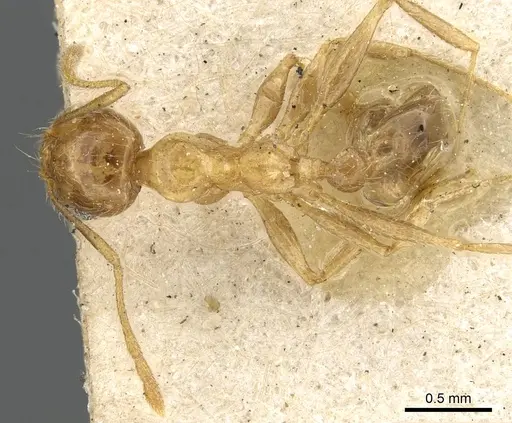
CASENT0901500
View on AntWeb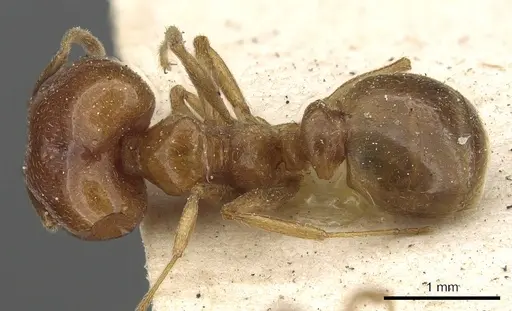
CASENT0907920
View on AntWeb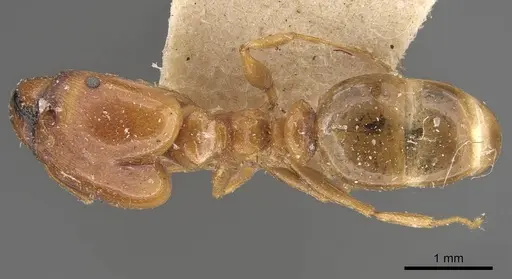
CASENT0907921
View on AntWeb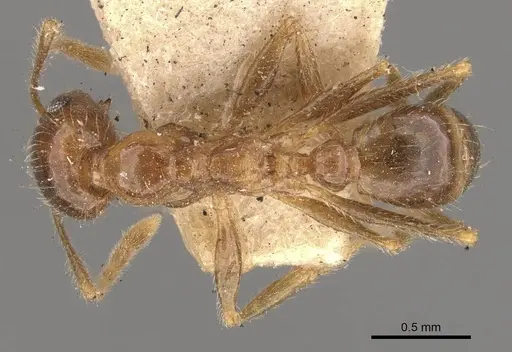
Literature
Loading...Loading products...