

Pheidole laevinota
- Scientific Name
- Pheidole laevinota
- Tribe
- Attini
- Subfamily
- Myrmicinae
- Author
- Forel, 1908
- Distribution
- Found in 1 countries
Pheidole laevinota Overview
Pheidole laevinota is an ant species of the genus Pheidole. It is primarily documented in 1 countries , including Brazil. Detailed taxonomic data and occurrence records can be further explored via authoritative databases such as AntWeb or the Global Biodiversity Information Facility (GBIF).
Pheidole laevinota
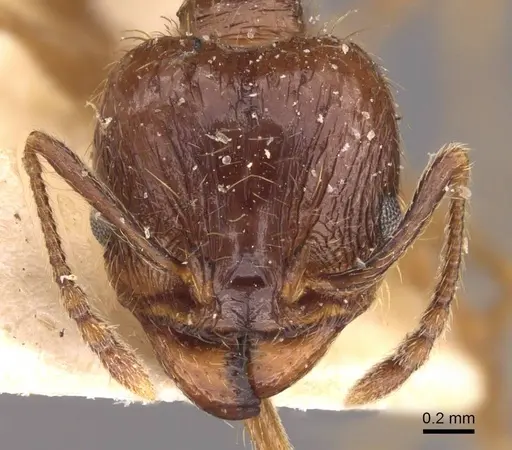
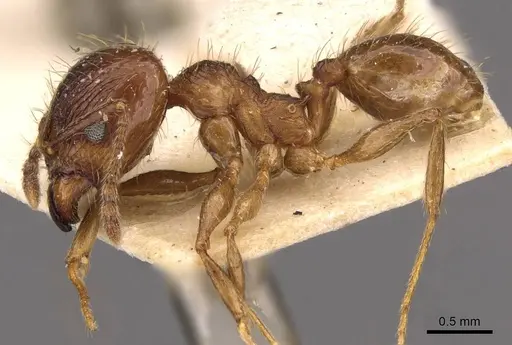
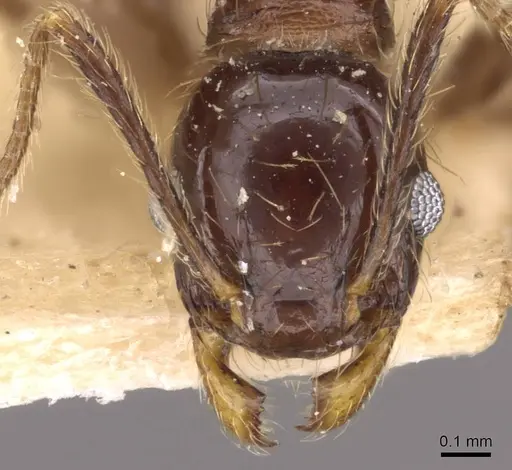
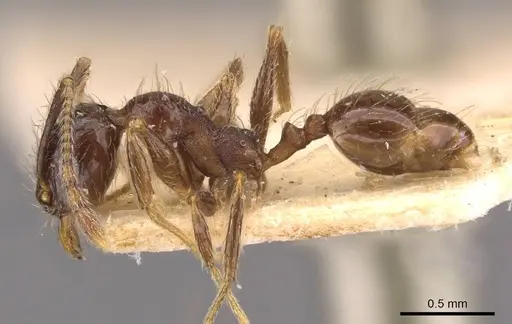
Pheidole laevinota is a small Myrmicinae ant native to the subtropical regions of southern South America. Workers come in two sizes: majors (soldiers) measure around 1.18mm head width with a chunky build, while minors are more slender at around 0.54mm. The species has a light brown body with darker yellow appendages in majors. Originally described as a variety of Pheidole rufipilis, it was elevated to full species status in 2003 by Wilson based on distinctive morphological differences, particularly the smooth versus rugose pronotum that earned it the name 'laevinota' (smooth back). This species inhabits subtropical evergreen forests in Argentina and Brazil at elevations between 750-900 meters[1].
What makes P. laevinota interesting is its place within the Pheidole genus, these ants are known for their polymorphic worker caste system with distinct major and minor workers. The genus Pheidole is one of the most diverse ant groups globally, with over 1000 species. Like most Pheidole, they likely play important roles in their ecosystem as seed dispersers and predators of small invertebrates.
Quick Summary
- Difficulty: Unknown, likely Easy to Medium based on genus patterns
- Origin & Habitat: Subtropical evergreen forests of Argentina (Jujuy, Tucumán, São Paulo) and Brazil at 750-900m elevation[1]
- Colony Type: Likely monogyne (single queen) based on typical Pheidole patterns, colony structure is unconfirmed for this species
- Size & Growth:
- Queen: Unconfirmed, likely 5-7mm based on genus estimate
- Worker: Major: 1.18mm HW, Minor: 0.54mm HW
- Colony: Likely several hundred workers based on typical Pheidole colony sizes
- Growth: Moderate, estimated based on genus patterns
- Development: Estimated 6-8 weeks based on typical Pheidole development (Development timeline is unconfirmed for this specific species, estimates based on related Pheidole species)
- Antkeeping:
- Temperature: Keep at room temperature (20-25°C), provide a gentle gradient if possible. This species comes from subtropical forests so moderate warmth is appropriate
- Humidity: Moderate humidity (50-70%), subtropical forest environment suggests they prefer damp but not saturated conditions. Keep nest substrate slightly moist
- Diapause: Likely requires a mild winter rest period (diapause) of 2-3 months at cooler temperatures (10-15°C) based on temperate/subtropical Pheidole patterns, unconfirmed for this species
- Nesting: In nature they likely nest in soil or under stones in forest floor habitats. In captivity, a standard test tube setup works well for founding colonies, transitioning to a formicarium as the colony grows. Y-tong or plaster nests work well for this size
- Behavior: Pheidole are generally non-aggressive and shy away from confrontation. Majors (soldier ants) have enlarged heads for seed-crushing but are not particularly defensive. Workers are active foragers that likely scavenge and collect seeds. Escape risk is moderate, minors are small (under 1mm) so ensure your setup has no gaps larger than 0.5mm. They are not known to sting and pose no danger to keepers
- Common Issues: limited data means care requirements are estimates based on genus patterns, monitor colony behavior and adjust accordingly, small minor workers (under 1mm) can escape through standard test tube cotton if not properly sealed, slow colony growth can frustrate beginners who overfeed and cause mold problems, test tube setups can flood if water reservoirs are overfilled, use appropriate tube size, winter dormancy requirements are unconfirmed, observe natural colony slowdown in winter months
Housing and Nest Setup
For founding colonies, a standard test tube setup works well. Fill the tube with water and plug the wet end with cotton, this creates a humidity chamber that the queen can use to maintain moisture for her brood. Cover the tube with a dark cloth to simulate the dark underground chamber she would naturally dig. Once the colony reaches 20-30 workers, you can transition to a small formicarium. Foraging areas should be simple plastic boxes with smooth walls that these small ants cannot climb. Escape prevention is important, these ants are tiny and can squeeze through surprisingly small gaps. Use fluon or similar barriers on rim edges. A Y-tong (acrylic) nest or plaster nest works well for established colonies, providing narrow chambers that help them feel secure. Avoid large open spaces which can stress small colonies.
Feeding and Diet
Pheidole species are typically omnivorous with a preference for seeds and protein. In captivity, offer a varied diet including: small seeds (millet, chia, sesame), protein sources like small insects (fruit flies, pinhead crickets, mealworms), and occasional sugar water or honey for energy. Major workers have enlarged mandibles designed for seed crushing, so offering seeds is both nutritious and provides enrichment. Feed protein 2-3 times per week, and keep a sugar source available at all times. Remove uneaten food after 24-48 hours to prevent mold. In the wild, these ants likely play important roles as seed dispersers in their forest habitat.
Temperature and Seasonal Care
Pheidole laevinota comes from subtropical Argentine forests, suggesting they prefer moderate temperatures around 20-25°C. Room temperature is likely suitable for this species. You can provide a gentle temperature gradient by placing part of the nest on a heating mat set to low, but ensure they can move to cooler areas if needed. During winter months (roughly November-February in the southern hemisphere), expect reduced activity and feed less frequently. If your colony shows signs of slowing down in winter, consider providing a cool period around 10-15°C for 2-3 months to simulate natural seasonal cycles. This species has not been studied for specific diapause requirements, so observe your colony's natural rhythms and adjust accordingly.
Colony Development and Growth
Pheidole colonies grow through a well-documented series of stages. The queen lays eggs which hatch into larvae, then pupate before emerging as adult workers. First workers (nanitics) are typically smaller than mature workers and help the queen with colony maintenance. As the colony grows, larger major workers develop, these have the distinctive enlarged heads used for seed processing and colony defense. A mature P. laevinota colony likely reaches several hundred workers with a proportion being majors. Growth rate is moderate, expect 6-12 months to reach 50 workers under good conditions. The presence of both major and minor workers is one of the defining characteristics of the genus Pheidole.
Frequently Asked Questions
How long does it take for Pheidole laevinota to produce first workers?
Based on typical Pheidole development, expect first workers (nanitics) around 6-8 weeks after the queen lays eggs. This timeline assumes room temperature around 22-25°C. Development may be slower at cooler temperatures.
What do Pheidole laevinota ants eat?
Like most Pheidole, they are omnivorous. Offer small seeds (millet, sesame), protein (small insects like fruit flies or mealworms), and sugar sources (honey water). Seeds are particularly important as major workers have specialized mandibles for seed crushing.
Can I keep multiple Pheidole laevinota queens together?
Pheidole species are typically single-queen (monogyne) colonies. Combining unrelated queens is not recommended as they will likely fight. If you find multiple queens, they should be separated into individual setups.
What temperature is best for Pheidole laevinota?
Keep them at room temperature (20-25°C). This species comes from subtropical forests so moderate warmth is appropriate. A slight temperature gradient allows workers to choose their preferred zone.
How big do Pheidole laevinota colonies get?
Based on typical Pheidole colony sizes, expect several hundred workers at maturity. The colony will have both small minor workers and larger major workers (soldiers) with enlarged heads.
Do Pheidole laevinota need hibernation?
Likely yes, they come from a temperate/subtropical region with distinct seasons. A cool period (10-15°C) for 2-3 months during winter is probably beneficial, though this is unconfirmed for this specific species.
When should I move my colony to a formicarium?
Move from test tube to formicarium once the colony reaches 20-30 workers and the test tube setup becomes cramped. Make sure the formicarium has appropriately sized chambers, too large spaces can stress small colonies.
Why are my Pheidole laevinota dying?
Common causes include: mold from overfeeding or poor ventilation, escape through tiny gaps (they are very small), stress from too-large foraging areas, or unsuitable temperature/humidity. Review each of these factors and adjust accordingly.
Are Pheidole laevinota good for beginners?
This species is suitable for intermediate keepers due to limited species-specific data. However, Pheidole in general are considered beginner-friendly due to their docile nature and straightforward care requirements.
References

This caresheet is licensed under CC BY-SA 4.0 .
CASENT0908204
View on AntWeb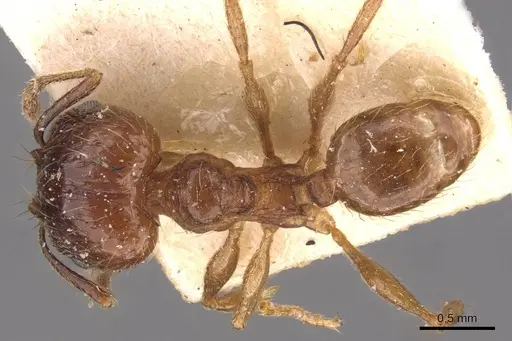
CASENT0908205
View on AntWeb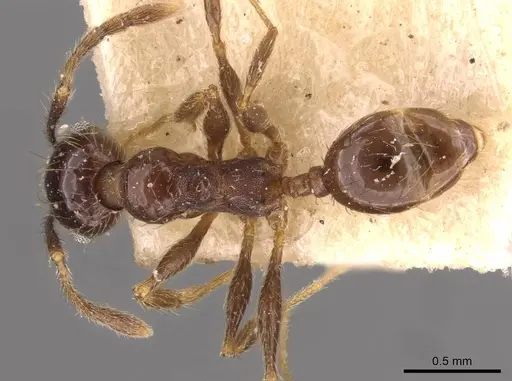
Literature
Loading...Loading products...